Kirjojen hintavertailu – 12 903 725 kirjaa ja 27 kauppaa

Kirjailija

Glenn Arbery

Kirjat ja teokset yhdessä paikassa: 4 kirjaa, julkaisuja vuosilta 2011–2025, suosituimpiin kuuluu Gates of Heaven. Vertaile teosten hintoja ja tarkista saatavuus suomalaisista kirjakaupoista.

4 kirjaa

Kirjojen julkaisuvuodet: 2011–2025.

Gates of Heaven

Gates of Heaven

Glenn Arbery

Wiseblood Books
2025
pokkari
In Gates of Heaven, the conclusion to his sweeping, polyphonic trilogy, Glenn Arbery carries his God-haunted characters to the threshold between despair and deliverance. Along the way, he offers an unflinching look at the American soul. The year is 2020. The Trump-Biden election looms against the backdrop of a global pandemic. Jacob Guizac, kept from his senior year of high school in Wyoming by another COVID-19 scare, reluctantly takes on a monumental homeschool project assigned by his father's friend, Braxton Forrest: a hundred-page essay on Gen. William Tecumseh Sherman. As Jacob yields to an obsession with Sherman's life and career, Forrest's oldest daughter in Georgia undergoes a marital crisis, and Jacob's father Walter succumbs to a case of Covid so severe that he's kept in a medical coma for almost two months. With the country in disarray, and families strained by illness, infidelity, and political divisions, Jacob's engagement with Sherman becomes intensely personal and contagious as he uncovers the religious contention within Sherman's own family and speculates about his decision to direct a war of destruction against the civilian population of the South. Sherman becomes a touchstone for contemporary America. In the cosmic scope of Gates of Heaven, Arbery shows us that time's linearity is an illusion and challenges us to reckon directly with the revelations that erupt when crises converge. PRAISE FOR GLENN ARBERY'S FICTION "a marvelous fusion of Gabriel Garc a M rquez with William Faulkner." -R. R. Reno, Editor of First Things "Glenn Arbery's Boundaries of Eden is many things: a book of generations; an intertextual tour de force; an anatomy of desire (sacred and profane); a corridor of horrors; a promise of hope. It offers an unflinching assessment of the postmodern present and frank acknowledgement of our shared, often malignant past. This is a fully-realized contemporary novel situated in the Grand Tradition." -William Bedford Clark, author of The American Vision of Robert Penn Warren
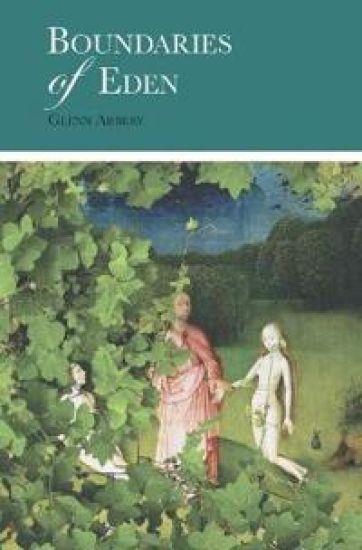
Boundaries of Eden

Boundaries of Eden

Glenn Arbery

Wiseblood Books
2020
pokkari
When a boy who does not know his own name turns up near an abandoned country home, inquiries about his origins begin to uncover a past hidden not just by time, but by overgrowths of disguise and deception. An official investigation exposes an invasive international drug cartel tied to small-town crime, while the local journalist at the center of the revelations, Walter Peach, also faces his own history of early abandonment, conflicting ideologies, personal sin, and dark retribution. Set in the modern South but reaching back through the radical 1960s to the Civil War era, Boundaries of Eden has a strong contemporary relevance with deep classical and biblical resonance." Glenn Arbery's Boundaries of Eden is many things: a book of generations; an intertextual tour de force; an anatomy of desire (sacred and profane); a corridor of horrors; a promise of hope. It offers an unflinching assessment of the postmodern present and frank acknowledgement of our shared, often malignant past. This is a fully-realized contemporary novel situated in the Grand Tradition, notable for its author's ability to move action and character forward through fast-paced dialogue and an unusual gift for conjuring time and place through vividly realized, cinematic detail. Readers of its prequel, Bearings and Distances, will bring a special gloss to this new novel, but Boundaries of Eden stands superbly on its own, striking in its pressing topicality but informed throughout by a firm grasp of first and last things." -William Bedford Clark, author of The American Vision of Robert Penn Warren
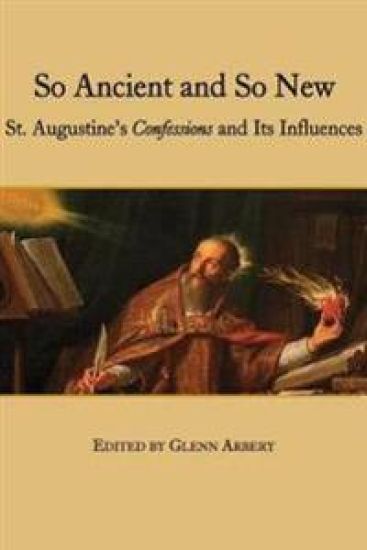
So Ancient and So New – St. Augustine`s Confessions and Its Influence
The study of any masterpiece can change one’s life, but the Confessions of St. Augustine, like Plato’s Republic or Dante’s Commedia, has the almost uncanny power to enact in the reader what it describes. Plato’s book reconfigures the city of the soul by freeing it from enslavement to the tyrannical passions and making it answerable to reason in its pursuit of the good. For Augustine, who shares many of the same ends, the pursuit of the good is not the rectification of philosophical reason, but (as it was for Dante) an intensely personal and consuming love: the encounter with the living God. Oddly, it may seem, that encounter comes for Augustine through the act of reading. Unlike Plato, who depicts the process of reasoning toward the truth, Augustine finds the truth revealed in another, immeasurably greater book that cannot be read in its true sense without the help of its author. The essays uncover a variety of themes, from Augustine’s act of reading (Marc LePain and Bercier), his emphasis on memory (Roger Corriveau), and his choice to reveal to the world his “hidden and unworldly activity” (Daniel Maher), to the way Augustine’s own education might serve as a corrective to contemporary understandings of “assessment” (Gavin Colvert). The vast wake of Augustine’s work includes writers from Dante and Montaigne to Nabokov, but three representative figures were chosen to show his influence: Jean-Jacques Rousseau in the Confessions (Rick Sorenson), James Joyce in the whole range of his work (Eloise Knowlton), and T. S. Eliot in the Four Quartets (Glenn Arbery). The most direct engagement with Augustine is obviously Rousseau’s. In his essay comparing and contrasting the pivotal moments of the two Confessions, Rick Sorenson explores major differences between the way of faith and the path of reliance on reason. Joyce might be said to have taken Rousseau’s path (at least in rejecting revelation), whereas Eliot took Augustine’s. In its sophistications and anxieties, the late antiquity Augustine inhabited feels a great deal like the late modernity we inhabit now. Certainly, the barbarians of materialist thought long ago sacked the civilization our ancestors inhabited. When Eliot published The Waste Land in 1922, he already saw the old order of antiquity and Christendom as “stony rubble,” “a heap of broken images.” As one of his speakers puts it, “Dry bones can harm no one.” This old book, the Confessions, might seem to our contemporaries as dry and dead as those bones, but it is not so. Without being a defense of Christianity (as the City of God is) or a work of catechesis, the Confessions might be the greatest counter to the materialist creed in Western literature. It recounts Augustine’s central, intensely personal, and ultimately liberating struggle to conceive of spiritual substance, an intellectual achievement without which he cannot even hope to accommodate his understanding to the reality of God. This book of essays has one primary end, which is to entice the reader to reopen Augustine’s book, to look over his shoulder and see what the act of reading means to him and what it has accomplished: the world-changing encounter with the substance of the Word.