

Kirjojen hintavertailu – 12 859 828 kirjaa ja 27 kauppaa

Kirjailija

Glymph Thavolia

Kirjat ja teokset yhdessä paikassa: 2 kirjaa, julkaisuja vuosilta 2008–2010, suosituimpiin kuuluu Out of the House of Bondage. Vertaile teosten hintoja ja tarkista saatavuus suomalaisista kirjakaupoista.

2 kirjaa

Kirjojen julkaisuvuodet: 2008–2010.

Freedom: A Documentary History of Emancipation, 1861–1867 2 Volume Paperback Set: Volume 1, The Destruction of Slavery

Freedom: A Documentary History of Emancipation, 1861–1867 2 Volume Paperback Set: Volume 1, The Destruction of Slavery

Barbara J. Fields; Glymph Thavolia; Reidy Joseph P.; Rowland Leslie S.

Cambridge University Press
2010
muu
The American Civil War destroyed slavery in the South. At first, most white Americans denied what would eventually seem self-evident. But black Americans saw clearly that the sectional conflict was their greatest opportunity for liberation. This volume of Freedom presents a documentary record of the transformation of the Civil War into a war against slavery, and the slaves' role in their own emancipation. The Destruction of Slavery shows the process by which a war for Union became a war for freedom. It demonstrates how three interrelated circumstances opened opportunities to slaves: first, the character of slave society; second, the course of the war itself; and third, the policies of the Union and Confederate governments. Together, they made emancipation an uneven, halting, and often tenuous process in which slaves played the central role.
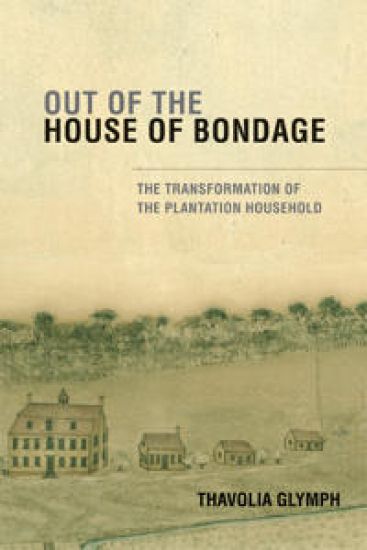
Out of the House of Bondage

Out of the House of Bondage

Glymph Thavolia

Cambridge University Press
2008
pokkari
The plantation household was, first and foremost, a site of production. This fundamental fact has generally been overshadowed by popular and scholarly images of the plantation household as the source of slavery's redeeming qualities, where 'gentle' mistresses ministered to 'loyal' slaves. This book recounts a very different story. The very notion of a private sphere, as divorced from the immoral excesses of chattel slavery as from the amoral logic of market laws, functioned to conceal from public scrutiny the day-to-day struggles between enslaved women and their mistresses, subsumed within a logic of patriarchy. One of emancipation's unsung consequences was precisely the exposure to public view of the unbridgeable social distance between the women on whose labor the plantation household relied and the women who employed them. This is a story of race and gender, nation and citizenship, freedom and bondage in the nineteenth century South; a big abstract story that is composed of equally big personal stories.