Kirjojen hintavertailu – 12 903 735 kirjaa ja 27 kauppaa

Kirjailija

Glyndwr Williams

Kirjat ja teokset yhdessä paikassa: 9 kirjaa, julkaisuja vuosilta 1980–2022, suosituimpiin kuuluu The Malaspina Expedition 1789–1794. Vertaile teosten hintoja ja tarkista saatavuus suomalaisista kirjakaupoista.

9 kirjaa

Kirjojen julkaisuvuodet: 1980–2022.

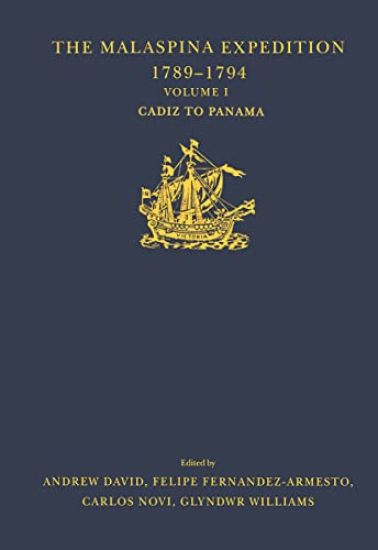
The Malaspina Expedition 1789–1794

The Malaspina Expedition 1789–1794

Andrew David; Felipe Fernández-Armesto; Glyndwr Williams

TAYLOR FRANCIS LTD
2022
nidottu
Among the voyages of exploration and surveying in the late 18th century, that of Alejandro Malaspina best represents the high ideals and scientific interests of the Enlightenment. Italian-born, Malaspina entered the Spanish navy in 1774. In September 1788 he and fellow-officer José Bustamante submitted a plan to the Ministry of Marine for a voyage of survey and inspection to Spanish territories in the Americas and Philippines. The expedition was to produce hydrographic charts for the use of Spanish merchantmen and warships and to report on the political, economic and defensive state of Spain's overseas possessions. The plan was approved and in July 1789 Malaspina and Bustamante sailed from Cádiz in the purpose-built corvettes, Descubierta and Atrevida. On board the vessels were scientists and artists and an array of the latest surveying and astronomical instruments. The voyage lasted more than five years. On his return Malaspina was promoted Brigadier de la Real Armada, and began work on an account of the voyage in seven volumes to dwarf the narratives of his predecessors in the Pacific such as Cook and Bougainville. Among much else, it would contain sweeping recommendations for reform in the governance of Spain's overseas empire. But Malaspina became involved in political intrigue. In November 1795 he was arrested, stripped of his rank and sentenced to life imprisonment. Although released in 1803, Malaspina spent the last seven years of his life in obscure retirement in Italy. He never resumed work on the great edition, and his journal was not published in Spain until 1885. Only in recent years has a multi-volume edition appeared under the auspices of the Museo Naval, Madrid, that does justice to the achievements of what for long was a forgotten voyage. This first volume of a series of three contains Malaspina's diario or journal from 31 July 1789 to 14 December 1790, newly translated into English, with substantial introduction and commentary. Among the places visited and described are Montevideo, Puerto Deseado, Port Egmont, Puerto San Carlos, Valparaíso, Callao, Guayaquil and Panamá. Other texts include Malaspina's introduction to his intended edition, and his correspondence with the Minister of the Marine before and during the voyage.
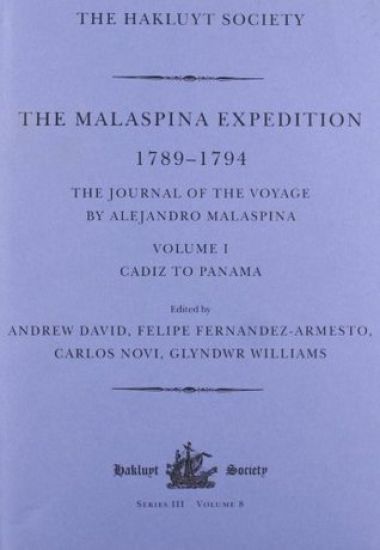
The Malaspina Expedition 1789–1794

The Malaspina Expedition 1789–1794

Andrew David; Felipe Fernández-Armesto; Glyndwr Williams

Hakluyt Society
2002
sidottu
Among the voyages of exploration and surveying in the late 18th century, that of Alejandro Malaspina best represents the high ideals and scientific interests of the Enlightenment. Italian-born, Malaspina entered the Spanish navy in 1774. In September 1788 he and fellow-officer José Bustamante submitted a plan to the Ministry of Marine for a voyage of survey and inspection to Spanish territories in the Americas and Philippines. The expedition was to produce hydrographic charts for the use of Spanish merchantmen and warships and to report on the political, economic and defensive state of Spain's overseas possessions. The plan was approved and in July 1789 Malaspina and Bustamante sailed from Cádiz in the purpose-built corvettes, Descubierta and Atrevida. On board the vessels were scientists and artists and an array of the latest surveying and astronomical instruments. The voyage lasted more than five years. On his return Malaspina was promoted Brigadier de la Real Armada, and began work on an account of the voyage in seven volumes to dwarf the narratives of his predecessors in the Pacific such as Cook and Bougainville. Among much else, it would contain sweeping recommendations for reform in the governance of Spain's overseas empire. But Malaspina became involved in political intrigue. In November 1795 he was arrested, stripped of his rank and sentenced to life imprisonment. Although released in 1803, Malaspina spent the last seven years of his life in obscure retirement in Italy. He never resumed work on the great edition, and his journal was not published in Spain until 1885. Only in recent years has a multi-volume edition appeared under the auspices of the Museo Naval, Madrid, that does justice to the achievements of what for long was a forgotten voyage. This first volume of a series of three contains Malaspina's diario or journal from 31 July 1789 to 14 December 1790, newly translated into English, with substantial introduction and commentary. Among the places visited and described are Montevideo, Puerto Deseado, Port Egmont, Puerto San Carlos, Valparaíso, Callao, Guayaquil and Panamá. Other texts include Malaspina's introduction to his intended edition, and his correspondence with the Minister of the Marine before and during the voyage.

Buccaneers, Explorers and Settlers

Buccaneers, Explorers and Settlers

Glyndwr Williams

Routledge
2019
nidottu
Buccaneers, Explorers and Settlers studies how during 'the long 18th century' British incursions into the Pacific transformed Europe's knowledge of that great ocean. Buccaneers devastated Spanish settlements and shipping in the South Sea, and the accounts by Dampier and his companions of their exploits became best-sellers. Anson's circumnavigation carried on the tradition of commerce-raiding, but it represented the beginnings of a more official interest in the Pacific and its resources. Later in the 18th century the hopes of speculative geographers that unknown continents and sea-passages existed in the Pacific prompted a series of expeditions by Cook and his contemporaries. New peoples were discovered as well as new lands, and the voyages led to changing perceptions of their lifestyles. Exploration was followed by trade and settlement in which Cook's associates such as Banks played a leading part. Before the end of the century there were British settlements in New South Wales, Nootka Sound had become a centre of international dispute, and across the Pacific traders, whalers and missionaries were following the tracks of the explorers.
The British Atlantic Empire Before the American Revolution
First Published in 1980. The dynamism within the American colonies in the fifty years or so before the outbreak of the crisis of the 1760s that was to lead to the Revolution has never been in doubt. The articles written included in this text suggest a number of ways in which the ‘imperial factor’ was of real importance in colonial life and show that there was dynamism on the British side as well as in the colonies.
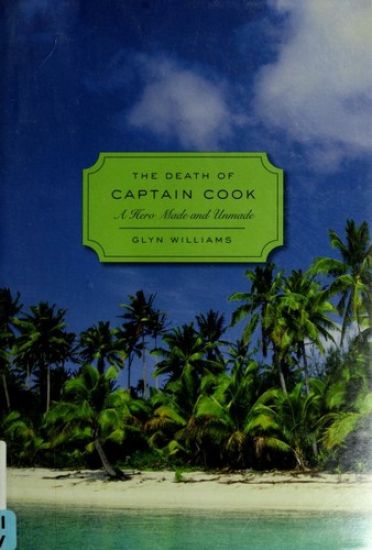
The Death of Captain Cook

The Death of Captain Cook

Glyndwr Williams

HARVARD UNIVERSITY PRESS
2009
sidottu
Since first reported to the world in 1780, the death of Captain Cook on a Hawaiian beach the previous year has been revered, celebrated, and shrouded in mystery. Simultaneously called a hero and an antihero, a ruthless invader, and a torchbearer of the Enlightenment, Cook's reputation grew as much out of the moving story of his death as out of his adventures while he lived. In a style that is more detective story than conventional biography, Glyn Williams explores the multiple narratives of Cook's death. He reveals how the British Admiralty first attempted to censor accounts of Cook's erratic behavior and how the "authorized" version of his death--a lengthy narrative serialized in the leading publications of the day--reduced the story to the final hours of a noble leader who gave his life to save others. Williams argues that the contrary evidence of a chaotic bloody fracas on the beach at Kealakekua Bay was ignored, and that the unexplained disappearance of Cook's own journal helped the process of concealment. He believes that Cook was not entirely the man sanctified by the British public. More than two hundred years later, an explosive interplay between academic controversy and nationalist feelings has once more drawn attention to a life that has attracted praise and controversy, abhorrence and admiration. In short, Williams examines the story of Cook's progress from obscurity to fame and, eventually, to infamy--a story that, until now, has never been fully told.
Buccaneers, Explorers and Settlers

Buccaneers, Explorers and Settlers

Glyndwr Williams

Variorum
2005
sidottu
Buccaneers, Explorers and Settlers studies how during 'the long 18th century' British incursions into the Pacific transformed Europe's knowledge of that great ocean. Buccaneers devastated Spanish settlements and shipping in the South Sea, and the accounts by Dampier and his companions of their exploits became best-sellers. Anson's circumnavigation carried on the tradition of commerce-raiding, but it represented the beginnings of a more official interest in the Pacific and its resources. Later in the 18th century the hopes of speculative geographers that unknown continents and sea-passages existed in the Pacific prompted a series of expeditions by Cook and his contemporaries. New peoples were discovered as well as new lands, and the voyages led to changing perceptions of their lifestyles. Exploration was followed by trade and settlement in which Cook's associates such as Banks played a leading part. Before the end of the century there were British settlements in New South Wales, Nootka Sound had become a centre of international dispute, and across the Pacific traders, whalers and missionaries were following the tracks of the explorers.
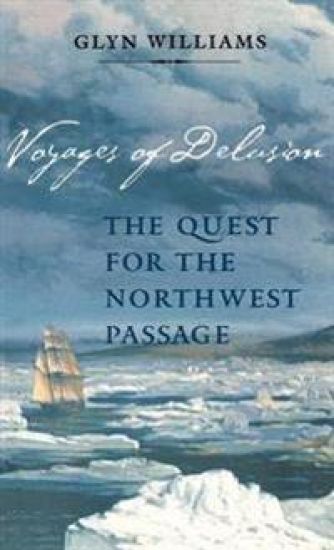
Voyages of Delusion

Voyages of Delusion

Glyndwr Williams

Yale University Press
2003
sidottu
In this gripping work of narrative history, Williams describes the adventures and mishaps of the misguided expeditions of the Age of Reason--the 18th century--in search of the maritime philosopher's stone. 51 illustrations.
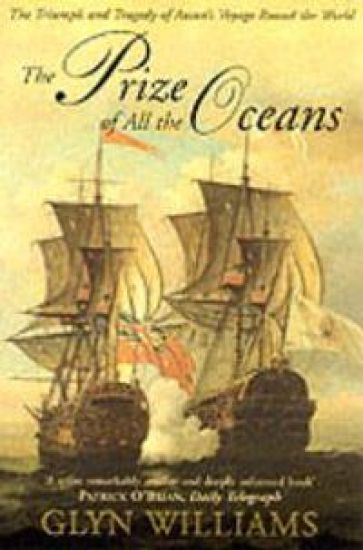
Prize of All the Oceans

Prize of All the Oceans

GLYNDWR WILLIAMS

HARPERCOLLINS PUBLISHERS
2000
nidottu
Commodore Anson's voyage around the world in 1740-44 holds a unique and terrible place in British naval history. This work recounts this classic journey from sea history, detailing the dramatic hardships, diasters, mutiny and heroism that occurred.
The British Atlantic Empire Before the American Revolution
First Published in 1980. The dynamism within the American colonies in the fifty years or so before the outbreak of the crisis of the 1760s that was to lead to the Revolution has never been in doubt. The articles written included in this text suggest a number of ways in which the ‘imperial factor’ was of real importance in colonial life and show that there was dynamism on the British side as well as in the colonies.