Kirjojen hintavertailu – 12 859 818 kirjaa ja 27 kauppaa

Kirjailija

Gopa Samanta

Kirjat ja teokset yhdessä paikassa: 5 kirjaa, julkaisuja vuosilta 2013–2022, suosituimpiin kuuluu Dancing with the River. Vertaile teosten hintoja ja tarkista saatavuus suomalaisista kirjakaupoista.

5 kirjaa

Kirjojen julkaisuvuodet: 2013–2022.

Mobilities in India

Mobilities in India

Bhaswati Mondal; Gopa Samanta

Springer Nature Switzerland AG
2022
nidottu
This book presents commuting as a new paradigm in mobility studies in the context of global south. It delves into suburban train commuting in Eastern India. The book interprets commuting not only as a means to attend work but also as a process producing kinetic event-space infused with different mobile practices, which is not determined by their locational fixity, rather can be cognized. It analyses the role of suburban train commuting in the metropolitan expansion of Kolkata, and the transformation of rural space into urban. The significant contribution of the book lies in explaining commuters’ experiencescape and the production of spatial fluidity in time capsule through commuting. It also explores the subjective reality of gendered commuting. The book uses a trans-disciplinary research design, blending quantitative and ethnographic research methods. The area selected for the empirical research is the Howrah-Bardhaman Main Railway Line (108 km), the first suburban railwayline in Eastern India. Commuters originating from three adjacent districts of Purba Bardhaman, Hooghly and Howrah took part in this research. Besides the commuters, non-commuting passengers and hawkers in the train were also interviewed to understand the diverse perceptions of the process of commuting. This book may be considered as a reference book for mobility studies, transport studies, urban geography and regional planning.
Negotiating Terrain in Local Governance

Negotiating Terrain in Local Governance

Riya Banerjee; Gopa Samanta

Springer Nature Switzerland AG
2022
nidottu
This book explores and analyses women’s participation in local urban governance in West Bengal, India. It is developed from empirical research with in-depth understanding of ground situations of freedom, functioning and obstacles of women councilors in India. The central idea of this book revolves around two central research questions: 1. How are women’s positions and spaces changing due to their political participation in the urban local governance? and 2. What are the major hurdles they face in their day to day lives barring their emancipation? The main strength of the book lies in the in-depth grounded research in four small cities (Darjiling, Balurghat, Raniganj and Hugli-Chinsurah) using both quantitative and qualitative research methods. This volume can be considered as a reference book for Gender Studies, Women’s Studies, Urban Governance, Women and Policy Research, Gender Development Studies.
Mobilities in India

Mobilities in India

Bhaswati Mondal; Gopa Samanta

Springer Nature Switzerland AG
2021
sidottu
This book presents commuting as a new paradigm in mobility studies in the context of global south. It delves into suburban train commuting in Eastern India. The book interprets commuting not only as a means to attend work but also as a process producing kinetic event-space infused with different mobile practices, which is not determined by their locational fixity, rather can be cognized. It analyses the role of suburban train commuting in the metropolitan expansion of Kolkata, and the transformation of rural space into urban. The significant contribution of the book lies in explaining commuters’ experiencescape and the production of spatial fluidity in time capsule through commuting. It also explores the subjective reality of gendered commuting. The book uses a trans-disciplinary research design, blending quantitative and ethnographic research methods. The area selected for the empirical research is the Howrah-Bardhaman Main Railway Line (108 km), the first suburban railwayline in Eastern India. Commuters originating from three adjacent districts of Purba Bardhaman, Hooghly and Howrah took part in this research. Besides the commuters, non-commuting passengers and hawkers in the train were also interviewed to understand the diverse perceptions of the process of commuting. This book may be considered as a reference book for mobility studies, transport studies, urban geography and regional planning.
Negotiating Terrain in Local Governance

Negotiating Terrain in Local Governance

Riya Banerjee; Gopa Samanta

Springer Nature Switzerland AG
2021
sidottu
This book explores and analyses women’s participation in local urban governance in West Bengal, India. It is developed from empirical research with in-depth understanding of ground situations of freedom, functioning and obstacles of women councilors in India. The central idea of this book revolves around two central research questions: 1. How are women’s positions and spaces changing due to their political participation in the urban local governance? and 2. What are the major hurdles they face in their day to day lives barring their emancipation? The main strength of the book lies in the in-depth grounded research in four small cities (Darjiling, Balurghat, Raniganj and Hugli-Chinsurah) using both quantitative and qualitative research methods. This volume can be considered as a reference book for Gender Studies, Women’s Studies, Urban Governance, Women and Policy Research, Gender Development Studies.
Dancing with the River

Dancing with the River

Kuntala Lahiri-Dutt; Gopa Samanta

Yale University Press
2013
sidottu
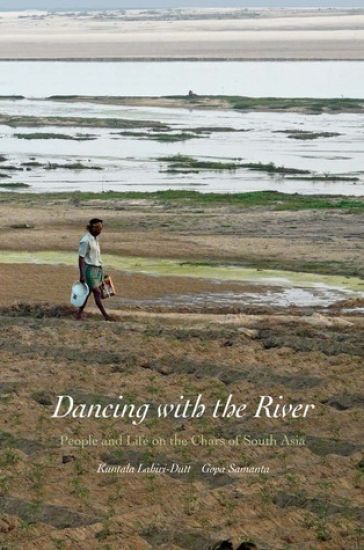
An intimate glimpse into the microcosmic world of “hybrid landscapes” and their inhabitantsWith this book Kuntala Lahiri-Dutt and Gopa Samanta offer an intimate glimpse into the microcosmic world of “hybrid environments.” Focusing on chars—the part-land, part-water, low-lying sandy masses that exist within the riverbeds in the floodplains of lower Bengal—the authors show how, both as real-life examples and as metaphors, chars straddle the conventional categories of land and water, and how people who live on them fluctuate between legitimacy and illegitimacy. The result, a study of human habitation in the nebulous space between land and water, charts a new way of thinking about land, people, and people's ways of life.