
Kirjailija
Gopalkrishna Gandhi
Kirjat ja teokset yhdessä paikassa: 11 kirjaa, julkaisuja vuosilta 2013–2025, suosituimpiin kuuluu India and Her Futures. Vertaile teosten hintoja ja tarkista saatavuus suomalaisista kirjakaupoista.
11 kirjaa
Kirjojen julkaisuvuodet: 2013–2025.
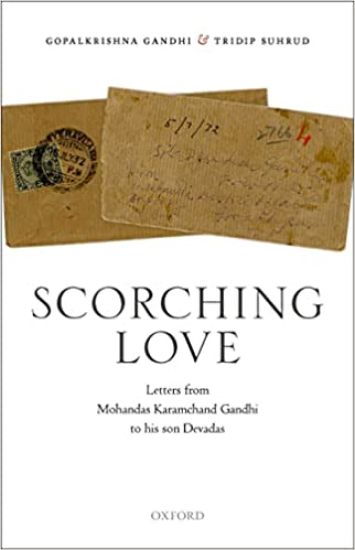
This book publishes - for the most part, for the first time - Gandhi's letters to his youngest son, Devadas from 1914, when father and son were both in South Africa to 1948, when they were both in Delhi, the capital of free India where within hours of the last letter Gandhi was assassinated. Gandhi wrote these letters by day, he wrote them by night, he wrote them from aboard trains, steamers, both right and left hands being pressed into service to rest one when tired out. The letters span three decades during which the writer grew from being a fighter for the rights of Indians in South Africa to being hailed as Father of the Nation by millions in India and - opposed by many as well including the man who felled him by three bullets fired at point blank range on 30 January, 1948. The letters hold his aspirations for his son and for his nation. They bear great love and they also scorch. And we see Devadas, the recipient of the letters, move in them from compliant childhood and youth, to adulthood, questioning and remonstrating with his father and being just the independent son his father wants him to be.
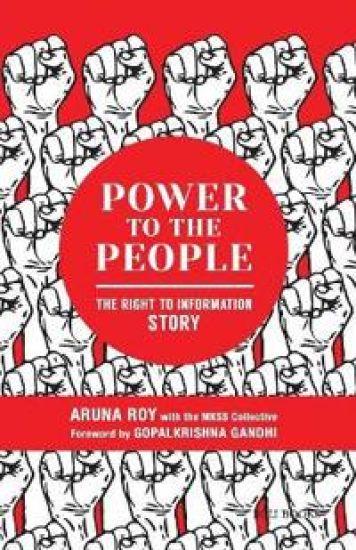
Power to the People: The Right to Information Story, is the story of a campaign that evolved into a genuine and vibrant people's movement. Culled from the voices of people, often such stories only feed into the research of scholars, largely unacknowledged and forgotten. The dominant narrative is always from the perspective of the ruler and single individuals. One had hoped that democracy would set it right. But the people who are the primary contributors to the discourse always remain on the fringes. Written by Aruna Roy with the MKSS collective, this book is for everyone who asks questions, seeks answers to fight corruption and injustice and challenges arbitrary power. It is a celebration of commitment laced with humour, the struggle, the songs, the theatres of protest, long spells on the street and drafting a peoples' law.
Gandhi in Raza
Nandalal Bose; Gopalkrishna Gandhi; Ashok Vajpeyi; SH Raza
Mapin Publishing Pvt.Ltd
2017
nidottu
The iconic modern Indian painter Sayed Haider Raza returned to India from France to spend the last five-and-a-half years of his life and artistic career in his homeland. A childhood glimpse of the Mahatma remained etched in Raza's mind, sparking an abiding interest with Gandhian ideals, and inspiring a set of paintings, in 2013, as a tribute to Gandhi. This volume is an attempt to put together these works in both artistic and historical perspective. Raza almost musically, certainly rhythmically, creates a Gandhi saptak through this set of works exploring the conceptual universe which the Mahatma created. With 7 paintings and 11 photographs, this volume binds together two extraordinary men, both artists in their ways, bound by an internal and external quest for peace.
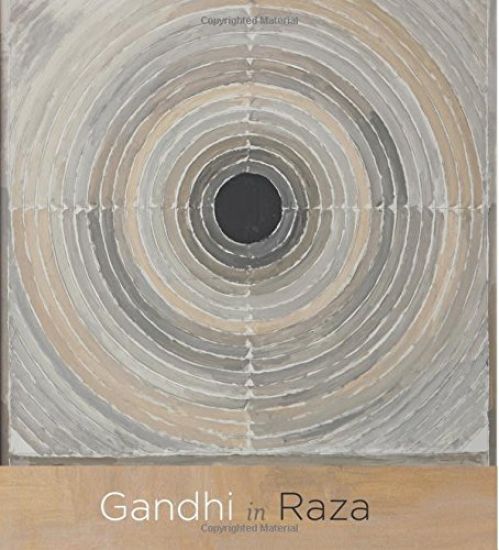
Gandhi in Raza
Nandalal Bose; Gopalkrishna Gandhi; Ashok Vajpeyi; Sayed Haider Raza
Mapin Publishing Pvt.Ltd
2017
nidottu
The iconic modern Indian painter Sayed Haider Raza did a set of paintings in 2013 by way of his tribute to Mahatma Gandhi. This volume is an attempt to put together these works in both artistic and historical perspective. Raza almost musically, certainly rhythmically, creates a Gandhi saptak through this set of works exploring the conceptual universe that the Mahatma created. With 7 paintings and 11 photographs, this volume brings together two extraordinary men, both artists in their ways, bound by an internal and external quest for peace.
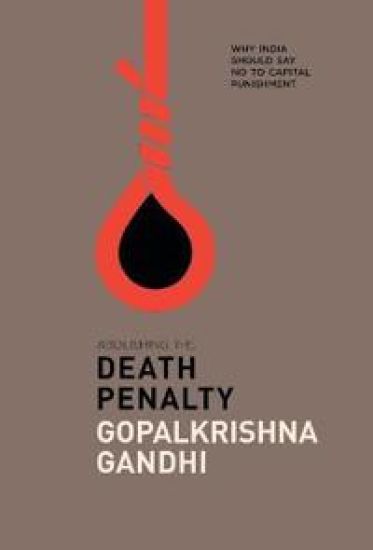
In Abolishing the Death Penalty: Why India Should Say No to Capital Punishment, Gopalkrishna Gandhi asks fundamental questions about the ultimate legal punishment awarded to those accused of major crimes. Is taking another life a just punishment or an act as inhuman as the crime that triggered it? Does having capital punishment in the law books deter crime? His conclusions are unequivocal: Cruel in its operation, ineffectual as deterrence, unequal in its application in an uneven society, liable like any punishment to be in error but incorrigibly so, these grievous flaws that are intrinsic to the death penalty are compounded by yet another-it leaves the need for retribution (cited as its primary 'good') unrequited and simply makes society more bloodthirsty. Examining capital punishment around the world from the time of Socrates onwards, the author delves into how the penalty was applied in India during the times of Asoka, Sikandar Lodi, Krishnadevaraya, the Peshwas and the British Raj, and how it works today. Of the 195 countries in the world, 140 are abolitionist and no longer have the death penalty in law or in practice. Abolition-minded in theory, India is retentionist in practice-the death penalty can be handed down even for non-homicidal crimes. But even though it is only meant to be handed down in the 'rarest of the rare' cases, there are currently 385 convicts on death row. Through in-depth analysis, persuasive argument and the marshalling of the considered opinion of jurists, human rights activists, scholars and criminologists among others, this book shows exactly why the death penalty should be abolished with immediate effect in India
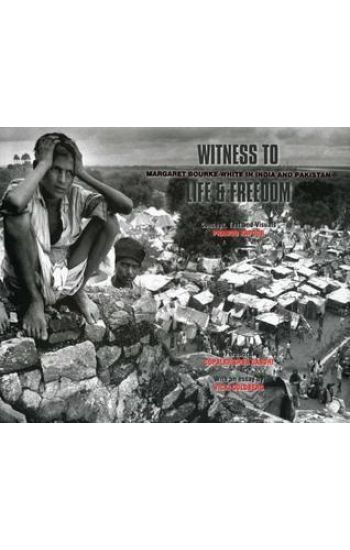
Witness to Life & Freedom
Pramod Kapoor; Gopalkrishna Gandhi; Vicki Goldberg
Roli Books Pvt Ltd
2013
sidottu
Margaret Bourke-White (1904-1971) was a pioneering American photojournalist. As staff photographer for the popular Life Magazine, she captured some of the defining moments of the twentieth century, which often took her to troubled spots around the world. She was the first female war correspondent, and covered combat during the Second World War. The first American to be allowed into the Soviet Union, she travelled through the country documenting its rapid industrialisation, and even managed to photograph Joseph Stalin at the Kremlin. Some of Margaret's most celebrated photographs were taken in India and Pakistan in 1947-48, as the two countries marched towards freedom from British colonial rule. She photographed the times and the leaders, including Mahatma Gandhi (who called her his 'torturer') and Muhammed Ali Jinnah. She was eyewitness to the migration of millions and the mayhem of communal violence that accompanied the subcontinent's partition into two independent nations. This body of work forms the focus of this book. Contents: Foreword; Preface; Introduction; India: A Pillar of Fire; Photo Essay.