Kirjojen hintavertailu – 12 859 818 kirjaa ja 27 kauppaa
Kirjailija
Göran Bolin
Kirjat ja teokset yhdessä paikassa: 10 kirjaa, julkaisuja vuosilta 2011–2026, suosituimpiin kuuluu Medievetenskapens idétraditioner. Vertaile teosten hintoja ja tarkista saatavuus suomalaisista kirjakaupoista.
Stina Bengtsson; Staffan Ericson; Fredrik Stiernstedt; Linus Andersson; Jonas Andersson Schwarz; Göran Bolin; Anders Burman; Annika Egan Sjölander; Otto Fischer; Johan Fornäs; Ingrid Forsler; Michael Forsman; Heike Graf; Camilla Hermansson; Peter Jakobsson; Sofia Johansson; Anne Kaun; Johan Lindell; Lars Lundgren; Jesper Olsson; Magnus Rodell; Sven Ross; Per Ståhlberg; Sven Olov Wallenstein; Espen Ytreberg; Patrik Åker
Den som vill förstå dagens mediesamhälle har mycket att hämta genom att återvända till tidigare analyser, teorier och idéer - till vad som kunde kallas för medie-vetenskapens idétraditioner. Den här antologin inventerar och förmedlar ett förråd av traditioner och texter, fyllt av verktyg för att navigera i det samtida medielandskapet. Varje kapitel behandlar en klassisk medievetenskaplig text och placerar den i sitt historiska och vetenskapliga sammanhang; presenterar en närläsning av dess centrala innehåll och diskuterar dess relevans idag. Bokens kapitel är tänkta att erbjuda ett stöd till egen läsning av originaltexterna, inte att ersätta sådan läsning. Boken riktar sig till studenter och lärare i medie- och kommunikationsvetenskap och närliggande ämnen samt andra som intresserar sig för medievetenskapens idétraditioner.
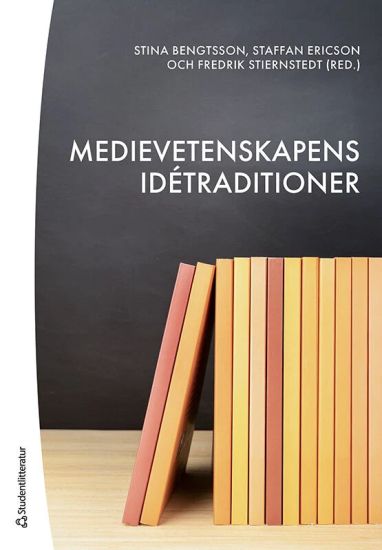
Stina Bengtsson; Staffan Ericson; Fredrik Stiernstedt; Linus Andersson; Jonas Andersson; Göran Bolin; Anders Burman; Marie Cronqvist; Annika Egan Sjölander; Otto Fischer; Johan Fornäs; Ingrid Forsler; Michael Forsman; Johan Fredrikzon; Heike Graf; Camilla Hermansson; Peter Jakobsson; Sofia Johansson; Anne Kaun; Johan Lindell; Lars Lundgren; Jesper Olsson; Magnus Rodell; Anna Roosvall; Sven Ross; Per Ståhlberg; Johanna Sumiala; Sven Olov Wallenstein; Kajsa Weber; Espen Ytreberg; Patrik Åker
Den som vill förstå dagens mediesamhälle har mycket att hämta genom att återvända till tidigare analyser, teorier och idéer – till medievetenskapens idétraditioner. Den här antologin både inventerar och förmedlar ett förråd av olika traditioner och texter som har haft stor betydelse för ämnet. Den är fylld av verktyg som behövs för att navigera i det samtida medielandskapet. Varje kapitel behandlar en klassisk medievetenskaplig text, placerar den i sitt historiska och vetenskapliga sammanhang, presenterar en närläsning av dess centrala innehåll och diskuterar dess relevans idag. Bokens kapitel är tänkta att erbjuda ett stöd till egen läsning av originaltexterna, inte att ersätta sådan läsning. Denna andra upplaga är reviderad efter de senaste forskningsrönen och utökad med fyra nya kapitel. Boken riktar sig främst till studenter och lärare i medie- och kommunikationsvetenskap med närliggande ämnen, men också till andra som intresserar sig för medievetenskapens idétraditioner.
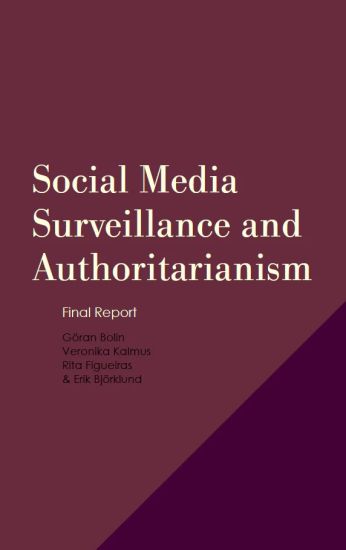
What are the attitudes of online media users to the vast collection of personal data held by commercial platform companies? Do previous experiences of state surveillance have an impact on these attitudes? Do they differ for those brought up in the surveillance regime of Estonia during the Soviet Union era, or who experienced the surveillance apparatus in Portugal under authoritarian dictatorship? Do Swedish media users without authoritarian surveillance experiences differ in their attitudes to commercial surveillance? These questions are discussed in this final report from the project Social Media Surveillance and Authoritarianism (Riksbankens Jubileumsfond, 2020-2023), a three-country comparative study (Estonia, Portugal, Sweden). The project aimed to analyse the role of past experiences of state surveillance on attitudes to dataveillance, that is, the commercial surveillance stemming from online media that is at the heart of data capitalism. The report accounts for the aims, objectives, theoretical and methodological points of departure and and presents empirical examplesof the results.
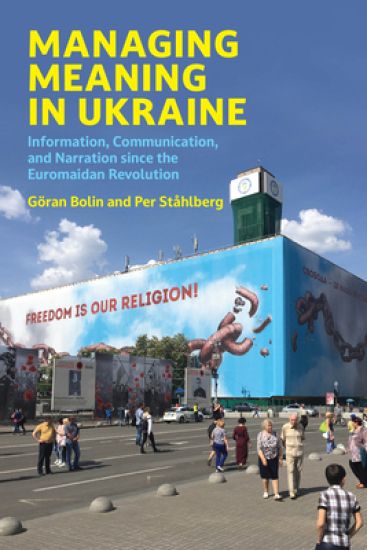
An in-depth look at Ukraine's attempts to shape how it is perceived by the rest of the world. During times of crisis, competing narratives are often advanced to define what is happening, and the stakes of information management by nations are high. In this timely book, G ran Bolin and Per St hlberg examine the fraught intersection of state politics, corporate business, and civil activism to understand the dynamics and importance of meaning management in Ukraine. Drawing on fieldwork inside the country, the authors discuss the forms, agents, and platforms within the complex political and communicative situation and how each articulated and acted upon perceptions of the propaganda threat. Bolin and St hlberg focus their analysis on the period between 2013 and 2022, when political tensions, commercial dynamics, and new communication technologies bred novel forms of information management. As they show, entities from governments and governmental administration to commercial actors, entrepreneurs, and activists formed new alliances in order to claim a stake in information policy. Bolin and St hlberg also explore how the various agents engaged in information management and strove to manage meaning in communication practice; the communicative tools they took advantage of; and the subsequent consequences for narrative constructions.
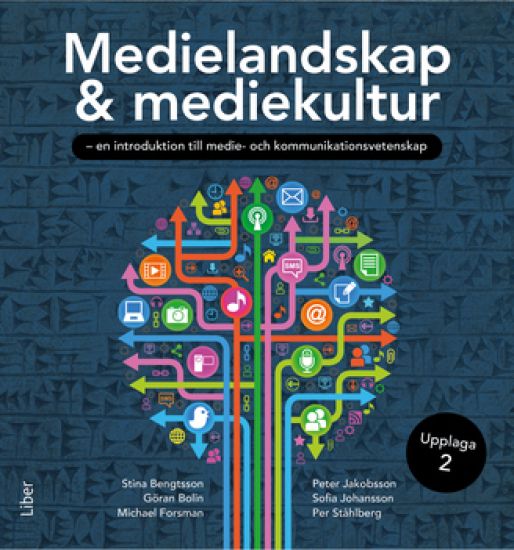
I dagens senmoderna samhällen är vi genomsyrade av medier – på arbetet, i skolan och på fritiden – och det påverkar oss i princip all vår vakna tid. Medielandskap & mediekultur ger oss en introduktion till det vetenskapliga studiet av mediernas roll i kultur och samhälle och tar upp en rad viktiga frågor. I boken diskuteras frågor som:Hur inverkar olika medier på oss som medborgare och kulturkonsumenter? Vad betyder det att vi ständigt är uppkopplade mot olika kommunikationsnätverk? Hur formas vi som individer i relation till de till synes oändliga utbud av information, nyheter och underhållning som medierna erbjuder? Hur kan appar och sociala nätverksmedier fungera som kommunikativa resurser i våra vardagsliv? Vad innebär den ökade betydelsen av data för politik, ekonomi och sociala relationer? Hur kan vi analysera mediernas alltmer komplexa och sofistikerade texter? Vilka analytiska modeller kan vi använda oss av för att förstå dessa frågor? Boken lämpar sig väl för grundkurser i medie- och kommunikationsvetenskap, journalistik och liknande ämnen, men kan även användas på andra humanistiska och samhällsvetenskapliga kurser. Den andra, reviderade upplagan har genomgått en allmän översyn och uppdatering av begrepp och modeller. Nya resonemang och diskussioner har adderats kring:ökade globala maktstrukturer kopplade till europeiska, amerikanska och kinesiska plattformsföretagmedier, postkolonialism och kosmopolitismförändrad konsumtion av nyheter onlineden ökade medialiseringen och datafieringen av vardagslivetdet ökade behovet av medielitteracitet och mediekunnighet. Sagt om boken"Det är dock inte enbart studenter som kan ha glädje och nytta av den, tvärtom torde boken vara både intressant och läsbar för en bred allmänhet. I dag är de flesta av oss genomsyrade av medier och behöver därför verktyg för att förstå vad denna nya mediala situation betyder för hur vi uppfattar oss själva och omvärlden – och inte minst hur vårt agerande påverkas. Sådana verktyg ger den här boken genom att på ett begripligt, men ändå gediget sätt diskutera olika perspektiv på vad medierna gör med oss och vad vi gör med dem. Här finns avsnitt om mediernas makt och ideologiproduktion, men också om hur vi som konsumenter använder dem för att skapa identitet och mening i våra liv. Dessutom ger den historiska genomgången djupare förståelse för medieteknikernas kognitiva betydelser". David Björklund, lektör, BTJ-häftet nr 7, 2017. Om författarnaStina Bengtsson, Göran Bolin, Michael Forsman, Sofia Johansson och Per Ståhlberg är lärare och forskare i medie- och kommunikationsvetenskap vid Södertörns högskola. Peter Jakobsson är verksam i samma ämne vid Uppsala universitet.
Based on an extended empirical research project, this book advances the theoretical, normative and practical understanding of civil society under the conditions of digital mediatization and in relation to a set of particular historical and geopolitical circumstances. Digital Media and the Dynamics of Civil Society adds to existing knowledge of the democratizing role of digital media in communication studies by carefully tracing the trajectory of the emergent communicative and representational practices of civil society in a pair of new European democracies – Estonia and Bulgaria – facing distinctive socio-cultural and political challenges. The book combines macro and micro perspectives to illuminate the activities of civic activist and civil society organizations in the new media environment taking into account the social and cultural developments characteristic of each country. Have digital media contributed to the constitution of a new public space fostering the vitality and democratic potency of civil society in countries where it has suffered historical obstacles? These chapters address this question by traversing the whole range between personal, group and societal beliefs, lived experiences and actions unfolding in a concrete region at a time when civic activists around the world are grappling to understand and harness the powers of digital communication.
Value is seldom discussed in its own right, though it is of utmost importance to our relations with media texts and cultural objects, as we constantly make judgements of various kinds with respect to them. This book focuses on how value - aesthetic, political and social and economic value - is produced in contemporary media and cultural production. Contending that value is not constituted by the essence of a thing, but is rather produced in social relations, through negotiations and justifications, Value and the Media discusses changes in the cultural industries over the past two decades, emphasising the rise of new, digital media, and the opportunities that these afford for the production and consumption of media texts and objects. Richly illustrated with examples from the UK, USA and Europe, this volume explores a range of media: both old mass media and new personal media, with a constant focus on the importance of both for our understanding of the changes that have occurred on the media landscape and their implications for the production of value. As such, this book will be of interest to social scientists and theorists working in the fields of cultural and media studies, popular culture, and consumption.
While the analysis of generations has been central in the sociological understanding of social change, the role of the media in this process has only been acknowledged as an important feature during the last couple of decades. Building on quantitative and qualitative comparative research, Media Generations analyses the role of the media in the formation of generational experience, identity and habitus, and how mediated nostalgia is an important part in the social formation of generations. Avoiding popular generational labelling Göran Bolin argues that the totality of the media landscape is a contextual structure that together with age and life-course factors help inform world-views and ways to relate to the wider society that guide the actions of media users. Media Generations demonstrates how - as different generations come of age at different moments in the mediatised historical process - they develop different media habits, but also make sense of the world differently, which informs their relations to older and younger generations. It also explores how this process of ‘generationing’, that is, the process in which a generation come into being as a self-perceived social identity, partly builds on specific kinds of nostalgia that establishes generational differences and distinctions. This book will be of special interest to those studying social change, collective memory, cultural identity and the role of the media in social experience.
Value is seldom discussed in its own right, though it is of utmost importance to our relations with media texts and cultural objects, as we constantly make judgements of various kinds with respect to them. This book focuses on how value - aesthetic, political and social and economic value - is produced in contemporary media and cultural production. Contending that value is not constituted by the essence of a thing, but is rather produced in social relations, through negotiations and justifications, Value and the Media discusses changes in the cultural industries over the past two decades, emphasising the rise of new, digital media, and the opportunities that these afford for the production and consumption of media texts and objects. Richly illustrated with examples from the UK, USA and Europe, this volume explores a range of media: both old mass media and new personal media, with a constant focus on the importance of both for our understanding of the changes that have occurred on the media landscape and their implications for the production of value. As such, this book will be of interest to social scientists and theorists working in the fields of cultural and media studies, popular culture, and consumption.