Kirjojen hintavertailu – 12 903 725 kirjaa ja 27 kauppaa

Kirjailija

Göran Roos

Kirjat ja teokset yhdessä paikassa: 9 kirjaa, julkaisuja vuosilta 1998–2018, suosituimpiin kuuluu Technology-Driven Productivity Improvements and the Future of Work. Vertaile teosten hintoja ja tarkista saatavuus suomalaisista kirjakaupoista.

Nimi esiintyy myös muodoissa: Goran Roos

9 kirjaa

Kirjojen julkaisuvuodet: 1998–2018.

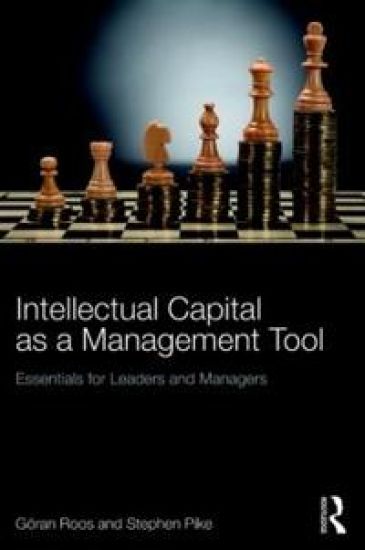
Intellectual Capital as a Management Tool

Intellectual Capital as a Management Tool

Göran Roos; Stephen Pike

Routledge
2018
nidottu
As technology evolves, it can be difficult to maintain a competitive edge. The management of intangible resources like competence, relationships, brands, processes and systems becomes increasingly important in such a world. Intellectual Capital as a Management Tool reviews the evidence to demonstrate where the intellectual capital view of the firm has made major contributions. The book introduces an updated version of the Intellectual Capital Navigator as an operational tool to help managers maximise value generation from an organisations portfolio of diverse resources. This tool is the only tool that enables organisations to use the resource based view of the firm in an operational way. The book also discusses future developments of the Intellectual Capital Navigator, increasing its precision around the financial aspects of the organisation. The book has broad application across all types of organisations and in all operating environments and is vital reading for managers who want to understand and exploit the importance of managing intellectual capital.
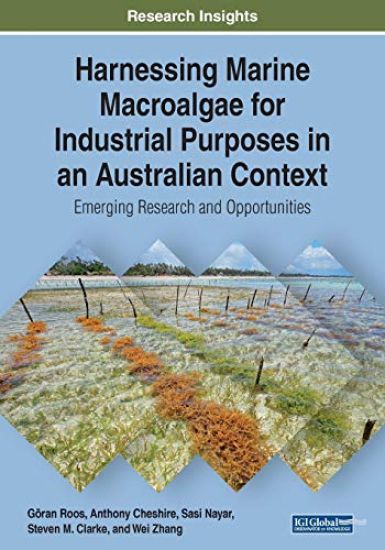
Harnessing Marine Macroalgae for Industrial Purposes in an Australian Context: Emerging Research and Opportunities

Harnessing Marine Macroalgae for Industrial Purposes in an Australian Context: Emerging Research and Opportunities

Göran Roos; Anthony Cheshire; Sasi Nayar; Steven M. Clarke; Wei Zhang

IGI Global
2018
nidottu
In today's environmental and economic climate, it is important for businesses to drive development towards sustainable and zero-waste industries, responsibly leveraging renewable low-cost inputs to generate high-value outputs for the global market. Marine macroalgae presents modern businesses with opportunities for the development of a new and vibrant industry sector that largely fulfills these requirements. Harnessing Marine Macroalgae for Industrial Purposes in an Australian Context: Emerging Research and Opportunities provides emerging perspectives on the theoretical and practical aspects of developing a new business sector within the bio-marine industry. Featuring coverage on a broad range of topics such as competitive advantage, food industry, and production systems, this publication is ideally designed for environmental researchers, business students, engineers, and academicians seeking current research on the economics, regulation, and policy in supporting the development of the macroalgal industry sector in the global market.
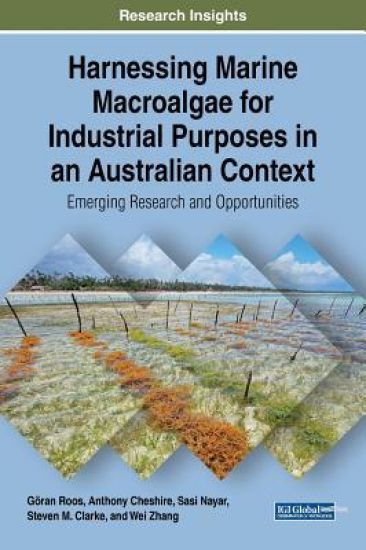
Harnessing Marine Macroalgae for Industrial Purposes in an Australian Context

Harnessing Marine Macroalgae for Industrial Purposes in an Australian Context

Göran Roos; Anthony Cheshire; Sasi Nayar; Steven M. Clarke; Wei Zhang

IGI Global
2018
sidottu
In today’s environmental and economic climate, it is important for businesses to drive development towards sustainable and zero-waste industries, responsibly leveraging renewable low-cost inputs to generate high-value outputs for the global market. Marine macroalgae presents modern businesses with opportunities for the development of a new and vibrant industry sector that largely fulfills these requirements. Harnessing Marine Macroalgae for Industrial Purposes in an Australian Context: Emerging Research and Opportunities provides emerging perspectives on the theoretical and practical aspects of developing a new business sector within the bio-marine industry. Featuring coverage on a broad range of topics such as competitive advantage, food industry, and production systems, this publication is ideally designed for environmental researchers, business students, engineers, and academicians seeking current research on the economics, regulation, and policy in supporting the development of the macroalgal industry sector in the global market.
Intellectual Capital as a Management Tool

Intellectual Capital as a Management Tool

Göran Roos; Stephen Pike

Routledge
2018
sidottu
As technology evolves, it can be difficult to maintain a competitive edge. The management of intangible resources like competence, relationships, brands, processes and systems becomes increasingly important in such a world. Intellectual Capital as a Management Tool reviews the evidence to demonstrate where the intellectual capital view of the firm has made major contributions. The book introduces an updated version of the Intellectual Capital Navigator as an operational tool to help managers maximise value generation from an organisations portfolio of diverse resources. This tool is the only tool that enables organisations to use the resource based view of the firm in an operational way. The book also discusses future developments of the Intellectual Capital Navigator, increasing its precision around the financial aspects of the organisation. The book has broad application across all types of organisations and in all operating environments and is vital reading for managers who want to understand and exploit the importance of managing intellectual capital.
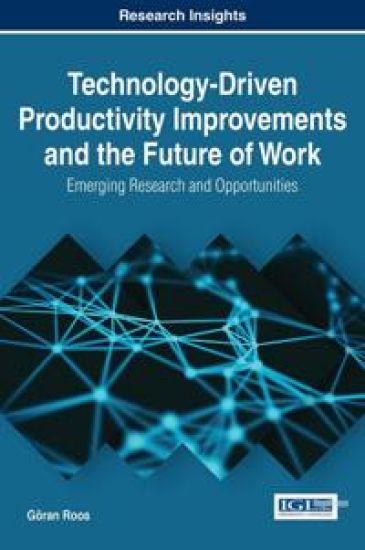
Technology-Driven Productivity Improvements and the Future of Work
While technological developments are evolving at a rapid pace, employee workplace skills are falling behind. This rate of change will continue to accelerate, and it is the responsibility of businesses to provide their employees with a solid foundation for keeping pace with the technology surrounding them. Technology-Driven Productivity Improvements and the Future of Work: Emerging Research and Opportunities provides a comprehensive discussion of the latest strategies and methods for creating harmony between the workplace population and their technological environments. Featuring coverage on relevant topics such as STEM skills, economic complexities, and social programs, this is an informative resource for all business owners, professionals, practitioners, and researchers who are interested in discovering new methods that will enable humans and technology to work together.
Managing Intellectual Capital in Practice

Managing Intellectual Capital in Practice

Göran Roos; Stephen Pike; Lisa Fernstrom

Routledge
2016
sidottu
This book is the essential guide for managers wishing to implement the benefits of Intellectual Capital thinking in their companies or divisions. It serves as an easily accessible introduction to the subject area for the novice, giving the gist of what it is about and how it has developed, but above all it gives hands-on instructions on how to incorporate intellectual capital thinking in everyday business and how to use the tools provided for the management and measurement of intangible resources. Throughout the main part of the book, three different cases in separate boxes run in parallel with the body text. These are introduced in chapter 2 and illustrate how the tools are to be used, depending on what type of company wishes to implement these ideas. The three case companies are characterised as a manufacturing company, an R&D organisation and a network company. Smaller case stories about well-known global companies are also interspersed throughout the book.
Managing Intellectual Capital in Practice

Managing Intellectual Capital in Practice

Göran Roos; Stephen Pike; Lisa Fernstrom

Butterworth-Heinemann Ltd
2006
nidottu
This book is the essential guide for managers wishing to implement the benefits of Intellectual Capital thinking in their companies or divisions. It serves as an easily accessible introduction to the subject area for the novice, giving the gist of what it is about and how it has developed, but above all it gives hands-on instructions on how to incorporate intellectual capital thinking in everyday business and how to use the tools provided for the management and measurement of intangible resources. Throughout the main part of the book, three different cases in separate boxes run in parallel with the body text. These are introduced in chapter 2 and illustrate how the tools are to be used, depending on what type of company wishes to implement these ideas. The three case companies are characterised as a manufacturing company, an R&D organisation and a network company. Smaller case stories about well-known global companies are also interspersed throughout the book.
Intellectual Capital

Intellectual Capital

Johan (EDT) Roos; Goran Roos; Nicola Carlo Dragonetti

New York University Press
1998
sidottu
Successful companies rely on traditional factors of production for their survival. Yet the most important and sustainable sources of competitive advantage-knowledge, customer relations, supply-on-demand, micromanagement, and other forms of "intellectual capital"-often don't even appear on many companies' reporting systems. The results of this lack of attention to intellectual capital can be disastrous for companies and their stockholders. Providing an organizational system that helps managers maximize the flow of intellectual capital in their companies, Intellectual Capital presents the insights gained by leading experts from the practice, research, and consulting side of business management. Starting with a definition of intellectual capital and it main components, the book offers a step-by-step "process model" to rooting out corporate inefficiency at all levels. Illustrated with vivid case studies, the book also covers the latest thinking and practices of the "second generation" of intellectual capital practices, from consolidating intellectual capital measures into a single "IC Index" to linking them with shareholder value creation systems.
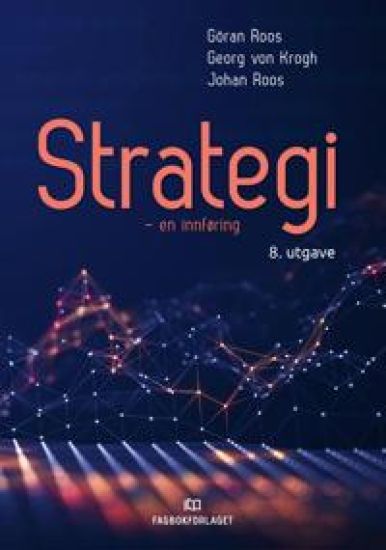
Strategi

Strategi

Göran Roos; Georg von Krogh; Johan Roos

Fagbokforlaget
nidottu
Strategi er viktig for enhver virksomhet, enten man driver kommersielt eller ikke. Denne boken gir en grunnleggende forståelse av strategifaget både på teoretisk og praktisk nivå. Den gir et rammeverk for å utvikle virksomhetens strategi og viser flere måter å angripe strategiarbeidet i organisasjoner på. Boken presenterer den klassiske strategiprosessen fra utforming av visjon, forretningsidé og mål, via ekstern og intern analyse til valg av strategi, iverksettelse og evaluering av yteevne, men også alternative tilnærminger til strategiformulering og iverksettelse. Faget har gjennomgått vesentlige endringer de siste årene, og denne utgaven innebærer en betydelig revidering og inkluderer nyere grep innen strategi. Boken diskuterer spesifikt den effekten covid-19-pandemien, digitalisering, det grønne skiftet og utviklingen av den multipolare verden har på samfunnet og internasjonale relasjoner, menneskelig atferd, organisasjoner, strategier, forretningsmodeller og strategiprosessen. Boken retter seg mot ledere som ønsker en faglig oppdatering og referansekilde, og mot studenter som ønsker eller trenger en grunnleggende introduksjon til strategifaget og til strategiske nøkkelbegreper. Dr. Göran Roos er daglig leder i konsulentselskapet Intellectual Capital Services i London og har jobbet som konsulent i over 50 land. Han innehar eller har innehatt akademiske posisjoner ved universiteter i syv land og sitter i redaksjonsrådet i flere internasjonale akademiske tidsskrifter og i bedriftsstyrer. Han er også medlem av Australian Academy of Technological Sciences and Engineering (ATSE) og Kungliga Ingenjörsvetenskapsakademien (IVA). Dr. Georg von Krogh er professor ved ETH Zürich (Swiss Federal Institute of Technology). Han leder også det internasjonale rådgivningsutvalget ved Norges forskningsråd og er aktiv konsulent i Europa og Nord-Amerika. Dr. Johan Roos er Executive Director for Vienna Center for Management Innovation ved Peter Drucker Society Europe og presidentrådgiver ved Hult International Business School. Han har ledet flere handelshøyskoler, grunnlagt sveitsiske Imagination Lab Foundation, er medoppfinner av LEGO Serious Play® og er medlem av Akademiet for de Tekniske Videnskaper i Danmark.