
Kirjojen hintavertailu – 12 859 828 kirjaa ja 27 kauppaa

Kirjailija

Gordon Hahn

Kirjat ja teokset yhdessä paikassa: 4 kirjaa, julkaisuja vuosilta 2001–2026, suosituimpiin kuuluu Så mäts socialt hållbart värdeskapande -. Vertaile teosten hintoja ja tarkista saatavuus suomalaisista kirjakaupoista.

4 kirjaa

Kirjojen julkaisuvuodet: 2001–2026.

Så mäts socialt hållbart värdeskapande -

Så mäts socialt hållbart värdeskapande -

Erik Jannesson; Stina Liljekvist; Tommy Borglund; Gordon Hahn

Studentlitteratur AB
2026
kartonkisidos
Förväntningarna och kraven ökar på att organisationer ska säkerställa en verksamhet och affärsmodell som bidrar till ett hållbart värdeskapande. Det gäller oavsett om det handlar om organisationer i näringslivet, offentlig sektor, civilsamhället eller akademin. Att göra detta med utgångspunkt i att realisera affärsnytta genom skapandet av samhälls­nytta – så kallad shared value – har därmed kommit att bli allt viktigare, och gärna då med utgångs­punkt i sektors­­övergripande samverkan. Med hjälp av konceptet social return on investment och den så kallade värde­­­skapandekedjan går det att mäta, följa upp och utvärdera hur verksamheten skapar konkreta värden – socialt, miljömässigt och ekonomiskt. Värdeskapande­kedjan bidrar till att skapa underlag som vägleder beslutsfattare mot en ökad resurseffektivitet och ett hållbart värdeskapande. I boken lotsas läsaren genom beskrivningar av värdeskapandekedjans sex komponenter – resurser, aktiviteter, prestationer, effekter, påverkan och värdeskapande – och olika mätverktyg som de är kopplade till. Dessutom presenteras praktiska exempel från olika organisationer, och konkreta tips utifrån de olika delarna av värdeskapandekedjan. Boken ger insikter om relevanta sätt att mäta effekter och värdeskapande, men har även ett problematiserande perspektiv på mätning som sådan.
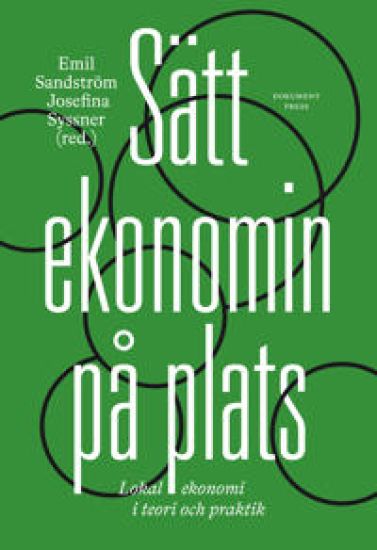
Sätt ekonomin på plats: Lokal ekonomi i teori och praktik

Sätt ekonomin på plats: Lokal ekonomi i teori och praktik

Ulla Herlitz; Björn Forsberg; Gordon Hahn; Jenny Helin; Matilda Dahl; Hannes Anagrius; Ylva Lundkvist Fridh; Erik Melin; Johan Gaddefors; Annika Lauren; Leif Tyrén; Ewa Engdahl; Rebecka Hansson; Patrik Cras

Dokument Press
2025
sidottu
Ekonomi handlar i grunden om att hushålla med knappa resurser – en fråga som varit central genom hela det moder- na samhällets historia. Vad som räknats som god ekonomi har däremot skiftat över tid. I Sätt ekonomin på plats utforskar forskare och praktiker lokal ekonomi både som kunskapsfält och som ett växande samhällsfenomen. Boken visar hur lokal ekonomi kan fungera som en drivkraft för hållbar samhällsförändring och belyser de idéer och det handlande som utvecklas i relation till den lokala ekonomin. I bokens texter diskuteras också hur lokalekonomiska perspektiv kan komplettera andra ekonomiska idétraditioner. Sätt ekonomin på plats har sin bakgrund i den nationella konfer- ensen Lokalekonomidagarna, som har arrangerats sedan år 2000. Den är en uppföljare till Lokal ekonomi för en hållbar tillväxt (2005). Ur innehållet Lokalekonomisk analys Den lokala ekonomins smörjmedel Kapitalförsörjning i den lokala ekonomin Allmänningens återkomst i den lokala ekonomin Ideella aktiebolag Lokalekonomi som kunskaps- och forskningsfält Hållbar lokal ekonomi genom kooperativa strukturer Lokal rådighet och lokal ekonomi Lokalekonomiska brytpunkter.
Russia's Revolution from Above, 1985-2000
The fall of the Soviet communist regime in 1991 offers a challenging contrast to other instances of democratic transition and change in the last decades of the twentieth century. The 1991 revolution was neither a peaceful revolution from below as occurred in Czechoslovakia nor a negotiated transition to democracy like those in Poland, Hungary, or Latin America. It was not primarily the result of social modernization, the rise of a new middle class, or of national liberation movements in the non-Russian union republics. Instead, as Gordon Hahn argues, the Russian transformation was a bureaucrat-led, state-based revolution managed by a group of Communist Party functionaries who won control over the Russian Republic (RSFSR) in the mid-1990s. Hahn describes how opportunistic Party and state officials, led by Boris Yeltsin, defected from the Gorbachev camp and proceeded in 1990-91 to dismantle the institutions that bound state and party. These revolutionaries from above seized control of political, economic, natural and human resources, and then separated the party apparatus from state institutions on Russian Republic territory. With the failed August 1991 hard-line coup, Yeltsin banned the Communist Party and decreed that all Union state organs, including the KGB and military were under RSFSR control. In Hahn's account, this mode of revolutionary change from above explains the troubled development of democracy in Russia and the former Soviet republics. Hahn shows how limited mobilization of the masses stunted the development of civil societies and the formation of political parties and trade unions with real grass roots. The result is a weak society unable to nudge the state to concentrate on institutional reforms society needs for the development of a free polity and economy. Russia's Revolution from Above goes far in correcting the historical record and reconceptualizing the Soviet transformation. It should be read by historians, economists, political scientists, and Russia area scholars.
Russia's Revolution from Above, 1985-2000

Russia's Revolution from Above, 1985-2000

Gordon Hahn

Transaction Publishers
2001
sidottu
The fall of the Soviet communist regime in 1991 offers a challenging contrast to other instances of democratic transition and change in the last decades of the twentieth century. The 1991 revolution was neither a peaceful revolution from below as occurred in Czechoslovakia nor a negotiated transition to democracy like those in Poland, Hungary, or Latin America. It was not primarily the result of social modernization, the rise of a new middle class, or of national liberation movements in the non-Russian union republics. Instead, as Gordon Hahn argues, the Russian transformation was a bureaucrat-led, state-based revolution managed by a group of Communist Party functionaries who won control over the Russian Republic (RSFSR) in the mid-1990s. Hahn describes how opportunistic Party and state officials, led by Boris Yeltsin, defected from the Gorbachev camp and proceeded in 1990-91 to dismantle the institutions that bound state and party. These revolutionaries from above seized control of political, economic, natural and human resources, and then separated the party apparatus from state institutions on Russian Republic territory. With the failed August 1991 hard-line coup, Yeltsin banned the Communist Party and decreed that all Union state organs, including the KGB and military were under RSFSR control. In Hahn's account, this mode of revolutionary change from above explains the troubled development of democracy in Russia and the former Soviet republics. Hahn shows how limited mobilization of the masses stunted the development of civil societies and the formation of political parties and trade unions with real grass roots. The result is a weak society unable to nudge the state to concentrate on institutional reforms society needs for the development of a free polity and economy. Russia's Revolution from Above goes far in correcting the historical record and reconceptualizing the Soviet transformation. It should be read by historians, economists, political scientists, and Russia area scholars.