Kirjojen hintavertailu – 12 859 828 kirjaa ja 27 kauppaa

Kirjailija

Gordon Mathews

Kirjat ja teokset yhdessä paikassa: 10 kirjaa, julkaisuja vuosilta 1996–2023, suosituimpiin kuuluu Hong Kong, China. Vertaile teosten hintoja ja tarkista saatavuus suomalaisista kirjakaupoista.

10 kirjaa

Kirjojen julkaisuvuodet: 1996–2023.

Life After Death Today in the United States, Japan, and China

Life After Death Today in the United States, Japan, and China

Gordon Mathews; Yang Yang; Miu Ying Kwong

TAYLOR FRANCIS LTD
2023
sidottu
This book is about contemporary senses of life after death in the United States, Japan, and China. By collecting and examining hundreds of interviews with people from all walks of life in these three societies, the book presents and compares personally held beliefs, experiences, and interactions with the concept of life after death. Three major aspects covered by the book Include, but are certainly not limited to, the enduring tradition of Japanese ancestor veneration, China’s transition from state-sponsored materialism to the increasing belief in some form of afterlife, as well as the diversity in senses of, or disbelief in, life after death in the United States. Through these diverse first-hand testimonies the book reveals that underlying these changes in each society there is a shift from collective to individual belief, with people developing their own visions of what may, or may not, happen after death. This book will be valuable reading for students of Anthropology as well as Religious, Cultural, Asian and American Studies. It will also be an impactful resource for professionals such as doctors, nurses, and hospice workers.

Life After Death Today in the United States, Japan, and China

Life After Death Today in the United States, Japan, and China

Gordon Mathews; Yang Yang; Miu Ying Kwong

TAYLOR FRANCIS LTD
2023
nidottu
This book is about contemporary senses of life after death in the United States, Japan, and China. By collecting and examining hundreds of interviews with people from all walks of life in these three societies, the book presents and compares personally held beliefs, experiences, and interactions with the concept of life after death. Three major aspects covered by the book Include, but are certainly not limited to, the enduring tradition of Japanese ancestor veneration, China’s transition from state-sponsored materialism to the increasing belief in some form of afterlife, as well as the diversity in senses of, or disbelief in, life after death in the United States. Through these diverse first-hand testimonies the book reveals that underlying these changes in each society there is a shift from collective to individual belief, with people developing their own visions of what may, or may not, happen after death. This book will be valuable reading for students of Anthropology as well as Religious, Cultural, Asian and American Studies. It will also be an impactful resource for professionals such as doctors, nurses, and hospice workers.
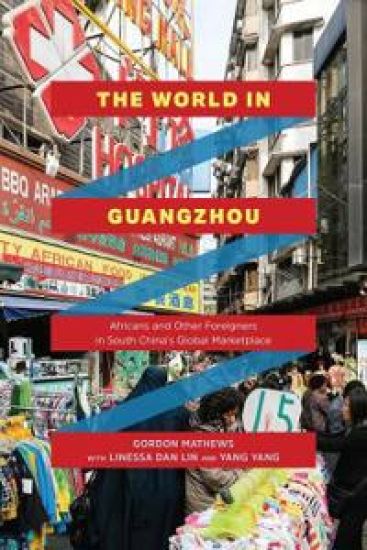
The World in Guangzhou

The World in Guangzhou

Gordon Mathews; Linessa Dan Lin; Yang Yang

University of Chicago Press
2017
nidottu
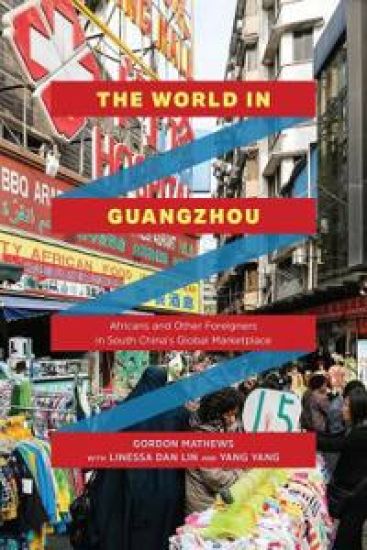
Mere decades ago, the population of Guangzhou was almost wholly Chinese. Today, it is a truly global city, a place where people from around the world go to make new lives, find themselves, or further their careers. A large number of those migrants are small-scale traders from Africa who deal in Chinese goods often knock-offs or copies of high-end branded items to send back to their home countries. In The World in Guangzhou, Gordon Mathews explores the question of how the city became such a center of "low-end" globalization and shows what we can learn from that experience similar transformations elsewhere in the world. Through detailed ethnographic portraits, Mathews reveals a world of globalization based on informality, reputation, and trust rather than on formal contracts. How, he asks, can such informal relationships emerge between two groups Chinese and Sub-Saharan Africans that don't share a common language, culture, or religion? And what happens when Africans move beyond their status as temporary residents and begin to put down roots and establish families? Full of unforgettable characters, The World in Guangzhou presents a compelling account of globalization at ground level and offers a look into the future of urban life as transnational connections continue to remake cities around the world.
The World in Guangzhou

The World in Guangzhou

Gordon Mathews; Linessa Dan Lin; Yang Yang

University of Chicago Press
2017
sidottu
Mere decades ago, the population of Guangzhou was almost wholly Chinese. Today, it is a truly global city, a place where people from around the world go to make new lives, find themselves, or further their careers. A large number of those migrants are small-scale traders from Africa who deal in Chinese goods often knock-offs or copies of high-end branded items to send back to their home countries. In The World in Guangzhou, Gordon Mathews explores the question of how the city became such a center of "low-end" globalization and shows what we can learn from that experience similar transformations elsewhere in the world. Through detailed ethnographic portraits, Mathews reveals a world of globalization based on informality, reputation, and trust rather than on formal contracts. How, he asks, can such informal relationships emerge between two groups Chinese and Sub-Saharan Africans that don't share a common language, culture, or religion? And what happens when Africans move beyond their status as temporary residents and begin to put down roots and establish families? Full of unforgettable characters, The World in Guangzhou presents a compelling account of globalization at ground level and offers a look into the future of urban life as transnational connections continue to remake cities around the world.
Ghetto at the Center of the World

Ghetto at the Center of the World

Gordon Mathews

University of Chicago Press
2011
nidottu
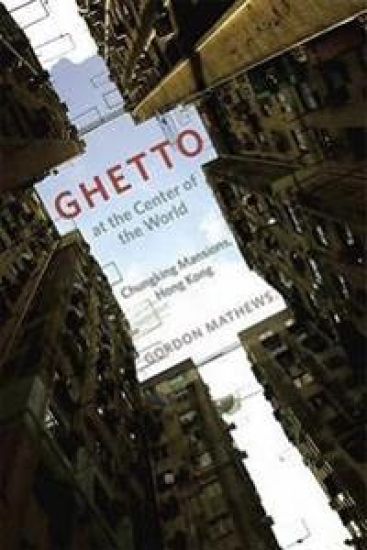
There is nowhere else in the world quite like Chungking Mansions, a dilapidated seventeen-story commercial and residential structure in the heart of Hong Kong's tourist district. A remarkably motley group of people call the building home; Pakistani phone stall operators, Chinese guesthouse workers, Nepalese heroin addicts, Indonesian sex workers, and traders and asylum seekers from all over Asia and Africa live and work there - even backpacking tourists rent rooms. In short, it is possibly the most globalized spot on the planet. But as "Ghetto at the Center of the World" shows us, a trip to Chungking Mansions reveals a far less glamorous side of globalization. A world away from the gleaming headquarters of multinational corporations, Chungking Mansions is emblematic of the way globalization actually works for most of the world's people. Gordon Mathews' intimate portrayal of the building's polyethnic residents lays bare their intricate connections to the international circulation of goods, money, and ideas. We come to understand the day-to-day realities of globalization through the stories of entrepreneurs from Africa carting cell phones in their luggage to sell back home and temporary workers from South Asia struggling to earn money to bring to their families. And we see that this so-called ghetto - which inspires fear in many of Hong Kong's other residents, despite its low crime rate-is not a place of darkness and desperation but a beacon of hope. Gordon Mathews' compendium of riveting stories enthralls and instructs in equal measure, making Ghetto at the Center of the World not just a fascinating tour of a singular place but also a peek into the future of life on our shrinking planet.
Hong Kong, China

Hong Kong, China

Gordon Mathews; Eric Ma; Tai-Lok Lui

Routledge
2008
nidottu
The idea of ‘national identity’ is an ambiguous one for Hong Kong. Returned to the national embrace of China on 1 July 1997 after 150 years as a British colony, the concept of national identity and what it means to "belong to a nation" is a matter of great tension and contestation in Hong Kong. Written by three academic specialists on Hong Kong cultural identity, social history, and mass media, this book explores the processes through which the people of Hong Kong are "learning to belong to a nation" by examining their relationship with the Chinese nation and state in the recent past, present, and future. It considers the complex meanings of and debates over national identity in Hong Kong over the past fifty years and especially during the last decade following Hong Kong’s return to China. It also places these arguments within a larger, global perspective, to ask what Hong Kong can teach us about national identity and its potential transformations. Multidisciplinary in its approach, Hong Kong and China explores national identity in terms of theory, mass media, survey date, ethnography and history, and will appeal to students and scholars of Chinese history, cultural studies, and nationalism.
Hong Kong, China

Hong Kong, China

Gordon Mathews; Eric Ma; Tai-Lok Lui

Routledge
2007
sidottu
The idea of ‘national identity’ is an ambiguous one for Hong Kong. Returned to the national embrace of China on 1 July 1997 after 150 years as a British colony, the concept of national identity and what it means to "belong to a nation" is a matter of great tension and contestation in Hong Kong. Written by three academic specialists on Hong Kong cultural identity, social history, and mass media, this book explores the processes through which the people of Hong Kong are "learning to belong to a nation" by examining their relationship with the Chinese nation and state in the recent past, present, and future. It considers the complex meanings of and debates over national identity in Hong Kong over the past fifty years and especially during the last decade following Hong Kong’s return to China. It also places these arguments within a larger, global perspective, to ask what Hong Kong can teach us about national identity and its potential transformations. Multidisciplinary in its approach, Hong Kong and China explores national identity in terms of theory, mass media, survey date, ethnography and history, and will appeal to students and scholars of Chinese history, cultural studies, and nationalism.
Global Culture/Individual Identity

Global Culture/Individual Identity

Gordon Mathews

Routledge
2000
nidottu
Most people still think of themselves as belonging to a particular culture. Yet today, many of us who live in affluent societies choose aspects of our lives from a global cultural supermarket, whether in terms of food, the arts or spiritual beliefs. So if roots are becoming simply one more consumer choice, can we still claim to possess a fundamental cultural identity? Global Culture/Individual Identity focuses on three groups for whom the tension between a particular national culture and the global cultural supermarket is especially acute: Japanese artists, American religious seekers and Hong Kong intellectuals after the handover to China. These ethnographic case studies form the basis for a theory of culture which we can all see reflected in our own lives. Gordon Mathews opens up the complex and debated topics of globalization, culture and identity in a clear and lively style.
Global Culture/Individual Identity

Global Culture/Individual Identity

Gordon Mathews

Routledge
2000
sidottu
Most people still think of themselves as belonging to a particular culture. Yet today, many of us who live in affluent societies choose aspects of our lives from a global cultural supermarket, whether in terms of food, the arts or spiritual beliefs. So if roots are becoming simply one more consumer choice, can we still claim to possess a fundamental cultural identity? Global Culture/Individual Identity focuses on three groups for whom the tension between a particular national culture and the global cultural supermarket is especially acute: Japanese artists, American religious seekers and Hong Kong intellectuals after the handover to China. These ethnographic case studies form the basis for a theory of culture which we can all see reflected in our own lives. Gordon Mathews opens up the complex and debated topics of globalization, culture and identity in a clear and lively style.
What Makes Life Worth Living?

What Makes Life Worth Living?

Gordon Mathews

University of California Press
1996
pokkari
Here is an original and provocative anthropological approach to the fundamental philosophical question of what makes life worth living. Gordon Mathews considers this perennial issue by examining nine pairs of similarly situated individuals in the United States and Japan. In the course of exploring how people from these two cultures find meaning in their daily lives, he illuminates a vast and intriguing range of ideas about work and love, religion, creativity, and self-realization. Mathews explores these topics by means of the Japanese term ikigai, "that which most makes one's life seem worth living." American English has no equivalent, but ikigai applies not only to Japanese lives but to American lives as well. Ikigai is what, day after day and year after year, each of us most essentially lives for. Through the life stories of those he interviews, Mathews analyzes the ways Japanese and American lives have been affected by social roles and cultural vocabularies. As we approach the end of the century, the author's investigation into how the inhabitants of the world's two largest economic superpowers make sense of their lives brings a vital new understanding to our skeptical age.