Kirjojen hintavertailu – 12 859 829 kirjaa ja 27 kauppaa

Kirjailija

Gordon Stewart

Kirjat ja teokset yhdessä paikassa: 12 kirjaa, julkaisuja vuosilta 1995–2024, suosituimpiin kuuluu Etudes for Piano Teachers. Vertaile teosten hintoja ja tarkista saatavuus suomalaisista kirjakaupoista.

12 kirjaa

Kirjojen julkaisuvuodet: 1995–2024.

Spymaster

Spymaster

Gordon Stewart

De Gruyter
2024
sidottu
Germany was the epicenter of the Cold War. Across the Iron Curtain, hundreds of thousands of soldiers faced each other, and if World War III were to break out, contemporaries feared, surely it would happen here. The country’s frontline status made it an El Dorado for spies, who gathered information on military targets, penetrated political parties, and trained partisans for stay-behind operations. For the Americans, the Central Intelligence Agency (CIA) came to take the lead in this silent – and sometimes not so silent – contest. In the heyday of the Cold War, the agency’s German station employed nearly two thousand officers – in addition to countless spies and informants. Ultimately, this covert empire reported to the CIA station chief in West Germany and his deputy. And for many years, either of those positions was held by Gordon Matthews Stewart. Gordon Stewart was well prepared for this assignment. He studied German history and literature during the 1930s and lived in Munich and Hamburg as a visiting student. Here, he personally witnessed the Nazi takeover, even catching a glimpse of Adolf Hitler at one of his notorious rallies. When the United States entered the war in 1941, the newly established Office of Strategic Services (OSS) recruited him as a specialist on German affairs. In the summer of 1945, he arrived in Germany with an OSS detachment. Eventually, the OSS morphed into the CIA, and Gordon Stewart would run the agency’s espionage organization in Germany for some twenty years. From CIA headquarters in Heidelberg, Karlsruhe, Frankfurt, and eventually, Bonn, Mr. Stewart directed all intelligence operations in central Europe. Initially, he hunted down Nazi war criminals, but the Cold War compelled him to bend his efforts toward the Soviet bloc. During the 1950s, Mr. Stewart directed espionage operations against East Germany, organized the training of Ukrainian partisans at U. S. bases in Bavaria, and participated in a scheme to dig a tunnel into East Berlin to eavesdrop on Soviet and East German communications. He also recruited and handled sources inside the West German government, including the chief of the Bundesnachrichtendienst, Reinhard Gehlen; the highest-ranking West German military officer, General Adolf Heusinger; and top policy-makers of the Christian and social democratic parties. Mr. Stewart’s memoirs, introduced by renowned intelligence scholar Thomas Boghardt, offer not only a fascinating look inside the CIA’s largest overseas station; they also tell the story of a deeply conscientious and highly accomplished intelligence officer, whose experience, intellect, and moral compass shaped American policy toward Germany and Europe during the turbulent years of the early Cold War.

The Cloak and Dollar War

The Cloak and Dollar War

Gordon Stewart

Hassell Street Press
2021
sidottu
This work has been selected by scholars as being culturally important and is part of the knowledge base of civilization as we know it. This work is in the public domain in the United States of America, and possibly other nations. Within the United States, you may freely copy and distribute this work, as no entity (individual or corporate) has a copyright on the body of the work. Scholars believe, and we concur, that this work is important enough to be preserved, reproduced, and made generally available to the public. To ensure a quality reading experience, this work has been proofread and republished using a format that seamlessly blends the original graphical elements with text in an easy-to-read typeface. We appreciate your support of the preservation process, and thank you for being an important part of keeping this knowledge alive and relevant.
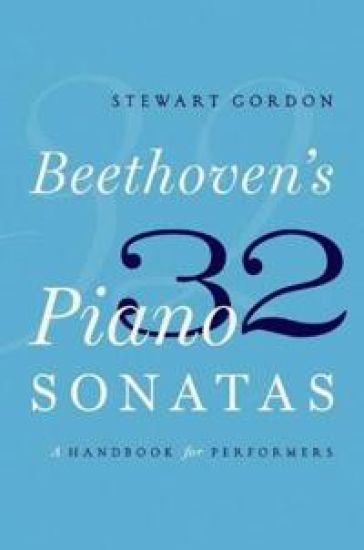
Beethoven's 32 Piano Sonatas

Beethoven's 32 Piano Sonatas

Gordon Stewart

Oxford University Press Inc
2017
nidottu
The thirty-two Piano Sonatas of Ludwig van Beethoven form one of the most important segments of piano literature. In this accessible, compact, and comprehensive guidebook, renowned performer and pedagogue Stewart Gordon presents the pianist with historical insights and practical instructional tools for interpreting the pieces. In the opening chapters of Beethoven's 32 Piano Sonatas, Gordon illuminates the essential historical context behind common performance problems, discussing Beethoven's own pianos and how they relate to compositional style and demands in the pieces, and addressing textual issues, performance practices, and nuances of the composer's manuscript inscriptions. In outlining patterns of structure, sonority, keyboard technique, and emotional meaning evident across Beethoven's compositional development, Gordon provides important background and technical information key to understanding his works in context. Part II of the book presents each sonata in an outline-chart format, giving the student and teacher ready access to essential information, interpretive choices, and technical challenges in the individual works, measure by measure, all in one handy reference source. In consideration of the broad diversity of today's Beethoven interpreters, Gordon avoids one-size-fits-all solutions or giving undue weight to his own tastes and preferences. Instead, he puts the choices in the hands of the performers, enabling them to create their own personal relationship with the music and a more powerful performance.
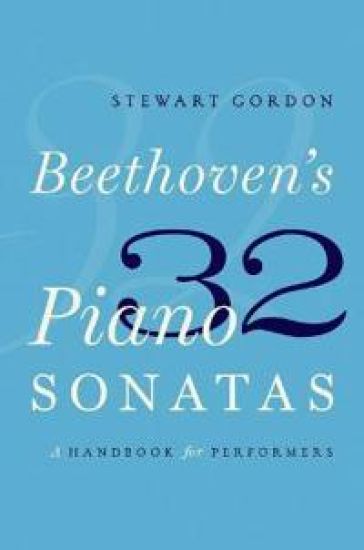
Beethoven's 32 Piano Sonatas

Beethoven's 32 Piano Sonatas

Gordon Stewart

Oxford University Press Inc
2017
sidottu
The thirty-two Piano Sonatas of Ludwig van Beethoven form one of the most important segments of piano literature. In this accessible, compact, and comprehensive guidebook, renowned performer and pedagogue Stewart Gordon presents the pianist with historical insights and practical instructional tools for interpreting the pieces. In the opening chapters of Beethoven's 32 Piano Sonatas, Gordon illuminates the essential historical context behind common performance problems, discussing Beethoven's own pianos and how they relate to compositional style and demands in the pieces, and addressing textual issues, performance practices, and nuances of the composer's manuscript inscriptions. In outlining patterns of structure, sonority, keyboard technique, and emotional meaning evident across Beethoven's compositional development, Gordon provides important background and technical information key to understanding his works in context. Part II of the book presents each sonata in an outline-chart format, giving the student and teacher ready access to essential information, interpretive choices, and technical challenges in the individual works, measure by measure, all in one handy reference source. In consideration of the broad diversity of today's Beethoven interpreters, Gordon avoids one-size-fits-all solutions or giving undue weight to his own tastes and preferences. Instead, he puts the choices in the hands of the performers, enabling them to create their own personal relationship with the music and a more powerful performance.
HIV and AIDS in Schools

HIV and AIDS in Schools

Barrie Craven; Pauline Dixon; Gordon Stewart; James Tooley

Institute of Economic Affairs
2001
sidottu
HIV and Aids teaching is compulsory in British schools but the content is not prescribed. Should teaching in such a difficult field, where there are disputes among experts, be left to secondary school teachers with no specialist knowledge? And is it right that the subject should be compulsory? These awkward issues are confronted in this controversial paper which examines the materials being used by schools in HIV/Aids teaching and how teachers are approaching the subject. The authors conclude that, because of material provided by pressure groups, teachers are exaggerating the Aids problem and failing to stress the extent to which the risk of infection depends on behaviour. Rent-seeking by vested interests results in a serious distortion of the views presented to children. Their conclusion about Britain is that HIV/Aids teaching should no longer be compulsory. Either the law should be repealed or schools should simply drop the subject.
Etudes for Piano Teachers

Etudes for Piano Teachers

Gordon Stewart

Oxford University Press Inc
2001
nidottu
Just as musical etudes focus on the development of skills and address the technical problems encountered in keyboard literature, the "etudes" in this volume also focus on ideas which prepare piano teachers for meeting the problems encountered in piano performing and teaching. This collection of essays on the piano teacher's art opens with an assessment of the role of the piano teacher, and goes on to explore various types of students and the challenge each presents: the moderately talented, but ambitious, student; the late beginner; the unusually gifted.
Etudes for Piano Teachers

Etudes for Piano Teachers

Gordon Stewart

Oxford University Press Inc
1995
sidottu
This is a collection of essays reflecting on the piano teacher's art and the many challenges involved in piano teaching and performance. The topics range from the role of the piano teacher in contemporary society to basic skills such as inner hearing, improvisation, and sight-reading. Filled with useful practical advice as well as more philosophical artistic guidance, these essays are designed to provoke thoughtful reaction and act as catalysts for creative thinking.