Kirjojen hintavertailu – 12 859 818 kirjaa ja 27 kauppaa

Kirjailija

Gordon Walker

Kirjat ja teokset yhdessä paikassa: 13 kirjaa, julkaisuja vuosilta 1987–2025, suosituimpiin kuuluu Energy and Rhythm. Vertaile teosten hintoja ja tarkista saatavuus suomalaisista kirjakaupoista.

13 kirjaa

Kirjojen julkaisuvuodet: 1987–2025.

Dr. Fun Guy's Passport to Kingdom Fungi

Dr. Fun Guy's Passport to Kingdom Fungi

Gordon Walker; Eugenia Bone

Potter/Ten Speed/Harmony/Rodale
2025
nidottu

Halvin toimitettuna 26,80 €

Learn the basics of fungal biology, foraging, and identification in this in-depth illustrated introduction from the beloved scientist, mushroom enthusiast, and social media star behind Fascinated By Fungi. In Dr. Fun Guy's Passport to Kingdom Fungi, Dr. Gordon Walker brings his scientific knowledge and love for everything fungi to the page. The first section of this book is written in a comprehensive question-and-answer format. Starting with "What are fungi?," you'll learn about everything from what mycelium is and fungi's evolution and biochemistry to how they are classified and how they impact our world today. You will also find information on best foraging practices and culinary techniques. The second half of this book introduces you to mushroom identification skills and profiles various mushrooms and other fungi, from incredible edibles you can find in the wild to the dangerously toxic, medicinal, and just plain weird. Finally, you'll find fungal phenomena, showing the amazing breadth and diversity of the fungal kingdom. With colorful and comprehensive science illustrations, mushroom photography, and QR codes linking to resources to help you continue your fungal explorations, this is the perfect portal to step through into the world of mushrooms.
Energy and Rhythm

Energy and Rhythm

Gordon Walker

BLOOMSBURY PUBLISHING PLC
2023
nidottu
Rhythms animate our lives and the worlds we inhabit. Rhythms of getting things done, of working technologies, of day and night and the seasons, and of shared patterns of work, home-life and moving around. Rhythms are also intrinsically about flows of energy – heat, light, motion – from the smallest movements of muscles, to the petrol-fuelled rhythms of the rush hour, the spinning of wind turbines and shifting cycles of solar radiation. This book sets out to energise Lefebvre’s rhythmanalysis in order to develop a novel and far reaching polyrhythmic conceptualisation of the beats and pulses of our relations with energy in both its natural and technological forms. Social theory, thermodynamic thinking and diverse streams of energy-oriented research are brought together to trace how the climate crisis has the rhythmic patterning of big power energy systems at its core; and how transitioning to a just, low carbon future means transforming energy systems and our everyday dependencies on them into new rhythmic patterns and interrelations.
Energy and Rhythm

Energy and Rhythm

Gordon Walker

Rowman Littlefield International
2021
sidottu
Rhythms permeate our everyday lives: they animate our bodies, and structure our experience of day and night and the seasons, time patterns of work and leisure, and the temporal organisation of mundane routine activities. Rhythms are also intrinsically about flows of energy – heat, light, motion – that run through the world, from the smallest movements of muscles, to the petrol fuelled patterns of the rush hour, the spinning of wind turbines and shifting cycles of solar radiation. Energy and Rhythm in Society sets out to energise the rhythm in Lefebvre’s ‘Rhythmanalysis’ in order to develop a novel and far reaching polyrhythmic theorisation and exemplification of our collective living with energy in its many natural and technological forms and flows. Through so doing, it also provides a distinctive understanding of the urgent challenges and possibilities of transforming future energy systems and energy uses into more just and lower carbon configurations.
Sustainable Development Goals

Sustainable Development Goals

Julia Walker; Alma Pekmezovic; Gordon Walker

John Wiley Sons Inc
2019
sidottu
Achieving the Sustainable Development Goals through Finance, Technology and Law Reform Achieving the SDGs requires a fundamental rethink from businesses and governments across the globe. To make the ambitious goals a reality, trillions of dollars need to be harnessed to mobilise finance and accelerate progress towards the SDGs. Bringing together leaders from the World Bank, the financial and business sectors, the startup community and academia, this important, topically relevant volume explains what the SDGs are, how they came about and how they can be accelerated. Real-world case studies and authoritative insights address how to direct investment of existing financial resources and re-align the global financial system to reflect the SDGs. In depth chapters discuss how financial institutions, such as UBS Wealth Management, Manulife Asset Management and Moody’s Rating Agency are supporting the SDGs. The opportunities arising from Blockchain, Big Data, Digital Identity and cutting-edge FinTech and RegTech applications are explored, whilst the relevance of sustainable and transparent global supply chains is underscored. Significant attention is paid to law reform which can accelerate progress of the SDGs through SME Financing, Crowdfunding, Peer-to-Peer Lending and tax restructuring. To achieve the ‘World We Want’, much needs to be done. The recommendations contained within this book are critical for supporting a fundamental shift in thinking from business and governments around the world, and for building a more just and prosperous future for all.
Energy and Society

Energy and Society

Gavin Bridge; Stewart Barr; Stefan Bouzarovski; Michael Bradshaw; Ed Brown; Harriet Bulkeley; Gordon Walker

Routledge
2018
nidottu
Energy and Society is the first major text to provide an extensive critical treatment of energy issues informed by recent research on energy in the social sciences. Written in an engaging and accessible style it draws new thinking on uneven development, consumption, vulnerability and transition together to illustrate the social significance of energy systems in the global North and South. The book features case studies, examples, discussion questions, activities, recommended reading and more, to facilitate its use in teaching. Energy and Society deploys contemporary geographical concepts and approaches but is not narrowly disciplinary. Its critical perspective highlights connections between energy and significant socio-economic and political processes, such as globalisation, urban isation, international development and social justice, and connects important issues that are often treated in isolation, such as resource availability, energy security, energy access and low-carbon transition. Co-authored by leading researchers and based on current research and thinking in the social sciences, Energy and Society presents a distinctive geographical approach to contemporary energy issues. It is an essential resource for upperlevel undergraduates and Master’s students in geography, environmental studies, urban studies, energy studies and related fields.
Energy and Society

Energy and Society

Gavin Bridge; Stewart Barr; Stefan Bouzarovski; Michael Bradshaw; Ed Brown; Harriet Bulkeley; Gordon Walker

Routledge
2018
sidottu
Energy and Society is the first major text to provide an extensive critical treatment of energy issues informed by recent research on energy in the social sciences. Written in an engaging and accessible style it draws new thinking on uneven development, consumption, vulnerability and transition together to illustrate the social significance of energy systems in the global North and South. The book features case studies, examples, discussion questions, activities, recommended reading and more, to facilitate its use in teaching. Energy and Society deploys contemporary geographical concepts and approaches but is not narrowly disciplinary. Its critical perspective highlights connections between energy and significant socio-economic and political processes, such as globalisation, urban isation, international development and social justice, and connects important issues that are often treated in isolation, such as resource availability, energy security, energy access and low-carbon transition. Co-authored by leading researchers and based on current research and thinking in the social sciences, Energy and Society presents a distinctive geographical approach to contemporary energy issues. It is an essential resource for upperlevel undergraduates and Master’s students in geography, environmental studies, urban studies, energy studies and related fields.
Strategic Consistency and Business Performance

Strategic Consistency and Business Performance

Gordon Walker; N Venkatraman

Palala Press
2018
pokkari
This work has been selected by scholars as being culturally important, and is part of the knowledge base of civilization as we know it. This work was reproduced from the original artifact, and remains as true to the original work as possible. Therefore, you will see the original copyright references, library stamps (as most of these works have been housed in our most important libraries around the world), and other notations in the work. This work is in the public domain in the United States of America, and possibly other nations. Within the United States, you may freely copy and distribute this work, as no entity (individual or corporate) has a copyright on the body of the work. As a reproduction of a historical artifact, this work may contain missing or blurred pages, poor pictures, errant marks, etc. Scholars believe, and we concur, that this work is important enough to be preserved, reproduced, and made generally available to the public. We appreciate your support of the preservation process, and thank you for being an important part of keeping this knowledge alive and relevant.
The Interaction of Uncertainty and Asset Specificity in Component Make-or-buy Decisions
This work has been selected by scholars as being culturally important, and is part of the knowledge base of civilization as we know it. This work was reproduced from the original artifact, and remains as true to the original work as possible. Therefore, you will see the original copyright references, library stamps (as most of these works have been housed in our most important libraries around the world), and other notations in the work. This work is in the public domain in the United States of America, and possibly other nations. Within the United States, you may freely copy and distribute this work, as no entity (individual or corporate) has a copyright on the body of the work. As a reproduction of a historical artifact, this work may contain missing or blurred pages, poor pictures, errant marks, etc. Scholars believe, and we concur, that this work is important enough to be preserved, reproduced, and made generally available to the public. We appreciate your support of the preservation process, and thank you for being an important part of keeping this knowledge alive and relevant.
Modern Competitive Strategy

Modern Competitive Strategy

Gordon Walker; Tammy Madsen

McGraw-Hill Education
2015
nidottu
Modern Competitive Strategy, 4e focuses on what makes firms successful over time, ultimately within industries that are global in scope. It is meant to be comprehensive yet succinct, discipline-based yet practical, highly general yet applicable to currently emerging industries - all of this, we hope, without sacrificing quality of content or style. It is intended to be appropriate for teaching at all levels—undergraduate, MBA, and EMBA - and to be understandable to students both with and without business experience. To this end, it serves as a relatively complete introduction to strategy as an academic and practical discipline. Furthermore, it is flexible in its fit to course length - module, quarter, or semester.
Environmental Justice

Environmental Justice

Gordon Walker

Routledge
2011
sidottu
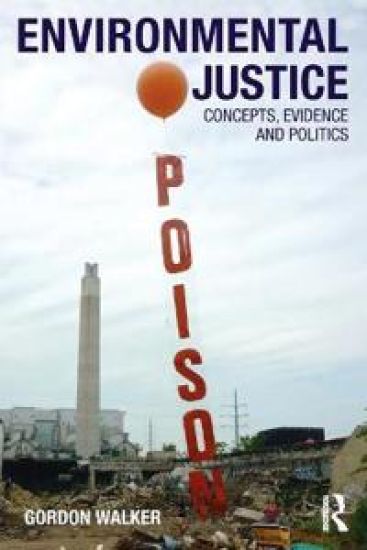
Environmental justice has increasingly become part of the language of environmental activism, political debate, academic research and policy making around the world. It raises questions about how the environment impacts on different people’s lives. Does pollution follow the poor? Are some communities far more vulnerable to the impacts of flooding or climate change than others? Are the benefits of access to green space for all, or only for some? Do powerful voices dominate environmental decisions to the exclusion of others? This book focuses on such questions and the complexities involved in answering them. It explores the diversity of ways in which environment and social difference are intertwined and how the justice of their interrelationship matters. It has a distinctive international perspective, tracing how the discourse of environmental justice has moved around the world and across scales to include global concerns, and examining research, activism and policy development in the US, the UK, South Africa and other countries. The widening scope and diversity of what has been positioned within an environmental justice ‘frame’ is also reflected in chapters that focus on waste, air quality, flooding, urban greenspace and climate change. In each case, the basis for evidence of inequalities in impacts, vulnerabilities and responsibilities is examined, asking questions about the knowledge that is produced, the assumptions involved and the concepts of justice that are being deployed in both academic and political contexts. Environmental Justice offers a wide ranging analysis of this rapidly evolving field, with compelling examples of the processes involved in producing inequalities and the challenges faced in advancing the interests of the disadvantaged. It provides a critical framework for understanding environmental justice in various spatial and political contexts, and will be of interest to those studying Environmental Studies, Geography, Politics and Sociology.

Environmental Justice

Environmental Justice

Gordon Walker

Routledge
2011
nidottu
Environmental justice has increasingly become part of the language of environmental activism, political debate, academic research and policy making around the world. It raises questions about how the environment impacts on different people’s lives. Does pollution follow the poor? Are some communities far more vulnerable to the impacts of flooding or climate change than others? Are the benefits of access to green space for all, or only for some? Do powerful voices dominate environmental decisions to the exclusion of others? This book focuses on such questions and the complexities involved in answering them. It explores the diversity of ways in which environment and social difference are intertwined and how the justice of their interrelationship matters. It has a distinctive international perspective, tracing how the discourse of environmental justice has moved around the world and across scales to include global concerns, and examining research, activism and policy development in the US, the UK, South Africa and other countries. The widening scope and diversity of what has been positioned within an environmental justice ‘frame’ is also reflected in chapters that focus on waste, air quality, flooding, urban greenspace and climate change. In each case, the basis for evidence of inequalities in impacts, vulnerabilities and responsibilities is examined, asking questions about the knowledge that is produced, the assumptions involved and the concepts of justice that are being deployed in both academic and political contexts. Environmental Justice offers a wide ranging analysis of this rapidly evolving field, with compelling examples of the processes involved in producing inequalities and the challenges faced in advancing the interests of the disadvantaged. It provides a critical framework for understanding environmental justice in various spatial and political contexts, and will be of interest to those studying Environmental Studies, Geography, Politics and Sociology.

Astronomical Observations

Astronomical Observations

Gordon Walker

Cambridge University Press
1987
pokkari
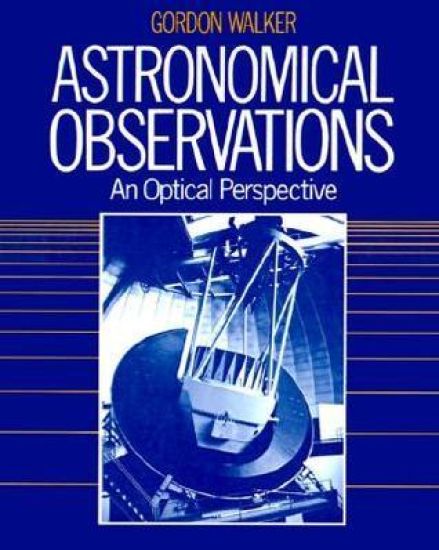
This book is an up-to-date and comprehensive account of current observational techniques with particular emphasis on optical astronomy. Dr Walker, a world expert in astronomical instrumentation, has written a complete survey of the basic electromagnetic spectrum. The author discusses the types and sources of stellar electromagnetic radiation and the range of telescopes that are used to observe them. Topics covered include the construction of sensitive low-noise detectors, preservation of image quality, and the limits to measurement precision. The book is particularly timely because astronomers now have access to a wide range of telescopes on the ground and in orbit. With increasing demand for observing time, it is important to understand the principles and limitations of the instruments and techniques. This book is suitable for undergraduate and graduate students studying observational astronomy. It will provide a ready source of reference for professional astronomers. Physicists and electronic engineers will also find this an absorbing account of the techniques of astronomical observation.