
Kirjailija
Graeme Davis
Kirjat ja teokset yhdessä paikassa: 32 kirjaa, julkaisuja vuosilta 2004–2026, suosituimpiin kuuluu Dark Origins. Vertaile teosten hintoja ja tarkista saatavuus suomalaisista kirjakaupoista.
32 kirjaa
Kirjojen julkaisuvuodet: 2004–2026.
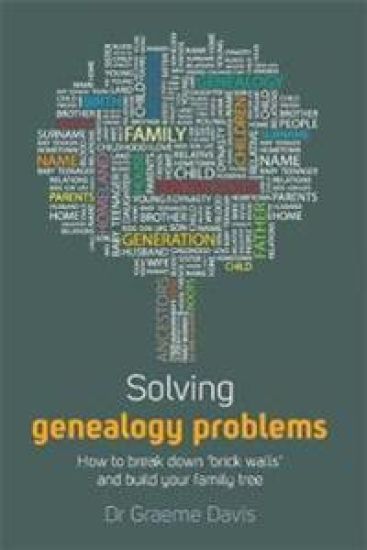
'Brick walls' occur everywhere and all the time in genealogy research, but with this book you can take your British Isles family tree back further. Solving Genealogy Problems will: - Help you find new records, including unusual ones genealogists often don't know about; and make the best use of them when you do find them. - Suggest new ideas for looking at old problems. - Give additional ideas on using the census - then more ideas on using census substitutes when the census doesn't have the answers. - Suggest ways of finding elusive births, marriages and deaths - and then of making progress anyway, even when you absolutely cannot find them. This book covers all periods of British Isles genealogy. The new frontiers of genealogy are considered for the hope they give on even the most intractable research block, and the possibility they allow of building even the most difficult of family trees. Contents: 1. RECOGNISING BRICK WALLS; 2. UNDERSTANDING BIRTHS, MARRIAGES AND DEATHS; 3. FINDING BMD BIRTHS; 4. FINDING BMD MARRIAGES; 5. FINDING BMD DEATHS; 6. CENSUS SOLUTIONS; 7. UNDERSTANDING PARISH REGISTERS; 8. FINDING PARISH REGISTER CHRISTENINGS; 9. FINDING PARISH REGISTERS MARRIAGES; 10. FINDING PARISH REGISTER BURIALS AND MEMORIAL INSCRIPTIONS; 11. USING NEWSPAPERS AS AN ALTERNATIVE SOURCE; 12. GETTING MORE FROM WILLS AND ADMINISTRATIONS; 13. DIRECTORIES AS A CENSUS SUBSTITUTE; 14. ELECTORAL ROLL AS AN ALTERNATIVE SOURCE; 15. OTHER ALTERNATIVE SOURCES; 16. YET MORE SOURCES: THE FREEDOM OF INFORMATION ACTS AND THE GENEALOGIST; 17. PUBLISHING YOUR FAMILY TREE; 18. ORAL HISTORY; 19. LOCAL HISTORY; 20. DESCRIPTIONS OF AN ANCESTOR'S HOME; 21. CLUSTER GENEALOGY AND COMMUNITIES; 22. MILITARY RECORDS; 23. OCCUPATIONAL RECORDS; 24. IRELAND: PROBLEMS AND INSPIRATION; 25. INTERNATIONAL GENEALOGY; 26. PHOTOGRAPHS; 27. EARLY GENEALOGY; 28. GENETICS AND GENEALOGY; 29. HERITAGE; 30. COST-BENEFIT ANALYSIS FOR RESEARCH; 31. THE GENEALOGY INDUSTRY; APPENDIX: THE TOP 10 BRICK WALL TIPS; INDEX.


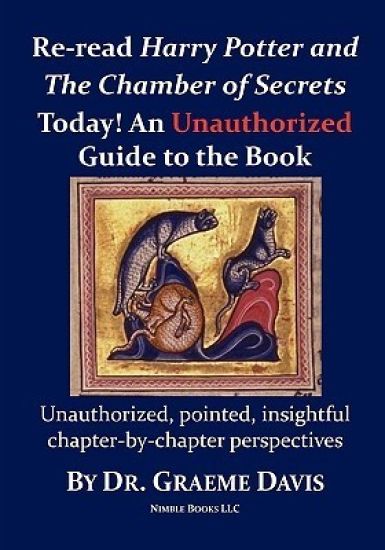
Re-read HARRY POTTER AND THE CHAMBER OF SECRETS Today! An Unauthorized Guide
Graeme Davis
Nimble Books
2008
pokkari
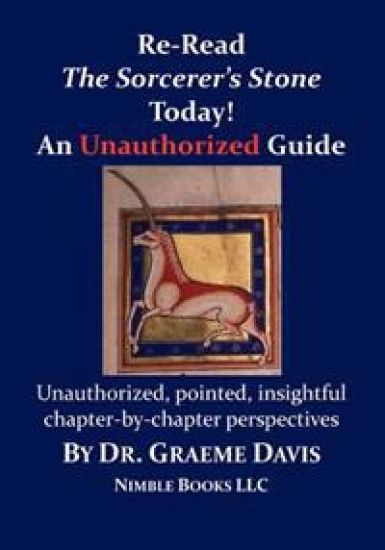
Re-Read HARRY POTTER AND THE SORCERER'S STONE Today! An Unauthorized Guide
Graeme Davis
Nimble Books
2008
pokkari

Lingua et Linguistica is part of the JLL Project: Language Linguistics Literature Learning published in association with Shakespeare Centre Press, and linked to the on-line journals of the Project: Journal of Language and Linguistics, Journal of Language and Learning, Journal of Language and Literature. Further information about the JLL Project and the refereeing committee for this journal is available at the project web-site: http://www.jllonline.org Lingua et Linguistica seeks to publish work which makes an original contribution to linguistics and language study, including language teaching methodology and the language of literature. Submission information is available through the project web site.
Comparative Syntax of Old English and Old Icelandic: Linguistic, Literary and Historical Implications
Graeme Davis; Karl A. Bernhardt
Peter Lang Publishing
2006
nidottu
Study of the syntax of Old English and Old Icelandic has for long been dominated by the impressions of early philologists. Their assertions that these languages were free in their word-order were for many years unchallenged. Only within the last two decades has it been demonstrated that the word-order of each shows regular patterns which approach the status of rules, and which may be precisely described. This book takes the subject one step further by offering a comparison of the syntax of Old English and Old Icelandic, the two best-preserved Old Germanic languages. Overwhelmingly the two languages show the same word-order patterns - as do the other Old Germanic languages, at least as far as can be determined from the fragments which have survived. It has long been recognised that Old English and Old Icelandic have a high proportion of common lexis and very similar morphology, yet the convention has been to emphasise the differences between the two as representatives respectively of the West and North sub-families of Germanic. The argument of this book is that the similar word-order of the two should instead lead us to stress the similarities between the two languages. Old English and Old Icelandic were sufficiently close to be mutually comprehensible. This thesis receives copious support from historical and literary texts. Our understanding of the Old Germanic world should be modified by the concept of a common Northern Speech which provided a common Germanic ethnic identity and a platform for the free flow of cultural ideas.

Meanings at the Text Level
Thanh Nyan; Graeme Davis; Karl A. Bernhardt
Verlag Peter Lang
2004
nidottu
If language and the brain are co-evolved and language as a latecomer can avail itself of pre-existing means to solve its own problems, then it should be possible to describe it in terms of processing strategies and constraints arising from brain systems. This is precisely what this study attempts to do with respect to the emergence of three types of higher-level meanings: direct speech acts, built-in conditions for their success and non-defective performance and constraints on sequencing of an argumentational kind. In so doing there are three main issues it needs to address. What types of problem arise at the text level that could have led to the emergence in question? Is there a clear parallel between these problems and those faced by brain systems? What solutions have been evolved to cater for the latter, which could have been co-opted by language? Finally there is the question of the extent to which such an account is compatible with a global theory of brain function such as Edelman's Theory of Neuronal Group Selection.