Kirjojen hintavertailu – 12 903 725 kirjaa ja 27 kauppaa

Kirjailija

Graeme Gill

Kirjat ja teokset yhdessä paikassa: 19 kirjaa, julkaisuja vuosilta 1993–2026, suosituimpiin kuuluu Bourgeoisie, State and Democracy. Vertaile teosten hintoja ja tarkista saatavuus suomalaisista kirjakaupoista.

19 kirjaa

Kirjojen julkaisuvuodet: 1993–2026.

Bourgeoisie, State and Democracy

Bourgeoisie, State and Democracy

Graeme Gill

Oxford University Press
2008
sidottu
One of the key questions in social science is the role of the bourgeoisie in creating a democracy. An important issue in contemporary international politics is the trajectory of the current Russian political system. This book brings these questions together by exploring the role played by the bourgeoisie in shaping political outcomes in five countries: contemporary Russia, and industrial revolution Britain, France, Germany and the USA. Its main focus is the way the different new business classes have been integrated into the political system, and the implications this had for the political trajectories of the respective countries. The contemporary Russian experience is thrown into relief by comparison with the national experiences of the other four countries, enabling conclusions to be drawn about both the general question of the historic role of this class in democratisation and the more specific question of its role in Russia today.
Leaders, Rules, and Personalist Politics

Leaders, Rules, and Personalist Politics

Graeme Gill

Oxford University Press
2026
sidottu
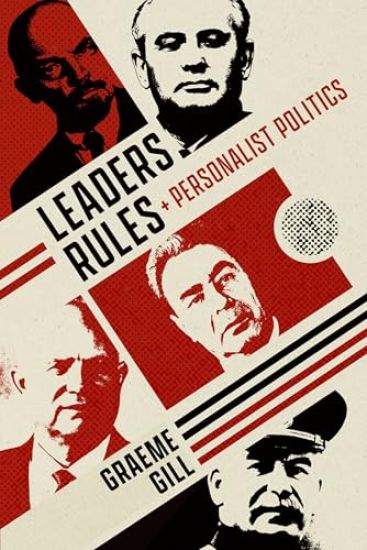
Leaders, Rules, and Personalist Politics addresses the common view that many personalist leaders, often called dictators, concentrate decision-making power in their own person and usually act in an arbitrary and unconstrained fashion. It argues that, rather than being unstructured in this way, authoritarian leaderships are actually structured by a set of rules that the oligarchs who run such systems generally follow. The book outlines those rules and then shows how they have applied across the life of one authoritarian system, the Soviet Union. The core of this analysis is the relationship between the individual leader, his colleagues and the rules, with decision-making and how it is structured central to this. The book explains the emergence of these rules under the predominant leadership of Lenin and how the patterns of action that they shaped changed once he disappeared from the scene. The emergence of Stalin as a dominant leader, especially with the unrolling of the terror in the mid-late 1930s, may have seemed to call into question the idea that rules could continue to operate to structure the activity of the top leadership, but the book explains how even under a dominant leader those rules continued to operate, albeit some of them in an altered form. The return to predominant leaders after Stalin's death (Khrushchev, Brezhnev and Gorbachev) saw a further re-working of the rules. Their ability to accommodate change while continuing to provide a framework for the actions of the leaders shows the flexibility of the rules, although the limits to this flexibility were shown by the collapse of the system in 1991. This longitudinal survey of the rules and how they developed underlines the important role they played in the longevity of the authoritarian Soviet system.
Revolution and Terror

Revolution and Terror

Graeme Gill

Oxford University Press
2023
sidottu
This book is a study of the relationship between revolution and terror. Historically many have claimed that revolution inevitably devolves into terror, best reflected in the way in which after coming to power the revolutionary elite turns on itself, and one section of it uses terrorist means to eliminate another section. This thesis originally stemmed from the French revolution but has more recently also been applied to the Russian and the Chinese revolutions. Graeme Gill argues that in order to understand the relationship between revolution and terror, it is necessary to distinguish between different types of terror. There are three such types: revolutionary terror, in which the aim is to destroy enemies and thereby consolidate the regime; transformational terror, designed to drive the politico-socio-economic transformation of society that is the purpose of the 'great' revolutions; and inverted terror, which is when terror is turned against part of the elite and regime more broadly. The analysis explains how these different types of terror are related to the revolutionary seizure of power, showing that revolutionary and transformational terror are organically connected to revolution while for inverted terror the connection is mediated through the leader. The argument is prosecuted through detailed analysis of the French, Russian, and Chinese revolutions. The study ends by assessing the contemporary salience of the lessons of the great revolutions in the light of the low level of violence in the negotiated revolutions of 1989.
Bridling Dictators

Bridling Dictators

Graeme Gill

Oxford University Press
2021
sidottu
Galtieri, Lukashenka, and Putin are some of the dictators whose untrammelled personal power has been seen as typical of the dog-eat-dog nature of leadership in authoritarian political systems. This book provides an innovative argument that, rather than being characterised by permanent insecurity, fear, and arbitrariness, the leadership of dictatorships is actually governed by a series of rules. The rules are identified, and their operation is shown in a range of different types of authoritarian regime. The operation of the rules is explained in ten different countries across five different regime types: the Soviet Union and China as communist single party regimes; Argentina, Brazil, and Chile as military regimes; electoral authoritarian Malaysia and Mexico; personalist dictatorships in Belarus and Russia; and the Gulf monarchies. Through close analysis of the way leadership functions in these different countries, the book shows how the rules have worked in different institutional settings. It also shows how the power distribution in authoritarian oligarchies is related to the rules. The book transforms our understanding of how authoritarian systems work.
Collective Leadership in Soviet Politics

Collective Leadership in Soviet Politics

Graeme Gill

Springer Nature Switzerland AG
2018
nidottu
This book studies the way in which the top leadership in the Soviet Union changed over time from 1917 until the collapse of the country in 1991. Its principal focus is the tension between individual leadership and collective rule, and it charts how this played out over the life of the regime. The strategies used by the most prominent leader in each period – Lenin, Stalin, Khrushchev, Brezhnev and Gorbachev – to acquire and retain power are counterposed to the strategies used by the other oligarchs to protect themselves and sustain their positions. This is analyzed against the backdrop of the emergence of norms designed to structure oligarch politics. The book will appeal to students and scholars interested in the fields of political leadership, Soviet politics and Soviet history.
Collective Leadership in Soviet Politics

Collective Leadership in Soviet Politics

Graeme Gill

Springer International Publishing AG
2018
sidottu
This book studies the way in which the top leadership in the Soviet Union changed over time from 1917 until the collapse of the country in 1991. Its principal focus is the tension between individual leadership and collective rule, and it charts how this played out over the life of the regime. The strategies used by the most prominent leader in each period – Lenin, Stalin, Khrushchev, Brezhnev and Gorbachev – to acquire and retain power are counterposed to the strategies used by the other oligarchs to protect themselves and sustain their positions. This is analyzed against the backdrop of the emergence of norms designed to structure oligarch politics. The book will appeal to students and scholars interested in the fields of political leadership, Soviet politics and Soviet history.
The Nature and Development of the Modern State
Despite the increasing globalization of many aspects of social, economic and political life, the state remains the fundamental element of contemporary governance. This fully revised and extended new edition provides a broad-ranging introduction to the origins, role and future of the modern state tracing out how significant shifts in state capacity came about in relation to developments in economic, political and ideological power.
Building an Authoritarian Polity

Building an Authoritarian Polity

Graeme Gill

Cambridge University Press
2015
sidottu
Graeme Gill shows why post-Soviet Russia has failed to achieve the democratic outcome widely expected at the time of the fall of the Soviet Union, instead emerging as an authoritarian polity. He argues that the decisions of dominant elites have been central to the construction of an authoritarian polity, and explains how this occurred in four areas of regime-building: the relationship with the populace, the manipulation of the electoral system, the internal structure of the regime itself, and the way the political elite has been stabilised. Instead of the common 'Yeltsin is a democrat, Putin an autocrat' paradigm, this book shows how Putin built upon the foundations that Yeltsin had laid. It offers a new framework for the study of an authoritarian political system, and is therefore relevant not just to Russia but to many other authoritarian polities.
Building an Authoritarian Polity

Building an Authoritarian Polity

Graeme Gill

Cambridge University Press
2015
pokkari
Graeme Gill shows why post-Soviet Russia has failed to achieve the democratic outcome widely expected at the time of the fall of the Soviet Union, instead emerging as an authoritarian polity. He argues that the decisions of dominant elites have been central to the construction of an authoritarian polity, and explains how this occurred in four areas of regime-building: the relationship with the populace, the manipulation of the electoral system, the internal structure of the regime itself, and the way the political elite has been stabilised. Instead of the common 'Yeltsin is a democrat, Putin an autocrat' paradigm, this book shows how Putin built upon the foundations that Yeltsin had laid. It offers a new framework for the study of an authoritarian political system, and is therefore relevant not just to Russia but to many other authoritarian polities.
Symbols and Legitimacy in Soviet Politics

Symbols and Legitimacy in Soviet Politics

Graeme Gill

Cambridge University Press
2011
sidottu
Symbols and Legitimacy in Soviet Politics analyses the way in which Soviet symbolism and ritual changed from the regime's birth in 1917 to its fall in 1991. Graeme Gill focuses on the symbolism in party policy and leaders' speeches, artwork and political posters, and urban redevelopment, and on ritual in the political system. He shows how this symbolism and ritual were worked into a dominant metanarrative which underpinned Soviet political development. Gill also shows how, in each of these spheres, the images changed both over the life of the regime and during particular stages: the Leninist era metanarrative differed from that of the Stalin period, which differed from that of the Khrushchev and Brezhnev periods, which was, in turn, changed significantly under Gorbachev. In charting this development, the book lays bare the dynamics of the Soviet regime and a major reason for its fall.
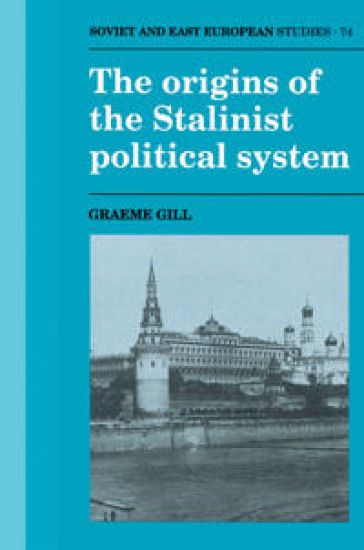
The Origins of the Stalinist Political System

The Origins of the Stalinist Political System

Graeme Gill

Cambridge University Press
2002
pokkari
The Origins of the Stalinist Political System offers new and challenging perspectives on Soviet political development from October 1917 until the outbreak of war in June 1941. Explanations of the emergence of a Stalinist political system have hitherto concentrated upon either impersonal factors, such as economic backwardness and the process of bureaucratisation, or Stalin the political actor and the intricacies of elite conflict. Graeme Gill examines the relationship between institutional structures and the conventions, which are created to shape the activities of individuals and considers centre/periphery relations. He divides this period into four sequential but distinct political systems and examines how the patterns of these relationships shaped the course of development to 1941. This book incorporates a great deal of new material. It will become essential reading for specialists in, and students of Soviet history with special reference to politics under Stalin, the 1920s and the 1930s.
Democracy and Post-Communism

Democracy and Post-Communism

Graeme Gill

Routledge
2001
sidottu
The collapse of communism was widely heralded as the dawn of democracy across the former Soviet region. However, the political outcome has been much less uniform. The post-communist states have developed political systems from democracy to dictatorship. Using examples and empirical data collected from twenty-six former Soviet states, Graeme Gill provides a detailed comparative analysis of the core issues of regime change, the creation of civil society, economic reform and the changing nature of post-communism. Within these individual cases, it becomes clear that political outcomes have not been arbitrary, but directly reflect the circumstances surrounding the birth of independence. Students of Comparative Politics, International Relations and Russian and Post-Soviet Studies should find this book essential reading.
Dynamics of Democratization

Dynamics of Democratization

Graeme Gill

Red Globe Press
2000
nidottu
The author assesses the main theories developed to account for and explain why and how authoritarian regimes give way to democratic ones. The book takes issue with the predominantly élite-centred focus of much of the literature, and illustrates how an understanding of democratization can be gained only if the role of civil society is taken into account.
Russia's Stillborn Democracy?

Russia's Stillborn Democracy?

Graeme Gill; Roger D. Markwick

Oxford University Press
2000
nidottu
The decade and a half since Gorbachev came to power has been a tumultuous time for Russia. It has seen the expectations raised by perestroika dashed, the collapse of the Soviet superpower, and the emergence of a new Russian state claiming to base itself on democratic, market principles. It has seen a political system shattered by a president turning tanks against the parliament, and then that president configuring the new political structure to give himself overwhelming power. These upheavals took place against a backdrop of social dislocations as the Russian people were ravaged by the effects of economic shock therapy. This book explains how these momentous changes came about, and in particular why political elites were able to fashion the new political system largely independent of the wishes of the populace at large. It was this relationship between powerful elites and weak civil society forces which has led to Russian democracy under Yeltsin being still born.
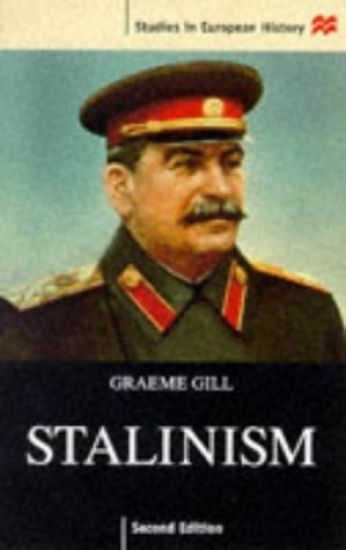
Stalinism

Stalinism

Graeme Gill

Red Globe Press
1998
nidottu
Drawing on research based on access to the recently-opened Soviet archives, this new edition provides a valuable thematic account of the nature of Stalinism. The author surveys the arguments about the origins of the Stalinist phenomenon and discusses the way in which the different faces of Stalinism (economic, social, cultural and political) changed over time. Gill concludes that the dramatic fall of the USSR was connected to the nature of Stalinism.
The Collapse of a Single-Party System

The Collapse of a Single-Party System

Graeme Gill

Cambridge University Press
1994
pokkari
In this book Graeme Gill traces the disintegration of the Communist Party of the Soviet Union from 1985 until the dissolution of the USSR in December 1991. Based principally on the contemporary Soviet press, this is the first book to follow the debates in the party over the implications of Gorbachev’s reforms and how the party should respond to them. It is an in-depth analysis of the institutional dynamics of a party under pressure. When it came under challenge and it could no longer use the weapon of suppression, the party was unable to mount a serious defence of its position and role. Confronted from the top by Gorbachev’s call to reform itself and by his changes to the political arena, and from the bottom by new political forces taking advantage of that arena, the party’s unity collapsed and with it any sense of purpose or possibility of survival.
The Politics of Transition

The Politics of Transition

Stephen White; Graeme Gill; Darrell Slider

Cambridge University Press
1993
sidottu
The Soviet system has undergone a dramatic transformation: from communist monopoly to multiparty politics, from marxism to competing values, from centralisation to fragmentation, and from state ownership to a mixed economy. This book, by three of the West's leading scholars of Soviet and post-Soviet affairs, traces the politics of transition in the late 1980s and early 1990s from its origins to its uncertain post-communist future. The authors analyse the full impact of transition on official and popular values, central and local political institutions, the post-Soviet republics, the CPSU and the parties which replaced it, and political communication. Detailed but clearly and accessibly written, The Politics of Transition provides an ideal guide to the changes that have been taking place in the politics of the newly-independent nations that together constitute a sixth of the world's land surface.
The Politics of Transition

The Politics of Transition

Stephen White; Graeme Gill; Darrell Slider

Cambridge University Press
1993
pokkari
The Soviet system has undergone a dramatic transformation: from communist monopoly to multiparty politics, from marxism to competing values, from centralisation to fragmentation, and from state ownership to a mixed economy. This book, by three of the West’s leading scholars of Soviet and post-Soviet affairs, traces the politics of transition in the late 1980s and early 1990s from its origins to its uncertain post-communist future. The authors analyse the full impact of transition on official and popular values, central and local political institutions, the post-Soviet republics, the CPSU and the parties which replaced it, and political communication. Detailed but clearly and accessibly written, The Politics of Transition provides an ideal guide to the changes that have been taking place in the politics of the newly-independent nations that together constitute a sixth of the world’s land surface.