Kirjojen hintavertailu – 12 859 829 kirjaa ja 27 kauppaa

Kirjailija

Graeme Newman

Kirjat ja teokset yhdessä paikassa: 4 kirjaa, julkaisuja vuosilta 1997–2021, suosituimpiin kuuluu Rational Choice and Situational Crime Prevention. Vertaile teosten hintoja ja tarkista saatavuus suomalaisista kirjakaupoista.

4 kirjaa

Kirjojen julkaisuvuodet: 1997–2021.

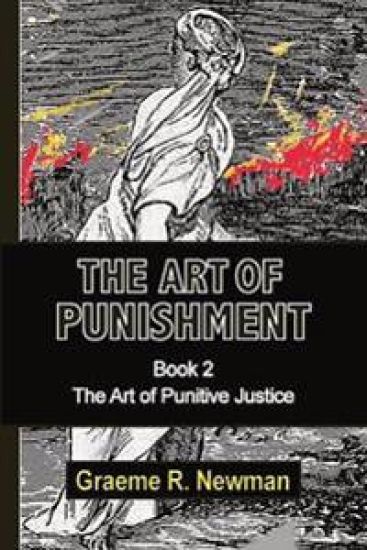
The Art of Punishment

The Art of Punishment

Graeme Newman

LYNNE RIENNER PUBLISHERS INC
2021
pokkari
This collection of art works comprising Books 1 and 2, provides glimpses of the ways in which we and our ancestors have punished those who broke the rules and laws; to repeat, some real, some imagined. The reader, confronted with an expanse of horror, sits back relieved that we no longer treat criminals or misfits or sinners or women or children or animals in the ways depicted in these volumes. But pay close attention to the pictures of prison in Book 2, for they hide the horrors of modern punishment within them. Yet out of all this violence and dread, there is but one consolation for the existence and seeming necessity of punishment: it makes possible the highly regarded human trait of mercy. "A picture is worth a thousand words," said Fred R. Barnard in 1921. The pictures in these book provide an intense guide to the history, practice and philosophy of punishment in the Western World.and what Western civilizations do to those who break society's rules of behavior. Yet pictures do not necessarily, or maybe even rarely tell the truth, certainly never the whole truth. In these volumes they are rather an indication, guideposts maybe, to the human drives, initiative and imagination in recording the history and practice of punishment. Much of the art does tell a story, most often one of the sword in the hands of tyrants, egged on by a rousing crowd. Taken together, Books 1 and 2 do not represent a chronological history of the art of punishment, rather they are an attempt to locate the origins of punishment in Western thought and action. Book 1 begins with punishment as it was depicted in Greek mythology, followed by Judeo-Christian punishments, both imagined and practiced-an entire religion based on punishment. Saints and sinners alike are cruelly punished, as are women, children and animals, whose common lives battle with sainthood and sinfulness, do they not? Guilt pervades all and is presumed. Punishment follows logically; it lies internal. Book 2 focuses on the external objects of punishment, slaves, soldiers (the military itself the personification of punishment), and of course, the most celebrated objects of punishment, criminals. Here a different principle dominates: the more such objects are punished, the more guilty they are. In Book 1, punishment relieves guilt. In Book 2, punishment guarantees and confirms guilt.

The Art of Punishment

The Art of Punishment

Graeme Newman

LYNNE RIENNER PUBLISHERS INC
2021
pokkari
In this first volume, Graeme Newman presents a kaleidoscope of punishment through the lens of artists, some famous, most unknown, who have captured the essence of punishment in the early history of the Western world and its contrasting modern representation in everyday life. These 102 images are not pictures to be gawked at (though readers will do so), they challenge us, (though readers may resent it), to accept that we moderns are the owners of what we do to those we punish. Newman's poignant and concise commentaries on every picture both educate and engage, uncovering the emotive psychology of punishment that lies at the heart of all societies. From slaps to even the declawing of cats, punishment is dissected from every perspective. Newman shows that punishment is both mundane and spectacular; either way, it lies at the very center of everyday life, including the lives of parents, their children and their dog. This collection of art works comprising Books 1 and 2, provides glimpses of the ways in which we and our ancestors have punished those who broke the rules and laws; to repeat, some real, some imagined. The illustrations in these books say a great deal about the history of Western civilization, and how it has dealt with those who break society's rules of behavior. They are an indication, guideposts maybe, to the human drives, initiative and imagination in recording the history and practice of punishment. Much of the art does tell a story, most often one of the sword in the hands of tyrants, egged on by a rousing crowd. Punishment takes on different forms, often depending on to whom it is applied, the classes in society that form the special objects of punishment: from slaves, criminals, soldiers, women, children and even animals. It is an ingrained virtue of Judeo Christian punishment that it carries with it a solemn, unnerving hyp-ocrisy. We have all been punished at one time or another, and are continually threatened with it each day of our lives (speeding signs for example). Thus, we are relieved when it is the other who is punished and not ourselves. Therein lies the dark relationship between guilt and punishment: not only must the punished be guilty, but also the punishers must bear the guilt of punishing. "There but for the grace of God, go I," we can hear the punishers muttering under their breath.
Punishment and Privilege: Second Edition

Punishment and Privilege: Second Edition

Graeme Newman

Independently Published
2018
nidottu
How much should people be punished? Is an egalitarian distribution of punishment possible, or even desirable? Should white collar and corporate criminals be punished more severely? Should disasters caused by corporations be treated as crimes and the executives punished accordingly? Sound modern? This collection of essays written in the 1990s by eminent sociologists, philosophers and political scientists, is even more relevant in the 21st. century. Edited with a new and provocative introduction by leading authority on criminal punishment, Graeme Newman. .
Rational Choice and Situational Crime Prevention

Rational Choice and Situational Crime Prevention

Graeme Newman; Ronald V. Clarke

Ashgate Publishing Limited
1997
sidottu
A collection of original papers examining the theoretical and philosophical bases of the perspective of situational crime prevention. Among issues examined are: the status of situational crime prevention as a theory; the theoretical traditions and context of SCP; the relationship of rational choice to SCP; utilitarianism and SCP; and the ethical./policy implications of SCP.