Kirjojen hintavertailu – 12 903 725 kirjaa ja 27 kauppaa

Kirjailija

Graeme Orr

Kirjat ja teokset yhdessä paikassa: 4 kirjaa, julkaisuja vuosilta 2015–2018, suosituimpiin kuuluu Ritual and Rhythm in Electoral Systems. Vertaile teosten hintoja ja tarkista saatavuus suomalaisista kirjakaupoista.

4 kirjaa

Kirjojen julkaisuvuodet: 2015–2018.

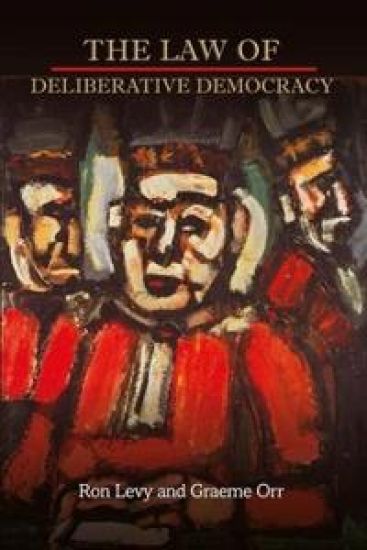
The Law of Deliberative Democracy

The Law of Deliberative Democracy

Ron Levy; Graeme Orr

Routledge
2018
nidottu
Laws have colonised most of the corners of political practice, and now substantially determine the process and even the product of democracy. Yet analysis of these laws of politics has been hobbled by a limited set of theories about politics. Largely absent is the perspective of deliberative democracy – a rising theme in political studies that seeks a more rational, cooperative, informed, and truly democratic politics. Legal and political scholarship often view each other in reductive terms. This book breaks through such caricatures to provide the first full-length examination of whether and how the law of politics can match deliberative democratic ideals. Essential reading for those interested in either law or politics, the book presents a challenging critique of laws governing electoral politics in the English-speaking world. Judges often act as spoilers, vetoing or naively reshaping schemes meant to enhance deliberation. This pattern testifies to deliberation’s weak penetration into legal consciousness. It is also a fault of deliberative democracy scholarship itself, which says little about how deliberation connects with the actual practice of law. Superficially, the law of politics and deliberative democracy appear starkly incompatible. Yet, after laying out this critique, The Law of Deliberative Democracy considers prospects for reform. The book contends that the conflict between law and public deliberation is not inevitable: it results from judicial and legislative choices. An extended, original analysis demonstrates how lawyers and deliberativists can engage with each other to bridge their two solitudes.
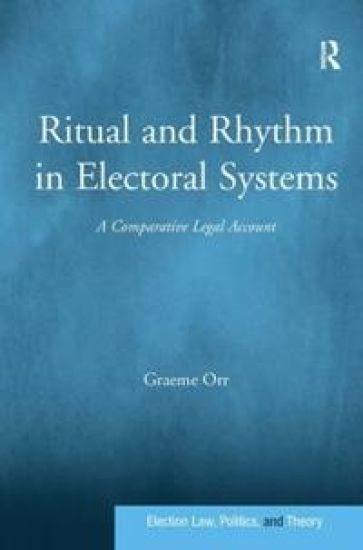
Ritual and Rhythm in Electoral Systems
’Why do we vote in schools?’ ’What is the social meaning of secret balloting?’ ’What is lost if we vote by mail or computers rather than on election day?’ ’What is the history and role of drinking and wagering in elections?’ ’How does the electoral cycle generate the theatre of election night and inaugurations?’ Elections are key public events - in a secular society the only real coming together of the social whole. Their rituals and rhythms run deep. Yet their conduct is invariably examined in instrumental ways, as if they were merely competitive games or liberal apparatus. Focusing on the political cultures and laws of the UK, the US and Australia, this book offers an historicised and generalised account of the intersection of electoral systems and the concepts of ritual, rhythm and the everyday, which form the basis of how we experience elections. As a novel contribution to the theory of the law of elections, this book will be of interest to researchers, students, administrators and policy makers in both politics and law.
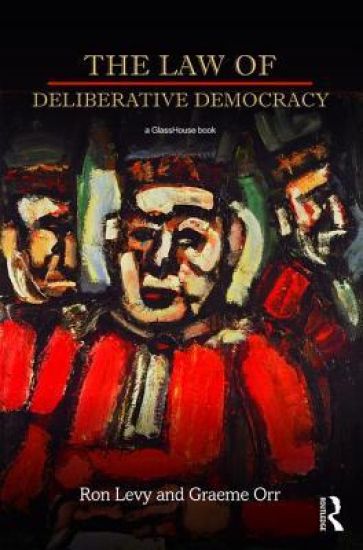
The Law of Deliberative Democracy

The Law of Deliberative Democracy

Ron Levy; Graeme Orr

Routledge
2016
sidottu
Laws have colonised most of the corners of political practice, and now substantially determine the process and even the product of democracy. Yet analysis of these laws of politics has been hobbled by a limited set of theories about politics. Largely absent is the perspective of deliberative democracy – a rising theme in political studies that seeks a more rational, cooperative, informed, and truly democratic politics. Legal and political scholarship often view each other in reductive terms. This book breaks through such caricatures to provide the first full-length examination of whether and how the law of politics can match deliberative democratic ideals. Essential reading for those interested in either law or politics, the book presents a challenging critique of laws governing electoral politics in the English-speaking world. Judges often act as spoilers, vetoing or naively reshaping schemes meant to enhance deliberation. This pattern testifies to deliberation’s weak penetration into legal consciousness. It is also a fault of deliberative democracy scholarship itself, which says little about how deliberation connects with the actual practice of law. Superficially, the law of politics and deliberative democracy appear starkly incompatible. Yet, after laying out this critique, The Law of Deliberative Democracy considers prospects for reform. The book contends that the conflict between law and public deliberation is not inevitable: it results from judicial and legislative choices. An extended, original analysis demonstrates how lawyers and deliberativists can engage with each other to bridge their two solitudes.
Ritual and Rhythm in Electoral Systems

Ritual and Rhythm in Electoral Systems

Graeme Orr

Ashgate Publishing Limited
2015
sidottu
’Why do we vote in schools?’ ’What is the social meaning of secret balloting?’ ’What is lost if we vote by mail or computers rather than on election day?’ ’What is the history and role of drinking and wagering in elections?’ ’How does the electoral cycle generate the theatre of election night and inaugurations?’ Elections are key public events - in a secular society the only real coming together of the social whole. Their rituals and rhythms run deep. Yet their conduct is invariably examined in instrumental ways, as if they were merely competitive games or liberal apparatus. Focusing on the political cultures and laws of the UK, the US and Australia, this book offers an historicised and generalised account of the intersection of electoral systems and the concepts of ritual, rhythm and the everyday, which form the basis of how we experience elections. As a novel contribution to the theory of the law of elections, this book will be of interest to researchers, students, administrators and policy makers in both politics and law.