Kirjojen hintavertailu – 12 859 829 kirjaa ja 27 kauppaa

Kirjailija

Graham Chapman

Kirjat ja teokset yhdessä paikassa: 11 kirjaa, julkaisuja vuosilta 1997–2019, suosituimpiin kuuluu Calcium Made Interesting. Vertaile teosten hintoja ja tarkista saatavuus suomalaisista kirjakaupoista.

11 kirjaa

Kirjojen julkaisuvuodet: 1997–2019.

The Geopolitics of South Asia: From Early Empires to the Nuclear Age
Anyone who is planning on carrying out research in South Asia or indeed anyone who simply wishes to understand more about this cultural heartland should read this book. It shows how geological movements moulded the land of this unique cradle and how they still impact on it. Discussions are woven around the three major forces of integration. These are 'identitive' forces - bonds of language, ethnicity, religion or ideology; 'utilitarian' forces - bonds of common material interest, and 'coercion' - the institutional use or threat of physical violence. By studying these forces, Professor Chapman shows how the organization of territory has been central to the region's historic, cultural, linguistic and economic development. In addition to the material on the Northwest frontier, Afghanistan and Kashmir which was added for the second edition, the Northeastern borderlands are also now examined in this fully revised third edition. The current geopolitical state of the region is completely updated and greatly enhanced.
The Geopolitics of South Asia

The Geopolitics of South Asia

Graham Chapman

Routledge
2019
nidottu
This title was first published in 2000: This volume explores one of the world's greatest cultural heartlands - the Indian sub-continent. It shows how geological movements moulded the land and how they still impact upon it; how the culture of early setters evolved to form Hinduism; how its wealth and power attracted the attention of Islamic invaders who founded the Sultanate of Delhi and then the great Mogul Empire; and how they were later usurped by the British Raj. The story continues with the trauma of Partition and Independence in 1947, as India's unique form of Islam shook free from Nehru's secular India with the founding of Pakistan. At different points in the story, discussions are woven in on subjects such as caste or the management of water resources. Much of the book is written in terms of the three major forces of integration. These are "identitive" forces - bonds of language, ethnicity, religion or ideology; "utilitarian" forces - bonds of common material interests; and "coercion" - the institutional use or threat of physical violence.
The Geopolitics of South Asia: From Early Empires to the Nuclear Age
Anyone who is planning on carrying out research in South Asia or indeed anyone who simply wishes to understand more about this cultural heartland should read this book. It shows how geological movements moulded the land of this unique cradle and how they still impact on it. Discussions are woven around the three major forces of integration. These are 'identitive' forces - bonds of language, ethnicity, religion or ideology; 'utilitarian' forces - bonds of common material interest, and 'coercion' - the institutional use or threat of physical violence. By studying these forces, Professor Chapman shows how the organization of territory has been central to the region's historic, cultural, linguistic and economic development. In addition to the material on the Northwest frontier, Afghanistan and Kashmir which was added for the second edition, the Northeastern borderlands are also now examined in this fully revised third edition. The current geopolitical state of the region is completely updated and greatly enhanced.
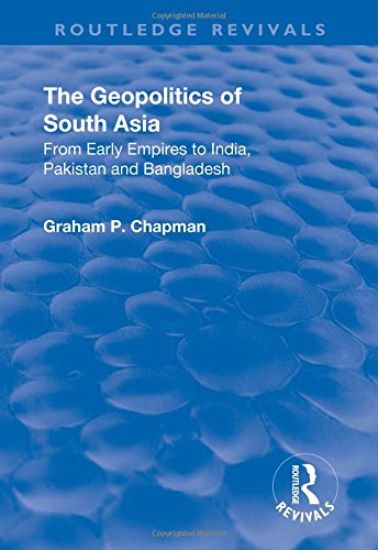
The Geopolitics of South Asia: From Early Empires to India, Pakistan and Bangladesh
This title was first published in 2000: This volume explores one of the world's greatest cultural heartlands - the Indian sub-continent. It shows how geological movements moulded the land and how they still impact upon it; how the culture of early setters evolved to form Hinduism; how its wealth and power attracted the attention of Islamic invaders who founded the Sultanate of Delhi and then the great Mogul Empire; and how they were later usurped by the British Raj. The story continues with the trauma of Partition and Independence in 1947, as India's unique form of Islam shook free from Nehru's secular India with the founding of Pakistan. At different points in the story, discussions are woven in on subjects such as caste or the management of water resources. Much of the book is written in terms of the three major forces of integration. These are "identitive" forces - bonds of language, ethnicity, religion or ideology; "utilitarian" forces - bonds of common material interests; and "coercion" - the institutional use or threat of physical violence. By studying these forces, Professor Chapman shows how the organization of territory - as states and empires, as monarchic realms and as representative democracies - has been central to the region's historic, cultural, linguistic and economic development. In doing so, he contends that the lynchpin of this region's story is a geopolitical one.
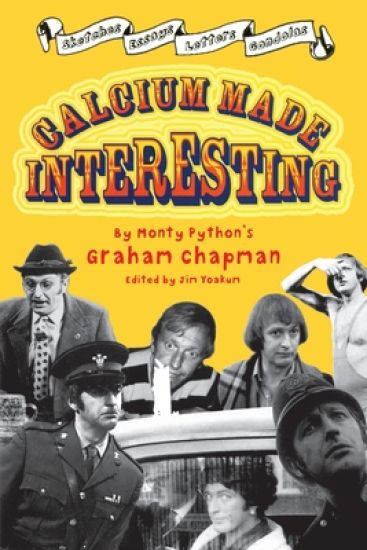
Calcium Made Interesting

Calcium Made Interesting

Graham Chapman

Pan Books
2016
pokkari
Graham Chapman is said to have been Monty Python's one true anarchist. Like his mentors Spike Milligan and Peter Cook, the man who portrayed the mistaken messiah in Life of Brian lived his life on and off stage with a sheer delight in madness for its own sake. 'I want to be a loony,' he said, 'it's quite an important thing.' Calcium Made Interesting contains everything from Graham Chapman's unpublished sketches and transcripts of his lecture tours to letters to his bank manager and reflections on his fellow Pythons and as a result offers a unique insight into the real Graham Chapman. Previously unpublished essays and notes help chart the life and times of a comic legend and include such gems as his reflections on how it feels to be crucified and his nostalgic memories of blowing up hotel rooms with his good friend Keith Moon. Funny and surreal, this collection captures the eclectic spirit of a true genius and confirms Graham Chapman's lasting impact on British comedy.
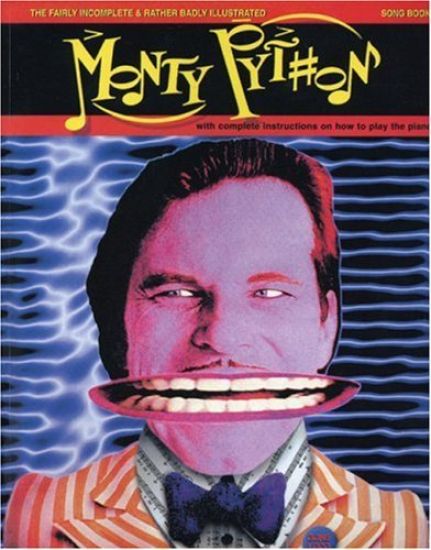
Fairly Incomplete and Rather Badly Illustrated Monty Python Songbook, The
From 'The Lumberjack Song' to 'Always Look on the Bright Side of Life', the Fairly Incomplete & Rather Badly Illustrated Monty Python Songbook does pretty much what it says on the cover, collecting up the cream of the Python team's musical output, from the four TV series and the various feature films. Included are such gems as 'Eric the Half-a - Bee', 'Sit on My Face and Tell Me That You Love Me', 'Bruces' Philosophers Song', 'Oliver Cromwell', 'The Knights of the Round Table', 'Christmas in Heaven', 'All Things Dull & Ugly', 'Every Sperm is Sacred', and 'Isn't it Awfully Nice to Have a Penis', amongst many others, all arranged with music for the piano and accompanied by Terry Gilliam's incomparable cartoons; Reissue of a classic Monty Python humour title; Original edition sold 10,000 copies; Arranged for Piano; Ilustrated by Terry Gilliam; With a foreword by 'Elvis Presley', and complete instructions on how to play the piano
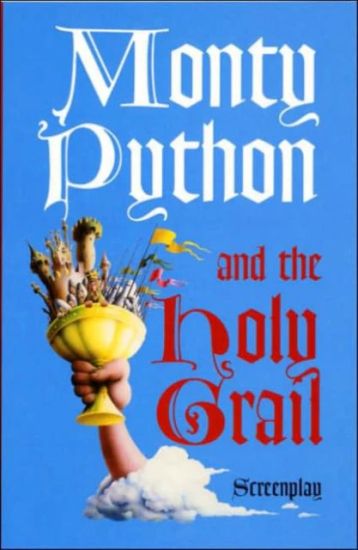
Monty Python and the Holy Grail: Screenplay

Monty Python and the Holy Grail: Screenplay

Graham Chapman

Methuen Publishing Ltd
2002
nidottu

Halvin toimitettuna 19,40 €

The first feature film by the Monty Python team is a mock heroic tale set in medieval Britain with lots of silly things going on besides. In a series of sketches and animations, the Pythons recount scenes from the Grail legend in which the knights forsake their chorus line can-can dancing in Camelot for a higher aim. Typically, the Pythons set-up a 'historical' tale which is really a take on the modern world. Memorable scenes, like Graham Chapman's King Arthur battling with John Cleese's Black Knight until the latter is reduced limb by limb down to a speaking stump of a torso, capture both the hilarity and grotesque nature of brutality. In scene after scene King Arthur's men are led a merry chase through the countryside, encountering life on many different social levels. This screenplay edition contains just the script and is supplemented by stills from the film.
Monty Python's Life of Brian, The (of Nazareth): Screenplay
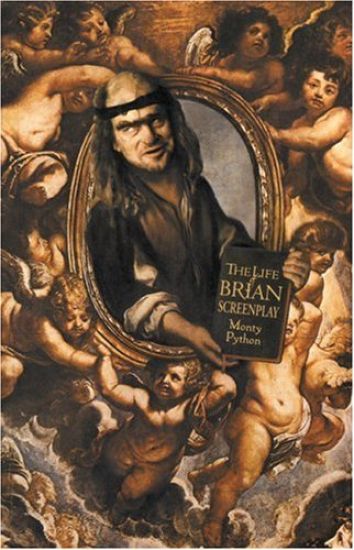
When The Life of Brian was first released in 1979 it was hailed by most as Monty Python's finest parody and denounced by a few as the most blasphemous film of all time. With its unforgettable song, 'Always Look on the Bright Side of Life', and its infinitely quotable script The Life of Brian has since gone on to become an enduring cult classic.
Yellowbeard

Yellowbeard

Graham Chapman

Limelight Editions
2000
nidottu
Of the many blackguards who left their bloodstained mark on history, the foulest of them all was the pirate Yellowbeard. His name struck terror into the hearts of gentlefolk in the days when Queen Anne was a monarch rather than a table. Until recently, however, Yellowbeard's exploits were lost in the swirling mists of time. That oversight has now been corrected with this hilarious spoof on the pirate adventure genre. According to the author, Monty Python member Graham Chapman, Yellowbeard tells "the true story of Treasure Island, all the bits that Robert Louis Stevenson didn't want to tell. Yellowbeard is a vile buccaneer so scurrilolus he makes Long John Silver look like a tinhorn. He puts 'rat' back into 'pirate." Yellowbeard contains Chapman's original novel and screenplay, plus interviews with John Daly, the film's producer, and cast members Cheech and Chong, Nigel Planer, Peter Boyle, and others. Its timely release coincides with the Broadway premier of Monty Python's Spamalot.
Environmentalism and the Mass Media

Environmentalism and the Mass Media

Graham Chapman; Caroline Fraser; Ivor Gaber; Keval Kumar

Routledge
1997
nidottu
The mass media in different countries reflects dominant concerns of contemporary societies. Ideas of `environmentalism' are often broad and imprecise, holding neither meaning nor currency. Environmentalism and Mass Media sheds new light on the diverse ideas of `environmentalism', the way environmental ideas circulate, and public reaction to environmental concerns conveyed by the media. Drawing on unique interviews with journalists, media pictures, and public opinion surveys in both UK and India, the authors outline the differing cultural, religious and political contexts against which `world views' form present a fascinating picture between North and South. Mass media and communication technology is in danger of locking Northern countries into a ghetto of environmental self-deception, thereby perpetuating poverty in the South. The South's goal remains the attainment of development; the North sees `environmental' problems occuring `elsewhere' - in Eastern Europe and developing countries. Whether or not `environmentalism' becomes a universal cause depends on how and to what extent such sharply contrasting world views can converge.
Environmentalism and the Mass Media

Environmentalism and the Mass Media

Graham Chapman; Caroline Fraser; Ivor Gaber; Keval Kumar

Routledge
1997
sidottu
The mass media in different countries reflects dominant concerns of contemporary societies. Ideas of `environmentalism' are often broad and imprecise, holding neither meaning nor currency. Environmentalism and Mass Media sheds new light on the diverse ideas of `environmentalism', the way environmental ideas circulate, and public reaction to environmental concerns conveyed by the media. Drawing on unique interviews with journalists, media pictures, and public opinion surveys in both UK and India, the authors outline the differing cultural, religious and political contexts against which `world views' form present a fascinating picture between North and South. Mass media and communication technology is in danger of locking Northern countries into a ghetto of environmental self-deception, thereby perpetuating poverty in the South. The South's goal remains the attainment of development; the North sees `environmental' problems occuring `elsewhere' - in Eastern Europe and developing countries. Whether or not `environmentalism' becomes a universal cause depends on how and to what extent such sharply contrasting world views can converge.