Kirjailija
Graham Harman
Kirjat ja teokset yhdessä paikassa: 38 kirjaa, julkaisuja vuosilta 2002–2026, suosituimpiin kuuluu Nesne Yönelimli Ontoloji. Vertaile teosten hintoja ja tarkista saatavuus suomalaisista kirjakaupoista.
38 kirjaa
Kirjojen julkaisuvuodet: 2002–2026.
It is well known that Dante s poetic works interpret love as themoving force of the universe: as embodied in his muse Beatrice fromLa Vita Nuova onward, as well as the much holier persons inhabitingParadiso. Likewise, if love is the ultimate form of sincerity, it is easyto interpret the Inferno as a brilliant counterpoint of anti-sincerity, governed by fraud and blasphemy along with the innocuous form offraud known as humour (strangely absent from all parts of Dante scosmos other than hell). In turn, the middle ground of Purgatorio is where Harman locatesDante s clearest theory of sincerity. Yet this is only the beginning. For while Dante provides a suitable background for the metaphysicsof commitment found in such later thinkers as Pascal, Kierkegaard, Sartre, and Badiou, he also provides even more important resourcesfor overcoming two centuries of philosophy shaped by Immanuel Kant."
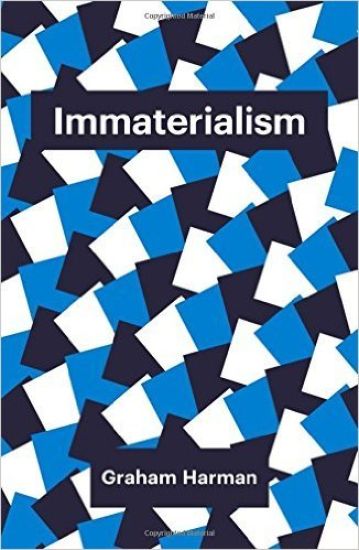
What objects exist in the social world and how should we understand them? Is a specific Pizza Hut restaurant as real as the employees, tables, napkins and pizzas of which it is composed, and as real as the Pizza Hut corporation with its headquarters in Wichita, the United States, the planet Earth and the social and economic impact of the restaurant on the lives of its employees and customers? In this book the founder of object-oriented philosophy develops his approach in order to shed light on the nature and status of objects in social life. While it is often assumed that an interest in objects amounts to a form of materialism, Harman rejects this view and develops instead an “immaterialist” method. By examining the work of leading contemporary thinkers such as Bruno Latour and Levi Bryant, he develops a forceful critique of ‘actor-network theory’. In an extended discussion of Leibniz’s famous example of the Dutch East India Company, Harman argues that this company qualifies for objecthood neither through ‘what it is’ or ‘what it does’, but through its irreducibility to either of these forms. The phases of its life, argues Harman, are not demarcated primarily by dramatic incidents but by moments of symbiosis, a term he draws from the biologist Lynn Margulis. This book provides a key counterpoint to the now ubiquitous social theories of constant change, holistic networks, performative identities, and the construction of things by human practice. It will appeal to anyone interested in cutting-edge debates in philosophy and social and cultural theory.
Manifesto of New Realism
Maurizio Ferraris; Graham Harman
State University of New York Press
2015
pokkari
Retraces the history of postmodern philosophy and proposes solutions to overcome its impasses. Philosophical realism has taken a number of different forms, each applied to different topics and set against different forms of idealism and subjectivism. Maurizio Ferraris's Manifesto of New Realism takes aim at postmodernism and hermeneutics, arguing against their emphasis on reality as constructed and interpreted. While acknowledging the value of these criticisms of traditional, dogmatic realism, Ferraris insists that the insights of postmodernism have reached a dead end. Calling for the discipline to turn its focus back to truth and the external world, Ferraris's manifesto-which sparked lively debate in Italy and beyond-offers a wiser realism with social and political relevance.
In this expanded edition of his landmark 2011 work on Meillassoux, Graham Harman covers new materials not available to the Anglophone reader at the time of the first edition. Along with Meillassoux's startling book on Mallarme's poem 'Un coup de des jamais n'abolira le hasard,' Harman discusses several new English articles by Meillassoux, including his controversial April 2012 Berlin lecture and its critique of 'subjectalism'. Freshly called to a professorship at the Sorbonne, Meillassoux's star has continued to rise. This expanded edition of the only book on Meillassoux remains the best introduction to one of Europe's most promising thinkers.
Quentin Meillassoux
Graham Harman
Edinburgh University Press
2015
nidottu
Halvin toimitettuna 32,10 €
Offers an in depth study of the emerging French philosopher Quentin Meillassoux. In this expanded edition of his landmark 2011 work on Meillassoux, Graham Harman covers new materials not published at the time of the first edition. Along with Meillassoux's startling book on Mallarme's poem 'Un coup de des jamais n'abolira le hasard', Harman discusses several new English articles by Meillassoux, including his controversial April 2012 Berlin lecture with its critique of 'subjectalism'. Freshly called to a professorship at the Sorbonne, Meillassoux's star has continued to rise. This expanded edition of the first book on Meillassoux remains the best introduction to one of Europe's most promising thinkers.
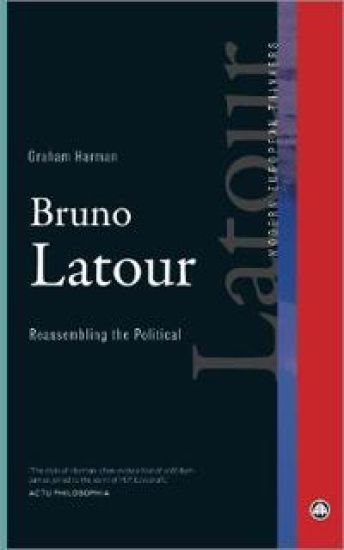
Bruno Latour, the French sociologist, anthropologist and long-established superstar in the social sciences is revisited in this pioneering account of his ever-evolving political philosophy. Breaking from the traditional focus on his metaphysics, most recently seen in Harman's book Prince of Networks, the author instead begins with the Hobbesian and even Machiavellian underpinnings of Latour's early period encountering his shift towards Carl Schmitt then finishing with his final development into the Lippmann / Dewey debate. Harman brings these twists and turns into sharp focus in terms of Latour's personal political thinking. Along with Latour's most important articles on political themes, the book chooses three works as exemplary of the distinct periods in Latour's thinking: The Pasteurization of France, Politics of Nature, and the recently published An Inquiry Into Modes of Existence, as his conception of politics evolves from a global power struggle between individuals, to the fabrication of fragile parliamentary networks, to just one mode of existence among many others.
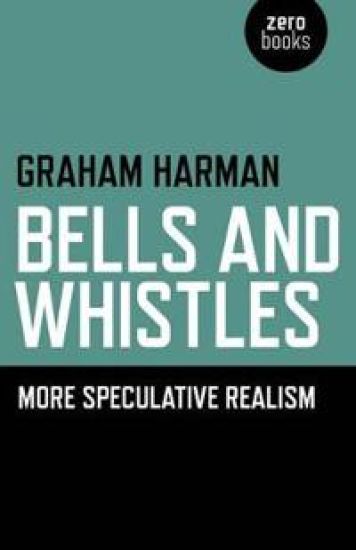
In this diverse collection of sixteen essays, lectures, and interviews dating from 2010 to 2013, Graham Harman lucidly explains the principles of Speculative Realism, including his own object-oriented philosophy. From Brazil to Russia, and in Poland, France, Croatia, and India, Harman addresses local philosophical concerns with the energy of a roving evangelist. He reflects on established giants such as Greenberg, Latour, and McLuhan, while refining his differences with such younger authors as Brassier, Bryant, Garcia, and Meillassoux. He speaks to philosophers in Paris, hecklers in New York, media theorists in Berlin, and architects in Curitiba, as object-oriented philosophy consolidates its position as the most widespread form of Speculative Realism. There has never been a more upbeat introduction to one of the most challenging philosophical schools of our time.
Weird Realism – Lovecraft and Philosophy
Graham Harman
John Hunt Publishing
2012
nidottu
Halvin toimitettuna 24,70 €
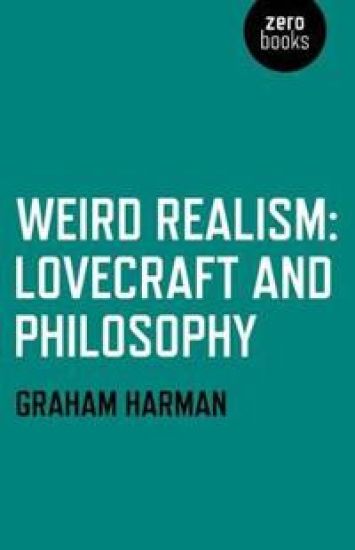
As Holderlin was to Martin Heidegger and Mallarme to Jacques Derrida, so is H. P. Lovecraft to the Speculative Realist philosophers. Lovecraft was one of the brightest stars of the horror and science fiction magazines, but died in poverty and relative obscurity in the 1930s. In 2005 he was finally elevated from pulp status to the classical literary canon with the release of a Library of America volume dedicated to his work. The impact of Lovecraft on philosophy has been building for more than a decade. Initially championed by shadowy guru Nick Land at Warwick during the 1990s, he was later discovered to be an object of private fascination for all four original members of the twenty-first century Speculative Realist movement. In this book, Graham Harman extracts the basic philosophical concepts underlying the work of Lovecraft, yielding a weird realism capable of freeing continental philosophy from its current soul-crushing impasse. Abandoning pious references by Heidegger to Holderlin and the Greeks, Harman develops a new philosophical mythology centered in such Lovecraftian figures as Cthulhu, Wilbur Whately, and the rat-like monstrosity Brown Jenkin. The Miskatonic River replaces the Rhine and the Ister, while Holderlin's Caucasus gives way to Lovecraft's Antarctic mountains of madness.
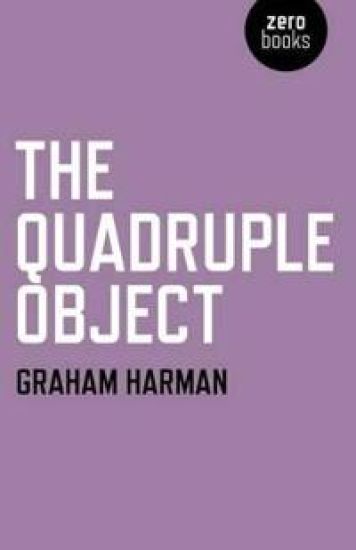
"Harman's style often evokes that of a William James merged with the spirit of H. P. Lovecraft." Olivier Surel in Actu Philosophia In this book the metaphysical system of Graham Harman is presented in lucid form, aided by helpful diagrams. In Chapter 1, Harman gives his most forceful critique to date of philosophies that reject objects as a primary reality. All such rejections are tainted by either an "undermining" or "overmining" approach to objects. In Chapters 2 and 3, he reviews his concepts of sensual and real objects. In the process, he attacks the prestige normally granted to philosophies of human access, which Harman links for the first time to the already discredited "Menos Paradox." In Chapters 4 through 7, Harman brings the reader up to speed on his interpretation of Heidegger, which culminates in a fourfold structure of objects linked by indirect causation. In Chapter 8, he speculates on the implications of this theory for the debate over panpsychism, which Harman both embraces and rejects. In Chapters 9 and 10, he introduces the term "ontography" as the study of the different possible permutations of objects and qualities, which he simplifies with easily remembered terminology drawn from standard playing cards.
Prince and the Wolf: Latour and Harman at the LSE, The
Bruno Latour; Graham Harman
John Hunt Publishing
2011
nidottu
The Prince and the Wolf contains the transcript of a debate which took place on 5th February 2008 at the London School of Economics (LSE) between the prominent French sociologist, anthropologist, and philosopher Bruno Latour and the Cairo-based American philosopher Graham Harman. The occasion for the debate was the impending publication of Harman's book, Prince of Networks: Bruno Latour and Metaphysics. During the discussion, Latour (the 'Prince') compared the professional philosophers who have pursued him over the years to a pack of wolves. The Prince and the Wolf is the story of what happens when the wolf catches up with the prince. Latour and Harman engage in brisk and witty conversation about questions that go to the heart of both metaphysics and research methodology: What are objects? How do they interact? And best how to study them?
Platonic myth meets American noir in this haunting series of philosophical images, from gigantic ferris wheels to offshore drilling rigs. It has been said that Plato, Nietzsche, and Giordano Bruno gave us the three great mythical presentations of serious philosophy in the West. They have spawned few imitators, as philosophers have generally drifted toward a dry, scholarly tone that has become the yardstick of professional respectability. In this book, Graham Harman tries to restore myth to its central place in the discipline. In Chapter One, the narrator considers the motion of a Ferris wheel of many miles in diameter, which generates disasters and other events in its endless revolutions. In Chapter Two, he moves from the Chesapeake Bay to the depths of Hell, where he observes the show trial of pre-Socratic thinkers. In Chapter Three, the narrator encounters a battered steam calliope in India that may summon tsunamis, solar flares, and other catastrophic forces. In Chapter Four, he tries to explain reports of a ghostly boat in Japanese waters. In Chapter Five, he discusses causation on an offshore drilling platform. And in Chapter Six, amidst a deadly Paris hailstorm, he proposes a theory of objects without relations.
These writings chart Harman's rise from Chicago sportswriter to co-founder of one of Europe's most promising philosophical movements: Speculative Realism. In 1997, Graham Harman was an obscure graduate student covering Chicago sporting events for a California website. Unpublished in philosophy at the time, he was already a popular conference speaker on Heidegger and related themes. Little more than a decade later, as the author of stimulating and highly visible books on continental philosophy, he was Associate Vice Provost for Research at the American University in Cairo, and a key member of the Speculative Realist movement along with Ray Brassier, Iain Hamilton Grant, and Quentin Meillassoux. This fascinating collection of eleven essays and lectures from 1997-2009, anchored by Harman's rebellious transformation of Heideggerian philosophy, show the evolution of his object-oriented metaphysics from its early days into an increasingly developed philosophical position. Each chapter is preceded by Harman's delightful and witty scene-setting commentary.
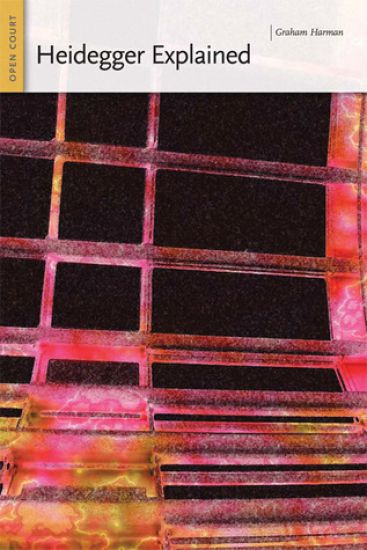
Heidegger Explained
Graham Harman
Open Court Publishing Co ,U.S.
2007
pokkari
Halvin toimitettuna 30,10 €
Martin Heidegger’s (1889-1976) influence has long been felt not just in philosophy, but also in such fields as art, architecture, and literary studies. Yet his difficult terminology has often scared away interested readers lacking an academic background in philosophy. In this new entry in the Ideas Explained series, author Graham Harman shows that Heidegger is actually one of the simplest and clearest of thinkers. His writings and analyses boil down to a single powerful idea: being is not presence. In any human relation with the world, our thinking and even our acting do not fully exhaust the world. Something more always withdraws from our grasp. As Harman shows, Heidegger understood that human beings are not lucid scientific observers staring at the world and describing it, but instead are thrown into a world where light is always mixed with shadow. The book concludes with a comprehensible discussion of the philosopher’s notoriously opaque concept of the fourfold.
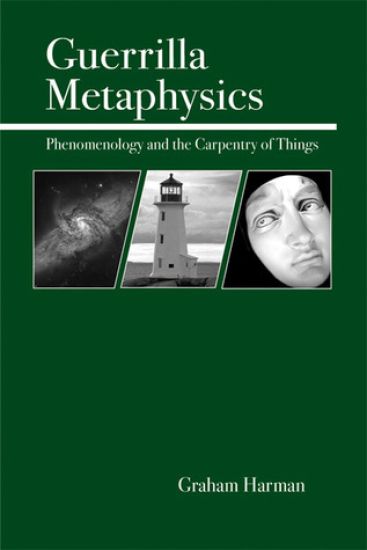
In Guerrilla Metaphysics, Graham Harman develops further the object-oriented philosophy first proposed in Tool-Being. Today’s fashionable philosophies often treat metaphysics as a petrified relic of the past, and hold that future progress requires an ever further abandonment of all claims to discuss reality in itself. Guerrilla Metaphysics makes the opposite assertion, challenging the dominant "philosophy of access" (both continental and analytic) that remains quarantined in discussions of language, perception, or literary texts. Philosophy needs a fresh resurgence of the things themselves?not merely the words or appearances themselves. Once these themes are adapted to the needs of an object-oriented philosophy, what emerges is a brand new type of metaphysics?a "guerrilla metaphysics."
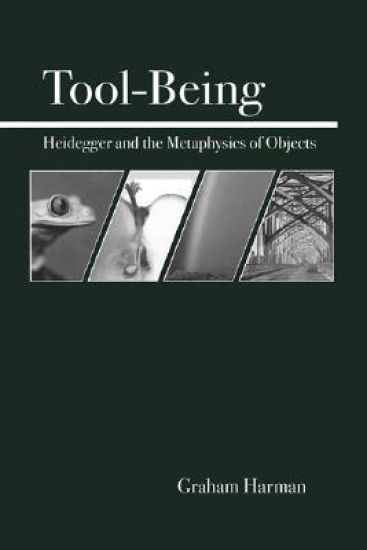
In this work, the author explains Heidegger's tool-analysis and then extends it beyond Heidegger's narrower theory of human practical activity to create an ontology of objects themselves.