Kirjojen hintavertailu – 12 903 725 kirjaa ja 27 kauppaa

Kirjailija

Graham Room

Kirjat ja teokset yhdessä paikassa: 11 kirjaa, julkaisuja vuosilta 1990–2017, suosituimpiin kuuluu Insecurity and Welfare Regimes in Asia, Africa and Latin America. Vertaile teosten hintoja ja tarkista saatavuus suomalaisista kirjakaupoista.

11 kirjaa

Kirjojen julkaisuvuodet: 1990–2017.

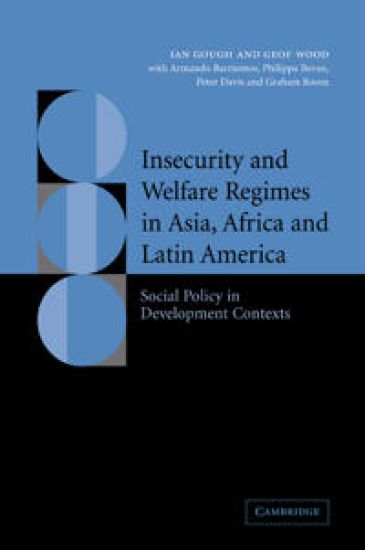
Insecurity and Welfare Regimes in Asia, Africa and Latin America

Insecurity and Welfare Regimes in Asia, Africa and Latin America

Ian Gough; Geof Wood; Armando Barrientos; Philippa Bevan; Peter Davis; Graham Room

Cambridge University Press
2008
pokkari
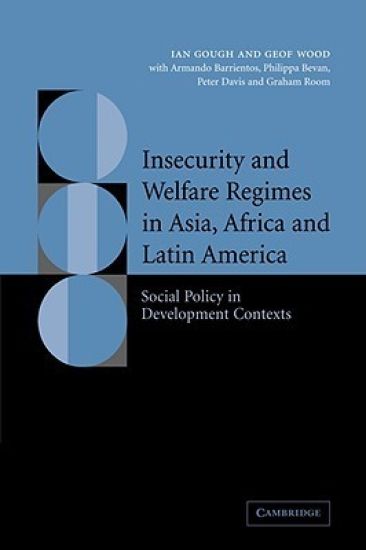
Written by a team of internationally respected experts, this book explores the conditions under which social policy, defined as the public pursuit of secure welfare, operates in the poorer regions of the world. Social policy in advanced capitalist countries operates through state intervention to compensate for the inadequate welfare outcomes of the labour market. Such welfare regimes cannot easily be reproduced in poorer regions of the world where states suffer problems of governance and labour markets are imperfect and partial. Other welfare regimes therefore prevail involving non-state actors such as landlords, moneylenders and patrons. This book seeks to develop a conceptual framework for understanding different types of welfare regime in a range of countries in Asia, Latin America and Africa and makes an important contribution to the literature by breaking away from the traditional focus on Europe and North America.
Insecurity and Welfare Regimes in Asia, Africa and Latin America

Insecurity and Welfare Regimes in Asia, Africa and Latin America

Ian Gough; Geof Wood; Armando Barrientos; Philippa Bevan; Peter Davis; Graham Room

Cambridge University Press
2004
sidottu
Written by a team of internationally respected experts, this book explores the conditions under which social policy, defined as the public pursuit of secure welfare, operates in the poorer regions of the world. Social policy in advanced capitalist countries operates through state intervention to compensate for the inadequate welfare outcomes of the labour market. Such welfare regimes cannot easily be reproduced in poorer regions of the world where states suffer problems of governance and labour markets are imperfect and partial. Other welfare regimes therefore prevail involving non-state actors such as landlords, moneylenders and patrons. This book seeks to develop a conceptual framework for understanding different types of welfare regime in a range of countries in Asia, Latin America and Africa and makes an important contribution to the literature by breaking away from the traditional focus on Europe and North America.
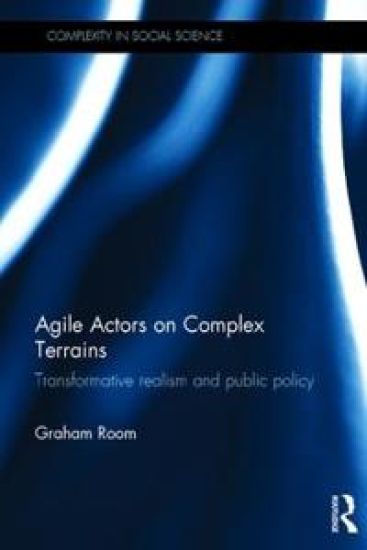
Agile Actors on Complex Terrains
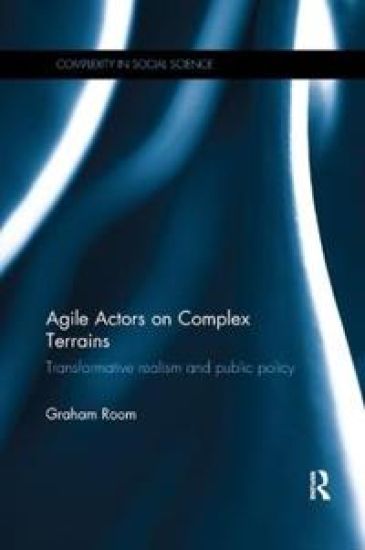
This book assesses the value and relevance of the literature on complex systems to policy-making, contributing to both social theory and policy analysis. For this purpose it develops two key ideas: agile action and transformative realism. The book takes some major themes from complexity science, presents them in a clear and accessible manner and applies them to core problems in sociological theory and policy analysis. Combining complexity science with perspectives from institutionalism and political economy, this book is the first to integrate these fields conceptually, methodologically and in terms of the implications for policy analysis and practice. Room shows how the models and methods of social and complexity science can be jointly deployed and applied to empirical areas of public policy. He demonstrates how complexity science can provide insight into the nonlinear dynamics of the social world, but why these need to be understood by reference to the unequal distribution of power and advantage. Among the sociological debates with which the book engages are those concerned with causation and explanation, rational action and positional competition, and the place of evolutionary concepts in accounts of social change. Among the policy debates are those concerned with evidence and policy, the dynamics of inequality, and libertarian paternalism. The book will appeal to final year undergraduates and postgraduate students in social sciences; scholars in social and policy studies broadly defined; policy-makers who want to go beyond conventional discussions of evidence-based policy-making and cross-national lesson-drawing, and consider how to approach complex and turbulent policy terrains; and a wider range of scholars in other disciplines where complexity science is already well developed.
Agile Actors on Complex Terrains
This book assesses the value and relevance of the literature on complex systems to policy-making, contributing to both social theory and policy analysis. For this purpose it develops two key ideas: agile action and transformative realism. The book takes some major themes from complexity science, presents them in a clear and accessible manner and applies them to core problems in sociological theory and policy analysis. Combining complexity science with perspectives from institutionalism and political economy, this book is the first to integrate these fields conceptually, methodologically and in terms of the implications for policy analysis and practice. Room shows how the models and methods of social and complexity science can be jointly deployed and applied to empirical areas of public policy. He demonstrates how complexity science can provide insight into the nonlinear dynamics of the social world, but why these need to be understood by reference to the unequal distribution of power and advantage. Among the sociological debates with which the book engages are those concerned with causation and explanation, rational action and positional competition, and the place of evolutionary concepts in accounts of social change. Among the policy debates are those concerned with evidence and policy, the dynamics of inequality, and libertarian paternalism. The book will appeal to final year undergraduates and postgraduate students in social sciences; scholars in social and policy studies broadly defined; policy-makers who want to go beyond conventional discussions of evidence-based policy-making and cross-national lesson-drawing, and consider how to approach complex and turbulent policy terrains; and a wider range of scholars in other disciplines where complexity science is already well developed.
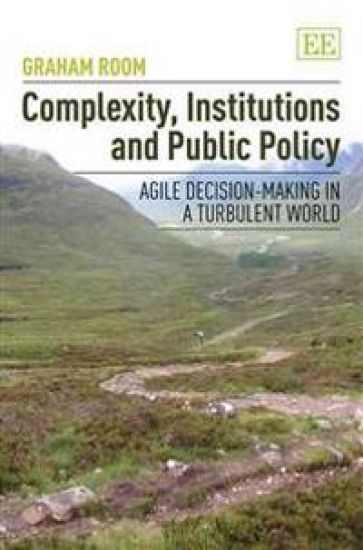
Complexity, Institutions and Public Policy

Complexity, Institutions and Public Policy

Graham Room

Edward Elgar Publishing Ltd
2011
nidottu
Graham Room argues that conventional approaches to the conceptualization and measurement of social and economic change are unsatisfactory. As a result, researchers are ill-equipped to offer policy advice. This book offers a new analytical approach, combining complexity science and institutionalism. It also provides tools for policy makers in turbulent times. Part 1 is concerned with the conceptualization of socio-economic change. It integrates complexity science and institutionalism into a coherent ontology of social and policy dynamics. Part 2 is concerned with models and measurement. It combines some of the principal approaches developed in complexity analysis with models and methods drawn from mainstream social and political science. Part 3 offers empirical applications to public policy: the dynamics of social exclusion; the social dimension of knowledge economies; the current financial and economic crisis. These are supplemented by a toolkit for the practice of 'agile policy making'. This is a stimulating, provocative and highly original book. It will appeal to academics and students in social and policy studies and to a wide range of scholars in other disciplines where complexity science is already well-developed. It will also be of major interest for decision makers coping with complex and turbulent policy terrains. Contents: Preface 1. Introduction Part I: Concepts 2. The Complexity Paradigm 3. Complex Adaptive Systems 4. The Economy as a Complex Adaptive System 5. Institutional Settings and Architectures 6. Institutional Dynamics 7. The Struggle for Positional Advantage 8. Conceptualising Social Dynamics Part II: Methods 9. Attractors and Orbits in Dynamic Systems 10. Patterns in Time and Space 11. Connections and Networks 12. Mobility on Social Landscapes 13. Towards a Generic Methodology Part III: Policies 14. Agile Policy-Making 15. Poverty and Social Exclusion 16. Social Dynamics of the Knowledge Economy 17. Global Turbulence and Crisis Postscript: Tools for Policy-Makers References Index
Complexity, Institutions and Public Policy

Complexity, Institutions and Public Policy

Graham Room

Edward Elgar Publishing Ltd
2011
sidottu
Graham Room argues that conventional approaches to the conceptualization and measurement of social and economic change are unsatisfactory. As a result, researchers are ill-equipped to offer policy advice. This book offers a new analytical approach, combining complexity science and institutionalism. It also provides tools for policy makers in turbulent times. Part 1 is concerned with the conceptualization of socio-economic change. It integrates complexity science and institutionalism into a coherent ontology of social and policy dynamics. Part 2 is concerned with models and measurement. It combines some of the principal approaches developed in complexity analysis with models and methods drawn from mainstream social and political science. Part 3 offers empirical applications to public policy: the dynamics of social exclusion; the social dimension of knowledge economies; the current financial and economic crisis. These are supplemented by a toolkit for the practice of 'agile policy making'. This is a stimulating, provocative and highly original book. It will appeal to academics and students in social and policy studies and to a wide range of scholars in other disciplines where complexity science is already well-developed. It will also be of major interest for decision makers coping with complex and turbulent policy terrains. Contents: Preface 1. Introduction Part I: Concepts 2. The Complexity Paradigm 3. Complex Adaptive Systems 4. The Economy as a Complex Adaptive System 5. Institutional Settings and Architectures 6. Institutional Dynamics 7. The Struggle for Positional Advantage 8. Conceptualising Social Dynamics Part II: Methods 9. Attractors and Orbits in Dynamic Systems 10. Patterns in Time and Space 11. Connections and Networks 12. Mobility on Social Landscapes 13. Towards a Generic Methodology Part III: Policies 14. Agile Policy-Making 15. Poverty and Social Exclusion 16. Social Dynamics of the Knowledge Economy 17. Global Turbulence and Crisis Postscript: Tools for Policy-Makers References Index
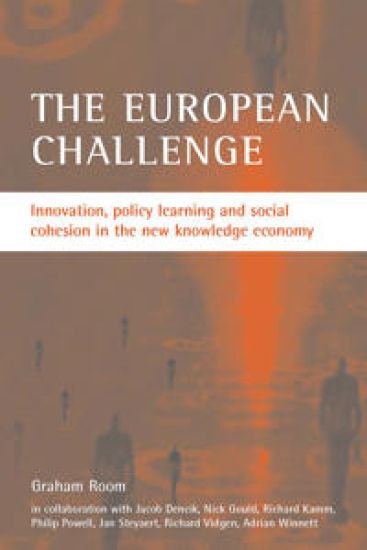
The European challenge

The European challenge

Graham Room; Jacob Dencik; Nick Gould; Richard Kamm; Philip Powell; Jan Steyaert; Richard Vidgen; Adrian Winnett

Policy Press
2005
nidottu
Economic and social change is accelerating under the twin impact of globalisation and the new information technologies. But how are these processes interrelated? Are they impelling us towards a common socio-economic future? What can governments do if they want to manage and steer the direction of development? This book addresses these questions with particular reference to the European Union, which has made the development of a socially cohesive, knowledge-based economy its central task for the present decade. It assesses both the challenges and the policy instruments that are being deployed, focussing in particular on the dynamics of the 'new economy'; the new organisational architectures associated with rapid innovation; the transformation of education and training; the implications for social cohesion and exclusion and the role of policy benchmarking in promoting policy learning and enhancing national performance. The European Challenge presents the most up-to-date research on the development of the knowledge-based economy and its social and policy implications. Its accessible and integrated treatment of the processes of economic, social and technological change make it an invaluable resource for those studying and researching in the fields of public and social policy, organisational and technological change and innovation. It is also highly relevant to policy-makers who need to understand and manage this change.
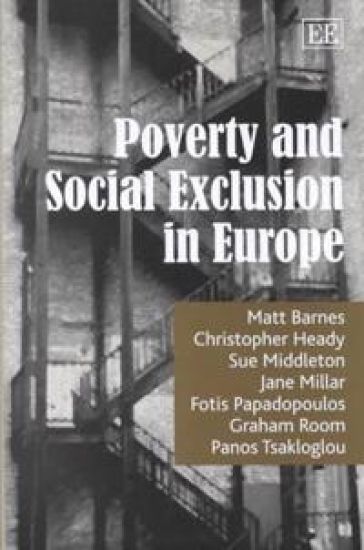
Poverty and Social Exclusion in Europe

Poverty and Social Exclusion in Europe

Matt Barnes; Christopher Heady; Sue Middleton; Jane Millar; Fotis Papadopoulos; Graham Room; Panos Tsakloglou

Edward Elgar Publishing Ltd
2003
nidottu
There are estimated to be almost 60 million people living in poverty throughout the European Union. This bleak statistic underlines the value of this important book which explores the nature and extent of poverty and social exclusion in six European countries, namely: Austria, Germany, Greece, Norway, Portugal and the UK. The book focuses on four 'life course' groups who might be considered particularly at risk: young adults, lone parents, the sick and disabled, and the retired. The authors show how poverty is the outcome of the interaction between several factors including education, gender and family structure. They emphasise the importance of distinguishing between poverty and non-monetary measures of deprivation and isolation. Although the poor are more at risk of suffering from deprivation, the authors demonstrate that this relationship is more tenuous than many people suppose. Employing rigorous theoretical and methodological analyses they go on to relate their findings to the policy environment in each of the countries, which were specifically chosen to reflect differing welfare systems. In this way the authors compare the impact of government policy on both the level of poverty and social exclusion, and on who is most at risk of experiencing them. Both statistically and in policy terms this book will be essential reading for students and academics of economics and the social sciences, and policy makers at both the national and European level.
Poverty and Social Exclusion in Europe

Poverty and Social Exclusion in Europe

Matt Barnes; Christopher Heady; Sue Middleton; Jane Millar; Fotis Papadopoulos; Graham Room; Panos Tsakloglou

Edward Elgar Publishing Ltd
2002
sidottu
There are estimated to be almost 60 million people living in poverty throughout the European Union. This bleak statistic underlines the value of this important book which explores the nature and extent of poverty and social exclusion in six European countries, namely: Austria, Germany, Greece, Norway, Portugal and the UK. The book focuses on four 'life course' groups who might be considered particularly at risk: young adults, lone parents, the sick and disabled, and the retired. The authors show how poverty is the outcome of the interaction between several factors including education, gender and family structure. They emphasise the importance of distinguishing between poverty and non-monetary measures of deprivation and isolation. Although the poor are more at risk of suffering from deprivation, the authors demonstrate that this relationship is more tenuous than many people suppose. Employing rigorous theoretical and methodological analyses they go on to relate their findings to the policy environment in each of the countries, which were specifically chosen to reflect differing welfare systems. In this way the authors compare the impact of government policy on both the level of poverty and social exclusion, and on who is most at risk of experiencing them. Both statistically and in policy terms this book will be essential reading for students and academics of economics and the social sciences, and policy makers at both the national and European level.
‘New Poverty’ in the European Community

‘New Poverty’ in the European Community

Graham Room

Palgrave Macmillan
1990
sidottu
During the 1980s, poverty became a major issue of debate in the countries of the E. C. Social researchers, political decision-makers and the mass media have argued that this poverty takes new forms and affects new groups of the population. This book first provides a critical analysis of these debates and the political interests which are involved. It then brings together the latest evidence on the changing patterns of poverty in the Community countries during the 1970s and 1980s and concludes by examining the likely effects on poverty of the Single European Market.
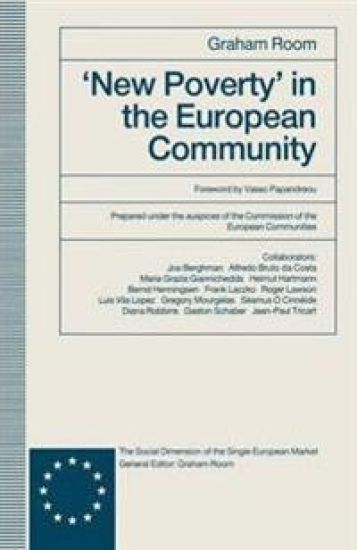
‘New Poverty’ in the European Community

‘New Poverty’ in the European Community

Graham Room

Palgrave Macmillan
1990
nidottu
During the 1980s, poverty became a major issue of debate in the countries of the E. C. Social researchers, political decision-makers and the mass media have argued that this poverty takes new forms and affects new groups of the population. This book first provides a critical analysis of these debates and the political interests which are involved. It then brings together the latest evidence on the changing patterns of poverty in the Community countries during the 1970s and 1980s and concludes by examining the likely effects on poverty of the Single European Market.