Kirjojen hintavertailu – 12 859 819 kirjaa ja 27 kauppaa

Kirjailija

Graham St John

Kirjat ja teokset yhdessä paikassa: 8 kirjaa, julkaisuja vuosilta 2009–2025, suosituimpiin kuuluu Global Tribe. Vertaile teosten hintoja ja tarkista saatavuus suomalaisista kirjakaupoista.

Nimi esiintyy myös muodoissa: Graham St. John

8 kirjaa

Kirjojen julkaisuvuodet: 2009–2025.

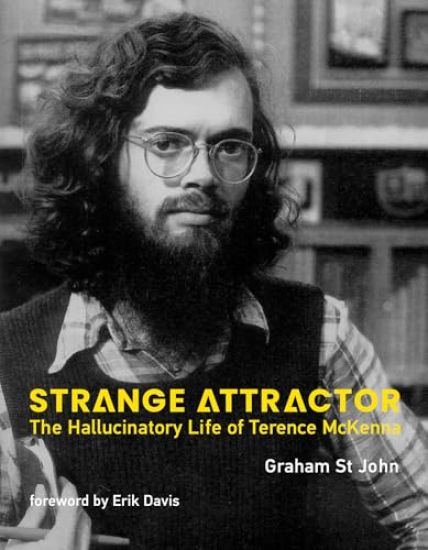
Strange Attractor

Strange Attractor

Graham St John; Erik Davis

MIT PRESS LTD
2025
nidottu

Halvin toimitettuna 30,10 €

An intellectual biography of one of the most celebrated and yet least understood figures of the late twentieth century, Terence McKenna. A stand-up philosopher who made a unique contribution to science, humanism, and the hidden arts, Terence McKenna (1946 2000) was the twentieth century s psychedelic Renaissance man. Perfecting his rugged philosophy on the role of psychedelics in evolution, consciousness, and time, McKenna was a riotous charmer who stalked the shadows, but also sought the iridescence. More than twenty years since his untimely passing, McKenna has an enduring magnetism across the virtual pop stream, in pervasive digitization, and within social media networks. In Strange Attractor, the first biography of this enigmatic figure, Graham St John detects the signal behind the noise. This book is an engaging chronicle of the life, works, and legacy of this brazen adventurer of the inner and outer dimensions, whose weird intelligence has affected multitudes and whose spirit continues to haunt the present. It draws on original documents and letters, features fifty two rare photographs and artworks, and shares previously untold stories from over eighty people. Neither glorifying nor disparaging its subject, Strange Attractor will appeal to those interested in the evolution of a psychedelic intellectual, and to those for whom McKenna s wisdom endures.
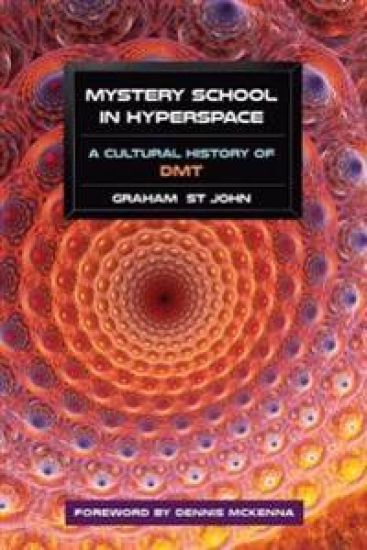
Mystery School in Hyperspace

Mystery School in Hyperspace

Graham St John; Dennis McKenna

Evolver Editions
2015
pokkari
Since the mid-1950s, the psychoactive compound DMT has attracted the attention of experimentalists and prohibitionists, scientists and artists, alchemists and hyperspace emissaries. While most known as a crucial component of the "jungle alchemy" that is ayahuasca, DMT is a unique story unto itself. Until now, this story has remained untold. Mystery School in Hyperspace is the first book to delve into the history of this substance, the discovery of its properties, and the impact it has had on poets, artists, and musicians. DMT has appeared at crucial junctures in countercultural history. William Burroughs was jacking the spice in Tangier at the turn of the 1960s. It was present at the meeting between Ken Kesey's Merry Pranksters and Tim Leary's associates. It guided the inception of the Grateful Dead in 1965. It showed up in Berkeley in the same year, falling into the hands of Terence McKenna, who would eventually become its champion in the post-rave neo-psychedelic movement of the 1990s. Its indole vapor drifted through Portugal's Boom Festival and has been evident at Nevada's Burning Man, where DMT has been adopted as spiritual technology supplying shape, color, and depth to a visionary art movement. The growing prevalence of use is evident in a vast networked independent research culture, and in its impact on fiction, film, music and metaphysics. As this book traces the effect of DMT's release into the cultural bloodstream, the results should be of great interest to contemporary readers. The book permits a broad reading audience to join ongoing debates in studies in consciousness and theology where the brain is held to be either a generator or a receiver of consciousness. The implications of the "spirit molecule" or "the brain's own psychedelic" among other theories illustrate that DMT may lift the lid on the Pandora's Box of consciousness. Features a foreword by Dennis McKenna, cover art by Beau Deeley, and thirty color illustrations by various artists, including Alex Grey, Android Jones, Martina Hoffmann, Luke Brown, Carey Thompson, Adam Scott Miller, Randal Roberts, along with Jay Bryan, Cyb, Orryelle Defenestrate-Bascule, Art Van D'lay, Stuart Griggs, Jay Lincoln, Gwyllm Llwydd, Shiptu Shaboo, Marianna Stelmach, and Mister Strange. Regarded as the "nightmare hallucinogen" or celebrated as the "spirit molecule," labelled "psychotogenic" or "entheogenic," considered a dangerous drug or the suspected X-factor in the evolution of consciousness, DMT is a powerful enigma. Documenting the scientists and artists drawn into its sphere of influence, navigating the liminal aesthetics of the "breakthrough" experience, tracing the novum of "hyperspace" in esoteric and science fiction currents, Mystery School in Hyperspace excavates the significance of this enigmatic phenomenon in the modern world. Exposing a great many myths, this cultural history reveals how DMT has had a beneficial influence on the lives of those belonging to a vast underground network whose reports and initiatives expose drug war propaganda and shine a light in the shadows. This conversation is highly relevant at a time when significant advances are being made to lift the moratorium on human research with psychedelics.

Global Tribe

Global Tribe

Graham St John

Equinox Publishing Ltd
2012
nidottu
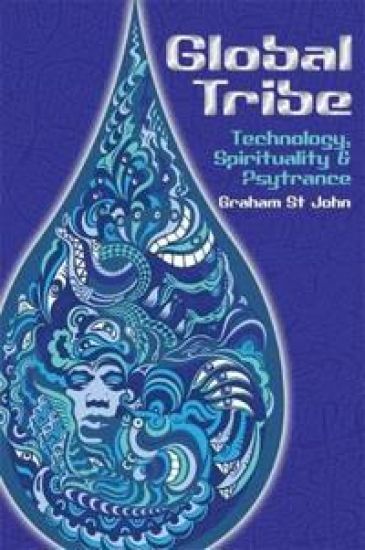
Trance events have an uncanny ability to capture an era, and captivate an audience of travellers occupying the eternal theatre of the dance floor. As this book shows, the tendency within psytrance is to thwart the passage of time, to prolong the night, for those who adopt a liminal lifestyle. Amid the hustle and hubris of the psytrance carnival there is a peaceful repose that you sometimes catch when you've drifted into a sea of outstretched limbs, bodies swaying like a field of sunflowers in a light breeze. And you feel intense joy in this fleeting moment. You are the moment. You are inside the flow. You are all. Embodying the poetry of dance, you are living evidence that nothing lasts. And this is a deep revelation of the mystical function of trance. It is difficult to emerge from this little death, because one does not want the party to end. But it must end, even so that it can recommence - so that one can return to repeat the cycle. The result of fifteen years of research in over a dozen countries, this book applies a sharp lens on a little understood global dance culture that has mushroomed all over the world since its beginnings in the diverse psychedelic music scenes flourishing in Goa in the 1970s and 1980s. The paramount expression of this movement has been the festival, from small parties to major international events such as Portugal's Boom Festival, which promotes itself as a world-summit of visionary arts and trance, a "united tribe of the world". Via first-hand accounts of the scenes, events and music of psychedelic trance in Australia, Israel, Germany, Italy, the UK, the US, Turkey and other places, the book thoroughly documents this transnational movement with its diverse aesthetic roots, multiple national translations and internal controversies. As a multi-sited ethnography and an examination of the digital, chemical, cyber and media assemblage constituting psytrance, the book explores the integrated role that technology and spirituality have played in the formation of this visionary arts movement and shows how these event-cultures accommodate rites of risk and consciousness, a complex circumstance demanding revision of existing approaches to ritual, music and culture.
Global Tribe

Global Tribe

Graham St John

Equinox Publishing Ltd
2012
sidottu
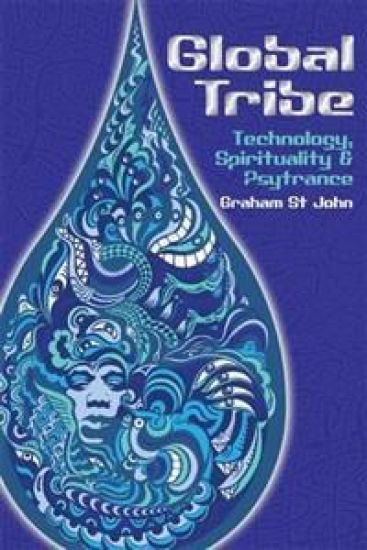
Trance events have an uncanny ability to capture an era, and captivate an audience of travellers occupying the eternal theatre of the dance floor. As this book shows, the tendency within psytrance is to thwart the passage of time, to prolong the night, for those who adopt a liminal lifestyle. Amid the hustle and hubris of the psytrance carnival there is a peaceful repose that you sometimes catch when you've drifted into a sea of outstretched limbs, bodies swaying like a field of sunflowers in a light breeze. And you feel intense joy in this fleeting moment. You are the moment. You are inside the flow. You are all. Embodying the poetry of dance, you are living evidence that nothing lasts. And this is a deep revelation of the mystical function of trance. It is difficult to emerge from this little death, because one does not want the party to end. But it must end, even so that it can recommence - so that one can return to repeat the cycle. The result of fifteen years of research in over a dozen countries, this book applies a sharp lens on a little understood global dance culture that has mushroomed all over the world since its beginnings in the diverse psychedelic music scenes flourishing in Goa in the 1970s and 1980s. The paramount expression of this movement has been the festival, from small parties to major international events such as Portugal's Boom Festival, which promotes itself as a world-summit of visionary arts and trance, a "united tribe of the world". Via first-hand accounts of the scenes, events and music of psychedelic trance in Australia, Israel, Germany, Italy, the UK, the US, Turkey and other places, the book thoroughly documents this transnational movement with its diverse aesthetic roots, multiple national translations and internal controversies. As a multi-sited ethnography and an examination of the digital, chemical, cyber and media assemblage constituting psytrance, the book explores the integrated role that technology and spirituality have played in the formation of this visionary arts movement and shows how these event-cultures accommodate rites of risk and consciousness, a complex circumstance demanding revision of existing approaches to ritual, music and culture.
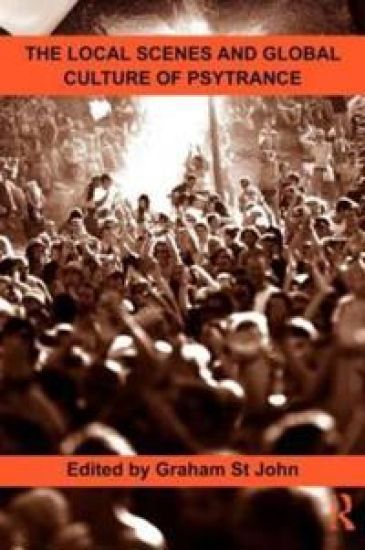
The Local Scenes and Global Culture of Psytrance
This lively textual symposium offers a collection of formative research on the culture of global psytrance (psychedelic trance). As the first book to address the diverse transnationalism of this contemporary electronic dance music phenomenon, the collection hosts interdisciplinary research addressing psytrance as a product of intersecting local and global trajectories. Contributing to theories of globalization, postmodernism, counterculture, youth subcultures, neotribes, the carnivalesque, music scenes and technologies, dance ritual and spirituality, chapters introduce psytrance in Goa, the UK, Israel, Japan, the US, Italy, Czech Republic, Portugal and Australia. As a global occurrence indebted to 1960s psychedelia, sharing music production technologies and DJ techniques with electronic dance music scenes, and harnessing the communication capabilities of the Internet, psytrance and its cultural implications are thoroughly discussed in this first scholarly volume of its kind.
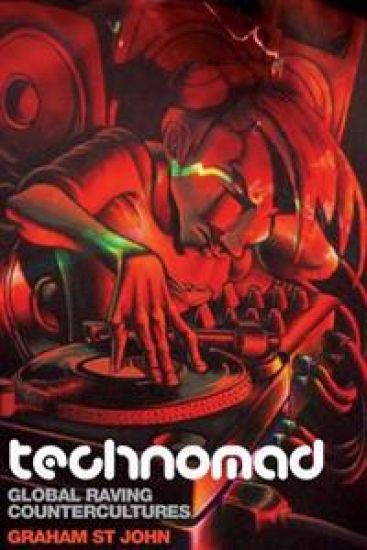
Technomad

Technomad

Graham St. John

Equinox Publishing Ltd
2009
nidottu

Halvin toimitettuna 39,20 €

A cultural history of global electronic dance music countercultures, "Technomad" explores the pleasurable and activist trajectories of post-rave. The book documents an emerging network of techno-tribes, exploring their pleasure principles and cultural politics. Attending to sound system culture, electro-humanitarianism, secret sonic societies, teknivals and other gatherings, intentional parties, revitalisation movements and counter-colonial interventions, "Technomad" investigates how the dance party has been harnessed for transgressive and progressive ends, for manifold freedoms. Seeking freedom from moral prohibitions and standards, pleasure in rebellion, refuge from sexual and gender prejudice, exile from oppression, rupturing aesthetic boundaries, re-enchanting the world, reclaiming space, fighting for 'the right to party', and responding to a host of critical concerns, electronic dance music cultures are multivalent sites of resistance. Drawing on extensive ethnographic, netographic and documentary research, "Technomad" details the post-rave trajectory through various local sites and global scenes, with each chapter attending to unique developments in the techno counterculture: example Spiral Tribe, teknivals, psytrance, Burning Man, Reclaim the Streets, Earthdream. The book offers an original nuanced theory of resistance to assist understanding of these developments. This cultural history of hitherto uncharted territory will be of interest to students of cultural, performance, music, media, and new social movement studies, along with enthusiasts of dance culture and popular politics.
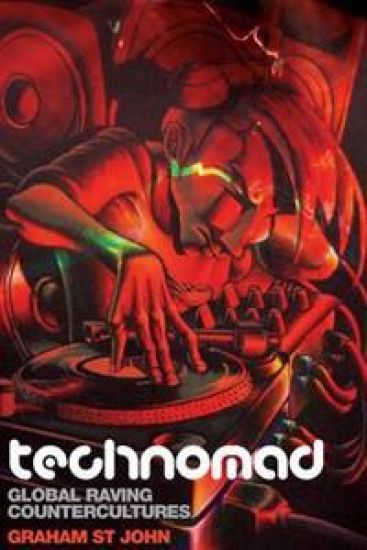
Technomad

Technomad

Graham St. John

Equinox Publishing Ltd
2009
sidottu
A cultural history of global electronic dance music countercultures, "Technomad" explores the pleasurable and activist trajectories of post-rave. The book documents an emerging network of techno-tribes, exploring their pleasure principles and cultural politics. Attending to sound system culture, electro-humanitarianism, secret sonic societies, teknivals and other gatherings, intentional parties, revitalisation movements and counter-colonial interventions, "Technomad" investigates how the dance party has been harnessed for transgressive and progressive ends, for manifold freedoms. Seeking freedom from moral prohibitions and standards, pleasure in rebellion, refuge from sexual and gender prejudice, exile from oppression, rupturing aesthetic boundaries, re-enchanting the world, reclaiming space, fighting for 'the right to party', and responding to a host of critical concerns, electronic dance music cultures are multivalent sites of resistance. Drawing on extensive ethnographic, netographic and documentary research, "Technomad" details the post-rave trajectory through various local sites and global scenes, with each chapter attending to unique developments in the techno counterculture: example Spiral Tribe, teknivals, psytrance, Burning Man, Reclaim the Streets, Earthdream. The book offers an original nuanced theory of resistance to assist understanding of these developments. This cultural history of hitherto uncharted territory will be of interest to students of cultural, performance, music, media, and new social movement studies, along with enthusiasts of dance culture and popular politics.