Kirjojen hintavertailu – 12 903 727 kirjaa ja 27 kauppaa

Kirjailija

Graham Ward

Kirjat ja teokset yhdessä paikassa: 28 kirjaa, julkaisuja vuosilta 1995–2026, suosituimpiin kuuluu Salvation. Vertaile teosten hintoja ja tarkista saatavuus suomalaisista kirjakaupoista.

28 kirjaa

Kirjojen julkaisuvuodet: 1995–2026.

Salvation

Salvation

Graham Ward

Oxford University Press
2026
sidottu
Salvation: Ethical Life III examines the meaning of salvation in Christian theology. Viewing all theological writing as a cultural production, Graham Ward rethinks key aspects of salvation^—^sin, death, atonement, and sanctification^—^through various lenses drawn from both the humanities and the sciences. This examination is divided into three parts. The first part explores what it is to be human: immersed in our environments, erring and death-bound, and reflecting upon who we are. The second part turns to the redemptive work of Christ by first examining so-called theories of the atonement and then analysing the redemptive process as it emerges in the seven last words of Jesus on the Cross. Proposing a universal salvation, the book develops the Pauline notion of recapitulation, the gathering of all things to their created origin in the Trinitarian Godhead. The final part then focusses upon the processes of this gathering in terms of spiritual formation. Ward moves from the initial hearing of the divine call, through to the way responding transforms perception, emotional life, and disposition. Foremost in this transformative process is the liberation of desire through which salvation culminates in coming to know as we are known and coming to love as we are loved. In an epilogue, the book reflects upon the life, theology, and poetry of Gerard Manley Hopkins, pointing to the role of failure in the process of redemption.

We Believe in the Holy Spirit

We Believe in the Holy Spirit

Graham Ward

Cascade Books
2023
pokkari
We Believe in the Holy Spirit is a collection of articles reflecting some of the most important ideas in pneumatology in recent years. Although the articles were not written to fit the articles of the Nicene Creed (381), linking these articles to the articles of the creed sheds imaginative light on the development of ideas in theologies of the Spirit.
Egon Altdorf: Into the Light

Egon Altdorf: Into the Light

Judith Le Grove; Graham Ward; Deborah Lewer; Dorothea Schöne; Julia Kelly

SANSOM CO
2023
sidottu
From sculpture to woodcuts, glass design to poetry, the work of German artist Egon Altdorf crossed boundaries. ‘Making culture behind the barbed wire’ was how Altdorf endured wartime captivity, inspiring a life dedicated to art that was innovative, spiritual and redemptive. Exhibiting in London alongside sculptors Barbara Hepworth, Lynn Chadwick and Reg Butler at the Unknown Political Prisoner exhibition (1953), he adopted an increasingly abstract approach, rooted in Biblical symbolism yet embracing different faiths, notably in designs for the outstanding interior of Wiesbaden’s new synagogue. Exploring Altdorf’s work in ten interdisciplinary chapters, this book illuminates the still-overlooked contribution of artists who reshaped postwar existence: the lost generation.
Another Kind of Normal

Another Kind of Normal

Graham Ward

Oxford University Press
2022
sidottu

Halvin toimitettuna 181,40 €

Every age needs to examine and propose its ways of living ethically. Another Kind of Normal: Ethical Life II constructs a mode of such living according to the Christian tradition, based upon an interpretation of Christ's coming and the relationship of that incarnation to God as the Creator of all things. In the second of four volumes, Graham Ward explores an Augustinian vision of consonance between divine rhythm and the rhythmic orders of creation. On the basis of what Augustine calls the 'interval', it proposes Christ is encountered as riddle, scandal, and paradox. It provides an account of creation as a Trinitarian event that calls for a rethinking of what are the key teachings in Christianity with respect to an understanding of creation as a divine benediction and a theatre for transformation and healing. Ward argues through Scriptural exegesis, for the omnidirectionality of time as graced, rejecting a conception of linear temporality and theologies indebted to that conception. Throughout, participation in God, through our hiddenness in Christ develops an account of the complex relationship between divine and human creativity, appealing to music, painting, poetry, drama, film, architecture, and novels.
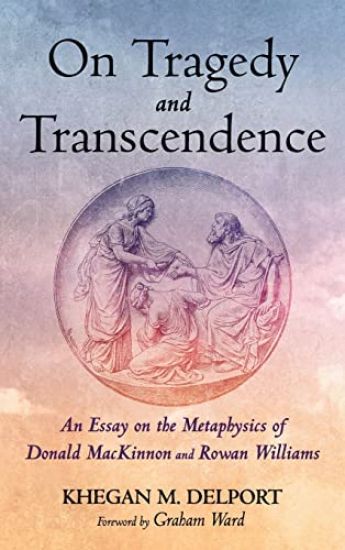
On Tragedy and Transcendence

On Tragedy and Transcendence

Khegan M Delport; Graham Ward

Pickwick Publications
2021
sidottu
From the time of Plato's proposed expulsion of the poets, tragedy has repeatedly proposed a challenge to philosophical and theological certainties. This is apparent already in early Christianity amongst leading figures during the patristic age. But this raises the question: Why was the theme of tragedy still accepted and deployed throughout the history of Christianity nevertheless? Is this merely an accident or is there something more substantial at play? Can Christian theology take the tragic seriously? Must Christianity ultimately deny the tragic to be coherent, or might it be able to sustain its negativity? Some like George Steiner, David Bentley Hart, and John Milbank have doubts about such a coherency, but others think differently. This book aims to examine this debate, laying out the lines of disagreement and continuing tensions. Through a critical examination of the work of Donald MacKinnon and the eminent Christian thinker Rowan Williams, the book aims to show that there is a path for reconciling the claims of Christian orthodoxy and the experience of tragedy, one that is able to maintain a metaphysical foundation for both real transcendence and unfolding historicity, without denying either.
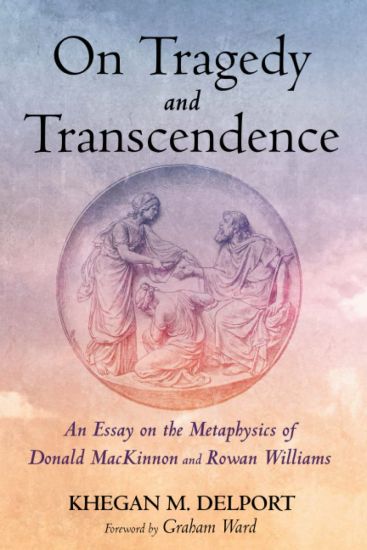
On Tragedy and Transcendence

On Tragedy and Transcendence

Khegan M Delport; Graham Ward

Wipf Stock Publishers
2021
pokkari
From the time of Plato's proposed expulsion of the poets, tragedy has repeatedly proposed a challenge to philosophical and theological certainties. This is apparent already in early Christianity amongst leading figures during the patristic age. But this raises the question: Why was the theme of tragedy still accepted and deployed throughout the history of Christianity nevertheless? Is this merely an accident or is there something more substantial at play? Can Christian theology take the tragic seriously? Must Christianity ultimately deny the tragic to be coherent, or might it be able to sustain its negativity? Some like George Steiner, David Bentley Hart, and John Milbank have doubts about such a coherency, but others think differently. This book aims to examine this debate, laying out the lines of disagreement and continuing tensions. Through a critical examination of the work of Donald MacKinnon and the eminent Christian thinker Rowan Williams, the book aims to show that there is a path for reconciling the claims of Christian orthodoxy and the experience of tragedy, one that is able to maintain a metaphysical foundation for both real transcendence and unfolding historicity, without denying either.
Theology and Religion

Theology and Religion

Graham Ward

Polity Press
2019
nidottu
Graham Ward argues that the study of theology and religion, as a single academic discipline, plays a vital role in helping us to understand politics, world affairs, and the nature of humanity itself. Religion can be used to justify inhumane actions, but it also feeds dreams, inspires hopes, and shapes aspirations. By invoking a sense of wonder about the natural world, religion can promote scientific discoveries, and by focusing on shared experiences, religion helps to bind societies together. Some scientists now believe that religious feeling might be hard-wired into our DNA, a fundamental aspect of what makes us human. Because religion is rooted in the imagination itself, its study involves staring into the profundities of who we are. Religion will not go away, so it needs to be understood.
Theology and Religion

Theology and Religion

Graham Ward

Polity Press
2019
sidottu
Graham Ward argues that the study of theology and religion, as a single academic discipline, plays a vital role in helping us to understand politics, world affairs, and the nature of humanity itself. Religion can be used to justify inhumane actions, but it also feeds dreams, inspires hopes, and shapes aspirations. By invoking a sense of wonder about the natural world, religion can promote scientific discoveries, and by focusing on shared experiences, religion helps to bind societies together. Some scientists now believe that religious feeling might be hard-wired into our DNA, a fundamental aspect of what makes us human. Because religion is rooted in the imagination itself, its study involves staring into the profundities of who we are. Religion will not go away, so it needs to be understood.
Unimaginable

Unimaginable

Graham Ward

I.B. Tauris
2018
sidottu
It has roots beneath consciousness and is expressed in moods, rhythms, tones and textures of experience that are as much mental as physiological. In his new book, a sequel to the earlier Unbelievable, one of Britain's most exciting writers on religion here presents a nuanced and many-dimensional portrait of the mystery and creativity of the human imagination. Discussing the likes of William Wordsworth, William Turner, Samuel Palmer and Ralph Vaughan Williams, so as to assess the true meanings of originality and memory, and drawing on his own rich encounters with belief, Graham Ward asks why it is that the imagination is so fundamental to who and what we are. Using metaphor and story to unpeel the hidden motivations and architecture of the mind, the author grapples with profound questions of ultimacy and transcendence. He reveals that, in understanding what it really means to be human, what cannot be imagined invariably means as much as what can.
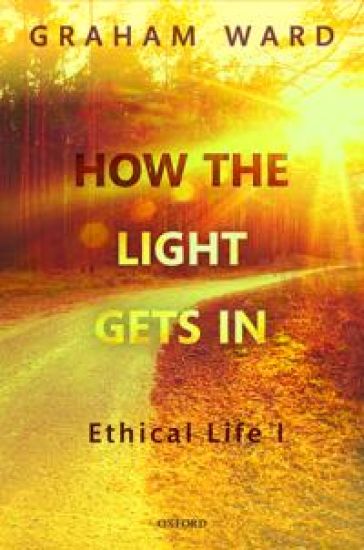
How the Light Gets In

How the Light Gets In

Graham Ward

Oxford University Press
2018
nidottu
How the Light Gets In: Ethical Life I presents a systematic account of the teachings of the Christian faith to offer a vision, from a human, created, and limited perspective, of the ways all things might be understood from the divine perspective. It explores how Christian doctrine is lived, and the way in which beliefs are not simply cognitive sets of ideas but embodied cultural practices. Christians learn how to understand the contents of their faith, learn the language of the faith, through engagements that are simultaneously somatic, affective, imaginative, and intellectual. In the first of four volumes, Graham Ward examines the complex levels of these engagements through three historical developments in the systematic organization of doctrine: the Creeds, the Summa, and Protestant dogmatics. He outlines a methodology for exploring and practicing systematic theology that captures how the faith is lived in cultural, social, and embodied engagements. Ward then unpicks several fundamental theological concepts and how they are to be understood from the point of view of an engaged systematics: truth, revelation, judgement, discernment, proclamation, faith seeking understanding, and believing as it relates to and grounds the possibilities for faith. This groundbreaking work offers an interdisciplinary investigation through poetry, art, film, the Bible and theological discourse, analysing the human condition and theology as the deep dream for salvation. The final part relates theology as a lived and ongoing pedagogy concerned with individual and corporate formation to biological life, social life, and life in Christ. Here an approach to living theologically is sketched that is the primary focus for all four volumes: ethical life.
The God We Proclaim

The God We Proclaim

Graham Ward

Cascade Books
2017
pokkari
Throughout history, Christians have found the summary of their faith in the three ancient creeds. The God We Proclaim explores that faith as it is found in the shortest of them: the Apostles' Creed. The contributors are among Britain's foremost Christian communicators and teachers. Written with an infectious enthusiasm for theology, The God We Proclaim is ideal for anyone seeking to understand the Christian faith, either individually, or in a church or student study group. It is based on a set of sermons delivered in the chapel of Jesus College, Cambridge, which surveyed the foundations of Christianity. Dorothy L. Sayers (1893-1957) wrote in her essay ""The Dogma is the Drama"" that people assume that if churches are empty it is because preachers ""insist too much upon doctrine,"" or ""dull dogma"" as they disapprovingly call it. Sayers knew that the opposite is true. ""It is the neglect of dogma that makes for dullness. The Christian faith is the most exciting drama that ever staggered the imagination of man--and the dogma is the drama."" ""Clear-eyed, creative, and stunningly insightful, these sermons on the creed will draw readers to a deeper and finer understanding, certainly, but for some there will also be the luminous discovery that the creed itself becomes a mysterious doorway into prayer, into an encounter with the mystery to which the words bear witness."" --Mark McIntosh, Professor, Loyola University Chicago ""As Dean of Jesus College, John Hughes proved to be someone whom many wanted to befriend recognizing the faith on which his life was built. Focusing on the Creed, this sermon series gives an inspiring insight into that faith, being broad enough to encompass the main tenets of belief but with gem after gem of deep insight. The book is a source of great joy and fulfillment."" --Ian White, Master, Jesus College, Cambridge John Hughes was a fellow of Jesus College, Cambridge, and the dean of the college chapel until his death in 2014 at the age of thirty-five. Widely regarded as one of the principal theological minds of his generation, he was the author of The End of Work (2007). His collected essays have been published as Graced Life: The Writings of John Hughes, edited by Matthew Bullimore (2016). Andrew Davison is the Starbridge Lecturer in Theology and Natural Sciences at the University of Cambridge, a fellow of Corpus Christi College, and the Canon Philosopher of St. Albans Cathedral. He is the author of several books, including Why Sacraments? (2013), The Love of Wisdom: An Introduction to Philosophy for Theologians (2013), and Blessing (2014), and the editor of Imaginative Apologetics (2011).
How the Light Gets In

How the Light Gets In

Graham Ward

Oxford University Press
2016
sidottu
How the Light Gets In: Ethical Life I presents a systematic account of the teachings of the Christian faith to offer a vision, from a human, created, and limited perspective, of the ways all things might be understood from the divine perspective. It explores how Christian doctrine is lived, and the way in which beliefs are not simply cognitive sets of ideas but embodied cultural practices. Christians learn how to understand the contents of their faith, learn the language of the faith, through engagements that are simultaneously somatic, affective, imaginative, and intellectual. In the first of four volumes, Graham Ward examines the complex levels of these engagements through three historical developments in the systematic organization of doctrine: the Creeds, the Summa, and Protestant dogmatics. He outlines a methodology for exploring and practicing systematic theology that captures how the faith is lived in cultural, social, and embodied engagements. Ward then unpicks several fundamental theological concepts and how they are to be understood from the point of view of an engaged systematics: truth, revelation, judgement, discernment, proclamation, faith seeking understanding, and believing as it relates to and grounds the possibilities for faith. This groundbreaking work offers an interdisciplinary investigation through poetry, art, film, the Bible and theological discourse, analysing the human condition and theology as the deep dream for salvation. The final part relates theology as a lived and ongoing pedagogy concerned with individual and corporate formation to biological life, social life, and life in Christ. Here an approach to living theologically is sketched that is the primary focus for all four volumes: ethical life.
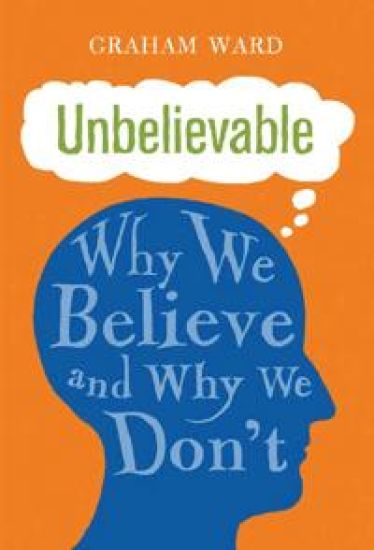
Unbelievable

Unbelievable

Graham Ward

I.B. Tauris
2014
sidottu
Why believe? What kinds of things do people believe in? How have they come to believe them? And how does what they believe - or disbelieve - shape their lives and the meaning the world has for them? For Graham Ward, who is one of the mostinnovative writers on contemporary religion, these questions are more than just academic. They go to the heart not only of who but of what we are as human beings. Over the last thirty years, our understandings of mind and consciousness have changed in important ways through exciting new developments in neuroscience. The author addresses this quantum shift by exploring the biology of believing. He offers sustained reflection on perception, cognition, time, emotional intelligence, knowledge and sensation. Though the 'truth' of belief remains under increasing attack, in a thoroughly secularised context, Ward boldly argues that secularity is itself a form of believing. Pointing to the places where prayer and dreams intersect, this book offers a remarkable journey through philosophy, theology and culture, thereby revealing the true nature of the human condition.
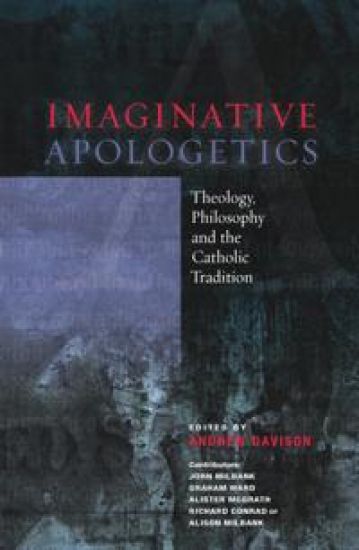
Imaginative Apologetics

Imaginative Apologetics

John Milbank; Graham Ward; Alister McGrath

Scm Press
2011
pokkari
A dynamic and constructive contribution to the discussion about faith and the new atheism. Apologetics is a key area of Christian theology, especially in an increasingly secular society. The authors explore what it means to do apologetics in an Anglican context.
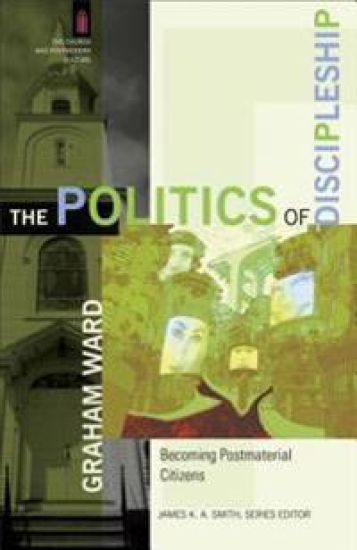
The Politics of Discipleship

The Politics of Discipleship

Graham Ward

Baker Academic, Div of Baker Publishing Group
2009
nidottu
Internationally acclaimed theologian Graham Ward is well known for his thoughtful engagement with postmodernism. This volume, the fourth in The Church and Postmodern Culture series, offers an engaging look at the political nature of the postmodern world. In the first section, "The World," Ward considers "the signs of the times" and the political nature of contemporary postmodernism. It is imperative, he suggests, that the church understand the world to be able to address it thoughtfully. In the second section, "The Church," he turns to practical application, examining what faithful discipleship looks like within this political context. Clergy and those interested in the emerging church will find this work particularly thought provoking.
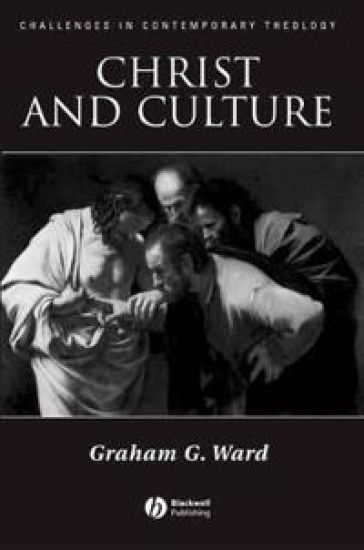
Christ and Culture

Christ and Culture

Graham Ward

Wiley-Blackwell (an imprint of John Wiley Sons Ltd)
2005
nidottu
Leading theologian Graham Ward presents a stimulating series of reflections on Christ and contemporary culture. Takes as its starting point Niebuhr’s famous volume on ‘Christ and Culture’ published in the 1970s Explores representations of Christ from sources as diverse as the New Testament and twentieth-century continental philosophy Considers Christ and culture in the light of contemporary categories such as the body, gender, desire, politics and the sublime Develops an original and imaginative Christology rooted in Scriptural exegesis and concerned with today’s cultural issues The author has been described as ‘the most visionary theologian of his generation’.
Cultural Transformation and Religious Practice

Cultural Transformation and Religious Practice

Graham Ward

Cambridge University Press
2004
sidottu
The book sets out to address and answer three questions from the point of view of Christian theology. The first is, from where does theology speak? The second is, what are the mechanisms whereby cultures change? The third is, how might we conceive the relationship between the contemporary production of theological discourse and the transformation of cultures more generally? Drawing upon the work of standpoint epistemologists, cultural anthropologists and social scientists, the book argues that public acts of interpretation are involvements in renegotiating the future direction of cultural change. Though the enquiry is conducted from one particular standpoint - Christian theology - the observations and suggestions it makes regarding cultural transformation and the defense it makes of syncretism have more general application.