Kirjojen hintavertailu – 12 903 725 kirjaa ja 27 kauppaa

Kirjailija

Graham White

Kirjat ja teokset yhdessä paikassa: 18 kirjaa, julkaisuja vuosilta 1985–2023, suosituimpiin kuuluu Harold Ickes of the New Deal. Vertaile teosten hintoja ja tarkista saatavuus suomalaisista kirjakaupoista.

18 kirjaa

Kirjojen julkaisuvuodet: 1985–2023.

Harold Ickes of the New Deal

Harold Ickes of the New Deal

Graham White; John Maze

Harvard University Press
1985
sidottu
Very little has been written about Harold Ickes, one of the most important, complex, and colorful figures of the New Deal. By any standards his public career was remarkable. For thirteen turbulent years as Interior Secretary and as head of the Public Works Administration he was an uncommonly effective official and a widely acknowledged leader of liberal reform. As the foremost conservationist of his time, he saved millions of acres of land from decimation. He was matchless, too, as a fighter for just causes, and used his formidable talent for invective and his inexhaustible supply of moral fervor to flay representatives of prejudice and self-interest, whether in the cause of Negro rights or that of the common man against economic royalists. Despite a long and distinguished public life, Ickes is an enigma because of his inability to control his rage, to temper his public criticism, to respond objectively to situations. At the heart of his public and private life was constant moral outrage. This astute study by a historian and a psychologist probes the sources and consequences of Ickes' abnormal combativeness. White and Maze uncover the psychological imperatives and conscious ideals of Ickes' unknown private life that illuminate his public career. Some of the episodes include sadistic attacks by an elder brother; young Harold contemplating shooting his father; bitter and physical brawls with his imperious, wealthy, and previously married socialite wife, Anna Wilmarth Thompson of Chicago; and thoughts of suicide. Richard Polenberg calls this book "Superb and] one of the most informative and interesting I have read on the New Deal. The story shows Ickes' weaknesses and flaws, but it puts them in context. The authors have not tried to explain everything Ickes ever did wholly in psychological terms, but the particular insights they bring to bear help present a rounded view of the man. The book is beautifully written."
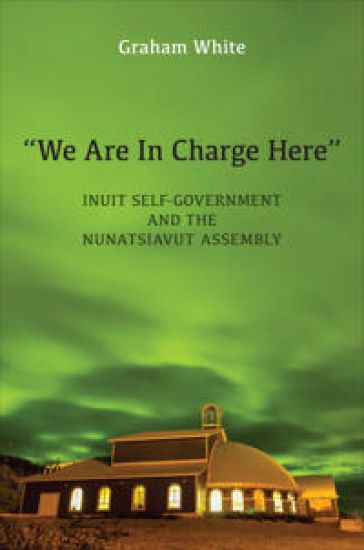
“We Are in Charge Here”

“We Are in Charge Here”

Graham White

UNIVERSITY OF TORONTO PRESS
2023
sidottu
Powerful, innovative Indigenous self-governance regimes are increasingly important players in Canadian politics, but little academic work has been done on their structure, operation, and effectiveness. "We Are In Charge Here" examines the central institution of the most populous Indigenous self-governance regime in Canada, the elected Assembly of the Nunatsiavut Government. Nunatsiavut – "our beautiful land" in Inuktitut – was established in 2006 by a modern treaty between the Labrador Inuit and the Canadian state. Graham White offers a thorough observation of the Assembly, based on interviews with Assembly members and others involved in Nunatsiavut politics, observation of Assembly sessions, and a review of official documents, in order to provide a comprehensive picture of the Assembly, its members, and its operations. The book examines the Assembly’s effectiveness in performing traditional legislative functions such as representation, policy making, and accountability. It addresses key concerns including executive-legislative power relations, Inuit influence on Assembly operations, and the Assembly’s role in realizing self-government. Illuminating the intersection of Indigenous self-governance approaches and Western institutions, "We Are In Charge Here" will be of interest to political leaders, legislative officials, and academics concerned with the design and on-the-ground functioning of Indigenous self-government.
Night Fighter Over Germany

Night Fighter Over Germany

Graham White

Pen Sword Aviation
2021
nidottu
These are the highly evocative wartime memoirs of a young NCO pilot who's operational experience was with Beaufighters and Mosquitoes flying in the long-range night-fighter role. It is not a gung-ho account of daring-do, but a 'warts and all' story of what life was really like in that time of international crisis. No punches are pulled when the author experienced badly designed and dangerous aircraft, such as the Merlin-engined Beaufighter that was almost impossible to fly and killed many pilots during training, nor are the blinding errors made by those staff officers who conceived impossible tasks and operations which these young airmen were ordered to fly and survive. Threaded into a fascinating story of flying with the then leading-edge electronic technology, are the entirely human tales of nights out on the town, when stressed crews could relieve the stress of combat. Some hilarious accounts of wild nights on the ground blend comfortably with the dark skies over Europe and the endless search for the invisible Luftwaffe who were tasked with the destruction of Allied heavy bombers.
Indigenous Empowerment through Co-management

Indigenous Empowerment through Co-management

Graham White

University of British Columbia Press
2020
pokkari
Co-management boards, established under comprehensive land claims agreements with Indigenous peoples, have become key players in land-use planning, wildlife management, and environmental regulation across Canada’s North. This book provides a detailed account of the operation and effectiveness of these new forms of federalism in order to address a central question: Have co-management boards been successful in ensuring substantial Indigenous involvement in policies affecting the land and wildlife in their traditional territories? Graham White tackles this question, drawing on decades of research and writing about the politics of Northern Canada. He begins with an overview of the boards, examining their legal foundations, structure and membership, decision-making processes, and independence from government. He then presents case studies of several important boards. While White identifies constraints on the role Northern Indigenous peoples play in board processes, he finds that overall they exercise extensive decision-making influence. These findings are provocative and offer valuable insights into our understanding of the importance of land claims boards and the role they play in the evolution of treaty federalism in Canada.
Indigenous Empowerment Through Co-management

Indigenous Empowerment Through Co-management

Graham White

University of British Columbia Press
2020
sidottu
Co-management boards, established under comprehensive land claims agreements with Indigenous peoples, have become key players in land-use planning, wildlife management, and environmental regulation across Canada's North. This book provides a detailed account of the operation and effectiveness of these new forms of federalism in order to address a central question: Have co-management boards been successful in ensuring substantial Indigenous involvement in policies affecting the land and wildlife in their traditional territories? Graham White tackles this question, drawing on decades of research and writing about the politics of Northern Canada. He begins with an overview of the boards, examining their legal foundations, structure and membership, decision-making processes, and independence from government. He then presents case studies of several important boards. While White identifies constraints on the role Northern Indigenous peoples play in board processes, he finds that overall they exercise extensive decision-making influence. These findings are provocative and offer valuable insights into our understanding of the importance of land claims boards and the role they play in the evolution of treaty federalism in Canada.
Made in Nunavut

Made in Nunavut

Jack Hicks; Graham White

University of British Columbia Press
2016
pokkari
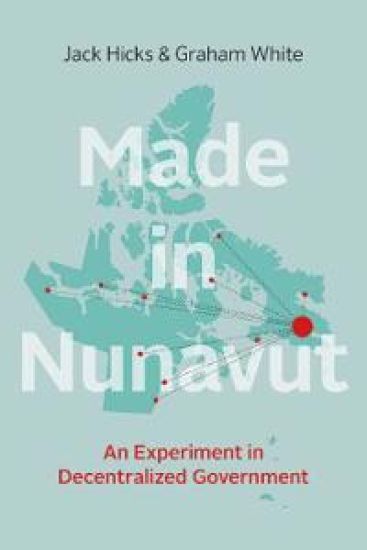
On April 1, 1999, after decades of dreams and negotiations and years of planning, the Inuit-dominated territory of Nunavut came into being in Canada's Eastern and Central Arctic. This was a momentous occasion, signifying not only the first change to the map of Canada in over half a century but also a remarkable achievement in terms of creating a new government from the ground up. Made in Nunavut provides the first behind-the-scenes account of how the Government of Nunavut was designed and implemented. Written by leading authorities on governance in the Canadian Arctic, this book pays particular attention to the most distinctive and innovative organizational design feature of the new government – the decentralization of offices and functions that would normally be located in the capital to small communities spread out across the vast territory. It also critically assesses whether decentralization has delivered "better" government for the people of Nunavut.
Made in Nunavut

Made in Nunavut

Jack Hicks; Graham White

University of British Columbia Press
2015
sidottu
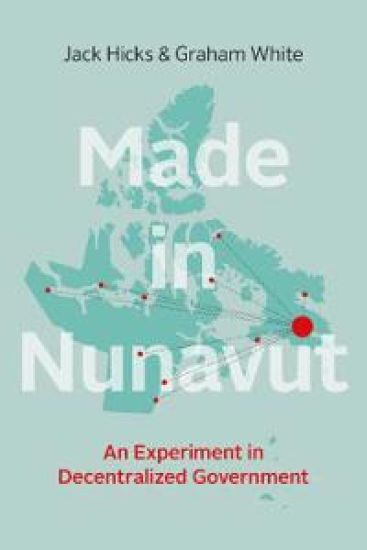
On April 1, 1999, after decades of dreams and negotiations and years of planning, the Inuit-dominated territory of Nunavut came into being in Canada's Eastern and Central Arctic. This was a momentous occasion, signifying not only the first change to the map of Canada in over half a century but also a remarkable achievement in terms of creating a new government from the ground up. Made in Nunavut provides the first behind-the-scenes account of how the Government of Nunavut was designed and implemented. Written by leading authorities on governance in the Canadian Arctic, this book pays particular attention to the most distinctive and innovative organizational design feature of the new government – the decentralization of offices and functions that would normally be located in the capital to small communities spread out across the vast territory. It also critically assesses whether decentralization has delivered "better" government for the people of Nunavut.
Playing the Numbers

Playing the Numbers

Shane White; Stephen Garton; Stephen Robertson; Graham White

Harvard University Press
2010
sidottu
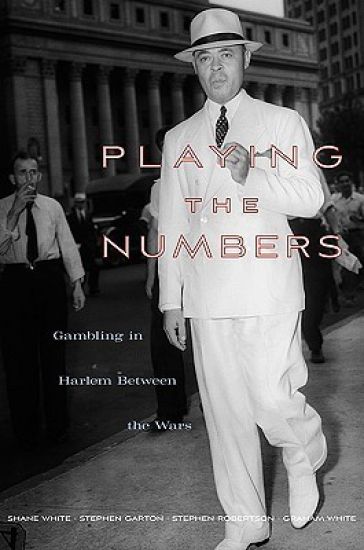
The phrase “Harlem in the 1920s” evokes images of the Harlem Renaissance, or of Marcus Garvey and soapbox orators haranguing crowds about politics and race. Yet the most ubiquitous feature of Harlem life between the world wars was the game of “numbers.” Thousands of wagers, usually of a dime or less, would be placed on a daily number derived from U. S. bank statistics. The rewards of “hitting the number,” a 600-to-1 payoff, tempted the ordinary men and women of the Black Metropolis with the chimera of the good life. Playing the Numbers tells the story of this illegal form of gambling and the central role it played in the lives of African Americans who flooded into Harlem in the wake of World War I. For a dozen years the “numbers game” was one of America’s rare black-owned businesses, turning over tens of millions of dollars every year. The most successful “bankers” were known as Black Kings and Queens, and they lived royally. Yet the very success of “bankers” like Stephanie St. Clair and Casper Holstein attracted Dutch Schultz, Lucky Luciano, and organized crime to the game. By the late 1930s, most of the profits were being siphoned out of Harlem. Playing the Numbers reveals a unique dimension of African American culture that made not only Harlem but New York City itself the vibrant and energizing metropolis it was. An interactive website allows readers to locate actors and events on Harlem’s streets.
Cabinets and First Ministers

Cabinets and First Ministers

Graham White

University of British Columbia Press
2006
pokkari
What place do first ministers and their cabinets have in democratic life in Canada? Has cabinet become a prime ministerial focus group? Do political staff and central agency bureaucrats enhance or diminish democracy? Do private members have any say in the cabinet process? Graham White renders a clear account of the development, structure, and operation of cabinet and the role of first ministers at the federal, provincial, and territorial levels. He discusses how the processes that support cabinet are affected by the considerable power of the first minister, and looks at the ways in which they permit the involvement of other elected members and the public. Taking the view that characterizing our Westminster-style government is an oversimplification, White examines first ministers and cabinets in terms of accountability and transparency and proposes realistic improvements to this aspect of Canadian democracy.
Cabinets and First Ministers

Cabinets and First Ministers

Graham White

University of British Columbia Press
2005
sidottu
What place do first ministers and their cabinets have in democratic life in Canada? Has cabinet become a prime ministerial focus group? Do political staff and central agency bureaucrats enhance or diminish democracy? Do private members have any say in the cabinet process? Graham White renders a clear account of the development, structure, and operation of cabinet and the role of first ministers at the federal, provincial, and territorial levels. He discusses how the processes that support cabinet are affected by the considerable power of the first minister, and looks at the ways in which they permit the involvement of other elected members and the public. Taking the view that characterizing our Westminster-style government is an oversimplification, White examines first ministers and cabinets in terms of accountability and transparency and proposes realistic improvements to this aspect of Canadian democracy.
Cycling Into Saigon

Cycling Into Saigon

David R. Cameron; Graham White

University of British Columbia Press
2001
pokkari
The essence of democracy is the peaceful and legitimate transfer of government. In 1995 in Ontario, the omens for a successful transition weren't promising. Almost no one had expected Mike Harris's Common Sense Revolution to catapult his Progressive Conservatives from third-party obscurity to victory in the June election. The Harris manifesto declared its intention to dismantle almost every policy of the defeated NDP administration of Bob Rae. Weeks of confrontation and confusion seemed inevitable. Yet, as Cameron and White compellingly describe, the transition was a surprising success, involving necessary co-operation between political mortal enemies. Cycling into Saigon has important lessons for everyone involved or interested in this key stage of the electoral process, wherever it takes place.
Cycling Into Saigon

Cycling Into Saigon

David R. Cameron; Graham White

University of British Columbia Press
2000
sidottu
The essence of democracy is the peaceful and legitimate transfer of government. In 1995 in Ontario, the omens for a successful transition weren't promising. Almost no one had expected Mike Harris's Common Sense Revolution to catapult his Progressive Conservatives from third-party obscurity to victory in the June election. The Harris manifesto declared its intention to dismantle almost every policy of the defeated NDP administration of Bob Rae. Weeks of confrontation and confusion seemed inevitable. Yet, as Cameron and White compellingly describe, the transition was a surprising success, involving necessary co-operation between political mortal enemies. Cycling into Saigon has important lessons for everyone involved or interested in this key stage of the electoral process, wherever it takes place.
Stylin'

Stylin'

Shane White; Graham White

Cornell University Press
1999
pokkari
For over two centuries, in the North as well as the South, both within their own community and in the public arena, African Americans have presented their bodies in culturally distinctive ways. Shane White and Graham White consider the deeper significance of the ways in which African Americans have dressed, walked, danced, arranged their hair, and communicated in silent gestures. They ask what elaborate hair styles, bright colors, bandanas, long watch chains, and zoot suits, for example, have really meant, and discuss style itself as an expression of deep-seated cultural imperatives. Their wide-ranging exploration of black style from its African origins to the 1940s reveals a culture that differed from that of the dominant racial group in ways that were often subtle and elusive. A wealth of black-and-white illustrations show the range of African American experience in America, emanating from all parts of the country, from cities and farms, from slave plantations, and Chicago beauty contests. White and White argue that the politics of black style is, in fact, the politics of metaphor, always ambiguous because it is always indirect. To tease out these ambiguities, they examine extensive sources, including advertisements for runaway slaves, interviews recorded with surviving ex-slaves in the 1930s, autobiographies, travelers' accounts, photographs, paintings, prints, newspapers, and images drawn from popular culture, such as the stereotypes of Jim Crow and Zip Coon.