Kirjailija
Grant Allen
Kirjat ja teokset yhdessä paikassa: 659 kirjaa, julkaisuja vuosilta 1885–2026, suosituimpiin kuuluu Side Lights By James Runciman. Vertaile teosten hintoja ja tarkista saatavuus suomalaisista kirjakaupoista.
659 kirjaa
Kirjojen julkaisuvuodet: 1885–2026.
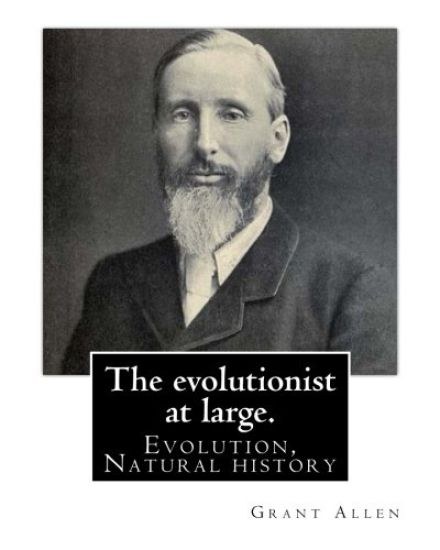
The evolutionist at large. By: Grant Allen: Evolution, Natural history
Grant Allen
Createspace Independent Publishing Platform
2016
nidottu
Charles Grant Blairfindie Allen (February 24, 1848 - October 25, 1899) was a Canadian science writer and novelist, and a proponent of the theory of evolution. Allen was born near Kingston, Canada West (known as Ontario after Confederation) - the second son of Catharine Ann Grant and the Rev. Joseph Antisell Allen, a Protestant minister from Dublin, Ireland. His mother was a daughter of the fifth Baron of Longueuil. He was educated at home until, at age 13, he and his parents moved to the United States, then to France and finally to the United Kingdom. He was educated at King Edward's School in Birmingham and at Merton College in Oxford, both in the United Kingdom. After graduation, Allen studied in France, taught at Brighton College in 1870-71 and in his mid-twenties became a professor at Queen's College, a black college in Jamaica. Despite citation needed] his religious father, Allen became an agnostic and a socialist. After leaving his professorship, in 1876 he returned to England, where he turned his talents to writing, gaining a reputation for his essays on science and for literary works. A 2007 book by Oliver Sacks cites with approval one of Allen's early articles, 'Note-Deafness' (a description of what became known as amusia, published in 1878 in the learned journal Mind). His first books dealt with scientific subjects, and include Physiological sthetics (1877) and Flowers and Their Pedigrees (1886). He was first influenced by associationist psychology as expounded by Alexander Bain and by Herbert Spencer, the latter often considered by whom?] the most important individual in the transition from associationist psychology to Darwinian functionalism. In Allen's many articles on flowers and on perception in insects, Darwinian arguments replaced the old Spencerian terms, leading to a radically new vision of plant life that influenced HG Wells and helped transform later botanical research. On a personal level, a long friendship that started when Allen met Spencer on his return from Jamaica grew uneasy over the years. Allen wrote a critical and revealing biographical article on Spencer that was published after Spencer's death. After assisting Sir W. W. Hunter in his Gazeteer of India in the early 1880s, Allen turned his attention to fiction, and between 1884 and 1899 produced about 30 novels. In 1895, his scandalous book titled The Woman Who Did, promulgating certain startling views on marriage and kindred questions, became a bestseller. The book told the story of an independent woman who has a child out of wedlock. In his career, Allen wrote two novels under female pseudonyms. One of these, the short novel The Type-writer Girl, he wrote under the name Olive Pratt Rayner. Another work, The Evolution of the Idea of God (1897), propounding a theory of religion on heterodox citation needed] lines, has the disadvantage original research?] of endeavoring to explain everything by one theory. This "ghost theory" was often seen by whom?] as a derivative of Herbert Spencer's theory. However, it was well known and brief references to it appear in a review by Marcel Mauss, Durkheim's nephew, in the articles of William James and in the works of Sigmund Freud. The young G. K. Chesterton wrote on what he considered the flawed premise of the idea, arguing that the idea of God preceded human mythologies, rather than developing from them. Chesterton said of Grant Allen's book on the evolution of the idea of God "it would be much more interesting if God wrote a book on the evolution of the idea of Grant Allen".
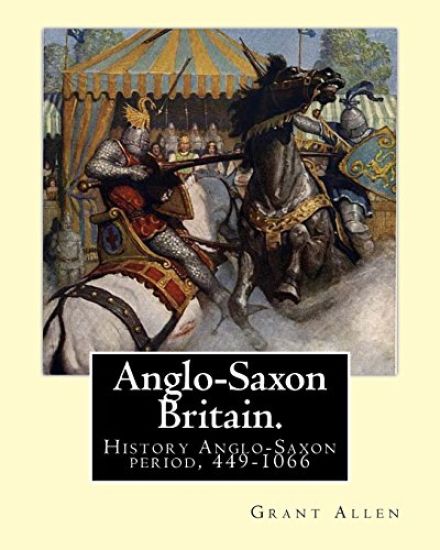
Anglo-Saxon Britain. By: Grant Allen: History Anglo-Saxon period, 449-1066
Grant Allen
Createspace Independent Publishing Platform
2016
nidottu
Charles Grant Blairfindie Allen (February 24, 1848 - October 25, 1899) was a Canadian science writer and novelist, and a proponent of the theory of evolution. Allen was born near Kingston, Canada West (known as Ontario after Confederation) - the second son of Catharine Ann Grant and the Rev. Joseph Antisell Allen, a Protestant minister from Dublin, Ireland. His mother was a daughter of the fifth Baron of Longueuil. He was educated at home until, at age 13, he and his parents moved to the United States, then to France and finally to the United Kingdom. He was educated at King Edward's School in Birmingham and at Merton College in Oxford, both in the United Kingdom. After graduation, Allen studied in France, taught at Brighton College in 1870-71 and in his mid-twenties became a professor at Queen's College, a black college in Jamaica. Despite citation needed] his religious father, Allen became an agnostic and a socialist. After leaving his professorship, in 1876 he returned to England, where he turned his talents to writing, gaining a reputation for his essays on science and for literary works. A 2007 book by Oliver Sacks cites with approval one of Allen's early articles, 'Note-Deafness' (a description of what became known as amusia, published in 1878 in the learned journal Mind). His first books dealt with scientific subjects, and include Physiological esthetics (1877) and Flowers and Their Pedigrees (1886). He was first influenced by associationist psychology as expounded by Alexander Bain and by Herbert Spencer, the latter often considered by whom?] the most important individual in the transition from associationist psychology to Darwinian functionalism. In Allen's many articles on flowers and on perception in insects, Darwinian arguments replaced the old Spencerian terms, leading to a radically new vision of plant life that influenced HG Wells and helped transform later botanical research. On a personal level, a long friendship that started when Allen met Spencer on his return from Jamaica grew uneasy over the years. Allen wrote a critical and revealing biographical article on Spencer that was published after Spencer's death. After assisting Sir W. W. Hunter in his Gazeteer of India in the early 1880s, Allen turned his attention to fiction, and between 1884 and 1899 produced about 30 novels. In 1895, his scandalous book titled The Woman Who Did, promulgating certain startling views on marriage and kindred questions, became a bestseller. The book told the story of an independent woman who has a child out of wedlock. In his career, Allen wrote two novels under female pseudonyms. One of these, the short novel The Type-writer Girl, he wrote under the name Olive Pratt Rayner. Another work, The Evolution of the Idea of God (1897), propounding a theory of religion on heterodox citation needed] lines, has the disadvantage original research?] of endeavoring to explain everything by one theory. This "ghost theory" was often seen by whom?] as a derivative of Herbert Spencer's theory. However, it was well known and brief references to it appear in a review by Marcel Mauss, Durkheim's nephew, in the articles of William James and in the works of Sigmund Freud. The young G. K. Chesterton wrote on what he considered the flawed premise of the idea, arguing that the idea of God preceded human mythologies, rather than developing from them. Chesterton said of Grant Allen's book on the evolution of the idea of God "it would be much more interesting if God wrote a book on the evolution of the idea of Grant Allen".
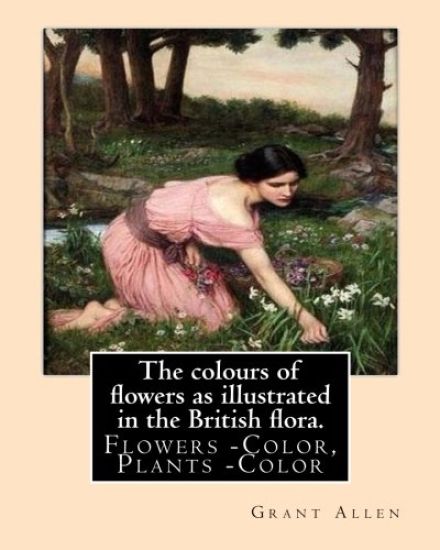
The colours of flowers as illustrated in the British flora. By: Grant Allen: Flowers -- Color, Plants -- Color
Grant Allen
Createspace Independent Publishing Platform
2016
nidottu
Charles Grant Blairfindie Allen (February 24, 1848 - October 25, 1899) was a Canadian science writer and novelist, and a proponent of the theory of evolution. Allen was born near Kingston, Canada West (known as Ontario after Confederation) - the second son of Catharine Ann Grant and the Rev. Joseph Antisell Allen, a Protestant minister from Dublin, Ireland. His mother was a daughter of the fifth Baron of Longueuil. He was educated at home until, at age 13, he and his parents moved to the United States, then to France and finally to the United Kingdom. He was educated at King Edward's School in Birmingham and at Merton College in Oxford, both in the United Kingdom. After graduation, Allen studied in France, taught at Brighton College in 1870-71 and in his mid-twenties became a professor at Queen's College, a black college in Jamaica. Despite citation needed] his religious father, Allen became an agnostic and a socialist. After leaving his professorship, in 1876 he returned to England, where he turned his talents to writing, gaining a reputation for his essays on science and for literary works. A 2007 book by Oliver Sacks cites with approval one of Allen's early articles, 'Note-Deafness' (a description of what became known as amusia, published in 1878 in the learned journal Mind). His first books dealt with scientific subjects, and include Physiological sthetics (1877) and Flowers and Their Pedigrees (1886). He was first influenced by associationist psychology as expounded by Alexander Bain and by Herbert Spencer, the latter often considered by whom?] the most important individual in the transition from associationist psychology to Darwinian functionalism. In Allen's many articles on flowers and on perception in insects, Darwinian arguments replaced the old Spencerian terms, leading to a radically new vision of plant life that influenced HG Wells and helped transform later botanical research. On a personal level, a long friendship that started when Allen met Spencer on his return from Jamaica grew uneasy over the years. Allen wrote a critical and revealing biographical article on Spencer that was published after Spencer's death. After assisting Sir W. W. Hunter in his Gazeteer of India in the early 1880s, Allen turned his attention to fiction, and between 1884 and 1899 produced about 30 novels. In 1895, his scandalous book titled The Woman Who Did, promulgating certain startling views on marriage and kindred questions, became a bestseller. The book told the story of an independent woman who has a child out of wedlock. In his career, Allen wrote two novels under female pseudonyms. One of these, the short novel The Type-writer Girl, he wrote under the name Olive Pratt Rayner. Another work, The Evolution of the Idea of God (1897), propounding a theory of religion on heterodox citation needed] lines, has the disadvantage original research?] of endeavoring to explain everything by one theory. This "ghost theory" was often seen by whom?] as a derivative of Herbert Spencer's theory. However, it was well known and brief references to it appear in a review by Marcel Mauss, Durkheim's nephew, in the articles of William James and in the works of Sigmund Freud. The young G. K. Chesterton wrote on what he considered the flawed premise of the idea, arguing that the idea of God preceded human mythologies, rather than developing from them. Chesterton said of Grant Allen's book on the evolution of the idea of God "it would be much more interesting if God wrote a book on the evolution of the idea of Grant Allen".
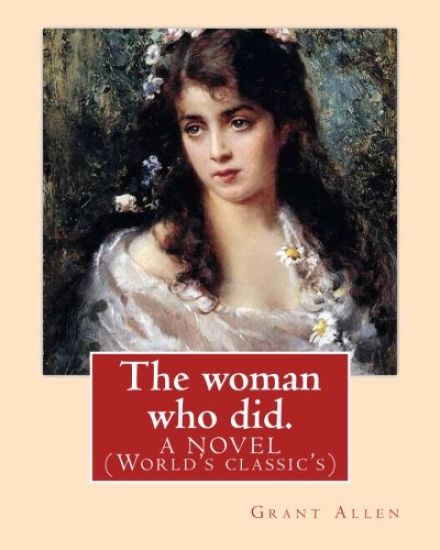
The woman who did. By: Grant Allen: A NOVEL (World's classic's)
Grant Allen
Createspace Independent Publishing Platform
2016
nidottu
Charles Grant Blairfindie Allen (February 24, 1848 - October 25, 1899) was a Canadian science writer and novelist, and a proponent of the theory of evolution. Allen was born near Kingston, Canada West (known as Ontario after Confederation) - the second son of Catharine Ann Grant and the Rev. Joseph Antisell Allen, a Protestant minister from Dublin, Ireland. His mother was a daughter of the fifth Baron of Longueuil. He was educated at home until, at age 13, he and his parents moved to the United States, then to France and finally to the United Kingdom. He was educated at King Edward's School in Birmingham and at Merton College in Oxford, both in the United Kingdom. After graduation, Allen studied in France, taught at Brighton College in 1870-71 and in his mid-twenties became a professor at Queen's College, a black college in Jamaica. Despite citation needed] his religious father, Allen became an agnostic and a socialist. After leaving his professorship, in 1876 he returned to England, where he turned his talents to writing, gaining a reputation for his essays on science and for literary works. A 2007 book by Oliver Sacks cites with approval one of Allen's early articles, 'Note-Deafness' (a description of what became known as amusia, published in 1878 in the learned journal Mind). His first books dealt with scientific subjects, and include Physiological sthetics (1877) and Flowers and Their Pedigrees (1886). He was first influenced by associationist psychology as expounded by Alexander Bain and by Herbert Spencer, the latter often considered by whom?] the most important individual in the transition from associationist psychology to Darwinian functionalism. In Allen's many articles on flowers and on perception in insects, Darwinian arguments replaced the old Spencerian terms, leading to a radically new vision of plant life that influenced HG Wells and helped transform later botanical research. On a personal level, a long friendship that started when Allen met Spencer on his return from Jamaica grew uneasy over the years. Allen wrote a critical and revealing biographical article on Spencer that was published after Spencer's death. After assisting Sir W. W. Hunter in his Gazeteer of India in the early 1880s, Allen turned his attention to fiction, and between 1884 and 1899 produced about 30 novels. In 1895, his scandalous book titled The Woman Who Did, promulgating certain startling views on marriage and kindred questions, became a bestseller. The book told the story of an independent woman who has a child out of wedlock. In his career, Allen wrote two novels under female pseudonyms. One of these, the short novel The Type-writer Girl, he wrote under the name Olive Pratt Rayner. Another work, The Evolution of the Idea of God (1897), propounding a theory of religion on heterodox citation needed] lines, has the disadvantage original research?] of endeavoring to explain everything by one theory. This "ghost theory" was often seen by whom?] as a derivative of Herbert Spencer's theory. However, it was well known and brief references to it appear in a review by Marcel Mauss, Durkheim's nephew, in the articles of William James and in the works of Sigmund Freud. The young G. K. Chesterton wrote on what he considered the flawed premise of the idea, arguing that the idea of God preceded human mythologies, rather than developing from them. Chesterton said of Grant Allen's book on the evolution of the idea of God "it would be much more interesting if God wrote a book on the evolution of the idea of Grant Allen".
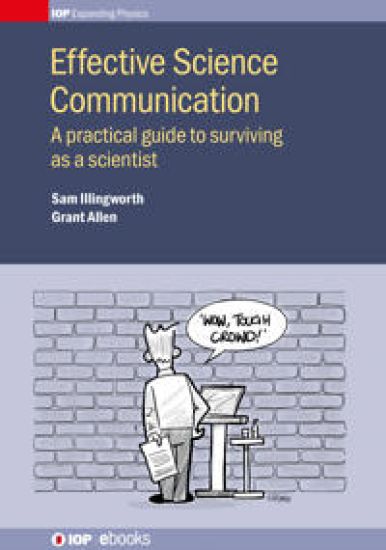
Effective Science Communication
Sam Illingworth; Grant Allen
Institute of Physics Publishing
2016
sidottu
Effective Science Communication: A practical guide to surviving as a scientist is devoted to the variety of ways that scientists are expected to communicate in their day-to-day professional lives. It includes practical advice on how to publish your work in scientific journals, apply for grants, and effectively communicate your research to both scientific and non-scientific audiences. There are chapters devoted to constructing a digital footprint, dealing with the media, and influencing science policy. There are a number of useful exercises throughout the book that will help you to become a more effective communicator, providing a helping hand in your scientific journey to not only survive, but to prosper in the process.

Effective Science Communication
Sam Illingworth; Grant Allen
INSTITUTE OF PHYSICS PUBLISHING
2016
nidottu

IBM’s DB2 Express Edition is one of the most capable of the free database platforms available in today’s marketplace. In Beginning DB2, author Grant Allen gets you started using DB2 Express Edition for web sites, desktop applications, and more. The author covers the basics of DB2 for developers and database administrators, shows you how to manage data in both XML and relational form, and includes numerous code examples so that you are never in doubt as to how things work. In this book, you’ll find: A friendly introduction to DB2 Express Edition, an industrial–strength, relational database from IBM Dozens of examples so that you are never in doubt as to how things work Coverage of important language interfaces, such as from PHP, Ruby, C#, Python, and more The book is aimed at developers who want a robust database to back their applications.
Anglo-Saxon Britain. By: Grant Allen
Grant Allen
Createspace Independent Publishing Platform
2016
nidottu
Allen was born near Kingston, Canada West (known as Ontario after Confederation) - the second son of Catharine Ann Grant and the Rev. Joseph Antisell Allen, a Protestant minister from Dublin, Ireland. His mother was a daughter of the fifth Baron of Longueuil. He was educated at home until, at age 13, he and his parents moved to the United States, then to France and finally to the United Kingdom. 3] He was educated at King Edward's School in Birmingham and at Merton College in Oxford, both in the United Kingdom. After graduation, Allen studied in France, taught at Brighton College in 1870-71 and in his mid-twenties became a professor at Queen's College, a black college in Jamaica. Despite citation needed] his religious father, Allen became an agnostic and a socialist. After leaving his professorship, in 1876 he returned to England, where he turned his talents to writing, gaining a reputation for his essays on science and for literary works. A 2007 book by Oliver Sacks cites with approval one of Allen's early articles, 'Note-Deafness' (a description of what became known as amusia, published in 1878 in the learned journal Mind). His first books dealt with scientific subjects, and include Physiological sthetics (1877) and Flowers and Their Pedigrees (1886). He was first influenced by associationist psychology as expounded by Alexander Bain and by Herbert Spencer, the latter often considered by whom?] the most important individual in the transition from associationist psychology to Darwinian functionalism. In Allen's many articles on flowers and on perception in insects, Darwinian arguments replaced the old Spencerian terms, leading to a radically new vision of plant life that influenced HG Wells and helped transform later botanical research. On a personal level, a long friendship that started when Allen met Spencer on his return from Jamaica grew uneasy over the years. Allen wrote a critical and revealing biographical article on Spencer that was published after Spencer's death.
The British barbarians: a hill-top NOVEL By: Grant Allen
Grant Allen
Createspace Independent Publishing Platform
2016
nidottu
Allen was born near Kingston, Canada West (known as Ontario after Confederation) - the second son of Catharine Ann Grant and the Rev. Joseph Antisell Allen, a Protestant minister from Dublin, Ireland. His mother was a daughter of the fifth Baron of Longueuil. He was educated at home until, at age 13, he and his parents moved to the United States, then to France and finally to the United Kingdom. 3] He was educated at King Edward's School in Birmingham and at Merton College in Oxford, both in the United Kingdom. After graduation, Allen studied in France, taught at Brighton College in 1870-71 and in his mid-twenties became a professor at Queen's College, a black college in Jamaica. Despite citation needed] his religious father, Allen became an agnostic and a socialist. After leaving his professorship, in 1876 he returned to England, where he turned his talents to writing, gaining a reputation for his essays on science and for literary works. A 2007 book by Oliver Sacks cites with approval one of Allen's early articles, 'Note-Deafness' (a description of what became known as amusia, published in 1878 in the learned journal Mind). His first books dealt with scientific subjects, and include Physiological sthetics (1877) and Flowers and Their Pedigrees (1886). He was first influenced by associationist psychology as expounded by Alexander Bain and by Herbert Spencer, the latter often considered by whom?] the most important individual in the transition from associationist psychology to Darwinian functionalism. In Allen's many articles on flowers and on perception in insects, Darwinian arguments replaced the old Spencerian terms, leading to a radically new vision of plant life that influenced HG Wells and helped transform later botanical research. On a personal level, a long friendship that started when Allen met Spencer on his return from Jamaica grew uneasy over the years. Allen wrote a critical and revealing biographical article on Spencer that was published after Spencer's death.
An African Millionaire (Episodes in the Life of the Illustrious Colonel Clay)
Grant Allen
Createspace Independent Publishing Platform
2016
nidottu
Charles Darwin. By: Grant Allen
Grant Allen
Createspace Independent Publishing Platform
2016
nidottu
Allen was born near Kingston, Canada West (known as Ontario after Confederation) - the second son of Catharine Ann Grant and the Rev. Joseph Antisell Allen, a Protestant minister from Dublin, Ireland. His mother was a daughter of the fifth Baron of Longueuil. He was educated at home until, at age 13, he and his parents moved to the United States, then to France and finally to the United Kingdom. 3] He was educated at King Edward's School in Birmingham and at Merton College in Oxford, both in the United Kingdom. After graduation, Allen studied in France, taught at Brighton College in 1870-71 and in his mid-twenties became a professor at Queen's College, a black college in Jamaica. Despite citation needed] his religious father, Allen became an agnostic and a socialist. After leaving his professorship, in 1876 he returned to England, where he turned his talents to writing, gaining a reputation for his essays on science and for literary works. A 2007 book by Oliver Sacks cites with approval one of Allen's early articles, 'Note-Deafness' (a description of what became known as amusia, published in 1878 in the learned journal Mind). His first books dealt with scientific subjects, and include Physiological sthetics (1877) and Flowers and Their Pedigrees (1886). He was first influenced by associationist psychology as expounded by Alexander Bain and by Herbert Spencer, the latter often considered by whom?] the most important individual in the transition from associationist psychology to Darwinian functionalism. In Allen's many articles on flowers and on perception in insects, Darwinian arguments replaced the old Spencerian terms, leading to a radically new vision of plant life that influenced HG Wells and helped transform later botanical research. On a personal level, a long friendship that started when Allen met Spencer on his return from Jamaica grew uneasy over the years. Allen wrote a critical and revealing biographical article on Spencer that was published after Spencer's death.
Falling in Love: With Other Essays on More Exact Branches of Science
Grant Allen
Createspace Independent Publishing Platform
2016
nidottu
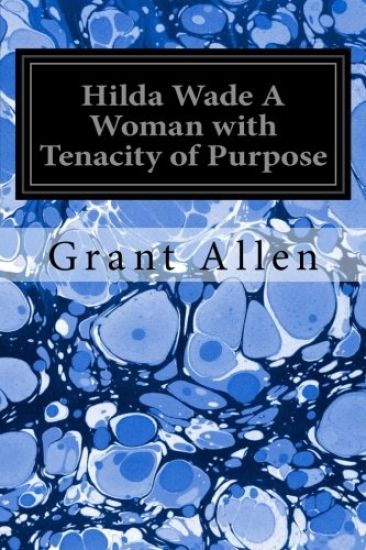
Hilda Wade A Woman with Tenacity of Purpose
Grant Allen
Createspace Independent Publishing Platform
2016
nidottu