Kirjailija
Grant Hayter-Menzies
Kirjat ja teokset yhdessä paikassa: 13 kirjaa, julkaisuja vuosilta 2007–2023, suosituimpiin kuuluu Woo, the Monkey Who Inspired Emily Carr. Vertaile teosten hintoja ja tarkista saatavuus suomalaisista kirjakaupoista.
Nimi esiintyy myös muodoissa: Grant Hayter–menzies
13 kirjaa
Kirjojen julkaisuvuodet: 2007–2023.
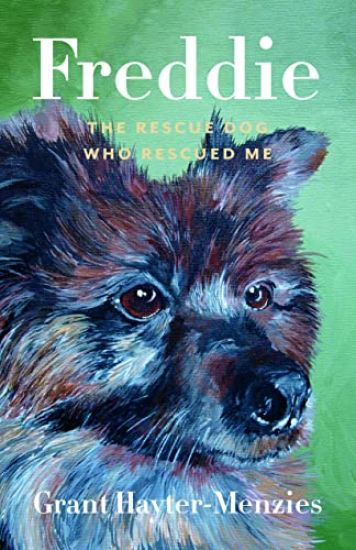
Rescued from a puppy mill in 2010, Freddie was a bright light in lives of his human companions and the ultimate muse for biographer Grant Hayter-Menzies to explore the human-animal bond in his books. As Grant helped Freddie overcome the fears and traumas of his early years, Freddie in turn helped Grant through some of the most challenging years of his personal and professional life. It was Freddie who inspired Grant to shift the focus of his writing from human biographies to the notable but forgotten lives of historical animals, who exhibited levels of bravery and devotion rarely seen among people. Yet as Freddie sat quietly beside his human's desk as he wrote these books, little did Grant know that Freddie was about to face the hardest battle of his young life. Freddie: The Rescue Dog Who Rescued Me is a heartwarming tribute to a truly unique and loving canine companion. Tracing their journey from Freddie's adoption and socialization through his growing bond with Grant to his devastating cancer diagnosis in 2020, this book will resonate deeply with anyone who has every loved and lost an animal. It reminds us of everything that animals can teach us about love, loyalty, and courage, and is a call to action to end the unethical and abusive treatment of animals everywhere.
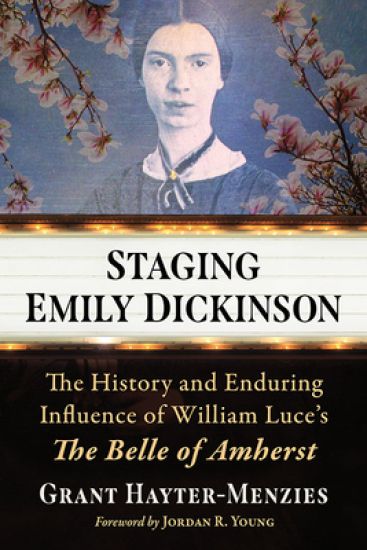
With a writer who had never written a play, an actress who had never taken the stage alone, and a director who had never headed a live performance, The Belle of Amherst managed to become an American theater classic. Despite being savaged by critics attending its opening night in April 1976, the play, which details the life of Emily Dickinson, survived its baptism by fire and went on to appear in theaters across the world. This is the remarkable untold story of "the little play that could." Covering the play's humble beginnings as well as its pioneers--like writer William Luce, director Charles Nelson Reilly and actress Julie Harris--this work also documents the modern efforts to keep the play alive. Exploring the show's enduring dramatic power, this book ultimately pays respect to the one-woman show that has triumphed for decades.
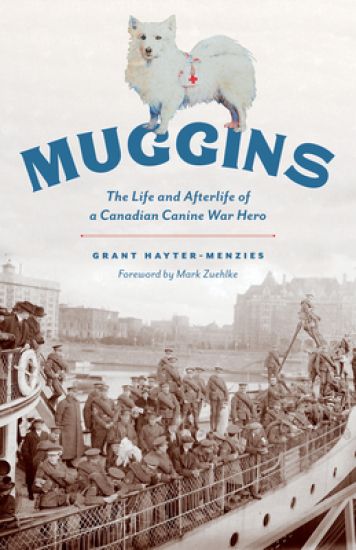
The unusual and moving tale of Muggins, a famed fundraising dog who became a mascot of the Canadian Red Cross during the First World War. Born in 1913 in the home of a millionaire philanthropist, Muggins was a purebred Spitz, a sharp-eared, sharp-nosed, fluffy-tailed sort of dog most often seen in the lap of a lady of leisure. But Muggins defied the odds, rising to unlikely fame during the First World War, when he became Victoria, BC's most diminutive fundraiser. He was taught to wander through downtown during the war with two change donation boxes tied to his back, and ultimately collected the equivalent of $250,000 for charities and causes including the Red Cross, the Blue Cross, food for poor children and prisoners of war, victims of Jewish pogroms, to name a few. During his short life, Muggins visited ferries and freight liners stopping in Victoria. He appeared in photos with the Prince of Wales and with famous Canadian general Sir Arthur Currie, among other celebrated admirers. He was also a favourite of the rank and file, helping cheer up wounded soldiers at Esquimalt Military Hospital. Muggins was made an honourary first lieutenant by the United States military for his service raising funds in Seattle. And he was so loved by departing soldiers he was more than once nearly taken along to the theatre of war. Based on valuable documents, memorabilia, newspaper and newsreel accounts of Muggins's brief but brilliant career, this book tackles the difficult question of human use of animals in war, at home and on the battlefield. It explores how crucial animals, specifically dogs, have been to wounded veterans recovering from physical and emotional damage--both in Muggins's lifetime and now.
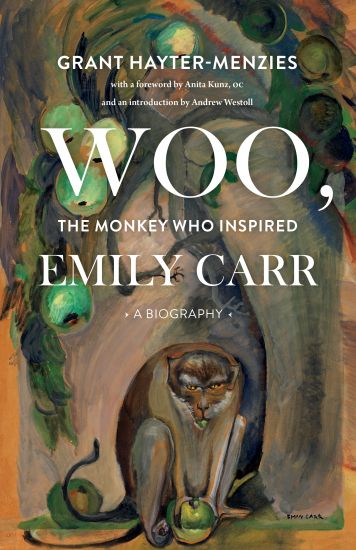
Although Emily Carr is now considered a Canadian legend, the most enduring image is that of her pushing a beat-up old pram into downtown Victoria, loaded with dogs, cats, birds--and a monkey. Woo, a Javanese macaque whom Carr adopted in 1923, has become inextricably linked with Carr in the popular imagination. But more than that, in her short lifetime Woo became equally connected to Carr's life and art. Born to a strictly religious family, Carr was never able to reconcile her wild and passionate nature with the stifling mores of the well-to-do Victorian society in which she was raised. Over the years, she increasingly turned to the company of animals to find the love and trust missing from her human relationships. Across the world in an Indonesian jungle lagoon, Woo (like Carr) was parted from her mother at a young age. The tiny ape with a "greeny-brown" pelt and penetrating golden eyes was then shipped across the world. When Carr spotted Woo in a pet store, she recognized a kindred spirit and took her home. Woo was many things to Carr--a surrogate daughter, a reflection of herself, a piece of the wild inside her downtown Victoria boarding house. Welcoming the mischievous Woo into her life, Carr also welcomed a freedom that allowed a full blooming of artistic expression and gave Canada and the world great art unlike any other before or since. However, despite Carr's clear love for Woo, her chaotic life did not always allow Carr to properly care for her. Tragically, after Carr was hospitalized due to heart failure, she arranged for Woo to be sent to the Stanley Park Zoo. Bereft of Carr, Woo died alone in her cage only a year later. Hayter-Menzies approaches his subject from a contemporary perspective on bringing wild animals into captivity while remaining empathetic to the unique relationship between artist and monkey.
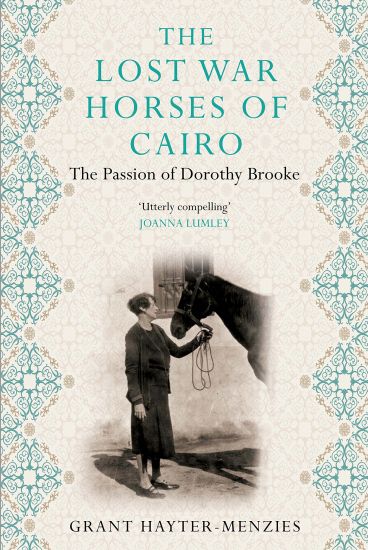
In 1930 wealthy Scottish socialite Dorothy Brooke followed her new husband to Cairo, where she discovered thousands of suffering former British war horses leading lives of toil and misery. Brought to the Middle East by British forces during the Great War, these ex-cavalry horses had been left behind at the war's end, abandoned as used equipment too costly to send home. Grant Hayter-Menzies chronicles not only the lives and eventual rescue of these noble creatures, who after years of deprivation and suffering found respite in the Old War Horse Memorial Hospital established by Dorothy, but also the story of the challenges of founding and maintaining an animal-rescue institution on this scale. The legacy of the Old War Horse Memorial Hospital and its founder endures today in the dozens of international Brooke animal-welfare facilities dedicated to improving the lives of working horses, donkeys and mules across Africa, Asia and Latin America.
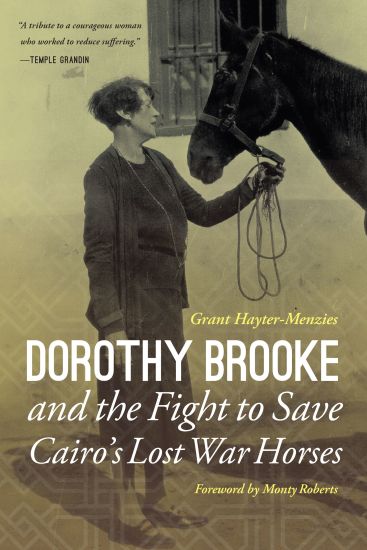
Dorothy Brooke and the Fight to Save Cairo’s Lost War Horses
Grant Hayter-Menzies
Potomac Books Inc
2017
sidottu
Born in June 1883 to an aristocratic Scottish family, Dorothy Gibson-Craig was brought up with dogs and horses. In 1926 she married Maj. Gen. Geoffrey Brooke, recipient of the Distinguished Service Order in World War I and a writer on equine culture. She followed her new husband to Cairo, where she discovered thousands of malnourished and suffering former British war horses leading lives of backbreaking toil and misery. Brought to the Middle East by British forces during the Great War, these ex-cavalry horses had been left behind at the war’s end, abandoned like used equipment too costly to send home. In Dorothy Brooke and the Fight to Save Cairo’s Lost War Horses Grant Hayter-Menzies chronicles not only the lives and eventual rescue of these noble creatures, who after years of deprivation and suffering found respite in Brooke’s Old War Horse Memorial Hospital, but also the story of the challenges of founding and maintaining an animal-rescue institution on this scale. The legacy of the Old War Horse Memorial Hospital and its founder endures today in the dozens of international Brooke animal-welfare facilities dedicated to improving the lives of working horses, donkeys, and mules across Africa, Asia, and Latin America. The author, Grant Hayter-Menzies, is making a donation of 20% of the royalties from the book to The Brooke Hospital for Animals and 20% of the royalties to its affiliate in Egypt, Brooke Hospital for Animals (Egypt). Neither the author or the publisher receives any payment from Brooke or any other party in connection with sales of this book. The Brooke Hospital for Animals is a charity registered in England and Wales no. 1085760.
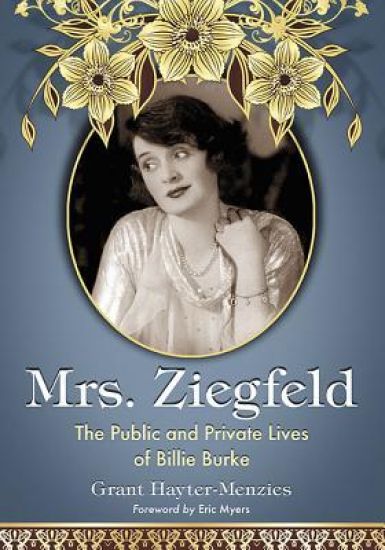
Broadway actress Billie Burke was one of the most sought after young stage beauties of her time, stealing the hearts of Enrico Caruso, Mark Twain, and, most importantly, famed Broadway producer Florenz Ziegfeld, who became her husband. Following Ziegfeld's death, the threats of financial ruin and encroaching age forced Burke to recreate herself as a Hollywood character actress. This biography benefits from the cooperation of the daughter and grandchildren of Burke and Ziegfeld, as well as from anecdotes provided by actors who performed with Burke on the stage and screen. In addition to studying the character and significance of Burke's greatest screen role as Glinda the Good Witch of the North, this richly illustrated book also provides a complete history of Burke's stage, screen, and radio work.
From Stray Dog to World War I Hero
Grant Hayter-Menzies; Pen Farthing
Potomac Books Inc
2015
sidottu
Halvin toimitettuna 29,50 €
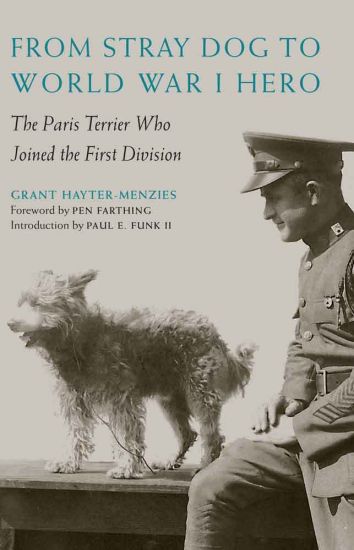
On the streets of Paris one day in July 1918, an American doughboy, Sgt. Jimmy Donovan, befriended a stray dog that he named Rags. No longer an unwanted street mutt, Rags became the mascot to the entire First Division of the American Expeditionary Force and a friend to the American troops who had crossed the Atlantic to fight. Rags was more than a scruffy face and a wagging tail, however. The little terrier mix was with the division at the crucial battle of Soissons, at the Saint-Mihiel offensive, and finally in the blood-and-mud bath of the Meuse-Argonne, during which he and his guardian were wounded. Despite being surrounded by distraction and danger, Rags learned to carry messages through gunfire, locate broken communications wire for the Signal Corps to repair, and alert soldiers to incoming shells, saving the lives of hundreds of American soldiers. Through it all, he brought inspiration to men with little to hope for, especially in the bitter last days of the war. From Stray Dog to World War I Hero covers Rags's entire life story, from the bomb-filled years of war through his secret journey to the United States that began his second life, one just as filled with drama and heartache. In years of peace, Rags served as a reminder to human survivors of what held men together when pushed past their limits by the horrors of battle. Watch a book trailer.
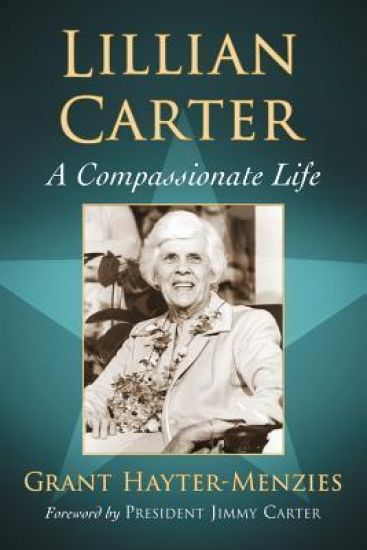
Written with the cooperation of President Jimmy Carter and his family, this book provides an intimate glimpse inside the life of the woman who--as nurse, mother and social justice activist in segregated southwest Georgia--made a lifelong habit of breaking the rules defining a woman's place in and out of the home and the status of blacks in society. As the only white nurse in her rural community who cared for black families, as a 68-year-old Peace Corps Volunteer in 1960s India, as a fearless supporter of civil rights and as a First Mother unlike any other, Lillian Carter showed how individual courage, conviction and compassion can make a difference. Drawing on interviews with friends and colleagues, members of the Plains, Georgia, black community, Peace Corps Volunteers who trained with her, White House insiders and key players in the civil rights movement, as well as letters, documents and photographs never before made public, this book captures the essence of the woman the press dubbed "Rose Kennedy without the hair dye" and "First Mother of the world."
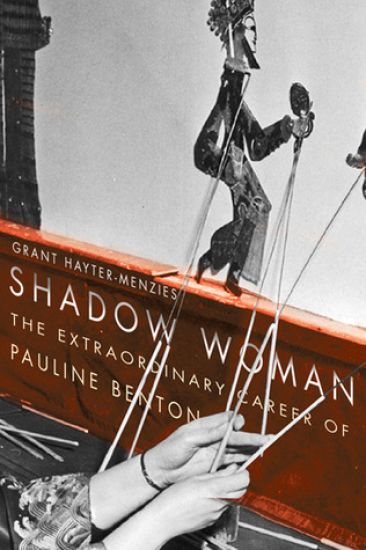
Kansas-born Pauline Benton (1898-1974) was encouraged by her father, one of America's earliest feminist male educators, to reach for the stars. Instead, she reached for shadows. In 1920s Beijing, she discovered shadow theatre (piyingxi), a performance art where translucent painted puppets are manipulated by highly trained masters to cast coloured shadows against an illuminated screen. Finding that this thousand-year-old forerunner of motion pictures was declining in China, Benton believed she could save the tradition by taking it to America. Mastering the male-dominated art form in China, Benton enchanted audiences eager for the exotic in Depression-era America. Her touring company, Red Gate Shadow Theatre, was lauded by theatre and art critics and even performed at Franklin Roosevelt's White House. Grant Hayter-Menzies traces Benton's performance history and her efforts to preserve shadow theatre as a global cultural treasure by drawing on her unpublished writings, the recollections of her colleagues, the testimonies of shadow masters who survived China's Cultural Revolution, as well as young innovators who have carried on Benton's pioneering work.
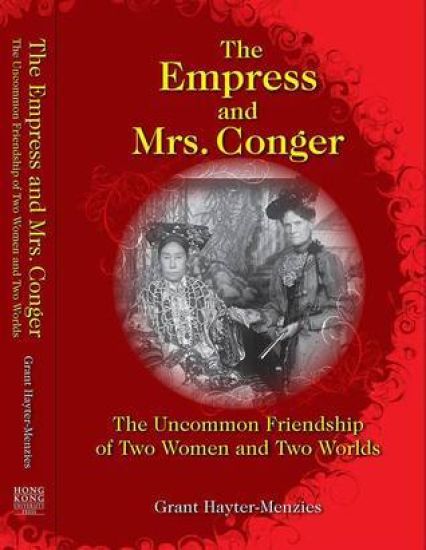
The Empress and Mrs. Conger – The Uncommon Friendship of Two Women and Two Worlds
Grant Hayter–menzies
Hong Kong University Press
2011
sidottu
In winter 1902, in the ruins of post-Boxer Uprising Beijing, two women from two different worlds joined hands in friendship-the former concubine and legendary tyrant Empress Dowager Cixi, and the Midwest-born, devoutly Christian diplomat's wife Sarah Pike Conger. Together, they made history.
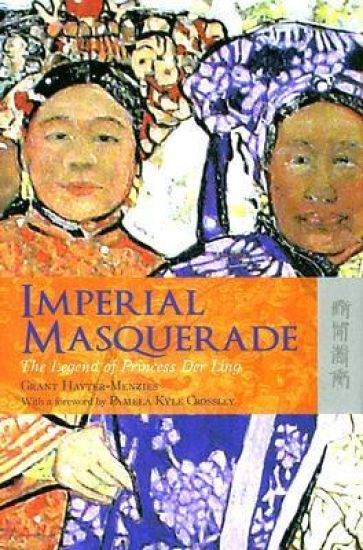
Imperial Masquerade – The Legend of Princess Der Ling
Grant Hayter–menzies
Hong Kong University Press
2008
sidottu
The extraordinary life of the Manchu author, feminist and figure of controversy, who yearned to expose the true humanity of the elderly empress dowager feared and hated by the rest of the world, but never quite shared the truth of herself.
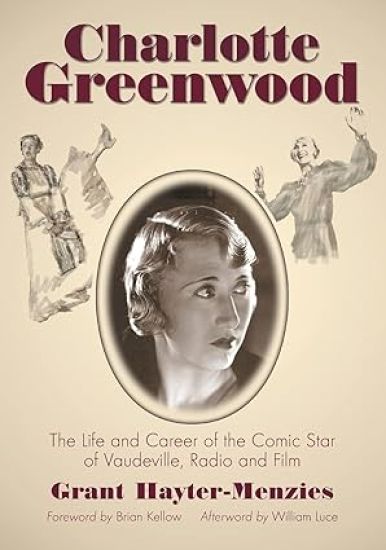
Charlotte Greenwood never intended to become a comedienne, but she was unfashionably tall at 5' 10" and her early aspirations to become a great dramatic actress eventually led her to the field of comedy. Greenwood, whose early life had taught her nothing if not how to be optimistic, stifled her disappointment and used her considerable skill to become one of the greatest comedic actresses of the early twentieth century. Based on Greenwood's unpublished memoirs, this biography presents a personal, detailed look at her colorful life. Beginning with her early years in Philadelphia, Boston and Norfolk, it relates her struggles with ill health, her social difficulties caused by her then unusual height and her realization of her ambition to become an actress. The main focus of the work is her career, which spanned more than 50 years and ranged from vaudeville to the dramatic stage and, finally, to films (during the World War II years she starred in Twentieth Century Fox musicals with Cesar Romero, Betty Grable, Edward Everett Horton, Jack Haley, Don Ameche, and Carmen Miranda). Her roles in a variety of works including The Passing Show of 1912, So Long Letty (both stage and film), and I Remember Mama are also discussed. Special emphasis is placed on her career-defining (and best-known) role as Aunt Eller Murphy in the 1955 film adaptation of Oklahoma! Charlotte Greenwood's performance history, a list of her known recordings, and a filmography for her husband Martin Broones are also included, along with a collection of rare photographs and memorabilia.