Kirjojen hintavertailu – 12 859 828 kirjaa ja 27 kauppaa

Kirjailija

Grant Macaskill

Kirjat ja teokset yhdessä paikassa: 10 kirjaa, julkaisuja vuosilta 2013–2024, suosituimpiin kuuluu Autism and the Church. Vertaile teosten hintoja ja tarkista saatavuus suomalaisista kirjakaupoista.

10 kirjaa

Kirjojen julkaisuvuodet: 2013–2024.

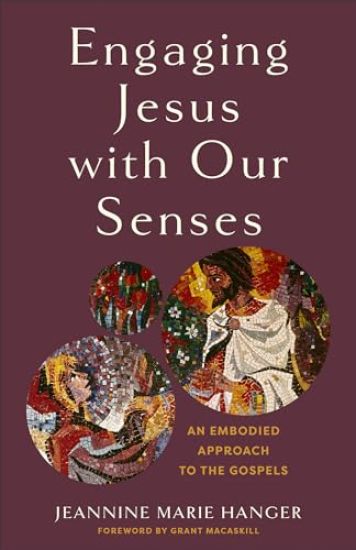
Engaging Jesus with Our Senses

Engaging Jesus with Our Senses

Jeannine Marie Hanger; Grant Macaskill

BAKER PUBLISHING GROUP
2024
nidottu
Jesus took on flesh--he was embodied. And the Gospels use multisensory language to reveal that his teaching, ministry, and interactions with people engaged the senses. Consider the raging storm on the Sea of Galilee, the perfume filling the house as Mary anointed Jesus's feet, the significance of touch as Jesus healed people. Jesus even described himself in sensory terms--as the bread of life, the light of the world, the vine to whom his disciples are connected. Our physical senses are crucial to gaining knowledge of the world around us. Yet when it comes to Bible reading, we often reduce it to a mere cognitive experience, ignoring the Psalmist's invitation to "taste and see that the Lord is good." This book offers a fresh way to read the Gospels with an emphasis on embodiment, focused on a life abiding in Christ. The goal is a greater, more tangible knowledge of God. Jeannine Hanger points to the importance of engaging our physical senses in Bible reading, shows an approach to doing so with an emphasis on sparking the imagination, and looks at how utilizing our primary senses plays out in reading the Gospels. Each chapter includes sensory practices and questions for personal reflection. The book includes a foreword by Grant Macaskill.

The Entangled Enoch: 2 Enoch and the Cultures of Late Antiquity
This study reframes and reorients the study of 2 Enoch, moving beyond debates about Christian or Jewish authorship and considering the work in the context of eclectic and erudite cultures in late antiquity, particularly Syria. The study compares the work with the Parables of Enoch and then with a variety of writings associated with late antique Syrian theology, demonstrating the distinctively eclectic character of 2 Enoch. It offers new paradigms for research into the pseudepigrapha.
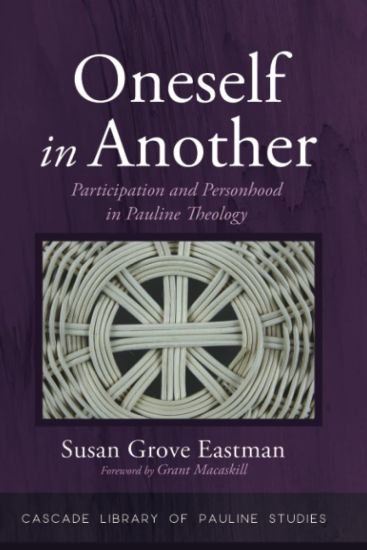
Oneself in Another

Oneself in Another

Susan Grove Eastman; Grant Macaskill

Wipf Stock Publishers
2023
pokkari
Oneself in Another explores the Pauline themes of redemption and transformation through Christ's participation in human history and life. The essays range from careful exegetical and historical analysis to interdisciplinary engagements with issues in theology, global events, and medical ethics. Throughout, they focus on human experience, questions about how people change, and God's gracious initiative liberating human agency.
Oneself in Another

Oneself in Another

Susan Grove Eastman; Grant Macaskill

Wipf Stock Publishers
2023
sidottu
Oneself in Another explores the Pauline themes of redemption and transformation through Christ's participation in human history and life. The essays range from careful exegetical and historical analysis to interdisciplinary engagements with issues in theology, global events, and medical ethics. Throughout, they focus on human experience, questions about how people change, and God's gracious initiative liberating human agency.
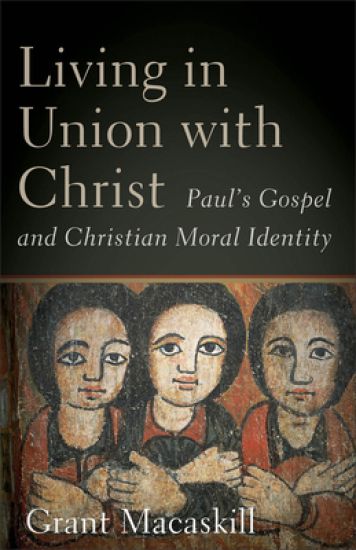
Living in Union with Christ

Living in Union with Christ

Grant Macaskill

BAKER PUBLISHING GROUP
2023
nidottu
Leading New Testament theologian Grant Macaskill introduces Paul's understanding of the Christian life, which is grounded in the apostle's theology of union with Christ. The author shows that the exegetical foundations for a Christian moral theology emerge from the idea of union with Christ. Macaskill covers various aspects of Christian moral theology, exploring key implications for the Christian life of the New Testament idea of participatory union as they unfold in Paul's Letters.
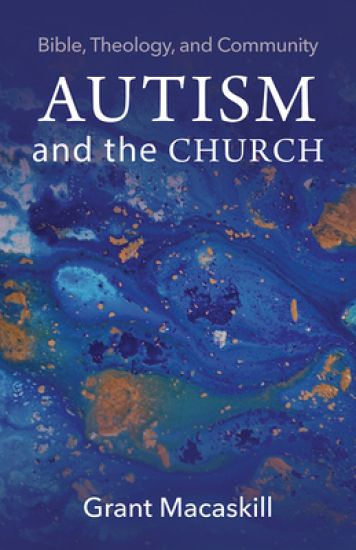
Autism and the Church

Autism and the Church

Grant Macaskill

Baylor University Press
2021
pokkari
An estimated 76 million people worldwide are affected by autism—current figures suggest that 1 in 100 people live somewhere along the autism spectrum, though many remain undiagnosed. Frequently, autism occurs alongside other conditions, such as anxiety or depression. Yet despite autism's prevalence and impact, the church remains slow to adapt, with responses that are often poorly informed and irresponsible. In Autism and the Church Grant Macaskill provides a careful, attentive, and sustained analysis of the reality of autism within the church and how this should be approached theologically. Macaskill demonstrates that attempts to read the Bible with reference to autism are often deficient because they move too quickly from the study of particular texts to claims about the condition and how it should be viewed. This leads some Christians to see autism as something that should be healed or even exorcised. Macaskill instead invites readers to struggle with the biblical canon, in ways shaped by the traditions of the early church, to a process of interpretation that calls upon the church, following Christ's teaching, to cherish those who experience autism as part of the diverse gifting of Christ's body. Accordingly, he calls churches to consider the implications of autism in their congregations and to explore how best to accommodate the particular needs of persons with autism in public worship and pastoral care, while valuing their distinctive contribution. In short, Macaskill challenges the church to "think biblically" about autism. Autism and the Church teaches readers that those with autism belong to the church, demonstrating that, if responsibly read, the Bible provides a resource that enables the church to recognize the value of those with autism. Macaskill shows how the Bible can help both individuals and church bodies flourish, even as the church deals faithfully with the opportunities and challenges that come with understanding autism. He writes as a biblical scholar intimately familiar with the experience of autism, dealing honestly with the real difficulties that can accompany the condition, while challenging misconceptions.
Autism and the Church

Autism and the Church

Grant Macaskill

Baylor University Press
2019
sidottu
An estimated 76 million people worldwide are affected by autismâcurrent figures suggest that 1 in 100 people live somewhere along the autism spectrum, though many remain undiagnosed. Frequently, autism occurs alongside other conditions, such as anxiety or depression. Yet despite autism's prevalence and impact, the church remains slow to adapt, with responses that are often poorly informed and irresponsible. In Autism and the Church Grant Macaskill provides a careful, attentive, and sustained analysis of the reality ofautism within the church and how this should be approached theologically. Macaskill demonstrates that attempts to read the Bible with reference to autism are often deficient because they move too quickly from the study of particular texts to claims about the condition and how it should be viewed. This leads some Christians to see autism as something that should be healed or even exorcised. Macaskill instead invites readers to struggle with the biblical canon, in ways shaped by the traditions of the early church, to a process of interpretation that calls upon the church, following Christ's teaching, to cherish those who experience autism as part of the diverse gifting of Christ's body. Accordingly, he callschurches to considerthe implications of autism in their congregations and to explore how best to accommodate the particular needs of persons with autism in public worship and pastoral care, while valuing their distinctive contribution. In short, Macaskill challenges the church to "think biblically" about autism. Autism and the Church teaches readers that those with autism belong to the church,demonstrating that, if responsibly read, the Bible provides a resource that enables the church to recognize the value of those with autism. Macaskill shows how the Bible can help both individuals and church bodies flourish, even as the church deals faithfully with the opportunities and challenges that come with understanding autism. He writes as a biblical scholar intimately familiar with the experience of autism, dealing honestly with the real difficulties that can accompany the condition, while challenging misconceptions.
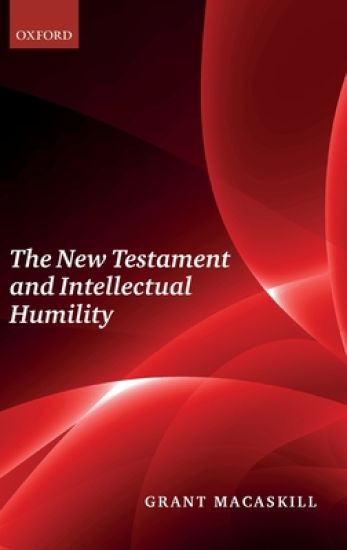
The New Testament and Intellectual Humility

The New Testament and Intellectual Humility

Grant Macaskill

Oxford University Press
2019
sidottu
This study examines how the New Testament scriptures might form and foster intellectual humility within Christian communities. It is informed by recent interdisciplinary interest in intellectual humility, and concerned to appreciate the distinctive representations of the virtue offered by the New Testament writers on their own terms. It argues that the intellectual virtue is cast as a particular expression of the broader Christian virtue of humility, something which itself proceeds from the believer's union with Christ, through which personal identity is reconstituted by the operation of the Holy Spirit. This demands that we speak of 'virtue' in ways determined by the acting presence of Jesus Christ that overcomes sin and evil in human lives and in the world. The Christian account of the intellectual virtue of humility is framed by this conflict, as the minds of believers who live together within the Christian community struggle with natural arrogance and selfishness, and come to share in the mind of Christ. The new identity that emerges creates a fresh openness to truth, as the capacity of the sinful mind to distort truth is exposed and challenged. This affects not just knowledge and perception, but also volition: for these ancient writers, a humble mind makes good decisions that reflect judgements decisively shaped by the sacrificial love of Jesus Christ. By presenting 'humility of mind' as a characteristic of the One who is worshipped--Jesus Christ--the New Testament writers insist that we acknowledge the virtue not just as an admission of human deficiency or limitation, but as a positive affirmation of our rightful place within the divine economy.
Union with Christ in the New Testament

Union with Christ in the New Testament

Grant Macaskill

Oxford University Press
2018
nidottu
Union with Christ in the New Testament is a study of the union between God and those he has redeemed, as it is represented in the New Testament. In conversation with historical and systematic theology, Grant Macaskill argues that the union between God and his people is consistently represented by the New Testament authors as covenantal, with the participation of believers in the life of God specifically mediated by Jesus, the covenant Messiah: hence, it involves union with Christ. Christ's mediation of divine participation of believers in the life of God specifically mediated by Jesus, the covenant Messiah: hence, it involves union with Christ. Christ's mediation of divine presence is grounded in the ontology of the Incarnation, the real divinity and real humanity of his person, and by the full divine personhood of the Holy Spirit, who unites believers to him in faith. His personal narrative of death and resurrection is understood in relation to the covenant by which God's dealings with humanity are ordered. In their union with him, believers are transformed both morally and noetically, so that the union has an epistemic dimension, strongly affirmed by the theological tradition but sometimes confused by scholars with Platonism. This account is developed in close engagement with the New Testament texts, read against Jewish backgrounds, and allowed to inform one another as context. As a 'participatory' understanding of New Testament soteriology, it is advanced in distinction to other participatory approaches that are here considered to be deficient, particularly the so-called 'apocalyptic' approach that is popular in Pauline scholarship, and those attempts to read New Testament soteriology in terms of theosis, elements of which are nevertheless affirmed.
Union with Christ in the New Testament

Union with Christ in the New Testament

Grant Macaskill

Oxford University Press
2013
sidottu
This book is a study of the union between God and those he has redeemed, as it is represented in the New Testament. In conversation with historical and systematic theology, Grant Macaskill argues that the union between God and his people is consistently represented by the New Testament authors as covenantal, with the participation of believers in the life of God specifically mediated by Jesus, the covenant Messiah: hence, it involves union with Christ. Christ's mediation of divine presence is grounded in the ontology of the Incarnation, the real divinity and real humanity of his person, and by the full divine personhood of the Holy Spirit, who unites believers to him in faith. His personal narrative of death and resurrection is understood in relation to the covenant by which God's dealings with humanity are ordered. In their union with him, believers are transformed both morally and noetically, so that the union has an epistemic dimension, strongly affirmed by the theological tradition but sometimes confused by scholars with Platonism. This account is developed in close engagement with the New Testament texts, read against Jewish backgrounds, and allowed to inform one another as context. As a 'participatory' understanding of New Testament soteriology, it is advanced in distinction to other participatory approaches that are here considered to be deficient, particularly the so-called 'apocalyptic' approach that is popular in Pauline scholarship, and those attempts to read New Testament soteriology in terms of theosis, elements of which are nevertheless affirmed.