Kirjojen hintavertailu – 12 903 725 kirjaa ja 27 kauppaa

Kirjailija

Grant S. McCall

Kirjat ja teokset yhdessä paikassa: 7 kirjaa, julkaisuja vuosilta 2014–2022, suosituimpiin kuuluu The Prehistory of Private Property. Vertaile teosten hintoja ja tarkista saatavuus suomalaisista kirjakaupoista.

7 kirjaa

Kirjojen julkaisuvuodet: 2014–2022.

The Prehistory of Private Property

The Prehistory of Private Property

Karl Widerquist; Grant S. McCall

EDINBURGH UNIVERSITY PRESS
2022
nidottu
Examines the origin and development of the private property rights system from prehistory to the present day Traces the origin and development of the private property rights system from prehistory to the present day showing that it was not the product of 'appropriation' and 'voluntary trade' but of a long history of violent aggression Reviews the long history of contradictory explanations why inequality is supposedly natural and inevitable or an inevitable feature of a free society Uses anthropological evidence to show that some societies have maintained strong equality and extensive freedom Addresses the negative-freedom argument for the market economy by showing that the hunter gatherer band economy has much more extensive negative freedom This book debunks three false claims commonly accepted by contemporary political philosophers regarding property systems: that inequality is natural, inevitable, or incompatible with freedom; that capitalism is more consistent with negative freedom than any other conceivable economic system; and that the normative principles of appropriation and voluntary transfer applied in the world in which we live support a capitalist system with strong, individualist and unequal private property rights. The authors review the history of the use and importance of these claims in philosophy, and use thorough anthropological and historical evidence to refute them. They show that societies with common-property systems maintaining strong equality and extensive freedom were initially nearly ubiquitous around the world, and that the private property rights system was established through a long series of violent state-sponsored aggressions.
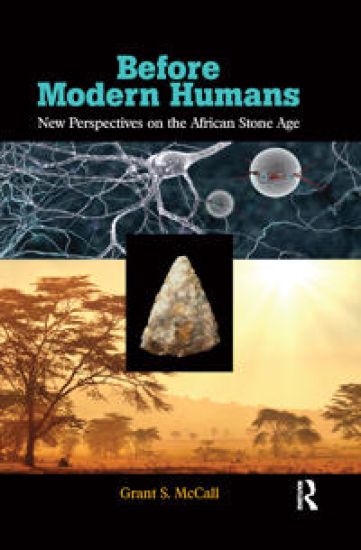
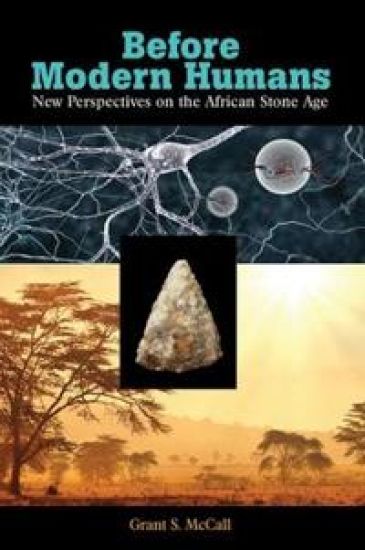
Before Modern Humans

Before Modern Humans

Grant S. McCall

Routledge
2020
nidottu
This fascinating volume, assessing Lower and Middle Pleistocene African prehistory, argues that the onset of the Middle Stone Age marks the origins of landscape use patterns resembling those of modern human foragers. Inaugurating a paradigm shift in our understanding of modern human behavior, Grant McCall argues that this transition—related to the origins of “home base” residential site use—occurred in mosaic fashion over the course of hundreds of thousands of years. He concludes by proposing a model of brain evolution driven by increasing subsistence diversity and intensity against the backdrop of larger populations and Pleistocene environmental unpredictability. McCall argues that human brain size did not arise to support the complex patterns of social behavior that pervade our lives today, but instead large human brains were co-opted for these purposes relatively late in prehistory, accounting for the striking archaeological record of the Upper Pleistocene.
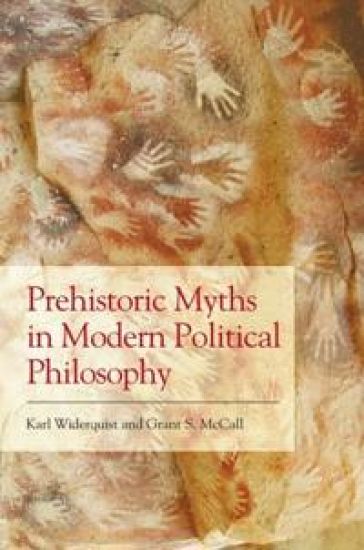
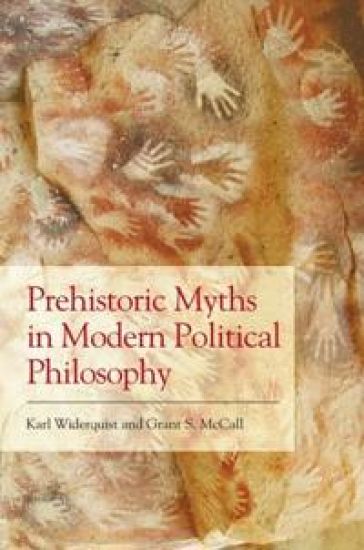
Prehistoric Myths in Modern Political Philosophy

Prehistoric Myths in Modern Political Philosophy

Karl Widerquist; Grant S. McCall

Edinburgh University Press
2018
nidottu
The state of nature, the origin of property, the origin of government, the primordial nature of inequality and war why do political philosophers talk so much about the Stone Age? And are they talking about a Stone Age that really happened, or is it just a convenient thought experiment to illustrate their points? Karl Widerquist and Grant S. McCall take a philosophical look at the origin of civilisation, examining political theories to show how claims about prehistory are used. Drawing on the best available evidence from archaeology and anthropology, they show that much of what we think we know about human origins comes from philosophers' imagination, not scientific investigation.
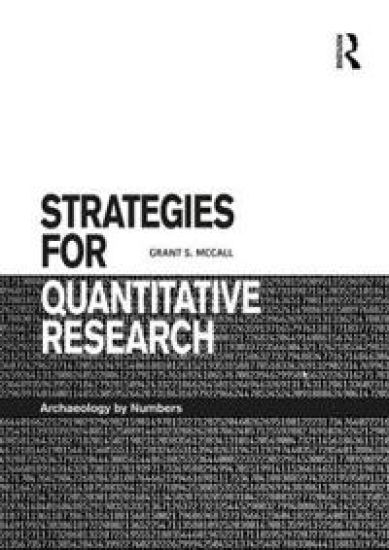
Strategies for Quantitative Research

Strategies for Quantitative Research

Grant S. McCall

Routledge
2018
nidottu
It is little secret that most archaeologists are uneasy with statistics. Thankfully, in the modern world, quantitative analysis has been made immensely easier by statistical software packages. Software now does virtually all our statistical calculations, removing a great burden for researchers. At the same time, since most statistical analysis now takes place through the pushing of buttons in software packages, new problems and dangers have emerged. How does one know which statistical test to use? How can one tell if certain data violate the assumptions of a particular statistical analysis? Rather than focusing on the mathematics of calculation, this concise handbook selects appropriate forms of analysis and explains the assumptions that underlie them. It deals with fundamental issues, such as what kinds of data are common in the field of archaeology and what are the goals of various forms of analysis. This accessible textbook lends a refreshing playfulness to an often-humorless subject and will be enjoyed by students and professionals alike.
Strategies for Quantitative Research

Strategies for Quantitative Research

Grant S. McCall

Routledge
2018
sidottu
It is little secret that most archaeologists are uneasy with statistics. Thankfully, in the modern world, quantitative analysis has been made immensely easier by statistical software packages. Software now does virtually all our statistical calculations, removing a great burden for researchers. At the same time, since most statistical analysis now takes place through the pushing of buttons in software packages, new problems and dangers have emerged. How does one know which statistical test to use? How can one tell if certain data violate the assumptions of a particular statistical analysis? Rather than focusing on the mathematics of calculation, this concise handbook selects appropriate forms of analysis and explains the assumptions that underlie them. It deals with fundamental issues, such as what kinds of data are common in the field of archaeology and what are the goals of various forms of analysis. This accessible textbook lends a refreshing playfulness to an often-humorless subject and will be enjoyed by students and professionals alike.
Prehistoric Myths in Modern Political Philosophy

Prehistoric Myths in Modern Political Philosophy

Karl Widerquist; Grant S. McCall

Edinburgh University Press
2017
sidottu
The state of nature, the origin of property, the origin of government, the primordial nature of inequality and war why do political philosophers talk so much about the Stone Age? And are they talking about a Stone Age that really happened, or is it just a convenient thought experiment to illustrate their points? Karl Widerquist and Grant S. McCall take a philosophical look at the origin of civilisation, examining political theories to show how claims about prehistory are used. Drawing on the best available evidence from archaeology and anthropology, they show that much of what we think we know about human origins comes from philosophers' imagination, not scientific investigation.
Before Modern Humans

Before Modern Humans

Grant S. McCall

Left Coast Press Inc
2014
sidottu
This fascinating volume, assessing Lower and Middle Pleistocene African prehistory, argues that the onset of the Middle Stone Age marks the origins of landscape use patterns resembling those of modern human foragers. Inaugurating a paradigm shift in our understanding of modern human behavior, Grant McCall argues that this transition—related to the origins of “home base” residential site use—occurred in mosaic fashion over the course of hundreds of thousands of years. He concludes by proposing a model of brain evolution driven by increasing subsistence diversity and intensity against the backdrop of larger populations and Pleistocene environmental unpredictability. McCall argues that human brain size did not arise to support the complex patterns of social behavior that pervade our lives today, but instead large human brains were co-opted for these purposes relatively late in prehistory, accounting for the striking archaeological record of the Upper Pleistocene.