Kirjojen hintavertailu – 12 859 819 kirjaa ja 27 kauppaa

Kirjailija

Greg Gordon

Kirjat ja teokset yhdessä paikassa: 6 kirjaa, julkaisuja vuosilta 2003–2026, suosituimpiin kuuluu Torg Eternity - Süßes oder Torg. Vertaile teosten hintoja ja tarkista saatavuus suomalaisista kirjakaupoista.

6 kirjaa

Kirjojen julkaisuvuodet: 2003–2026.

The Contractual Allocation of Liabilities in the Upstream Oil and Gas Industry
The upstream oil and gas industry is a high-risk, high-value activity. When operations run smoothly and oil prices are high, immense profits can be achieved. However, when accidents happen the consequences can be catastrophic, as incidents such as Deepwater Horizon and the Piper Alpha disaster attest. Liability allocation provisions are therefore of vital importance in oil and gas contracts. This comprehensive text addresses the large number of practical challenges stemming from the drafting, interpretation and implementation of such clauses, all in one distinct volume. The author provides an expert account of the industry’s liability allocation regime, explains the reasons behind industry practice, analyses the extent to which the law challenges the industry’s intentions to re-allocate risk in this way, and addresses the technical difficulties inherent in using contracts as a means of re-allocating liability. The book also considers the unique features of offshore contracting, as well as the particular liability allocation issues which can be anticipated to arise as a result of onshore contracting. This is essential reading for oil and gas lawyers worldwide, particularly those involved in dispute resolution and contract negotiation in the upstream industry. It will also be of interest to those studying and researching energy law.

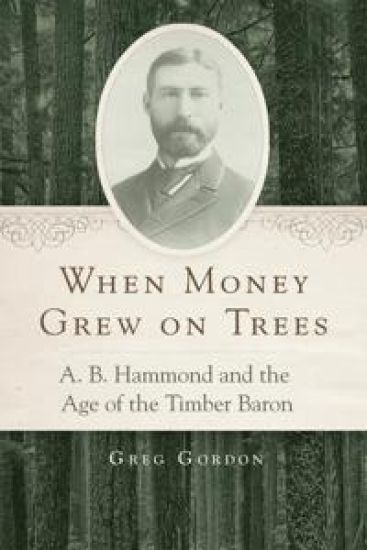
When Money Grew on Trees

When Money Grew on Trees

Greg Gordon

UNIVERSITY OF OKLAHOMA PRESS
2023
nidottu
Born in the timber colony of New Brunswick, Maine, in 1848, Andrew Benoni Hammond got off to an inauspicious start as a teenage lumberjack. By his death in 1934, Hammond had built an empire of wood that stretched from Puget Sound to Arizona—and in the process had reshaped the American West and the nation’s way of doing business. When Money Grew on Trees follows Hammond from the rough-and-tumble world of mid-nineteenth-century New Brunswick to frontier Montana and the forests of Northern California—from lowly lumberjack to unrivaled timber baron. Although he began his career as a pioneer entrepreneur, Hammond, unlike many of his associates, successfully negotiated the transition to corporate businessman. Against the backdrop of western expansion and nation-building, his life dramatically demonstrates how individuals—more than the impersonal forces of political economy—shaped capitalism in this country, and in doing so, transformed the forests of the West from functioning natural ecosystems into industrial landscapes. In revealing Hammond’s instrumental role in converting the nation’s public domain into private wealth, historian Greg Gordon also shows how the struggle over natural resources gave rise to the two most pervasive forces in modern American life: the federal government and the modern corporation. Combining environmental, labor, and business history with biography, When Money Grew on Trees challenges the conventional view that the development and exploitation of the western United States was dictated from the East Coast. The West, Gordon suggests, was perfectly capable of exploiting itself, and in his book we see how Hammond and other regional entrepreneurs dammed rivers, logged forests, and leveled mountains in just a few decades. Hammond and his like also built cities, towns, and a vast transportation network of steamships and railroads to export natural resources and import manufactured goods. In short, they established much of the modern American state and economy.
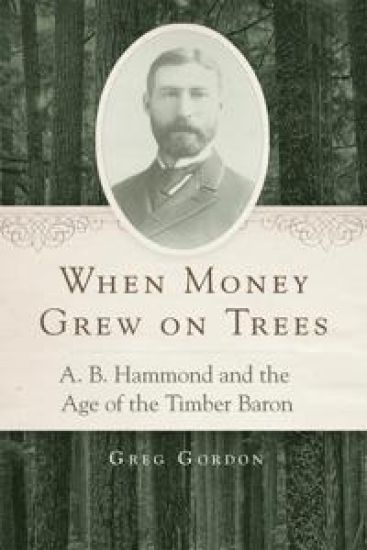
When Money Grew on Trees

When Money Grew on Trees

Greg Gordon

University of Oklahoma Press
2014
sidottu
Born in the timber colony of New Brunswick, Maine, in 1848, Andrew Benoni Hammond got off to an inauspicious start as a teenage lumberjack. By his death in 1934, Hammond had built an empire of wood that stretched from Puget Sound to Arizona - and in the process had reshaped the American West and the nation's way of doing business. When Money Grew on Trees follows Hammond from the rough-and-tumble world of mid-nineteenth-century New Brunswick to frontier Montana and the forests of Northern California - from lowly lumberjack to unrivaled timber baron. Although he began his career as a pioneer entrepreneur, Hammond, unlike many of his associates, successfully negotiated the transition to corporate businessman. Against the backdrop of western expansion and nation-building, his life dramatically demonstrates how individuals - more than the impersonal forces of political economy - shaped capitalism in this country, and in doing so, transformed the forests of the West from functioning natural ecosystems into industrial landscapes. In revealing Hammond's instrumental role in converting the nation's public domain into private wealth, historian Greg Gordon also shows how the struggle over natural resources gave rise to the two most pervasive forces in modern American life: the federal government and the modern corporation. Combining environmental, labor, and business history with biography, When Money Grew on Trees challenges the conventional view that the development and exploitation of the western United States was dictated from the East Coast. The West, Gordon suggests, was perfectly capable of exploiting itself, and in his book we see how Hammond and other regional entrepreneurs dammed rivers, logged forests, and leveled mountains in just a few decades. Hammond and his like also built cities, towns, and a vast transportation network of steamships and railroads to export natural resources and import manufactured goods. In short, they established much of the modern American state and economy.
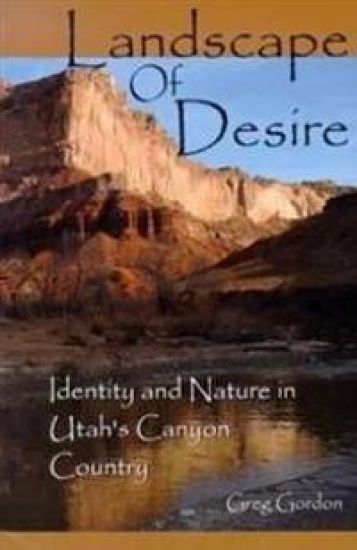
Landscape Of Desire

Landscape Of Desire

Greg Gordon

Utah State University Press
2003
pokkari
Landscape of Desire powerfully documents and celebrates a place and the evolutions that occur when human beings are intimately connected to their surroundings. Greg Gordon accomplishes this with a tapestry of writing that interweaves land use history, natural history, experiential education, and personal reflection. He tracks the geomorphology of southern Utah as well as the creatures and plants his student group encounters, the history lessons (planned and unplanned), the trials and joys of gathering so many individuals into a cohesive will, and his own personal epiphanies, restraints, insights, and disillusionments. Landscape of Desire examines the plight of the western landscape. It discusses a wide range of issues, including mining, grazing, dams, recreation, wilderness, and land management. Since recreation has replaced extraction industries as the primary use of wilderness, especially in southern Utah, Gordon addresses its impactful qualities. He overviews the history of the conflict between preservation and development and places these issues in a cultural context. The text is presented in a narrative format, following the individuals of one field course Gordon lead that explored Muddy Creek and the Dirty Devil River from Interstate 70 to Lake Powell. Though each chapter focuses on the geologic formation the group is travelling through, the plants, animals, ecology, and human impacts are all tightly woven into the narrative. Not only does the land affect the members of the field course, but their attitudes and insights affect the land. In Landscape of Desire Gordon achieves a vision of wholeness of this popular and contested region of Utah that centers around the implications of being human and also stewards of the wild.
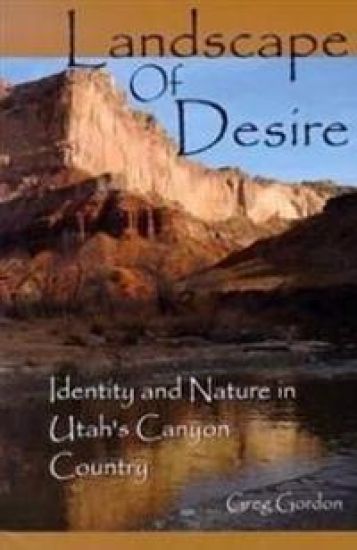
Landscape Of Desire

Landscape Of Desire

Greg Gordon

Utah State University Press
2003
sidottu
Landscape of Desire powerfully documents and celebrates a place and the evolutions that occur when human beings are intimately connected to their surroundings. Greg Gordon accomplishes this with a tapestry of writing that interweaves land use history, natural history, experiential education, and personal reflection. He tracks the geomorphology of southern Utah as well as the creatures and plants his student group encounters, the history lessons (planned and unplanned), the trials and joys of gathering so many individuals into a cohesive will, and his own personal epiphanies, restraints, insights, and disillusionments. Landscape of Desire examines the plight of the western landscape. It discusses a wide range of issues, including mining,grazing, dams, recreation, wilderness, and land management. Since recreation has replaced extraction industries as the primary use of wilderness, especially in southern Utah, Gordon addresses its impactful qualities. He overviews the history of the conflict between preservation and development and places these issues in a cultural context. The text is presented in a narrative format, following the individuals of one field course Gordon lead that explored Muddy Creek and the Dirty Devil River from Interstate 70 to Lake Powell. Though each chapter focuses on the geologic formation the group is travelling through, the plants, animals, ecology, and human impacts are all tightly woven into the narrative. Not only does the land affect the members of the field course, but their attitudes and insights affect the land. In Landscape of Desire Gordon achieves a vision of wholeness of this popular and contested region of Utah that centers around the implications of being human and also stewards of the wild.