Kirjojen hintavertailu – 12 903 724 kirjaa ja 27 kauppaa

Kirjailija

Gregg Mitman

Kirjat ja teokset yhdessä paikassa: 5 kirjaa, julkaisuja vuosilta 1992–2023, suosituimpiin kuuluu Empire of Rubber. Vertaile teosten hintoja ja tarkista saatavuus suomalaisista kirjakaupoista.

5 kirjaa

Kirjojen julkaisuvuodet: 1992–2023.

Empire of Rubber

Empire of Rubber

Gregg Mitman

THE NEW PRESS
2023
pokkari
“A well-rendered and -documented tale of exploitation in the developing world” (Kirkus Reviews) with deep resonance in the present day In a book Paul Farmer called “a gem of a social history linking two countries stuck in uncomfortable embrace for well over a century,” award-winning author and filmmaker Gregg Mitman tells a sweeping story of capitalism, racial exploitation, and environmental devastation, as Firestone transformed Liberia into America’s rubber empire. Scouring remote archives to unearth a story of promises unfulfilled for the vast numbers of Liberians who toiled on rubber plantations built on taken land, Mitman “peppers this history with a wealth of fascinating details and interesting characters” (Foreign Affairs), revealing a system of racial segregation and medical experimentation that reflected Jim Crow America—on African soil. Called “a brilliant, compelling read” by Princeton scholar Rob Nixon, Empire of Rubber, now available in paperback, provides a riveting narrative of ecology and disease, of commerce and science, and of racial politics and political maneuvering—the hidden story of a corporate empire whose tentacles reach into the present.
Empire of Rubber

Empire of Rubber

Gregg Mitman

The New Press
2021
sidottu
An ambitious and shocking exposé of America’s hidden empire in Liberia, run by the storied Firestone corporation, and its long shadow In the early 1920s, Americans owned 80 percent of the world’s automobiles and consumed 75 percent of the world’s rubber. But only one percent of the world’s rubber grew under the U. S. flag, creating a bottleneck that hampered the nation’s explosive economic expansion. To solve its conundrum, the Firestone Tire and Rubber Company turned to a tiny West African nation, Liberia, founded in 1847 as a free Black republic. Empire of Rubber tells a sweeping story of capitalism, racial exploitation, and environmental devastation, as Firestone transformed Liberia into America’s rubber empire. Historian and filmmaker Gregg Mitman scoured remote archives to unearth a history of promises unfulfilled for the vast numbers of Liberians who toiled on rubber plantations built on taken land. Mitman reveals a history of racial segregation and medical experimentation that reflected Jim Crow America—on African soil. As Firestone reaped fortunes, wealth and power concentrated in the hands of a few elites, fostering widespread inequalities that fed unrest, rebellions and, eventually, civil war. A riveting narrative of ecology and disease, of commerce and science, and of racial politics and political maneuvering, Empire of Rubber uncovers the hidden story of a corporate empire whose tentacles reach into the present.
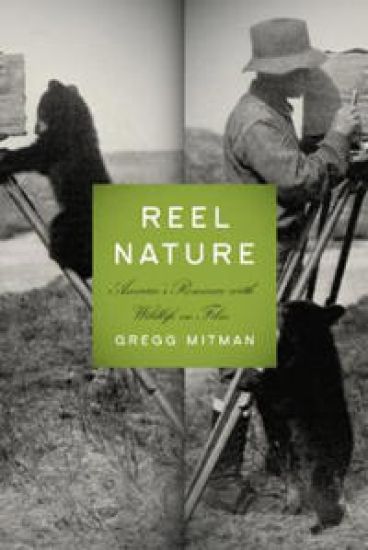
Reel Nature

Reel Nature

Gregg Mitman; William Cronon

University of Washington Press
2009
pokkari
Winner of the History of Science Society's Watson Davis and Helen Miles Davis Prize in the History of Science. From the early exploits of Teddy Roosevelt in Africa to blockbuster films such as March of the Penguins, Gregg Mitman's Reel Nature reveals how changing values, scientific developments, and new technologies have come to shape American encounters with wildlife on and off the big screen. Whether crafted to elicit thrills or to educate audiences about the real-life drama of threatened wildlife, nature films then and now have had an enormous impact on how Americans see, think about, consume, and struggle to protect animals across the globe. For more information about the author go to: http://gmitman.com/
The State of Nature

The State of Nature

Gregg Mitman

University of Chicago Press
1992
sidottu
Although science may claim to be "objective," scientists cannot avoid the influence of their own values on their research. In The State of Nature, Gregg Mitman examines the relationship between issues in early twentieth-century American society and the sciences of evolution and ecology to reveal how explicit social and political concerns influenced the scientific agenda of biologists at the University of Chicago and throughout the United States during the first half of this century. Reacting against the view of nature "red in tooth and claw," ecologists and behavioral biologists such as Warder Clyde Allee, Alfred Emerson, and their colleagues developed research programs they hoped would validate and promote an image of human society as essentially cooperative rather than competitive. Mitman argues that Allee's religious training and pacifist convictions shaped his pioneering studies of animal communities in a way that could be generalized to denounce the view that war is in our genes.
The State of Nature

The State of Nature

Gregg Mitman

University of Chicago Press
1992
nidottu
Although science may claim to be "objective," scientists cannot avoid the influence of their own values on their research. In The State of Nature, Gregg Mitman examines the relationship between issues in early twentieth-century American society and the sciences of evolution and ecology to reveal how explicit social and political concerns influenced the scientific agenda of biologists at the University of Chicago and throughout the United States during the first half of this century. Reacting against the view of nature "red in tooth and claw," ecologists and behavioral biologists such as Warder Clyde Allee, Alfred Emerson, and their colleagues developed research programs they hoped would validate and promote an image of human society as essentially cooperative rather than competitive. Mitman argues that Allee's religious training and pacifist convictions shaped his pioneering studies of animal communities in a way that could be generalized to denounce the view that war is in our genes.