Kirjojen hintavertailu – 12 903 725 kirjaa ja 27 kauppaa

Kirjailija

Gregor Benton

Kirjat ja teokset yhdessä paikassa: 8 kirjaa, julkaisuja vuosilta 1999–2026, suosituimpiin kuuluu Chinatowns. Vertaile teosten hintoja ja tarkista saatavuus suomalaisista kirjakaupoista.

8 kirjaa

Kirjojen julkaisuvuodet: 1999–2026.

Chinatowns

Chinatowns

Gregor Benton

Routledge
2026
sidottu
Gregor Benton is one of the foremost scholars of China in the world. Chinatowns is a highly readable, and sweeping book on this global phenomenon, including a photo essay of historical snapshots of Chinatowns across the globe. The Chinese diaspora, which started a couple of centuries ago, produced Chinatowns from the US to Britain to Europe to Southeast Asia to Australia. Exploring how each Chinatown is different; Benton explains how a unique culture developed and outlines their basic cultural, social, and political features. He highlights the unique features of the different Chinatowns surveyed. For instance, in Paris, there is a Chinatown populated primarily by Chinese who are the descendants of Chinese migrants to Southeast Asia (a former French colony). In the United States, the cloistered nature of Chinatowns stemmed from institutionalized racism. And in Australia, weaker taboos against interracial sex led to more open enclaves. Everywhere, though, Chinatowns have been stereotyped as places of exoticism and corruption, and to this day are frequently viewed through an Orientalist gaze. In this truly unique book, Gregor Benton applies his vast knowledge to cover all of these features.
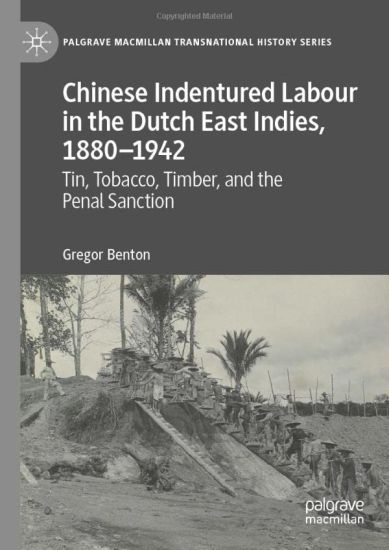
Chinese Indentured Labour in the Dutch East Indies, 1880–1942

Chinese Indentured Labour in the Dutch East Indies, 1880–1942

Gregor Benton

Springer International Publishing AG
2023
nidottu
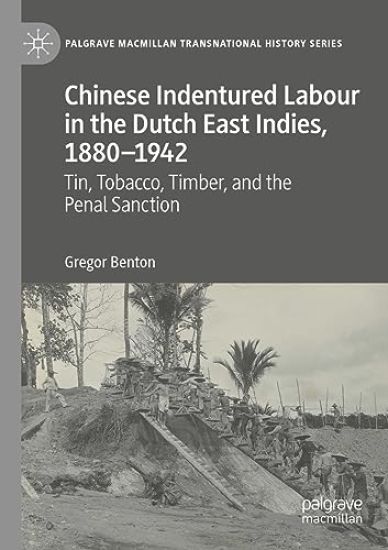
This book offers a comprehensive account of indentured Chinese labour in the Dutch East Indies between 1880 and 1942, particularly in its twilight years after 1917. The author shows that Chinese indenture started and evolved differently from other forms of bonded labour in Southeast Asia and globally, including its Indian and Javanese variants. This difference is reflected in its lexicon, which was in part special to the Chinese strain. Using fieldwork findings from the tin islands of Bangka and Belitung and the Deli plantations on Sumatra as well as archival materials in Dutch, Chinese, and other languages held in libraries in Java, Nanjing, Taipei, Hong Kong, and Leiden, this book presents cutting-edge research that sets out to contribute to the revising of our historical understanding of indenture.
Chinese Indentured Labour in the Dutch East Indies, 1880–1942

Chinese Indentured Labour in the Dutch East Indies, 1880–1942

Gregor Benton

Springer International Publishing AG
2022
sidottu
This book offers a comprehensive account of indentured Chinese labour in the Dutch East Indies between 1880 and 1942, particularly in its twilight years after 1917. The author shows that Chinese indenture started and evolved differently from other forms of bonded labour in Southeast Asia and globally, including its Indian and Javanese variants. This difference is reflected in its lexicon, which was in part special to the Chinese strain. Using fieldwork findings from the tin islands of Bangka and Belitung and the Deli plantations on Sumatra as well as archival materials in Dutch, Chinese, and other languages held in libraries in Java, Nanjing, Taipei, Hong Kong, and Leiden, this book presents cutting-edge research that sets out to contribute to the revising of our historical understanding of indenture.
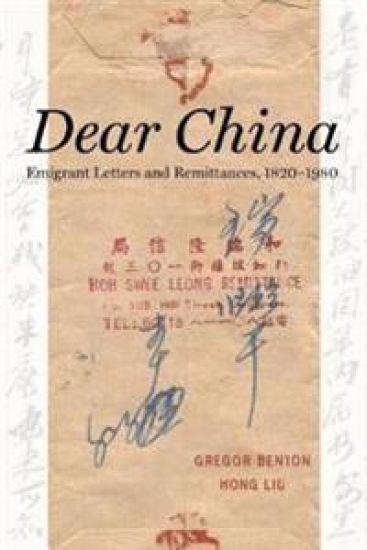
Dear China

Dear China

Gregor Benton; Hong Liu; Gungwu Wang

University of California Press
2018
sidottu
Qiaopi is one of several names given to the “silver letters” Chinese emigrants sent home in the nineteenth and twentieth centuries. These letters-cum-remittances document the changing history of the Chinese diaspora in different parts of the world and in different times. Dear China is the first book-length study in English of qiaopi and of the origins, structure, and operations of the qiaopi trade. The authors explore the characteristics and transformations of qiaopi, showing how such institutionalized and cross-national mechanisms helped sustain families separated by distance and state frontiers and contributed to the sending regions’ socioeconomic development. Dear China contributes substantially to our understanding of modern Chinese history and to the comparative study of global migration.
Dear China

Dear China

Gregor Benton; Hong Liu; Gungwu Wang

University of California Press
2018
pokkari
Qiaopi is one of several names given to the “silver letters” Chinese emigrants sent home in the nineteenth and twentieth centuries. These letters-cum-remittances document the changing history of the Chinese diaspora in different parts of the world and in different times. Dear China is the first book-length study in English of qiaopi and of the origins, structure, and operations of the qiaopi trade. The authors explore the characteristics and transformations of qiaopi, showing how such institutionalized and cross-national mechanisms helped sustain families separated by distance and state frontiers and contributed to the sending regions’ socioeconomic development. Dear China contributes substantially to our understanding of modern Chinese history and to the comparative study of global migration.
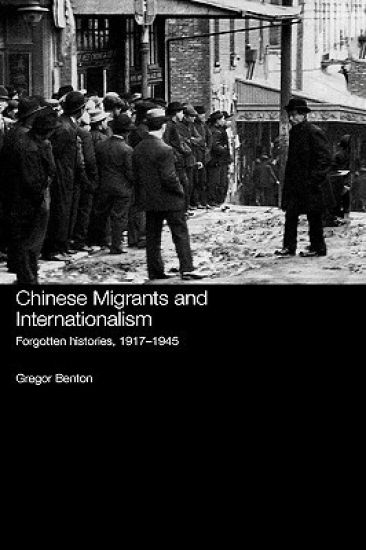
Chinese Migrants and Internationalism
The transnational and diasporic dimensions of early Chinese migrant politics opened in the late nineteenth century when Chinese radical groups bent on overthrowing the Qing dynasty (1644-1911) vied with one another to win Chinese overseas to their modernizing projects, and immigrants who had suffered discrimination welcomed their proposals. The radicals’ concentration on Chinese communities abroad as outposts of Chinese politics and culture strengthened the stereotype of Chinese as clannish, unassimilable, xenophobic, and deeply introverted. This book argues that such a view has its roots less in historical truth than in political and ideological prejudice and obscures a rich vein of internationalist practice in Chinese migrant or diasporic history, which the study aims to restore to visibility. In some cases, internationalist alliances sprang from the spontaneous perception by Chinese and other non-Chinese migrants or local workers of shared problems and common solutions in everyday life and work. At other times, they emerged from under the umbrella of transnationalism, when Chinese nationalist and anti-imperialist activists overseas received support for their campaigns from local internationalists; or the alliances were the product of nurturing by Chinese or non-Chinese political organizers, including anarchists, communists, and members of internationalist cultural movements like Esperantism. Based on sources in a dozen languages, and telling hitherto largely unknown or forgotten stories of Chinese migrant experiences in Russia, Germany, Cuba, Spain and Australia, this study will appeal to students and scholars of Chinese history, labour studies and ethnic/migration studies alike.
Chinese Migrants and Internationalism
The transnational and diasporic dimensions of early Chinese migrant politics opened in the late nineteenth century when Chinese radical groups bent on overthrowing the Qing dynasty (1644-1911) vied with one another to win Chinese overseas to their modernizing projects, and immigrants who had suffered discrimination welcomed their proposals. The radicals’ concentration on Chinese communities abroad as outposts of Chinese politics and culture strengthened the stereotype of Chinese as clannish, unassimilable, xenophobic, and deeply introverted. This book argues that such a view has its roots less in historical truth than in political and ideological prejudice and obscures a rich vein of internationalist practice in Chinese migrant or diasporic history, which the study aims to restore to visibility. In some cases, internationalist alliances sprang from the spontaneous perception by Chinese and other non-Chinese migrants or local workers of shared problems and common solutions in everyday life and work. At other times, they emerged from under the umbrella of transnationalism, when Chinese nationalist and anti-imperialist activists overseas received support for their campaigns from local internationalists; or the alliances were the product of nurturing by Chinese or non-Chinese political organizers, including anarchists, communists, and members of internationalist cultural movements like Esperantism. Based on sources in a dozen languages, and telling hitherto largely unknown or forgotten stories of Chinese migrant experiences in Russia, Germany, Cuba, Spain and Australia, this study will appeal to students and scholars of Chinese history, labour studies and ethnic/migration studies alike.
New Fourth Army

New Fourth Army

Gregor Benton

University of California Press
1999
sidottu
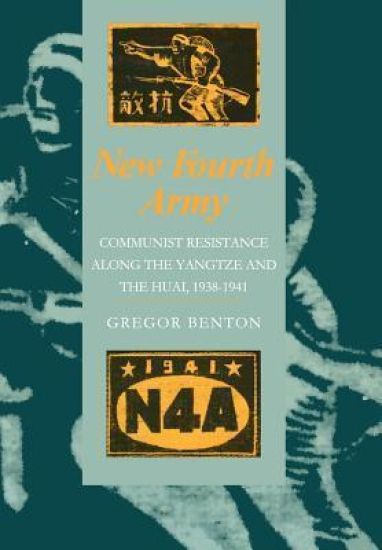
In his prizewinning Mountain Fires: The Red Army's Three-Year War in South China, 1934-1938, Gregor Benton traced the fate of the Communist rear guard that stayed behind when the Red Army set off on the Long March. After three bloody years, the survivors regrouped as the New Fourth Army, which later helped to drive the Nationalists from the mainland. In this sequel to Mountain Fires, Benton describes the first three years of this army, and its triangular war with the Nationalists and the Japanese. Like the Three-Year War from which it stemmed, the New Fourth Army was for many years neglected by historians, mainly because of the absence from it of Mao Zedong, around whom the story of the Chinese Revolution was largely written until his death in 1976. With the downgrading of the Mao cult and the return of some power to the regions (where New Fourth Army veterans held power) in the 1980s, new sources on the New Fourth Army became available. This study, which combines a thematic and a narrative approach, makes exhaustive use of these and other sources to explain the original features of this youthful army, which was no outgrowth or faithful copy of Mao's senior and better-known Eighth Route Army but a body with its own origins and history, and which fought its war in a quite different political, military, and social setting.