Kirjojen hintavertailu – 12 903 725 kirjaa ja 27 kauppaa

Kirjailija

Gregoris Ioannou

Kirjat ja teokset yhdessä paikassa: 5 kirjaa, julkaisuja vuosilta 2020–2024, suosituimpiin kuuluu Getting into Art and Design Courses. Vertaile teosten hintoja ja tarkista saatavuus suomalaisista kirjakaupoista.

5 kirjaa

Kirjojen julkaisuvuodet: 2020–2024.

Getting into Art and Design Courses

Getting into Art and Design Courses

James Foster; Gregoris Ioannou

Trotman Indigo Publishing Limited
2024
nidottu
The ultimate guide to securing your place at university to study art, design or architecture. Now in its 13th edition, Getting into Art & Design Courses is packed with detailed advice and up-to-date information to guide you through the decision-making process and help you prepare a strong university application. This practical and comprehensive book will lead you through every stage of the process, including: What to consider when choosing the right course and university for youSupport on preparing a winning UCAS applicationAdvice on putting together a portfolio of your workInformation on what to expect at interview and tips on how to shineFirst-hand advice from admissions tutors, students and industry professionalsFeatures a chapter dedicated to architecture with specific personal statement advice MPW Guides explain the complex procedures for getting into higher education. Written by acknowledged experts in a clear and concise format, they go beyond the official publications to give would-be students straightforward, practical advice on how to secure a place on a course of their choice.
Employment, Trade Unionism, and Class

Employment, Trade Unionism, and Class

Gregoris Ioannou

TAYLOR FRANCIS LTD
2023
nidottu

Halvin toimitettuna 58,10 €

The economic crisis has brought about a watershed in institutional, political, and social relations, reshaping the labour market and the class structure in southern Europe. This book provides a critical comparative assessment of the dynamics of change in the employment field, focusing on Spain, Greece, and Cyprus. The book assesses how the liberalization and deregulation processes and the promotion of market-enhancing reforms progressed in three different national settings, identifying the forces, agents, contexts, and mechanisms shaping the employment and industrial relations systems. The comparative perspective used deciphers the interplay of external and internal dynamics in the restructuring of the labour field in Southern Europe, examining austerity and its contestation in connection with prevailing societal ideologies and class shifts. The first part of the book sets the theoretical and historical context, the second is comprised of three empirical national case studies, and the third discusses comparatively the handling of the crisis, its impact, and its legacy from the standpoint of a decade later. The book presents differences in industrial relations systems, trade union forms, and class composition dynamics, accounting for the development of the crisis and the reshaping of the employment field after one decade of crisis. It will be of value to researchers, academics, professionals, and students working on issues of employment and industrial relations, labour market and labour law, political economy and class structure, as well as those interested in the contemporary society and economy of southern Europe in general, and Spain, Greece, and Cyprus in particular.
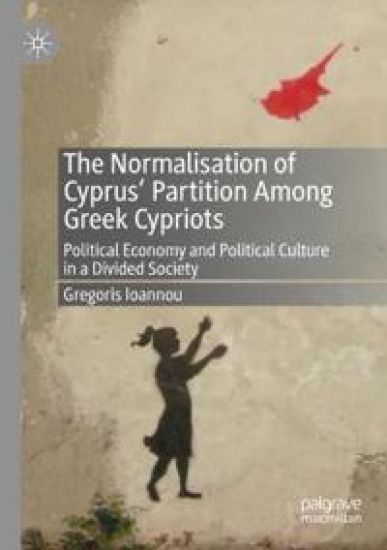
The Normalisation of Cyprus’ Partition Among Greek Cypriots

The Normalisation of Cyprus’ Partition Among Greek Cypriots

Gregoris Ioannou

Springer Nature Switzerland AG
2021
nidottu
This book explores the basic dynamics that shaped the Cyprus problem, with a focus on recent decades. The author deals with the periods, nodal points and fields that produced the conditions for the normalisation of partition and also presents the Cyprus problem as viewed from the outside. The chapters approach Cyprus’ division in light of power relations in society, the interaction between the political elite and society, and discuss the political and ideological dynamics as manifested in the public sphere. While analysing primarily the Greek Cypriot community, the book also refers to parallel developments in the Turkish Cypriot and international communities, arguing that the normalisation of Cyprus’ partition is rooted in the political economy and political culture of Greek Cypriots. At the same time, from the perspective of the peace and reunification movement, this is an inherently contradictory and potentially unstable process that can be overturned.‘? remarkably thorough study focusing on nationalist narratives, political and media discourses and socio-economic structures in Cyprus and their impact on the formation and transformation of political identities since the 1950s. Unlike many other books on the issue, Ioannou analyses social and political developments in both the Greek-Cypriot and the Turkish-Cypriot communities. This approach sheds light on the internal reasons of the perpetuation of the island’s division, which the geopolitical and international relations approaches alone miss to grasp. Combining the analytical skills of a political scientist and his personal experience as an engaged citizen in favour of unification, Ioannou offers significant insight on a complex and traumatic conflict that remains one of Europe’s black spots.’ –Athena Skoulariki, Assistant Professor in Sociology of Communication, Discourse Analysis and Social Representations, University of Crete, Greece ‘The basic argument of the bookis that the consolidation of partition was neither automatic nor happened behind the backs of Greek Cypriots. The very interesting and demythologising work of Gregoris Ioannou brings to light a hidden, but common secret of the Greek Cypriots.’ –Alexis Heraklides, Emeritus Professor of International Relations, Panteion University, Greece ‘Ioannou projects a multi-focal spotlight on the Cyprus problem, so as, at least for the careful reader, this becomes not only an interesting topic in itself, but, also a cognitive springboard from which to understand broader pathogenies of our common social and political life.’ –Seraphim Seferiades, Associate Professor in Political Science, Panteion University, Greece
Employment, Trade Unionism, and Class

Employment, Trade Unionism, and Class

Gregoris Ioannou

Routledge
2021
sidottu
The economic crisis has brought about a watershed in institutional, political, and social relations, reshaping the labour market and the class structure in southern Europe. This book provides a critical comparative assessment of the dynamics of change in the employment field, focusing on Spain, Greece, and Cyprus. The book assesses how the liberalization and deregulation processes and the promotion of market-enhancing reforms progressed in three different national settings, identifying the forces, agents, contexts, and mechanisms shaping the employment and industrial relations systems. The comparative perspective used deciphers the interplay of external and internal dynamics in the restructuring of the labour field in Southern Europe, examining austerity and its contestation in connection with prevailing societal ideologies and class shifts. The first part of the book sets the theoretical and historical context, the second is comprised of three empirical national case studies, and the third discusses comparatively the handling of the crisis, its impact, and its legacy from the standpoint of a decade later. The book presents differences in industrial relations systems, trade union forms, and class composition dynamics, accounting for the development of the crisis and the reshaping of the employment field after one decade of crisis. It will be of value to researchers, academics, professionals, and students working on issues of employment and industrial relations, labour market and labour law, political economy and class structure, as well as those interested in the contemporary society and economy of southern Europe in general, and Spain, Greece, and Cyprus in particular.
The Normalisation of Cyprus’ Partition Among Greek Cypriots

The Normalisation of Cyprus’ Partition Among Greek Cypriots

Gregoris Ioannou

Springer Nature Switzerland AG
2020
sidottu
This book explores the basic dynamics that shaped the Cyprus problem, with a focus on recent decades. The author deals with the periods, nodal points and fields that produced the conditions for the normalisation of partition and also presents the Cyprus problem as viewed from the outside. The chapters approach Cyprus’ division in light of power relations in society, the interaction between the political elite and society, and discuss the political and ideological dynamics as manifested in the public sphere. While analysing primarily the Greek Cypriot community, the book also refers to parallel developments in the Turkish Cypriot and international communities, arguing that the normalisation of Cyprus’ partition is rooted in the political economy and political culture of Greek Cypriots. At the same time, from the perspective of the peace and reunification movement, this is an inherently contradictory and potentially unstable process that can be overturned.‘? remarkably thorough study focusing on nationalist narratives, political and media discourses and socio-economic structures in Cyprus and their impact on the formation and transformation of political identities since the 1950s. Unlike many other books on the issue, Ioannou analyses social and political developments in both the Greek-Cypriot and the Turkish-Cypriot communities. This approach sheds light on the internal reasons of the perpetuation of the island’s division, which the geopolitical and international relations approaches alone miss to grasp. Combining the analytical skills of a political scientist and his personal experience as an engaged citizen in favour of unification, Ioannou offers significant insight on a complex and traumatic conflict that remains one of Europe’s black spots.’ –Athena Skoulariki, Assistant Professor in Sociology of Communication, Discourse Analysis and Social Representations, University of Crete, Greece ‘The basic argument of the bookis that the consolidation of partition was neither automatic nor happened behind the backs of Greek Cypriots. The very interesting and demythologising work of Gregoris Ioannou brings to light a hidden, but common secret of the Greek Cypriots.’ –Alexis Heraklides, Emeritus Professor of International Relations, Panteion University, Greece ‘Ioannou projects a multi-focal spotlight on the Cyprus problem, so as, at least for the careful reader, this becomes not only an interesting topic in itself, but, also a cognitive springboard from which to understand broader pathogenies of our common social and political life.’ –Seraphim Seferiades, Associate Professor in Political Science, Panteion University, Greece