Kirjojen hintavertailu – 12 859 819 kirjaa ja 27 kauppaa
Kirjailija
Gregory M. Fulkerson
Kirjat ja teokset yhdessä paikassa: 10 kirjaa, julkaisuja vuosilta 2019–2027, suosituimpiin kuuluu Inequality at the Urban-Rural Nexus. Vertaile teosten hintoja ja tarkista saatavuus suomalaisista kirjakaupoista.
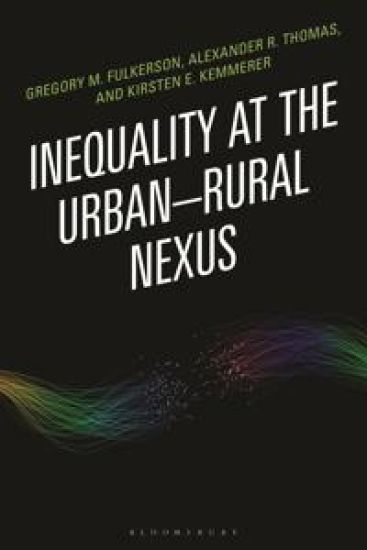
This book examines the systemic and structural nature of social inequalities, focusing on how the urban-rural divide intersects with race, class, gender, ethnicity, and sexuality to shape identities and access to opportunities. It offers valuable insights for sociologists and scholars of inequality seeking to broaden the scope of current research. Ultimately, the authors argue that it will be impossible to build a more just and equitable society without addressing the urban-rural nexus.
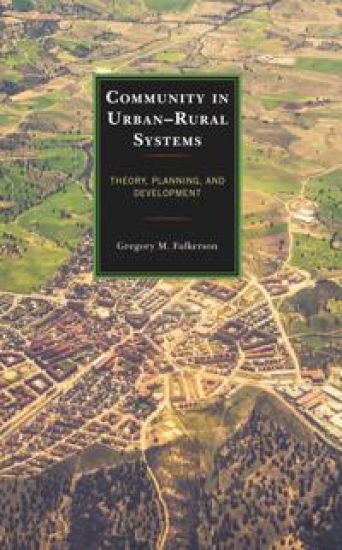
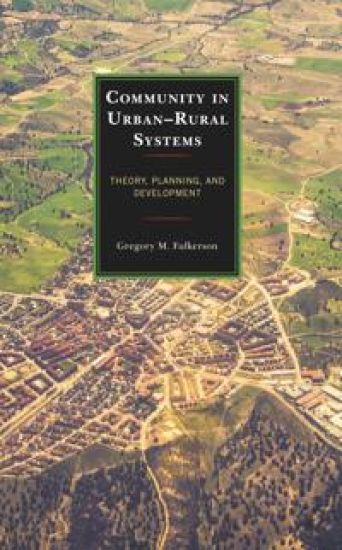
Gregory M. Fulkerson offers a complete portrait of what communities are, how they work, and how they are embedded in urban–rural systems at regional, national, and global scales. After explaining the concept of urban–rural systems, Fulkerson walks through the central dynamics of environmental demography, political economy, culture, social interaction, the built environment, and community connections. His focus on urban–rural systems ensures that communities are understood as nodes within a network, overcoming the tendency to view them as self-contained. Each chapter in Community in Urban–Rural Systems: Theory, Planning, and Development offers a blend of classical and contemporary theories and concludes with relevant planning considerations. An additional chapter on community development provides strategies for translating planning considerations into action. The conclusion offers insights into long-term principles of community sustainability and justice.
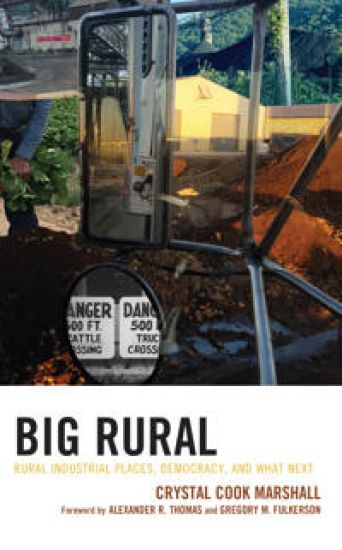
In Big Rural: Rural Industrial Places, Democracy, and What Next, Crystal Cook Marshall unveils the rural not as wild and unknowable but as measured and intervened-in as big cities. Drawing international comparisons with a case study centering on the Pocahontas Coalfield, Cook Marshall documents that rural places are often systems among systems that scientists and engineers heavily shape both in landscape and culture. Often single sector economies with consolidated power and automation away of jobs, these rural industrial places compound the problems of their inhabitants, even threatening their capacity to practice democracy. Cook Marshall interacts with rural interveners from industry to Rural Studies and Science and Technology scholars to policy advocates, also detailing the gaps in related scholarship. Building from analysis, she proposes a range of antidotes to the extraction and destruction of “Big Rural” both in material life and in knowledge, such as potential National Rural and Sustainable Agricultural strategies. Through these, in interviews with rural change agents, through research, and through local and federal paths, Cook Marshall asserts a way forward for the rural that is more equitable and just.
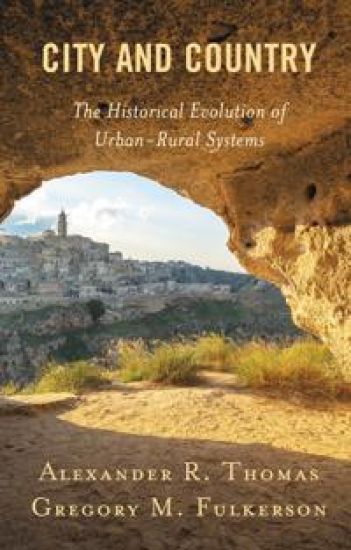
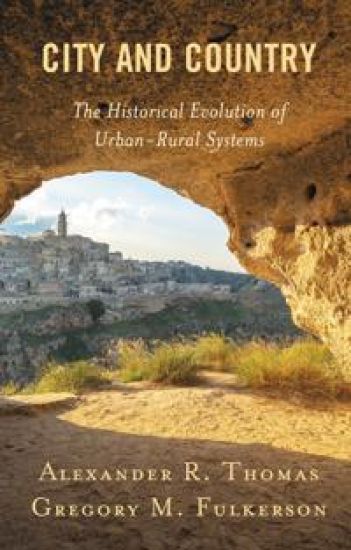
City and Country: The Historical Evolution of Urban-Rural Systems begins with a simple assumption: every human requires, on average, two-thousand calories per day to stay alive. Tracing the ramifications of this insight leads to the caloric well: the caloric demand at one point in the environment. As population increases, the depth of the caloric well reflects this increased demand and requires a population to go further afield for resources, a condition called urban dependency. City and Country traces the structural ramifications of these dynamics as the population increased from the Paleolithic to today. We can understand urban dependency as the product of the caloric demands a population puts on a given environment, and when those demands outstrip the carry capacity of the environment, a caloric well develops that forces a community to look beyond its immediate area for resources. As the well deepens, the horizon from which resources are gathered is pushed further afield, often resulting in conflict with neighboring groups. Prior to settled villages, increases in population resulted in cultural (technological) innovations that allowed for greater use of existing resources: the broad-spectrum revolution circa 20 thousand years ago, the birth of agricultural villages 11 thousand years ago, and hierarchically organized systems of multiple settlements working together to produce enough food during the Ubaid period in Mesopotamia seven-thousand years ago—the first urban-rural systems. As cities developed, increasing population resulted in an ever-deepening morass of urban dependency that required expansion of urban-rural systems. These urban-rural dynamics today serve as an underlying logic upon which modern capitalism is built. The culmination of two decades of research into the nature of urban-rural dynamics, City and Country argues that at the heart of the logic of capitalism is an even deeper logic: urbanization is based on urban dependency.
Gregory M. Fulkerson offers a complete portrait of what communities are, how they work, and how they are embedded in urban-rural systems at regional, national, and global scales. After explaining the concept of urban-rural systems, Fulkerson walks through the central dynamics of environmental demography, political economy, culture, social interaction, the built environment, and community connections. His focus on urban-rural systems ensures that communities are understood as nodes within a network, overcoming the tendency to view them as self-contained. Each chapter in Community in Urban-Rural Systems: Theory, Planning, and Development offers a blend of classical and contemporary theories and conclude with relevant planning considerations. An additional chapter on community development provides strategies for translating planning considerations into action. The conclusion offers insights into long-term principles of community sustainability and justice.
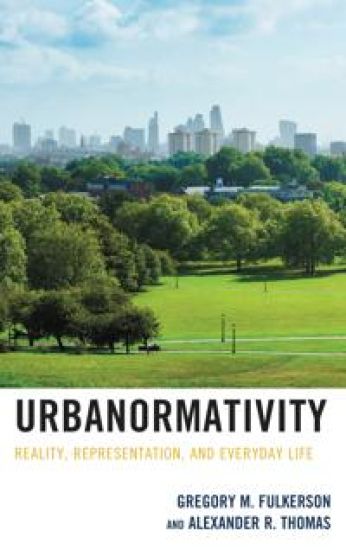
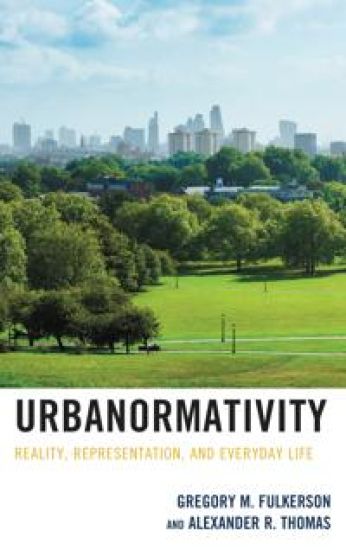
This book investigates urbanormativity—a concept that privileges urban normalcy and desirability over rural deviance and undesirability. The “reality” section outlines its foundations—urbanization, urban-rural systems, and urban dependency. The “representation” section explores urbanormative culture by considering cultural capital, media, and identity. The last section, “everyday life,” examines urban-rural disparities in law and politics and in life within different communities. It concludes by calling for a rural justice approach that will revalue the rural.
City and Country: The Historical Evolution of Urban-Rural Systems begins with a simple assumption: every human requires, on average, two-thousand calories per day to stay alive. Tracing the ramifications of this insight leads to the caloric well: the caloric demand at one point in the environment. As population increases, the depth of the caloric well reflects this increased demand and requires a population to go further afield for resources, a condition called urban dependency. City and Country traces the structural ramifications of these dynamics as the population increased from the Paleolithic to today. We can understand urban dependency as the product of the caloric demands a population puts on a given environment, and when those demands outstrip the carry capacity of the environment, a caloric well develops that forces a community to look beyond its immediate area for resources. As the well deepens, the horizon from which resources are gathered is pushed further afield, often resulting in conflict with neighboring groups. Prior to settled villages, increases in population resulted in cultural (technological) innovations that allowed for greater use of existing resources: the broad-spectrum revolution circa 20 thousand years ago, the birth of agricultural villages 11 thousand years ago, and hierarchically organized systems of multiple settlements working together to produce enough food during the Ubaid period in Mesopotamia seven-thousand years ago—the first urban-rural systems. As cities developed, increasing population resulted in an ever-deepening morass of urban dependency that required expansion of urban-rural systems. These urban-rural dynamics today serve as an underlying logic upon which modern capitalism is built. The culmination of two decades of research into the nature of urban-rural dynamics, City and Country argues that at the heart of the logic of capitalism is an even deeper logic: urbanization is based on urban dependency.
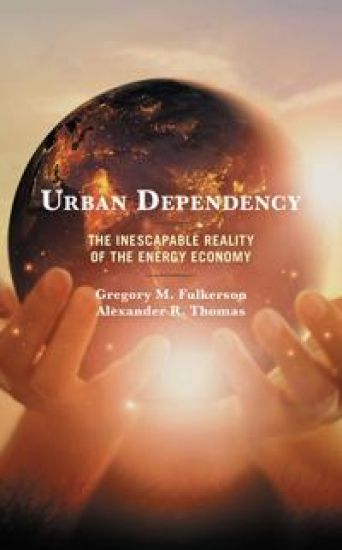
Urban Dependency investigates the risks of urban populations that cannot survive without the massive consumption of basic rural products like food, textiles, fossil fuels, and other energy-rich goods that are harvested by a shrinking rural base. Thomas and Fulkerson argue that though essential, rural workers and communities are poorly compensated for their labor that is both dangerous and highly exploitative. While the rural population is already shrinking, the authors predict that harsh political-economic conditions will only fuel further rural-urban migration, worsening the problem of urban dependency. The authors apply their theory of the energy economy to explore a balance between the supply and demand of energy resources that promotes rural justice.
Urbanormativity explores a cultural ideology that posits that urban is normal and desirable while rural is deviant, exotic, or undesirable. This work examines the relevance and meaning of this phenomenon in three parts: reality, which discusses the urbanization of the planet and the inherent conflict that emerges from the condition of urban dependency; representations, which discusses the cultural dynamics of urbanormativity; and everyday life, which focuses on the outcomes of urbanormativity in terms of the legal and political landscape, emphasizing the role of spatial inequality in creating urban-rural disparities. The book then examines life in rural communities amid urbanormativity, highlighting such processes as rural gentrification as well as the transformation of the character and tradition of rural communities through the process of place structuration. This book conclude by developing a new rural justice ethic that advocates for the incorporation of Sen’s notion of capability maximization along with a concerted effort to revalue the rural—socially, culturally, politically, and economically.