Kirjojen hintavertailu – 12 903 725 kirjaa ja 27 kauppaa

Kirjailija

Gregory Schrempp

Kirjat ja teokset yhdessä paikassa: 6 kirjaa, julkaisuja vuosilta 1992–2020, suosituimpiin kuuluu Science, Bread, and Circuses. Vertaile teosten hintoja ja tarkista saatavuus suomalaisista kirjakaupoista.

6 kirjaa

Kirjojen julkaisuvuodet: 1992–2020.

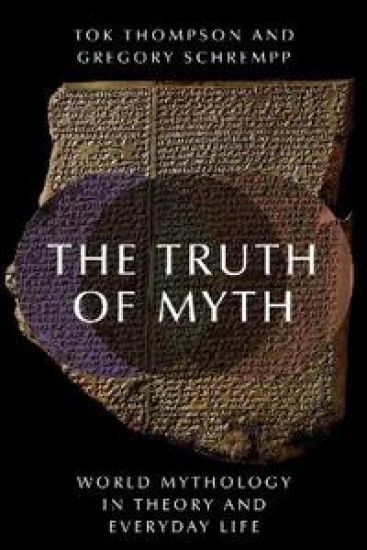
The Truth of Myth

The Truth of Myth

Tok Thompson; Gregory Schrempp

Oxford University Press Inc
2020
sidottu
The Truth of Myth is a thorough and accessible introduction to the study of myth, surveying the intellectual history of the topic, methods for studying myth cross-culturally, and emerging trends. Readers will encounter insightful commentaries on such questions as: What is the relation of mythology to religion? To science? To popular culture? Did the events recounted in myths actually occur? Why does the term "myth" have so many contradictory definitions and connotations? Offering serious students with an intellectual "toolkit" for launching into this fascinating field, the book is especially useful in conjunction with case studies of individual mythological traditions.
The Truth of Myth

The Truth of Myth

Tok Thompson; Gregory Schrempp

Oxford University Press Inc
2020
nidottu

Halvin toimitettuna 48,50 €

The Truth of Myth is a thorough and accessible introduction to the study of myth, surveying the intellectual history of the topic, methods for studying myth cross-culturally, and emerging trends. Readers will encounter insightful commentaries on such questions as: What is the relation of mythology to religion? To science? To popular culture? Did the events recounted in myths actually occur? Why does the term "myth" have so many contradictory definitions and connotations? Offering serious students with an intellectual "toolkit" for launching into this fascinating field, the book is especially useful in conjunction with case studies of individual mythological traditions.
The Science of Myths and Vice Versa

The Science of Myths and Vice Versa

Gregory Schrempp

Prickly Paradigm Press, LLC
2016
nidottu
We often assume that science and myth stand in opposition—with science providing empirically supported truths that replace the false ideas found in traditional mythologies. But the rhetoric of contemporary popular science and related genres tells a different story about what contemporary readers really want from science. In The Science of Myths and Vice Versa, Gregory Schrempp offers four provocative vignettes that bring copious amounts of research on both traditional and modern mythologies to bear on the topic of science in contemporary popular culture. Schrempp shows how writers such as Malcolm Gladwell and Michael Pollan successfully fuse science and myth to offer compelling narratives about how we can improve our understanding of ourselves and our world. The most effective science writers, he finds, are those who make use of the themes and motifs of folklore to increase the appeal of their work. Schrempp’s understanding of science and myth as operating not in opposition but in reciprocal relation offers an essential corrective to contemporary mischaracterizations.
Science, Bread, and Circuses

Science, Bread, and Circuses

Gregory Schrempp

Utah State University Press
2014
nidottu
In "Science, Bread, and Circuses," Gregory Schrempp brings a folkloristic viewpoint to the topic of popular science, calling attention to the persistence of folkloric form, idiom, and worldview within the increasingly important dimension of popular consciousness defined by the impact of science. Schrempp considers specific examples of texts in which science interpreters employ folkloric tropesmyths, legends, epics, proverbs, spectacles, and a variety of gestures from religious traditionsto lend credibility and appeal to their messages. In each essay he explores an instance of science popularization rooted in the quotidian round: variations of proverb formulas in monumental measurements, invocations of science heroes like saints or other inspirational figures, the battle of mythos and logos in parenting and academe, the meme's involvement in quasi-religious treatments of the problem of evil, and a range of other tropes of folklore drafted to serve the exposition of science. "Science, Bread, and Circuses" places the relationship of science and folklore at the very center of folkloristic inquiry by exploring a range of attempts to rephrase and thus domesticate scientific findings and claims in folklorically imbued popular forms."
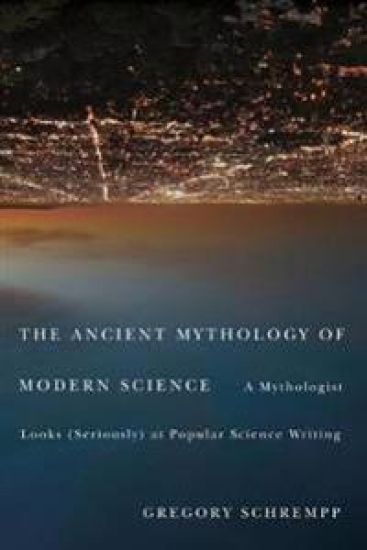
The Ancient Mythology of Modern Science

The Ancient Mythology of Modern Science

Gregory Schrempp

McGill-Queen's University Press
2012
sidottu
Humans have long been captivated by mythology and theorized about the lessons embedded in their tales. In The Ancient Mythology of Modern Science, Gregory Schrempp brings a mythologist's critical eye to popular science writing, a flourishing genre that forms a key link between science and popular consciousness. Schrempp argues that the defining and appealing characteristic of this genre is not simplification or "dumbing-down," but the attempt to parlay scientific findings into aesthetically and morally compelling visions that offer guidance for humanity. Schrempp argues that in striving for inspirational visions, popular science invariably reproduces - with ingenious invention - the structures, strategies, and cosmic imagery that infuse traditional mythological views of the cosmos. His claim challenges the widespread tendency to separate myth and science. Schrempp considers both the intellectual history of mythography and concrete examples from world mythologies including ancient Greek, Oceanic, and Native American. Schrempp's explorations span a range of fields, including astronomy, evolutionary biology, and cognitive science. In a world informed, transformed, and sometimes mesmerized by science, this book offers the first in-depth study of popular science writing from a mythologist's perspective.
Magical Arrows

Magical Arrows

Gregory Schrempp; Marshall Sahlins

University of Wisconsin Press
1992
nidottu
An exploration of cosmology, connecting the Western philosophical tradition with the cosmological traditions of non-Western societies. Using the mythology and philosophy of the Maori as a counterpoint, it finds a philosophical common denominator in the thought of Zeno of Elea.