
Kirjojen hintavertailu – 12 859 824 kirjaa ja 27 kauppaa

Kirjailija

Guiqiang Peng

Kirjat ja teokset yhdessä paikassa: 2 kirjaa, julkaisuja vuosilta 2019–2020, suosituimpiin kuuluu Massive MIMO Detection Algorithm and VLSI Architecture. Vertaile teosten hintoja ja tarkista saatavuus suomalaisista kirjakaupoista.

2 kirjaa

Kirjojen julkaisuvuodet: 2019–2020.

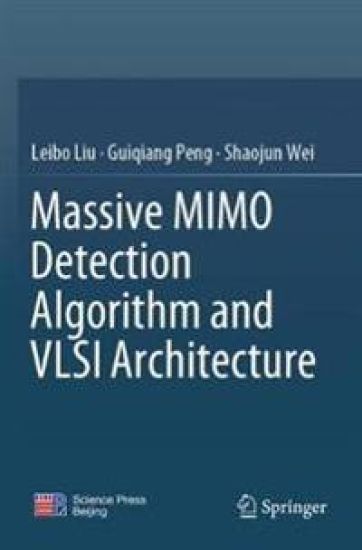
Massive MIMO Detection Algorithm and VLSI Architecture

Massive MIMO Detection Algorithm and VLSI Architecture

Leibo Liu; Guiqiang Peng; Shaojun Wei

Springer Verlag, Singapore
2020
nidottu
This book introduces readers to a reconfigurable chip architecture for future wireless communication systems, such as 5G and beyond. The proposed architecture perfectly meets the demands for future mobile communication solutions to support different standards, algorithms, and antenna sizes, and to accommodate the evolution of standards and algorithms. It employs massive MIMO detection algorithms, which combine the advantages of low complexity and high parallelism, and can fully meet the requirements for detection accuracy. Further, the architecture is implemented using ASIC, which offers high energy efficiency, high area efficiency and low detection error. After introducing massive MIMO detection algorithms and circuit architectures, the book describes the ASIC implementation for verifying the massive MIMO detection. In turn, it provides detailed information on the proposed reconfigurable architecture: the data path and configuration path for massive MIMO detection algorithms, including the processing unit, interconnections, storage mechanism, configuration information format, and configuration method.
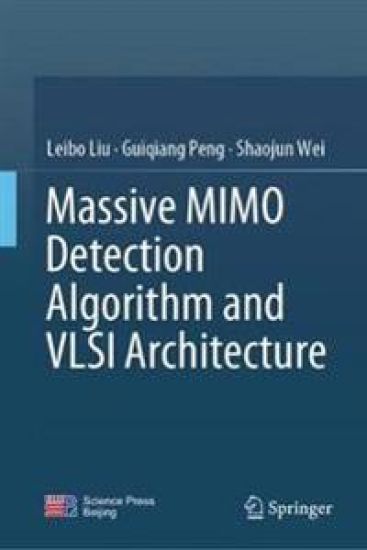
Massive MIMO Detection Algorithm and VLSI Architecture

Massive MIMO Detection Algorithm and VLSI Architecture

Leibo Liu; Guiqiang Peng; Shaojun Wei

Springer Verlag, Singapore
2019
sidottu
This book introduces readers to a reconfigurable chip architecture for future wireless communication systems, such as 5G and beyond. The proposed architecture perfectly meets the demands for future mobile communication solutions to support different standards, algorithms, and antenna sizes, and to accommodate the evolution of standards and algorithms. It employs massive MIMO detection algorithms, which combine the advantages of low complexity and high parallelism, and can fully meet the requirements for detection accuracy. Further, the architecture is implemented using ASIC, which offers high energy efficiency, high area efficiency and low detection error. After introducing massive MIMO detection algorithms and circuit architectures, the book describes the ASIC implementation for verifying the massive MIMO detection. In turn, it provides detailed information on the proposed reconfigurable architecture: the data path and configuration path for massive MIMO detection algorithms, including the processing unit, interconnections, storage mechanism, configuration information format, and configuration method.