Kirjojen hintavertailu – 12 859 828 kirjaa ja 27 kauppaa

Kirjailija

Güler Aras

Kirjat ja teokset yhdessä paikassa: 9 kirjaa, julkaisuja vuosilta 2009–2024, suosituimpiin kuuluu Sustainable Markets for Sustainable Business. Vertaile teosten hintoja ja tarkista saatavuus suomalaisista kirjakaupoista.

9 kirjaa

Kirjojen julkaisuvuodet: 2009–2024.

A Handbook of Corporate Governance and Social Responsibility
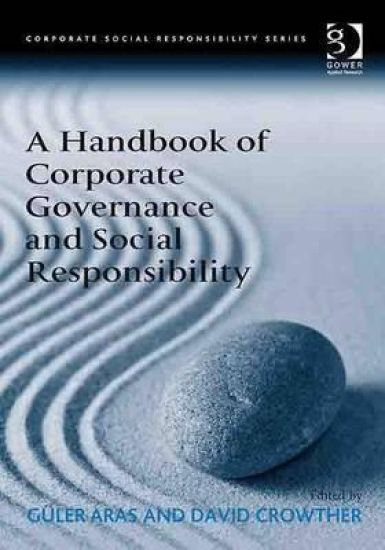
The current economic situation has highlighted deficiencies in corporate governance while also showing the importance of stakeholder relations. It has also raised the profile of the debates regarding corporate social responsibility and shown the inter-relationship with governance. And the two together are essential for sustainable business. The social and environmental contexts of business are generally considered to be as significant as the economic and financial contexts and good governance will address all of these aspects. The combination of these aspects offers long term benefits for a firm, such as reducing risk and attracting new investors, shareholders and more equity as well as sustainable performance. Written by experts from all over the world, A Handbook of Corporate Governance and Social Responsibility is the most authoritative single-volume guide to the relationship between good governance and social responsibility and the reality of managing both. In addition to the theory and practice of governance and CSR, the book includes case studies from large and small organizations and NGOs to highlight examples of good and bad practice, and to show international and cultural similarities and differences while at the same time furthering the debate regarding the relationship between good governance and social responsibility.
Sustainable Markets for Sustainable Business
Around the world the focus is on the relationship between ethics and governance codes and how widely this should be interpreted. Sustainability has three main accepted dimensions: economic growth, social responsibility, and environmental protection. It is a truly multidimensional and multidisciplinary concept, and one which directly affects the risks and opportunities for markets and businesses. In three distinct parts, Sustainable Markets for Sustainable Business explores the relationship between markets and business and sustainable development, as well as issues such as climate change, pollution, land degradation and biodiversity loss. Firstly the authors, all experts from around the world, consider a variety of theoretical issues concerned with sustainability in the new environment. In Part Two the emphasis is on looking at these issues in the market and business practice under various guises. Although every chapter contains discussion and recommended solutions, the final part specifically focuses on future perspectives and the solution strategies for implementation of sustainability measures. Throughout the book the authors address the need for business and market sustainability reforms. The world's markets have the potential to improve the lives of billions in developing countries, reducing poverty and securing environmental quality for future generations. Often they fail to capture the full value of natural resources or promote the interests of poor people. Therefore, an effective public policy framework is required. Sustainable Markets for Sustainable Business and future titles in the Finance, Governance and Sustainability Series address this need.
Transforming Governance

Transforming Governance

Maria Aluchna; Güler Aras

Routledge
2019
nidottu
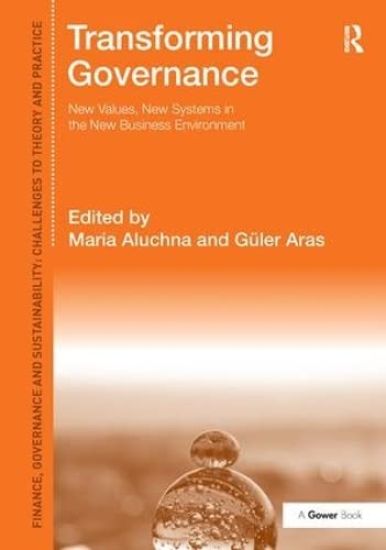
Transforming Governance: New Values, New Systems in the New Business Environment, edited by Maria Aluchna and Güler Aras addresses the current state, as well as the development of corporate governance and its perceived tasks and functions, in response to the changing market and regulatory environment. Divided into three parts, the book firstly addresses the variety of theoretical approaches. The inefficiencies, scandals and crises as well as the significant shortcomings and current criticism of shareholder value provide a new setting and theoretical assumptions for the purpose and role of corporate governance in the economy and society. The second section of the book goes on to discuss the forces which lead to the changing corporate governance paradigm, as companies are expected to incorporate not only shareholders but also stakeholders expectations and report and improve upon social and environmental performance. The focus of this section is to present the impact of stakeholders, the requirement for corporate social responsibility and sustainability, as well as the increasing importance of women in management and their participation at corporate board level. Section Three contains corporate governance case studies within various organizational and institutional settings; including the case of family companies, social enterprises/benefit corporations, sustainable companies and emerging markets. The book's contributors comprise both researchers and business experts addressing both theoretical and practical dimensions.
Transforming Governance

Transforming Governance

Maria Aluchna; Güler Aras

Routledge
2015
sidottu
Transforming Governance: New Values, New Systems in the New Business Environment, edited by Maria Aluchna and Güler Aras addresses the current state, as well as the development of corporate governance and its perceived tasks and functions, in response to the changing market and regulatory environment. Divided into three parts, the book firstly addresses the variety of theoretical approaches. The inefficiencies, scandals and crises as well as the significant shortcomings and current criticism of shareholder value provide a new setting and theoretical assumptions for the purpose and role of corporate governance in the economy and society. The second section of the book goes on to discuss the forces which lead to the changing corporate governance paradigm, as companies are expected to incorporate not only shareholders but also stakeholders expectations and report and improve upon social and environmental performance. The focus of this section is to present the impact of stakeholders, the requirement for corporate social responsibility and sustainability, as well as the increasing importance of women in management and their participation at corporate board level. Section Three contains corporate governance case studies within various organizational and institutional settings; including the case of family companies, social enterprises/benefit corporations, sustainable companies and emerging markets. The book's contributors comprise both researchers and business experts addressing both theoretical and practical dimensions.
Sustainable Markets for Sustainable Business
Around the world the focus is on the relationship between ethics and governance codes and how widely this should be interpreted. Sustainability has three main accepted dimensions: economic growth, social responsibility, and environmental protection. It is a truly multidimensional and multidisciplinary concept, and one which directly affects the risks and opportunities for markets and businesses. In three distinct parts, Sustainable Markets for Sustainable Business explores the relationship between markets and business and sustainable development, as well as issues such as climate change, pollution, land degradation and biodiversity loss. Firstly the authors, all experts from around the world, consider a variety of theoretical issues concerned with sustainability in the new environment. In Part Two the emphasis is on looking at these issues in the market and business practice under various guises. Although every chapter contains discussion and recommended solutions, the final part specifically focuses on future perspectives and the solution strategies for implementation of sustainability measures. Throughout the book the authors address the need for business and market sustainability reforms. The world's markets have the potential to improve the lives of billions in developing countries, reducing poverty and securing environmental quality for future generations. Often they fail to capture the full value of natural resources or promote the interests of poor people. Therefore, an effective public policy framework is required. Sustainable Markets for Sustainable Business and future titles in the Finance, Governance and Sustainability Series address this need.
Governance and Social Responsibility

Governance and Social Responsibility

Güler Aras; David Crowther

Red Globe Press
2011
nidottu
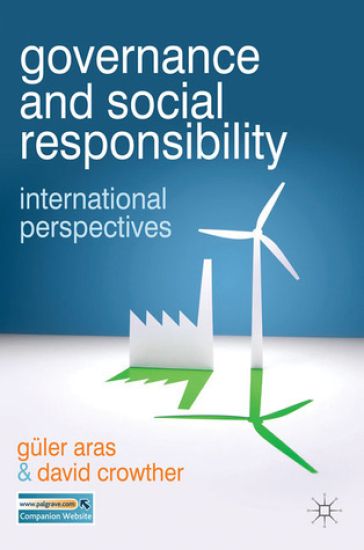
Recent corporate failures have attracted the attention of managers, governments and the general public to the role of governance and social responsibility. Ranging from managerial behaviour and reward systems, to environmental protection and human rights, governance and social responsibility encompasses a variety of thought provoking business issues. In Governance and Social Responsibility, Aras and Crowther bring together the considerable debates about what exactly it is, and how it can be applied to business. Key Features:- Written by leading governance and social responsibility experts- International coverage and orientation- Comprehensive coverage of CSR issues and debates- Excellent pedagogy, including case studies, reflective questions and further readingFirmly grounded in academic research, Governance and Social Responsibility is an ideal companion for CSR courses at all levels.
A Handbook of Corporate Governance and Social Responsibility
The current economic situation has highlighted deficiencies in corporate governance while also showing the importance of stakeholder relations. It has also raised the profile of the debates regarding corporate social responsibility and shown the inter-relationship with governance. And the two together are essential for sustainable business. The social and environmental contexts of business are generally considered to be as significant as the economic and financial contexts and good governance will address all of these aspects. The combination of these aspects offers long term benefits for a firm, such as reducing risk and attracting new investors, shareholders and more equity as well as sustainable performance. Written by experts from all over the world, A Handbook of Corporate Governance and Social Responsibility is the most authoritative single-volume guide to the relationship between good governance and social responsibility and the reality of managing both. In addition to the theory and practice of governance and CSR, the book includes case studies from large and small organizations and NGOs to highlight examples of good and bad practice, and to show international and cultural similarities and differences while at the same time furthering the debate regarding the relationship between good governance and social responsibility.
Global Perspectives on Corporate Governance and CSR
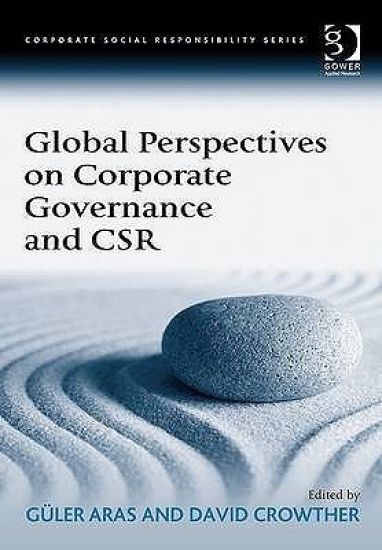
Good governance is good PR, it is important in every sphere of society, whether it be the corporate environment, the political, or wider society. When resources are too limited to meet the minimum expectations of the people, it is a good governance level that can help to promote the welfare of society. Enlightened companies recognise that there is a clear link between governance and corporate social responsibility and make efforts to link the two. Unfortunately this is too often no more than making a claim that good governance is a part of their CSR policy as well as a part of their relationship with shareholders. Corporate Governance and CSR are significant issues in all parts of the world, huge amounts of time and energy are devoted to its global interpretation. Most analysis however is too simplistic to be helpful as it normally resolves itself into simple dualities: rules based v principles based or Anglo-Saxon v Continental. The editors of this book argue that this is not helpful - that the reality is far more complex. They show that Corporate Governance and CSR cannot be understood without taking geographical, cultural and historical factors into account. It is necessary, they say to understand the concerns of people in different parts of the world. Therefore, by using a wealth of case studies, theoretical models, and drawing on the knowledge and perspective of experts from around the world, the editors have produced this valuable book. Global Perspectives on Corporate Governance and CSR discusses issues such as regional and cultural similarities and differences, the contexts of differing legal frameworks and governance codes, differences between large companies and SMEs, governance in new environments (companies and economies) versus stable environments, and the changing environment affecting corporate social responsibility around the world. The editors then synthesise this in a way that will be helpful to business people as well as to academics.
The Durable Corporation

The Durable Corporation

Güler Aras; David Crowther

Gower Publishing Ltd
2009
sidottu
Sustainability is normally considered to be about choices for the future being limited by decisions made in the present, and is frequently portrayed as concerning environmental issues alone. The Durable Corporation rejects both of these notions to argue that sustainability is a more complex concept that involves balancing many factors. It explores the nature, value and role of sustainability in business and maintains that resource utilization must be based upon the twin pillars of equity and efficiency rather than attempting to ensure that our choices in the future are not reduced. The authors of The Durable Corporation propose a new model of sustainability and a fresh approach to managing resources. They extend this to the development of difference strategies for achieving sustainability and an alternative approach to managing for the future. These features make it essential reading for all those with responsibility for the sustainability or durability of the enterprises in which they are engaged or in the study of the issues at stake.