Kirjojen hintavertailu – 12 903 725 kirjaa ja 27 kauppaa

Kirjailija

Gungwu Wang

Kirjat ja teokset yhdessä paikassa: 22 kirjaa, julkaisuja vuosilta 1996–2026, suosituimpiin kuuluu Lee Kuan Yew Through The Eyes Of Chinese Scholars. Vertaile teosten hintoja ja tarkista saatavuus suomalaisista kirjakaupoista.

22 kirjaa

Kirjojen julkaisuvuodet: 1996–2026.

Lee Kuan Yew Through The Eyes Of Chinese Scholars

Lee Kuan Yew Through The Eyes Of Chinese Scholars

Chen Ning Yang; Ying-shih Yu; Gungwu Wang

WS Professional
2017
sidottu
Lee Kuan Yew through the Eyes of Chinese Scholars is a compilation of essays by highly-respected Chinese scholars in which they evaluate the life, work and philosophy of Lee Kuan Yew, founding Prime Minister of Singapore. Presenting a range of views from a uniquely Chinese/Asian perspective, this book provides valuable insights for those who wish to gain a fuller and deeper understanding of Lee Kuan Yew — the man, as well as Singapore — his nation. Marking the momentous event of his death as well as the 50th anniversary of Singapore's independence in 2015, this compilation reflects both the high regard in which Lee Kuan Yew is held across the Chinese-speaking world as well as the reservations of a few. The contributors are all ethnic Chinese from different academic disciplines ranging from a Nobel laureate in physics, Chen-Ning Yang, to historians, economists and political scientists. They include Singaporeans such as Wang Gungwu and Chew Cheng Hai, as well as scholars from China, the US and Hong Kong such as Yongnian Zheng, Ying-Shih Yu, Lawrence Lau and Hang-Chi Lam among others. Originally published in Chinese, this English translation makes the material accessible to a wider English-reading audience.
Lee Kuan Yew Through The Eyes Of Chinese Scholars

Lee Kuan Yew Through The Eyes Of Chinese Scholars

Chen Ning Yang; Ying-shih Yu; Gungwu Wang

WS Professional
2017
nidottu
Lee Kuan Yew through the Eyes of Chinese Scholars is a compilation of essays by highly-respected Chinese scholars in which they evaluate the life, work and philosophy of Lee Kuan Yew, founding Prime Minister of Singapore. Presenting a range of views from a uniquely Chinese/Asian perspective, this book provides valuable insights for those who wish to gain a fuller and deeper understanding of Lee Kuan Yew — the man, as well as Singapore — his nation. Marking the momentous event of his death as well as the 50th anniversary of Singapore's independence in 2015, this compilation reflects both the high regard in which Lee Kuan Yew is held across the Chinese-speaking world as well as the reservations of a few. The contributors are all ethnic Chinese from different academic disciplines ranging from a Nobel laureate in physics, Chen-Ning Yang, to historians, economists and political scientists. They include Singaporeans such as Wang Gungwu and Chew Cheng Hai, as well as scholars from China, the US and Hong Kong such as Yongnian Zheng, Ying-Shih Yu, Lawrence Lau and Hang-Chi Lam among others. Originally published in Chinese, this English translation makes the material accessible to a wider English-reading audience.
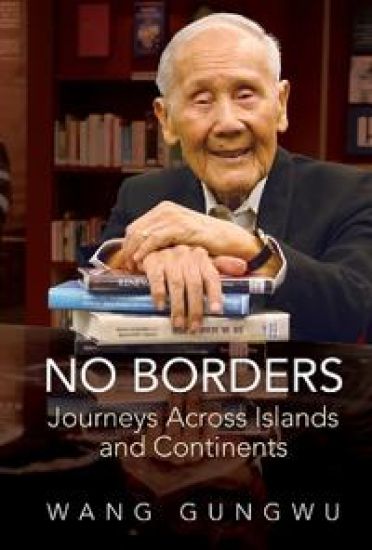
No Borders: Journeys Across Islands And Continents

No Borders: Journeys Across Islands And Continents

Gungwu Wang

WORLD SCIENTIFIC PUBLISHING CO PTE LTD
2026
nidottu
No Borders: Journeys Across Islands and Continents is the autobiography of eminent historian Professor Wang Gungwu. Respected the world over for his interpretation of the Sinic civilisation, he delves into his own annals to tell his story. From vantage points in Malaya, London, Australia, Hong Kong and Singapore, he has witnessed the trials and tribulations of China over the last 80 years — even as he devoted himself to studying its past. This he accomplished alongside a career defined by exceptional leadership, which saw him rise to become the vice-chancellor of the University of Hong Kong from 1986 to 1995. Eventually landing in Singapore in 1996, he has spent the last 30 years on the island-state at the tip of a vast continent, attracted by its commitment to stability after navigating a life of order and disorder. This book is written in his signature elegant prose, bearing the hallmarks of the scholarly gentleman he is recognised to be, with echoes of an English literature style that was his first love. Finely balanced with personal anecdotes and perspectives of the chaordic times he lived through, No Borders is an insightful oeuvre into how a masterful history specialist came to be.
No Borders: Journeys Across Islands And Continents

No Borders: Journeys Across Islands And Continents

Gungwu Wang

WORLD SCIENTIFIC PUBLISHING CO PTE LTD
2026
sidottu
No Borders: Journeys Across Islands and Continents is the autobiography of eminent historian Professor Wang Gungwu. Respected the world over for his interpretation of the Sinic civilisation, he delves into his own annals to tell his story. From vantage points in Malaya, London, Australia, Hong Kong and Singapore, he has witnessed the trials and tribulations of China over the last 80 years — even as he devoted himself to studying its past. This he accomplished alongside a career defined by exceptional leadership, which saw him rise to become the vice-chancellor of the University of Hong Kong from 1986 to 1995. Eventually landing in Singapore in 1996, he has spent the last 30 years on the island-state at the tip of a vast continent, attracted by its commitment to stability after navigating a life of order and disorder. This book is written in his signature elegant prose, bearing the hallmarks of the scholarly gentleman he is recognised to be, with echoes of an English literature style that was his first love. Finely balanced with personal anecdotes and perspectives of the chaordic times he lived through, No Borders is an insightful oeuvre into how a masterful history specialist came to be.
Roads To Chinese Modernity: Civilisation And National Culture

Roads To Chinese Modernity: Civilisation And National Culture

Gungwu Wang

WORLD SCIENTIFIC PUBLISHING CO PTE LTD
2025
nidottu
What is China? While many perceive it as a rising power challenging Western dominance, eminent historian Professor Gungwu Wang posits that the country has no ambitions on that front. In this illuminating book comprised of edited transcripts of selected lectures, it offers his interpretation of the answer. He traces China's roots as an ancient, borderless Sinic civilisation with a distinctive past that has been a source of strength. Following the establishment of the concept of a nation-state in the late 18th century, its identity was eventually forced to change from dynastic rule to a republic. Revolution and reform characterised much of the evolution, compelling it to define a national culture that would propel it down the road of progress and enable it to take its rightful place on the world stage. Interspersed with observations from his position as an overseas Chinese, this collection of insights is a must-read for anyone keen to understand China better.
Roads To Chinese Modernity: Civilisation And National Culture

Roads To Chinese Modernity: Civilisation And National Culture

Gungwu Wang

WORLD SCIENTIFIC PUBLISHING CO PTE LTD
2025
sidottu
What is China? While many perceive it as a rising power challenging Western dominance, eminent historian Professor Gungwu Wang posits that the country has no ambitions on that front. In this illuminating book comprised of edited transcripts of selected lectures, it offers his interpretation of the answer. He traces China's roots as an ancient, borderless Sinic civilisation with a distinctive past that has been a source of strength. Following the establishment of the concept of a nation-state in the late 18th century, its identity was eventually forced to change from dynastic rule to a republic. Revolution and reform characterised much of the evolution, compelling it to define a national culture that would propel it down the road of progress and enable it to take its rightful place on the world stage. Interspersed with observations from his position as an overseas Chinese, this collection of insights is a must-read for anyone keen to understand China better.
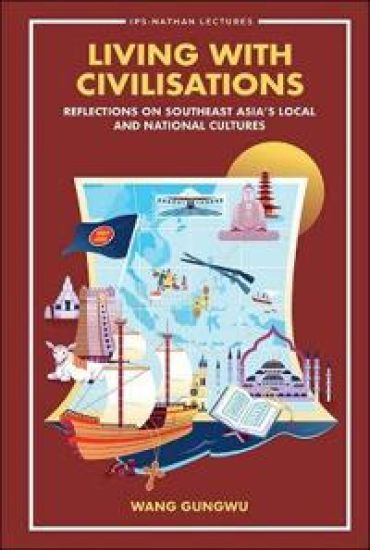
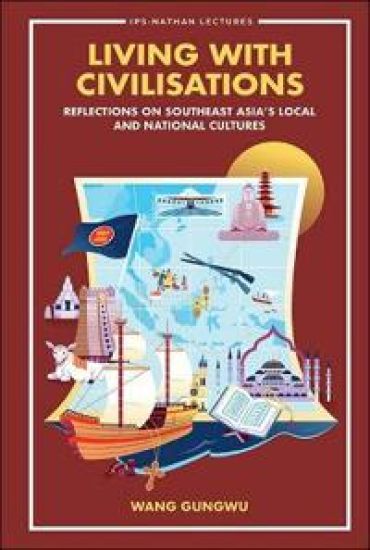
Living With Civilisations: Reflections On Southeast Asia's Local And National Cultures
Professor Wang Gungwu is the Institute of Policy Studies' 12th S R Nathan Fellow for the Study of Singapore. This book is an edited collection of his four IPS-Nathan Lectures, delivered from November 2022 to March 2023, and includes highlights of his question-and-answer segments with our audience. The Southeast Asian region is home to a set of diverse local cultures and distinct local identities. In this lecture series, Professor Wang looks at how great civilisations came into contact with our region and shaped its local identities and cultures. Being at the centre of Southeast Asia, Singapore's national identity and development have also been moulded by great ancient civilisations, namely the Indic, Sinic and Islamic. Later on, the idea of modernity brought about by Christian European civilisation greatly impacted our region. Understanding the history of Singapore from this perspective will give us insight to how the country's modern identity is being shaped and enable us to better understand our region's place in the modern world order. The IPS-Nathan Lecture series was launched in 2014 as part of the S R Nathan Fellowship for the Study of Singapore, named after Singapore's sixth and longest-serving president. It seeks to advance public understanding and discussion of issues of critical national interest for Singapore.
Living With Civilisations: Reflections On Southeast Asia's Local And National Cultures
Professor Wang Gungwu is the Institute of Policy Studies' 12th S R Nathan Fellow for the Study of Singapore. This book is an edited collection of his four IPS-Nathan Lectures, delivered from November 2022 to March 2023, and includes highlights of his question-and-answer segments with our audience. The Southeast Asian region is home to a set of diverse local cultures and distinct local identities. In this lecture series, Professor Wang looks at how great civilisations came into contact with our region and shaped its local identities and cultures. Being at the centre of Southeast Asia, Singapore's national identity and development have also been moulded by great ancient civilisations, namely the Indic, Sinic and Islamic. Later on, the idea of modernity brought about by Christian European civilisation greatly impacted our region. Understanding the history of Singapore from this perspective will give us insight to how the country's modern identity is being shaped and enable us to better understand our region's place in the modern world order. The IPS-Nathan Lecture series was launched in 2014 as part of the S R Nathan Fellowship for the Study of Singapore, named after Singapore's sixth and longest-serving president. It seeks to advance public understanding and discussion of issues of critical national interest for Singapore.
Global History And Migrations

Global History And Migrations

Gungwu Wang

Routledge
2019
sidottu
Humans have been on the move for millennia. They have done so slowly as well as quickly, sometimes involuntarily, sometimes transported by force, often relocated at great cost in lives, but they have always moved. Over the centuries, improved transportation has eased the movement, even in the face of man-made or natural obstacles. But in modern tim
China Reconnects: Joining A Deep-rooted Past To A New World Order

China Reconnects: Joining A Deep-rooted Past To A New World Order

Gungwu Wang

World Scientific Publishing Co Pte Ltd
2019
sidottu
'The book is engaging, informative, and provocative and can profitably be read by undergraduates and professors alike. You do not have to agree with the dean of China studies to learn from him.'China Review International The book shows how the Chinese are now confident of their capacity to learn all they need from the developed world and are keen to know which parts of the past they would need to build a modern Chinese civilization. They are very conscious of the challenges coming from the United States, and are looking for ways and means to respond to a superpower that wants to preserve its dominant position in the international status quo. The book seeks to explain what China is doing and what its immediate and long-term interests are. It is not to defend or judge China. It does not employ theoretical frameworks that are not appropriate for describing Chinese conditions. It calls for understanding why history is particularly relevant to the Chinese state and most of its people. That way, we also see how the present and hopes for the future changes our perspectives of the past. Related Link(s)
China Reconnects: Joining A Deep-rooted Past To A New World Order

China Reconnects: Joining A Deep-rooted Past To A New World Order

Gungwu Wang

World Scientific Publishing Co Pte Ltd
2019
nidottu
'The book is engaging, informative, and provocative and can profitably be read by undergraduates and professors alike. You do not have to agree with the dean of China studies to learn from him.'China Review International The book shows how the Chinese are now confident of their capacity to learn all they need from the developed world and are keen to know which parts of the past they would need to build a modern Chinese civilization. They are very conscious of the challenges coming from the United States, and are looking for ways and means to respond to a superpower that wants to preserve its dominant position in the international status quo. The book seeks to explain what China is doing and what its immediate and long-term interests are. It is not to defend or judge China. It does not employ theoretical frameworks that are not appropriate for describing Chinese conditions. It calls for understanding why history is particularly relevant to the Chinese state and most of its people. That way, we also see how the present and hopes for the future changes our perspectives of the past. Related Link(s)
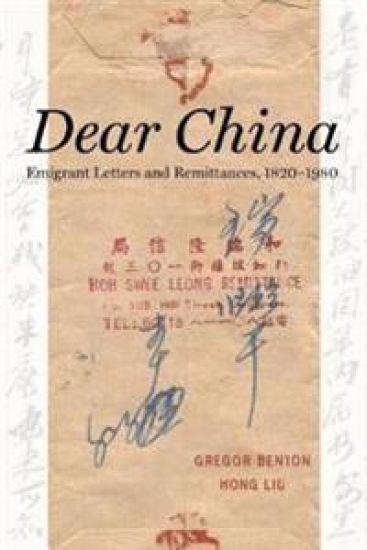
Dear China

Dear China

Gregor Benton; Hong Liu; Gungwu Wang

University of California Press
2018
sidottu
Qiaopi is one of several names given to the “silver letters” Chinese emigrants sent home in the nineteenth and twentieth centuries. These letters-cum-remittances document the changing history of the Chinese diaspora in different parts of the world and in different times. Dear China is the first book-length study in English of qiaopi and of the origins, structure, and operations of the qiaopi trade. The authors explore the characteristics and transformations of qiaopi, showing how such institutionalized and cross-national mechanisms helped sustain families separated by distance and state frontiers and contributed to the sending regions’ socioeconomic development. Dear China contributes substantially to our understanding of modern Chinese history and to the comparative study of global migration.
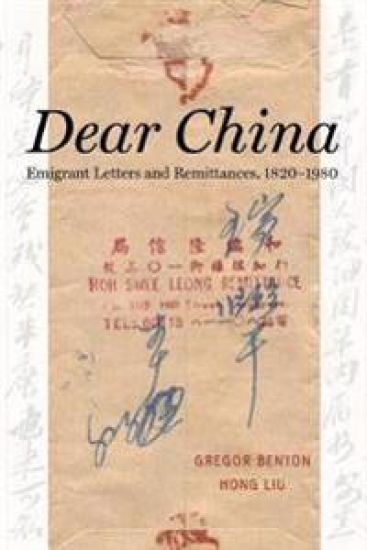
Dear China

Dear China

Gregor Benton; Hong Liu; Gungwu Wang

University of California Press
2018
pokkari
Qiaopi is one of several names given to the “silver letters” Chinese emigrants sent home in the nineteenth and twentieth centuries. These letters-cum-remittances document the changing history of the Chinese diaspora in different parts of the world and in different times. Dear China is the first book-length study in English of qiaopi and of the origins, structure, and operations of the qiaopi trade. The authors explore the characteristics and transformations of qiaopi, showing how such institutionalized and cross-national mechanisms helped sustain families separated by distance and state frontiers and contributed to the sending regions’ socioeconomic development. Dear China contributes substantially to our understanding of modern Chinese history and to the comparative study of global migration.
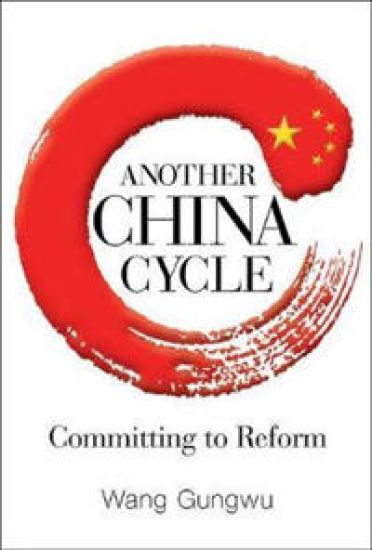
Another China Cycle: Committing To Reform

Another China Cycle: Committing To Reform

Gungwu Wang

World Scientific Publishing Co Pte Ltd
2014
sidottu
The essays in this volume take the 1990s after the 1989 Tiananmen tragedy as its baseline. They consist of ways of looking at China's developmental path during the two decades before and after the turn of the 21st century. This book traces the choices that three generations of Chinese leaders from Deng Xiaoping to Jiang Zemin and Hu Jintao, have made to rebuild China and consolidate the reforms introduced in the late 1970s. It also examines how Chinese leaders are trying to restore China's position in the region; how they are re-connecting with the country's history and re-defining the kind of nation it wants, and also how they hope to establish what they consider to be China's rightful place in the international order.
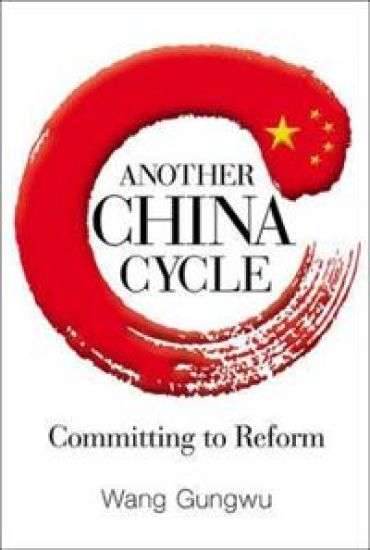
Another China Cycle: Committing To Reform

Another China Cycle: Committing To Reform

Gungwu Wang

World Scientific Publishing Co Pte Ltd
2014
nidottu
The essays in this volume take the 1990s after the 1989 Tiananmen tragedy as its baseline. They consist of ways of looking at China's developmental path during the two decades before and after the turn of the 21st century. This book traces the choices that three generations of Chinese leaders from Deng Xiaoping to Jiang Zemin and Hu Jintao, have made to rebuild China and consolidate the reforms introduced in the late 1970s. It also examines how Chinese leaders are trying to restore China's position in the region; how they are re-connecting with the country's history and re-defining the kind of nation it wants, and also how they hope to establish what they consider to be China's rightful place in the international order.
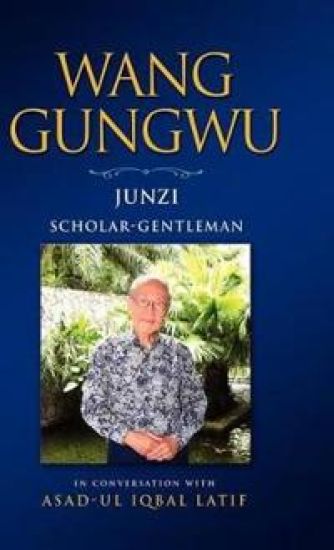
Wang Gungwu

Wang Gungwu

Gungwu Wang

ISEAS
2010
sidottu
This book of interviews with Professor Wang Gungwu, published to felicitate him on his 80th birthday in 2010, seeks to convey to a general audience something of the life, times and thoughts of a leading historian, Southeast Asianist, Sinologist and public intellectual. The interviews flesh out Professor Wangs views on being Chinese in Malaya; his experience of living and working in Malaysia, Singapore and Australia; the Vietnam War; Hong Kong and its return to China; the rise of China; Taiwans, Japans and Indias place in the emerging scheme of things; and on the United States in an age of terrorism and war. The book includes an interview with his wife, Mrs Margaret Wang, on their life together for half a century. Two interviews by scholars on Professor Wangs work are also included, as are his curriculum vitae and a select bibliography of his works. What comes across in this book is how Professor Wang was buffeted by feral times and hostile worlds but responded to them as a left-liberal humanist who refused to cut ideological corners. This book records his response to tumultuous times on hindsight, but with a keen sense of having lived through the times of which he speaks.
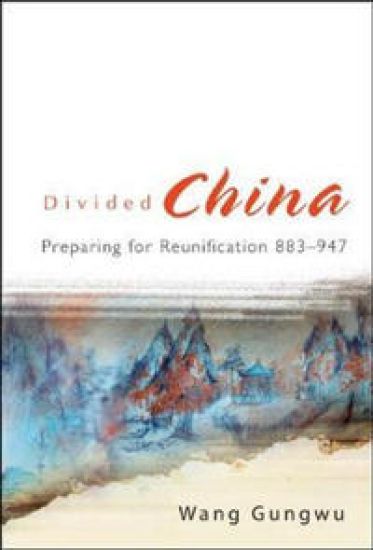
Divided China: Preparing For Reunification 883-947

Divided China: Preparing For Reunification 883-947

Gungwu Wang

World Scientific Publishing Co Pte Ltd
2007
sidottu
The oneness of China is the norm. Periods of divisions are aberrations. This is how Chinese thinkers, leaders and ultimately the majority of Chinese people have regarded Chinese politics and history for more than 2,000 years. The oneness was never perfect. As long as certain minimal conditions were met and the polity which proclaimed that oneness was widely acknowledged, that was enough. Chinese ruling elites adopted this pragmatic approach so they could ensure that the ideal could always approximate China's reality. This is a revised edition of a study undertaken to explain what happened during one of the worst periods of division in Chinese history. What were the key factors that helped the centripetal forces to get back to the imperial norm? It begins with the final stage of decline of the Tang dynasty (618-907) and ends 50 years later when it became clear that the foundations for a last push towards unification were in place.
Divided China: Preparing For Reunification 883-947

Divided China: Preparing For Reunification 883-947

Gungwu Wang

World Scientific Publishing Co Pte Ltd
2007
nidottu
The oneness of China is the norm. Periods of divisions are aberrations. This is how Chinese thinkers, leaders and ultimately the majority of Chinese people have regarded Chinese politics and history for more than 2,000 years. The oneness was never perfect. As long as certain minimal conditions were met and the polity which proclaimed that oneness was widely acknowledged, that was enough. Chinese ruling elites adopted this pragmatic approach so they could ensure that the ideal could always approximate China's reality. This is a revised edition of a study undertaken to explain what happened during one of the worst periods of division in Chinese history. What were the key factors that helped the centripetal forces to get back to the imperial norm? It begins with the final stage of decline of the Tang dynasty (618-907) and ends 50 years later when it became clear that the foundations for a last push towards unification were in place.
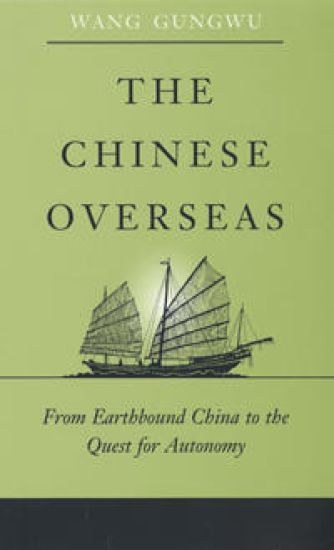
The Chinese Overseas

The Chinese Overseas

Gungwu Wang

Harvard University Press
2002
nidottu
The Chinese overseas now number 25 to 30 million, yet the 2,000-year history of Chinese attempts to venture abroad and the underlying values affecting that migration have never before been presented in a broad overview. Despite centuries of prohibition against leaving the land and traveling and settling overseas, the "earthbound" Chinese--first traders, then peasants and workers--eventually found new sources of livelihood abroad. The practice of sojourning, being always temporarily away from home, was the answer the Chinese overseas found to deal with imperial and orthodox concerns. Today their challenge is to find an alternative to either returning or assimilating by seeking a new kind of autonomy in a world that will come to acknowledge the ideal of multicultural states. In pursuing this story, international scholar Wang Gungwu uncovers some major themes of global history: the coming together of Asian and European civilizations, the ambiguities of ethnicity and diasporic consciousness, and the tension between maintaining one's culture and assimilation.
Reform, Legitimacy And Dilemmas: China's Politics And Society

Reform, Legitimacy And Dilemmas: China's Politics And Society

Gungwu Wang; Yongnian Zheng

World Scientific Publishing Co Pte Ltd
2001
sidottu
How has China's post-Deng leadership governed the country? How have the changing social and political environments shifted the bases of political legitimacy? What strategies has Jiang Zemin adopted to cope with new circumstances in order to strengthen his leadership? What are the challenges these new reform measures have generated for the leadership? And how have domestic concerns constrained the leadership's intention in China's foreign relations? These are some of the questions which this volume attempts to address. The authors agree that Jiang Zemin is not a man without any political initiative. He has struggled to establish his own style of leadership, and to strengthen the legitimacy of his leadership by setting forth new rules and institutions for political games and by finding new measures to cope with new challenges. This collection of articles shows the success Jiang and his colleagues have had in strengthening their leadership; how the different reform measures have strengthened Jiang's rule; and how the ongoing reform has created new challenges for his regime.