Kirjojen hintavertailu – 12 859 818 kirjaa ja 27 kauppaa

Kirjailija

Gunnar Karlsson

Kirjat ja teokset yhdessä paikassa: 10 kirjaa, julkaisuja vuosilta 2000–2023, suosituimpiin kuuluu Psykopatologi. Vertaile teosten hintoja ja tarkista saatavuus suomalaisista kirjakaupoista.

10 kirjaa

Kirjojen julkaisuvuodet: 2000–2023.

Psychoanalytic and Phenomenological Reflections on Masculinity
In this highly original volume, Gunnar Karlsson offers new answers to the question concerning the relationship between belonging to a specific sex as a male and striving for a masculine identity. This book offers a uniquely psychoanalytic and phenomenological perspective on masculinity. Karlsson considers masculinity and traditional masculine ideals through a psychoanalytic lens before taking phenomenological concepts to chisel out the relationship between sex and gender. This perspective is developed throughout the volume to inspire readers to further their understanding of traditional gender assignment – female, male and intersex – in light of gendered characteristics such as femininity and masculinity. Chapters span topics such as the characteristics of typical, so-called “phallic masculinity”, its allure and psychogenetic explanation, as well as looking at what phallic masculinity disregards. Throughout, Karlsson maintains that phallic masculinity is unattainable, as it seeks to escape the existential conditions of helplessness, vulnerability, and dependence. He makes the case for the importance of considering the notion of ego-identity in the field of sex/gender studies, encouraging a liberation from gender stereotypes. Psychoanalytic and Phenomenological Reflections on Masculinity will be of great interest to researchers, clinical psychoanalysts and psychotherapists, as well as anyone interested in masculinity, gender studies and the relationship between sex and gender. The Open Access version of this book, available at http://www.taylorfrancis.com, has been made available under a Creative Commons Attribution-Non Commercial-No Derivatives (CC-BY-NC-ND) 4.0 license.
Psychoanalytic and Phenomenological Reflections on Masculinity
In this highly original volume, Gunnar Karlsson offers new answers to the question concerning the relationship between belonging to a specific sex as a male and striving for a masculine identity. This book offers a uniquely psychoanalytic and phenomenological perspective on masculinity. Karlsson considers masculinity and traditional masculine ideals through a psychoanalytic lens before taking phenomenological concepts to chisel out the relationship between sex and gender. This perspective is developed throughout the volume to inspire readers to further their understanding of traditional gender assignment – female, male and intersex – in light of gendered characteristics such as femininity and masculinity. Chapters span topics such as the characteristics of typical, so-called “phallic masculinity”, its allure and psychogenetic explanation, as well as looking at what phallic masculinity disregards. Throughout, Karlsson maintains that phallic masculinity is unattainable, as it seeks to escape the existential conditions of helplessness, vulnerability, and dependence. He makes the case for the importance of considering the notion of ego-identity in the field of sex/gender studies, encouraging a liberation from gender stereotypes. Psychoanalytic and Phenomenological Reflections on Masculinity will be of great interest to researchers, clinical psychoanalysts and psychotherapists, as well as anyone interested in masculinity, gender studies and the relationship between sex and gender. The Open Access version of this book, available at http://www.taylorfrancis.com, has been made available under a Creative Commons Attribution-Non Commercial-No Derivatives (CC-BY-NC-ND) 4.0 license.

Iceland's 1100 Years

Iceland's 1100 Years

Gunnar Karlsson

C Hurst Co Publishers Ltd
2020
nidottu

Halvin toimitettuna 37,10 €

'Iceland's 1100 Years' recounts the history of a society on the margin of Europe as well as on the margin of reaching the size and wealth of a proper state. Iceland is unique among the European societies in being founded as late as the Viking Age, and in surviving for centuries without any central power after Christianity had introduced the art of writing. This was the age of the Sagas, which are not only literature but also a rare treasury of sources about a stateless society. In sharp contrast to the prosperous society portrayed by the Sagas, early modern Iceland appears to have been extremely poor and miserable. It is challenging to question whether the deterioration was due to foreign rule, to a colder climate, or to an unfortunate internal power structure. Or was the Golden Age perhaps the invention of 19th-century nationalists? Iceland adopted nationalism quickly and thoroughly. In the mid-nineteenth century about 60,000 inhabitants, mostly poor peasants, set out to gain independence from Denmark, which was finally achieved in 1944 with the foundation of a republic. In recent decades Iceland has caught up economically with its closest neighbours. This has come about mainly through the mechanisation of fishing, which gave rise to a second battle for sovereignty, this time over the country's fishing grounds.
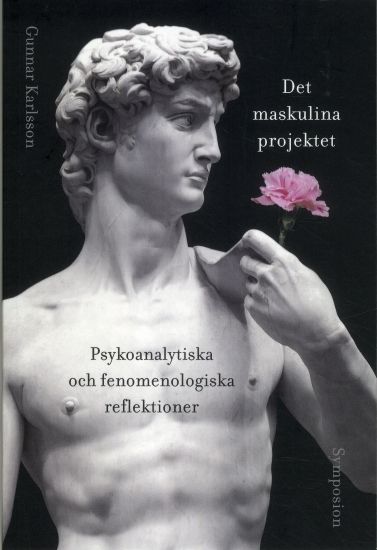
Det maskulina projektet : psykoanalytiska och fenomenologiska reflektioner
Gunnar Karlsson hävdar att det som anses som typiskt för maskulinitet i första hand är en reaktion på människans existentiella villkor, som innefattar hjälplöshet, sårbarhet och beroende. Bokens bärande tankegång är att maskulinitet är ett ouppnåeligt projekt, då den just söker undkomma de existentiella villkoren. Maskulinitet förstås som ett avståndstagande från den moderliga omsorgen, en kompensatorisk reaktion snarare än som ett fullbordande av något naturligt givet hos ett mankön. Med hjälp av psykoanalytiska och fenomenologiska tankegångar tar sig författaren an frågor om vad som utmärker maskuliniteten, hur den blir till och vad den försummar och går miste om. Det maskulina projektet är en bok som vänder sig till alla med intresse för den komplexa genusfrågan, och med hjälp av psykoanalysen och fenomenologin breddar den förståelsen av maskulinitet. Gunnar Karlsson är professor i pedagogik vid Stockholms universitet, och privatpraktiserande psykoanalytiker och psykoterapeut. Pressröster:"Först vill jag uttrycka min beundran för Gunnar Karlssons mod att ge sig på detta svåra, komplexa, politiskt överladdade, närmast minerade ämne. [---] Boken innehåller intressanta psykodynamiska och fenomenologiska infallsvinklar på ämnet vars rika innehåll inte går att ge rättvisa i en recension. [---] ... vill jag tacka Karlsson för en kunskapsrik bok ... Boken är ett av de viktigaste inläggen i den psykodynamiska könsdebatten på senare tid och den bör ha en stor möjlighet att bli en svensk klassiker. Med Det maskulina projektet har Gunnar Karlsson gett ett utomordentligt intressant och tankeväckande inlägg i den viktiga diskussionen om vår könsidentitet." Tomas Wånge, Leg. psykolog och privatpraktiserande psykoterapeut med relationell inriktning vid Linnéstadens Psykoterapiinstitut i Göteborg, Psykoterapi, Nr. 3, 2019, s. 49-52Karlsson s book is a major contribution to the psychoanalytic discussions on sexes and genders and especially on the challenges of being a man. I find especially important the way Karlsson emphatically makes the distinction between sex and gender, kön och genus, as two ontologically different kinds of structures, the former being something one is, the latter rather as a project... There is much to learn from his discussion, I think, and the book should be read not only by psychoanalysts and psychotherapists, but more broadly by people interested in gender questions. Jussi Kotkavirta, The Scandinavian Psychoanalytic Review,
Filosofi på liv och död : texter om psykoanalys

Filosofi på liv och död : texter om psykoanalys

Johan Cullberg; Sara Edenheim; Johan Eriksson; Svein Haugsgjerd; Per Magnus Johansson; Gunnar Karlsson; Iréne Matthis; Ulf Karl Olov Nilsson; Astrid von Rosen; Fredrika Spindler; Annika Stiebe

Göteborgs förening för filosofi och psykoanalys
2015
nidottu
Denna volym presenterar ett urval av texter skrivna av föreläsare som Göteborgs förening för filosofi och psykoanalys engagerat i sin verksamhet. Ur inledningen: "Titeln har vi valt att låna från Fredrika Spindlers text om Spinoza, kanske för att titeln på ett poetiskt sätt också kan sägas beskriva psykoanalysen – som en filosofi på liv och död. Bland de medverkande skribenterna finns representanter från olika akademiska fält. De har antingen föreläst, lett seminarier eller medverkat i offentliga samtal mellan åren 2011 och 2015. Bland texterna finns de som utforskar psykoanalysens vetenskapliga hemvist, de som använder psykoanalysen som lins i förståelsen av konsten eller samhället, och de som presenterar andra tankegångar i relation till psykoanalysen. Bidragens uttrycksformer är sinsemellan olika; några är transkriberade föredrag eller bearbetningar av manuskript, andra är essäer och ytterligare några är akademiskt utformade artiklar. Boken kan i denna bemärkelse ses som ett dokument, ett minnesspår, över de senaste årens verksamhet där 24 föreläsningar, 27 seminarietillfällen och 23 publika samtal koncentrerats till de 12 texter som här lyfts fram"
Psykopatologi

Psykopatologi

Claudia Fahlke; Per Magnus Johansson; Billy P.M. Larsson; Lars-Gunnar Lundh; Sven G. Carlsson; Gunnar Karlsson

Natur Kultur Läromedel och Akademi
2012
sidottu
"'I Psykopatologi presenteras en aktuell och vetenskapligt förankrad kunskap om psykopatologi utifrån tre centrala psykologiska teorier: biologisk psykologi
Psychoanalysis in a New Light

Psychoanalysis in a New Light

Gunnar Karlsson

Cambridge University Press
2010
sidottu
What kind of a science is psychoanalysis? What constitutes its domain? What truth claims does it maintain? In this unique and scholarly work concerning the nature of psychoanalysis, Gunnar Karlsson guides his arguments through phenomenological thinking which, he claims, can be seen as an alternative to the recent attempts to cite neuropsychoanalysis as the answer to the crisis of psychoanalysis. Karlsson criticizes this effort to ground psychoanalysis in biology and neurology and emphasizes instead the importance of defining the psychoanalytic domain from the vantage point of the character of consciousness. His understanding of the unconscious, the libido and the death drive offer new insights into the nature of psychoanalysis, and he also illuminates and develops neglected dimensions such as consciousness and self-consciousness. Karlsson's approach to psychoanalysis is rigorous yet original, and this book fills an intellectual gap with implications for both the theoretical understanding and clinical issues of psychoanalysis.
Psychoanalysis in a New Light

Psychoanalysis in a New Light

Gunnar Karlsson

Cambridge University Press
2010
pokkari
What kind of a science is psychoanalysis? What constitutes its domain? What truth claims does it maintain? In this unique and scholarly work concerning the nature of psychoanalysis, Gunnar Karlsson guides his arguments through phenomenological thinking which, he claims, can be seen as an alternative to the recent attempts to cite neuropsychoanalysis as the answer to the crisis of psychoanalysis. Karlsson criticizes this effort to ground psychoanalysis in biology and neurology and emphasizes instead the importance of defining the psychoanalytic domain from the vantage point of the character of consciousness. His understanding of the unconscious, the libido and the death drive offer new insights into the nature of psychoanalysis, and he also illuminates and develops neglected dimensions such as consciousness and self-consciousness. Karlsson's approach to psychoanalysis is rigorous yet original, and this book fills an intellectual gap with implications for both the theoretical understanding and clinical issues of psychoanalysis.
History Of Iceland

History Of Iceland

Gunnar Karlsson

University of Minnesota Press
2000
nidottu
The only comprehensive history of Iceland available in English. The only comprehensive history of Iceland available in English. Unique among European societies, Iceland was founded late, in the Viking Age, and has copious written and archaeological sources about its origin. Gunnar Karlsson, that country’s premier historian, chronicles the age of the sagas, consulting them to describe an era without a monarch or central authority. Equating this prosperous time with the golden age of antiquity in world history, Karlsson then marks a correspondence between the Dark Ages of Europe and Iceland’s "dreary period," which started with the loss of political independence in the late thirteenth century and culminated with an epoch of poverty and humility, especially during the early Modern Age. Iceland’s renaissance began with the successful struggle for independence in the nineteenth and early twentieth centuries, and continued with the industrial and technical modernization of the first half of the twentieth century. Karlsson describes the rise of nationalism as Iceland’s mostly poor peasants set about breaking with Denmark, and he shows how Iceland in the twentieth century slowly caught up economically with its European neighbors.