Kirjojen hintavertailu – 12 903 725 kirjaa ja 27 kauppaa
Kirjailija
Gunnar Lidén
Kirjat ja teokset yhdessä paikassa: 23 kirjaa, julkaisuja vuosilta 2011–2026, suosituimpiin kuuluu Forests and mankind. Vertaile teosten hintoja ja tarkista saatavuus suomalaisista kirjakaupoista.
Under tamarisken är samlade intryck från sex år som invandrare i Grekland, ett land som kulturellt tillhör Mellanöstern mer än Europa. Under sex år mellan 2010-2016 förändrades Grekland genom den ekonomiska nedgången och flyktingkrisen. Gunnar Lidén bodde och arbetade under denna tid i Athen och reste till Kreta, Rhodos och Thessaloniki. Boken innehåller teckningar och reflektioner från ett land i förvandling.
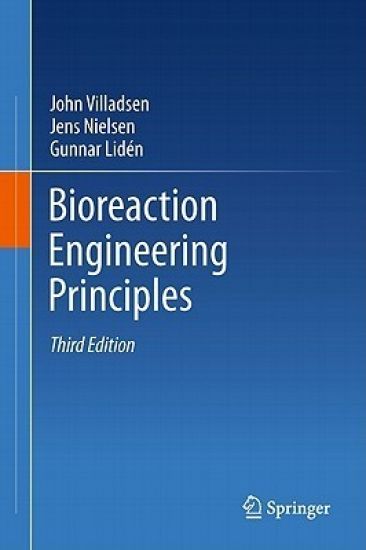
The present text is a complete revision of the 2nd edition from 2003 of the book with the same title. In recognition of the fast pace at which biotechnology is moving we have rewritten several chapters to include new scientific progress in the field from 2000 to 2010. More important we have changed the focus of the book to support its use, not only in universities, but also as a guide to design new processes and equipment in the bio-industry. A new chapter has been included on the prospects of the bio-refinery to replace many of the oil- and gas based processes for production of especially bulk chemicals. This chapter also serves to make students in Chemical Engineering and in the Bio-Sciences enthusiastic about the whole research field. As in previous editions we hope that the book can be used as textbook for classes, even at the undergraduate level, where chemical engineering students come to work side by side with students from biochemistry and microbiology. To help the chemical engineering students Chapter 1 includes a brief review of the most important parts of microbial metabolism. In our opinion this review is sufficient to understand microbial physiology at a sufficiently high level to profit from the rest of the book. Likewise the bio-students will not be overwhelmed by mathematics, but since the objective of the book is to teach quantitative process analysis and process design at a hands-on level some mathematics and model analysis is needed. We hope that the about 100 detailed examples and text notes, together with many instructive problems will be sufficient to illustrate how model analysis is used, also in Bio-reaction Engineering.
The present text is a complete revision of the 2nd edition from 2003 of the book with the same title. In recognition of the fast pace at which biotechnology is moving we have rewritten several chapters to include new scientific progress in the field from 2000 to 2010. More important we have changed the focus of the book to support its use, not only in universities, but also as a guide to design new processes and equipment in the bio-industry. A new chapter has been included on the prospects of the bio-refinery to replace many of the oil- and gas based processes for production of especially bulk chemicals. This chapter also serves to make students in Chemical Engineering and in the Bio-Sciences enthusiastic about the whole research field. As in previous editions we hope that the book can be used as textbook for classes, even at the undergraduate level, where chemical engineering students come to work side by side with students from biochemistry and microbiology. To help the chemical engineering students Chapter 1 includes a brief review of the most important parts of microbial metabolism. In our opinion this review is sufficient to understand microbial physiology at a sufficiently high level to profit from the rest of the book. Likewise the bio-students will not be overwhelmed by mathematics, but since the objective of the book is to teach quantitative process analysis and process design at a hands-on level some mathematics and model analysis is needed. We hope that the about 100 detailed examples and text notes, together with many instructive problems will be sufficient to illustrate how model analysis is used, also in Bio-reaction Engineering.