Kirjojen hintavertailu – 12 903 724 kirjaa ja 27 kauppaa

Kirjailija

Günter Frankenberg

Kirjat ja teokset yhdessä paikassa: 11 kirjaa, julkaisuja vuosilta 2014–2026, suosituimpiin kuuluu Comparative Law. Vertaile teosten hintoja ja tarkista saatavuus suomalaisista kirjakaupoista.

11 kirjaa

Kirjojen julkaisuvuodet: 2014–2026.

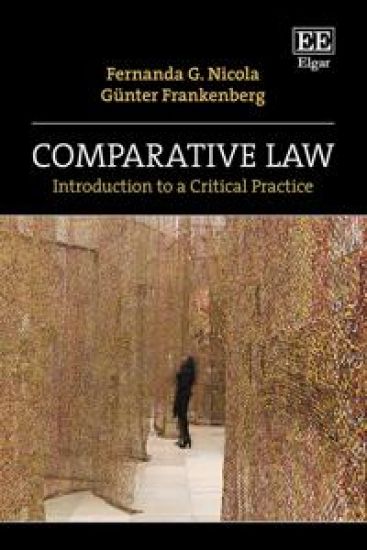
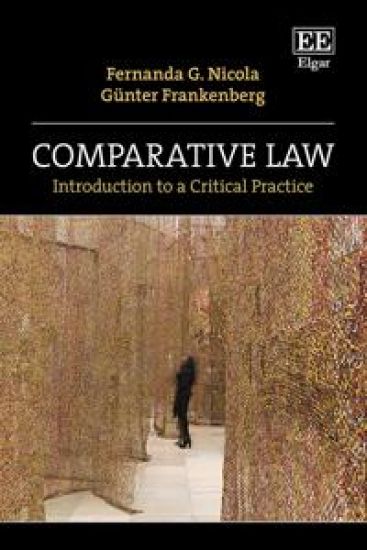
Comparative Law

Comparative Law

Fernanda G. Nicola; Günter Frankenberg

EDWARD ELGAR PUBLISHING LTD
2024
nidottu
This book provides a practical introductory guide to comparative law. Fernanda G. Nicola and Günter Frankenberg present and examine conventional and critical approaches to legal comparison, exploring its ramifications in the field and political effects. Comparative Law begins by outlining the theory and methodology of this critical legal practice. Chapters present real-world problems that the law faces in eight specific fields: property (informal property), contracts (specific performance), tort (wrongful birth), family law (same-sex marriage), administrative law (COVID-19 measures), constitutional law (veiling), legal transfers (gun control), and legal histories (indigenous property claims). Whilst examining various approaches to legal comparison, Nicola and Frankenberg crucially recognize how legal knowledge can be perpetually reconstructed, abstracted, and re-contextualized in diverse settings across space and time. Pairing real-world contemporary examples with established legal principles and practices, this book is an essential resource for teachers and students of comparative law and legal anthropology. Its practical case application will also be of interest to political scientists and journalists engaged in international legal regimes, problems, and solutions.

Comparative Law

Comparative Law

Fernanda G. Nicola; Günter Frankenberg

EDWARD ELGAR PUBLISHING LTD
2024
sidottu
This book provides a practical introductory guide to comparative law. Fernanda G. Nicola and Günter Frankenberg present and examine conventional and critical approaches to legal comparison, exploring its ramifications in the field and political effects. Comparative Law begins by outlining the theory and methodology of this critical legal practice. Chapters present real-world problems that the law faces in eight specific fields: property (informal property), contracts (specific performance), tort (wrongful birth), family law (same-sex marriage), administrative law (COVID-19 measures), constitutional law (veiling), legal transfers (gun control), and legal histories (indigenous property claims). Whilst examining various approaches to legal comparison, Nicola and Frankenberg crucially recognize how legal knowledge can be perpetually reconstructed, abstracted, and re-contextualized in diverse settings across space and time. Pairing real-world contemporary examples with established legal principles and practices, this book is an essential resource for teachers and students of comparative law and legal anthropology. Its practical case application will also be of interest to political scientists and journalists engaged in international legal regimes, problems, and solutions.
Authoritarianism

Authoritarianism

Günter Frankenberg

Edward Elgar Publishing Ltd
2020
sidottu
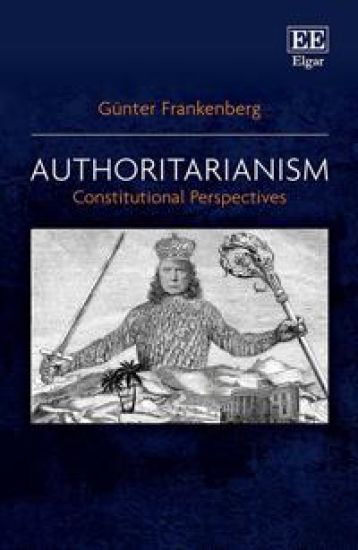
In this thought-provoking book, Günter Frankenberg explores why authoritarian leaders create new constitutions, or revise old ones. Through a profound analysis of authoritarian constitutions as phenomena in their own right, Frankenberg reveals their purposes, the audiences they seek to address and investigates the ways in which they fit into the broader context of autocracies. Frankenberg outlines the essential features of authoritarianism through a discussion of a variety of constitutional projects in authoritarian settings: the executive style of opportunist, informal governing, political power as private property, participation as complicity, and the cult of immediacy that is geared towards fantasies of a community of the followers and their leader. He also takes a comparative approach to authoritarian constitutions, drawing out the relationships between them, as well as providing a critique of the discourse around populism and authoritarianism. Authoritarianism will be critical reading for scholars of constitutional law, as well as political scientists, who will find its comparative analysis of political systems in this context invaluable. It will also be useful to students of comparative law and political science for its clear explanation of the characteristics of authoritarianism across regimes.
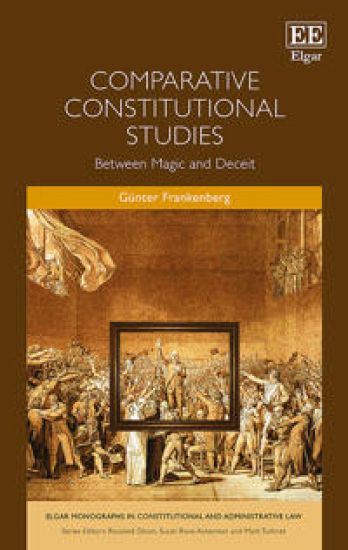
Comparative Constitutional Studies

Comparative Constitutional Studies

Günter Frankenberg

Edward Elgar Publishing Ltd
2019
nidottu
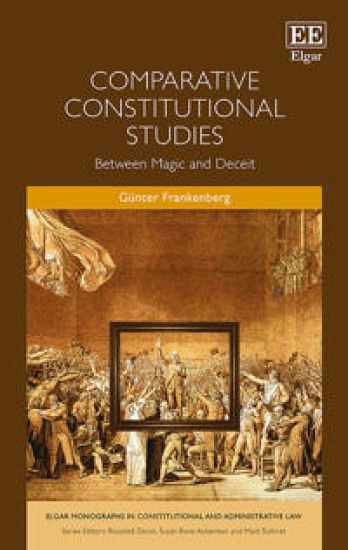
Comparative Constitutional Studies takes a rich area of research and teaching and makes it attractive for the classroom setting and beyond. Every constitution has an interesting story to tell, and for this book Günter Frankenberg has selected vibrant examples that encourage readers to practise realism, demonstrate critical spirit and examine the dark side of framers' reports and normative theories. This book deals with textbook hegemons, made in Philadelphia, Tokyo, Paris and, more importantly, with other constitutions from the global south, often classified as also-ran. Constitutions reflect conflicts and experiences, political visions and anxieties, ideals and ideologies, and Frankenberg's interdisciplinary approach serves as an excellent introduction to a new transnational conversation in comparative constitutional law. Its fresh perspective will make this book as an excellent resource for scholars and students of comparative constitutional law, political science, sociology, and anthropology.
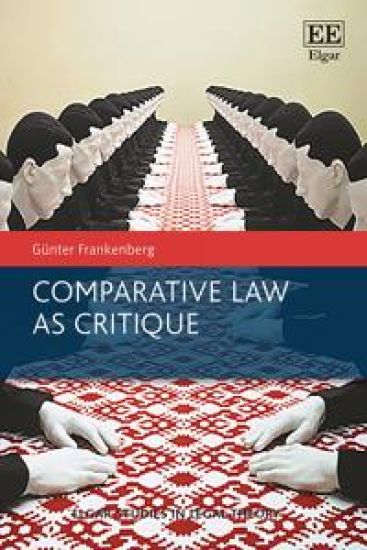
Comparative Law as Critique

Comparative Law as Critique

Günter Frankenberg

Edward Elgar Publishing Ltd
2019
nidottu
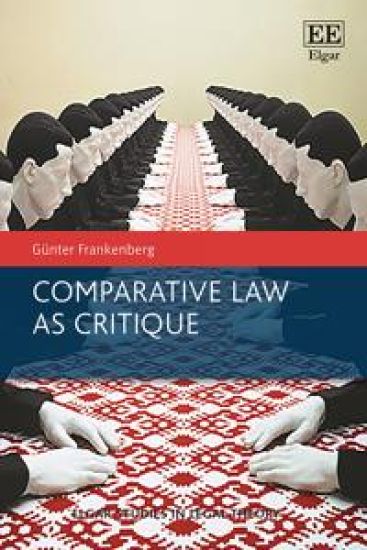
'A leading figure in critical legal studies and renowned scholar of comparative constitutionalism, Frankenberg urges us forward, offering a new taxonomy for critical work. He illustrates its potential in terrific chapters on recent transnational legal movements: to regulate the veil, provide access to justice and reinvigorate human rights as a language of justification. A methodological tour de force.'- David Kennedy, Harvard University'One of the most courageous and intellectually earnest legal scholars of our time, Gunter Frankenberg, has devoted his efforts to reconstructing comparative law's internal strength and potential for critical analysis. This book is a masterpiece that should be read by every serious thinker concerned with the need for legal reforms and the politics of globalization.'- Pier Giuseppe Monateri, University of Turin, Italy Presenting a critique of conventional methods in comparative law, this book argues that, for comparative law to qualify as a discipline, comparatists must reflect on how and why they make comparisons. Gunter Frankenberg discusses not only methods and theories but also the ethical implications and the politics of comparative law in order to bring out the different dimensions of the discipline. Comparative Law as Critique offers various approaches that turn on the academic discourse of comparative law, including analysis of a widespread spirit of innocence in terms of method, and critique of human rights narratives. It also analyses how courts negotiate differences between cases regarding Muslim veiling. Gunter Frankenberg presents varied critical projects that discuss methods and theories, ethics and the politics of comparative law to bring out the different dimensions of the discipline. The incisive critiques and comparisons in this book will make essential reading for comparatists working in legal education and research as well as students of comparative law and scholars in comparative anthropology and social sciences.
Comparative Constitutional Studies

Comparative Constitutional Studies

Günter Frankenberg

Edward Elgar Publishing Ltd
2018
sidottu
Comparative Constitutional Studies takes a rich area of research and teaching and makes it attractive for the classroom setting and beyond. Every constitution has an interesting story to tell, and for this book Günter Frankenberg has selected vibrant examples that encourage readers to practise realism, demonstrate critical spirit and examine the dark side of framers' reports and normative theories. This book deals with textbook hegemons, made in Philadelphia, Tokyo, Paris and, more importantly, with other constitutions from the global south, often classified as also-ran. Constitutions reflect conflicts and experiences, political visions and anxieties, ideals and ideologies, and Frankenberg's interdisciplinary approach serves as an excellent introduction to a new transnational conversation in comparative constitutional law. Its fresh perspective will make this book as an excellent resource for scholars and students of comparative constitutional law, political science, sociology, and anthropology.
Comparative Law as Critique

Comparative Law as Critique

Günter Frankenberg

Edward Elgar Publishing Ltd
2016
sidottu
'A leading figure in critical legal studies and renowned scholar of comparative constitutionalism, Frankenberg urges us forward, offering a new taxonomy for critical work. He illustrates its potential in terrific chapters on recent transnational legal movements: to regulate the veil, provide access to justice and reinvigorate human rights as a language of justification. A methodological tour de force.'- David Kennedy, Harvard University'One of the most courageous and intellectually earnest legal scholars of our time, Gunter Frankenberg, has devoted his efforts to reconstructing comparative law's internal strength and potential for critical analysis. This book is a masterpiece that should be read by every serious thinker concerned with the need for legal reforms and the politics of globalization.'- Pier Giuseppe Monateri, University of Turin, Italy Presenting a critique of conventional methods in comparative law, this book argues that, for comparative law to qualify as a discipline, comparatists must reflect on how and why they make comparisons. Gunter Frankenberg discusses not only methods and theories but also the ethical implications and the politics of comparative law in order to bring out the different dimensions of the discipline. Comparative Law as Critique offers various approaches that turn on the academic discourse of comparative law, including analysis of a widespread spirit of innocence in terms of method, and critique of human rights narratives. It also analyses how courts negotiate differences between cases regarding Muslim veiling. Gunter Frankenberg presents varied critical projects that discuss methods and theories, ethics and the politics of comparative law to bring out the different dimensions of the discipline. The incisive critiques and comparisons in this book will make essential reading for comparatists working in legal education and research as well as students of comparative law and scholars in comparative anthropology and social sciences.
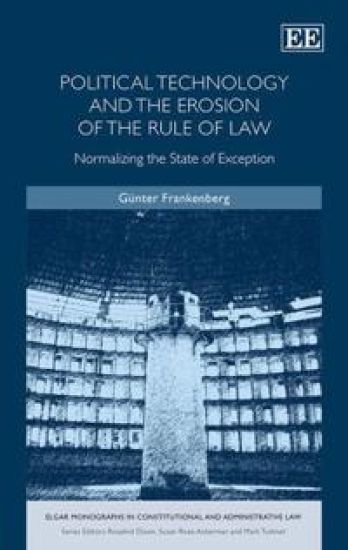
Political Technology and the Erosion of the Rule of Law

Political Technology and the Erosion of the Rule of Law

Günter Frankenberg

Edward Elgar Publishing Ltd
2015
nidottu
This timely volume by distinguished scholar Günter Frankenberg offers a sophisticated analysis and sharp critique of the reactions of nations such as the US, Great Britain and Germany to perceived terrorist threats, organized crime actions and other political emergencies that have occurred in recent years. The author demonstrates how governments have increasingly sacrificed the rule of law and human rights for the benefit of security programs –- as evidenced by a rise in extraordinary measures such as surveillance, detention and torture –- thus normalizing the state of exception and privileging preemptive, proactive and coercive methods of political engineering. An interdisciplinary and multi-jurisdictional study, this book develops and implements a unique theoretical and conceptual framework for understanding the rise of technical-political rationality and the fall of the rule of law, and submits both to a firm critique. Particularly relevant in light of current controversies, this provocative book will appeal to scholars and students of international and constitutional law, legal theory, political science, and terrorism studies.
Political Technology and the Erosion of the Rule of Law

Political Technology and the Erosion of the Rule of Law

Günter Frankenberg

Edward Elgar Publishing Ltd
2014
sidottu
This timely volume by distinguished scholar Günter Frankenberg offers a sophisticated analysis and sharp critique of the reactions of nations such as the US, Great Britain and Germany to perceived terrorist threats, organized crime actions and other political emergencies that have occurred in recent years. The author demonstrates how governments have increasingly sacrificed the rule of law and human rights for the benefit of security programs –- as evidenced by a rise in extraordinary measures such as surveillance, detention and torture –- thus normalizing the state of exception and privileging preemptive, proactive and coercive methods of political engineering. An interdisciplinary and multi-jurisdictional study, this book develops and implements a unique theoretical and conceptual framework for understanding the rise of technical-political rationality and the fall of the rule of law, and submits both to a firm critique. Particularly relevant in light of current controversies, this provocative book will appeal to scholars and students of international and constitutional law, legal theory, political science, and terrorism studies.