Kirjojen hintavertailu – 12 903 724 kirjaa ja 27 kauppaa

Kirjailija

Guntram B. Wolff

Kirjat ja teokset yhdessä paikassa: 3 kirjaa, julkaisuja vuosilta 2022–2024, suosituimpiin kuuluu Greening Europe's post-COVID-19 recovery. Vertaile teosten hintoja ja tarkista saatavuus suomalaisista kirjakaupoista.

3 kirjaa

Kirjojen julkaisuvuodet: 2022–2024.

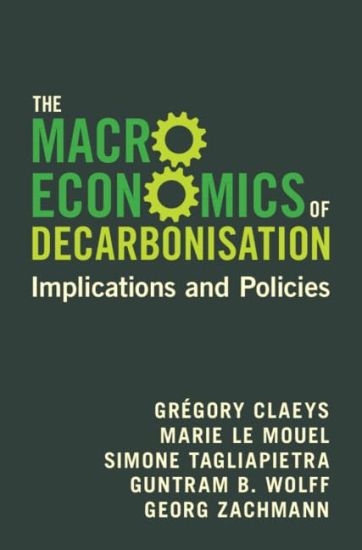
The Macroeconomics of Decarbonisation

The Macroeconomics of Decarbonisation

Grégory Claeys; Marie Le Mouel; Simone Tagliapietra; Guntram B. Wolff; Georg Zachmann

Cambridge University Press
2024
sidottu
Decarbonisation is the reduction of carbon dioxide emissions using low carbon power sources, lowering output of greenhouse gasses into the atmosphere. This is essential to meet global temperature standards set by international climate agreements. To limit global warming to 1.5°C, hence avoiding the worst-case scenarios predicted by climate science, the world economy must rapidly reduce its emissions and reach climate neutrality within the next three decades. This will not be an easy journey. Shifting away from carbon-intensive production will require a historic transformation of the structure of our economies. Written by a team of academics linked to the European think tank Bruegel, The Macroeconomics of Decarbonisation provides a guide to the macroeconomic fundamentals of decarbonisation. It identifies the major economic transformations, both over the long- and short-run, and the roadblocks requiring policy intervention. It proposes a macroeconomic policy agenda for decarbonisation to achieve the climate goals of the international community.
The Macroeconomics of Decarbonisation

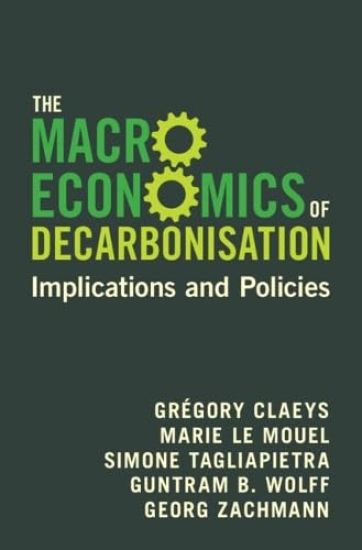
The Macroeconomics of Decarbonisation

Grégory Claeys; Marie Le Mouel; Simone Tagliapietra; Guntram B. Wolff; Georg Zachmann

Cambridge University Press
2024
pokkari
Decarbonisation is the reduction of carbon dioxide emissions using low carbon power sources, lowering output of greenhouse gasses into the atmosphere. This is essential to meet global temperature standards set by international climate agreements. To limit global warming to 1.5°C, hence avoiding the worst-case scenarios predicted by climate science, the world economy must rapidly reduce its emissions and reach climate neutrality within the next three decades. This will not be an easy journey. Shifting away from carbon-intensive production will require a historic transformation of the structure of our economies. Written by a team of academics linked to the European think tank Bruegel, The Macroeconomics of Decarbonisation provides a guide to the macroeconomic fundamentals of decarbonisation. It identifies the major economic transformations, both over the long- and short-run, and the roadblocks requiring policy intervention. It proposes a macroeconomic policy agenda for decarbonisation to achieve the climate goals of the international community.