Kirjojen hintavertailu – 12 859 829 kirjaa ja 27 kauppaa

Kirjailija

Guoqiang Li

Kirjat ja teokset yhdessä paikassa: 9 kirjaa, julkaisuja vuosilta 2009–2026, suosituimpiin kuuluu Smart Adhesively Bonded Composite Joints. Vertaile teosten hintoja ja tarkista saatavuus suomalaisista kirjakaupoista.

9 kirjaa

Kirjojen julkaisuvuodet: 2009–2026.

Smart Adhesively Bonded Composite Joints

Smart Adhesively Bonded Composite Joints

Jinquan Cheng; Guoqiang Li; Su-Seng Pang

Nova Science Publishers Inc
2009
nidottu
Due to their inherent advantages over mechanical-fastening methods, the use of adhesively bonded composite joints has been significantly increased in recent years for joining composite beams, panels, tubes, etc., which are fundamental components in civilian, military and aeronautic structures. Because the applied load in the adherends is always transferred in the form of shear and/or peel stresses through the adhesive layer, the stress concentration developed in the end regions at the adhesive bondline is the principal reason for causing the premature and catastrophic failure of adhesively bonded joints. This has always been a dilemma for the designers of such joints. In order to reduce the peel/shear stresses concentration and improve the joint strength, some traditional mechanical methods have been developed as practical solutions to reduce the stress concentration, such as rounding off sharp edges, spewing fillets, and tapering adherends. These methods are passive in reducing stress concentration, i.e., they are ineffective unless the pattern and magnitude of the applied loads are fixed. Comparing to these traditional mechanical enhancement methods, an active smart strength improvement method for adhesively bonded composite joint is introduced in this book to adaptively realise the reduction of peel/shear stress concentration through the integrated piezoelectric layers as sensor/actuator in the composite joint system. This type of joint is smart because, on one hand, the integrated piezoelectric layers can serve as sensors to monitor the joint system deformation; on the other hand, the piezoelectric layers also serve as actuators to produce a counter-balancing force or moment. In such smart joints, counter-balancing forces and moments can be adaptively produced by adjusting the applied electric fields to the integrated piezoelectric layers based on the information as sensors. The additional forces and moments can be controlled to act oppositely to those developed internally by the payloads, thereby alleviating the stress concentration in the joint edges and smartly improve the joint strength. In this book, the fundamental concept of the proposed smart adhesively bonded composite joint method is firstly introduced, and then, the details in designing and analysing such joints under various loading conditions are systematically discussed, including single-lap and single-strap smart composite joints subjected to tensile loading, and smart composite pipe joints subjected to axial tension or bending.

Gallium Nitride-Based Materials and Chips Epitaxially Grown on a Silicon Substrate
Gallium nitride (GaN) is a wide bandgap semiconductor with significant applications in optoelectronic and high-power electronic devices. The epitaxial growth of GaN on silicon (Si) substrates is of great interest due to the low cost, large wafer size, good thermal conductivity, and compatibility with established Si device technology. Gallium Nitride-Based Materials and Chips Epitaxially Grown on a Silicon Substrate reviews research on developing high-performance semiconductor materials and chips using gallium nitride-based materials. In particular the book, firstly, describes a novel, two-step growth method that combines low-temperature epitaxy by pulsed laser deposition (PLD) with high-temperature epitaxy by metal-organic chemical vapor deposition (MOCVD)/molecular beam epitaxy (MBE). This method effectively controls the stress of Si-based GaN epitaxial materials and significantly reduces the defect density of the epitaxial materials by three orders of magnitude. Secondly, in terms of chip structure design, the book describes a variety of Si-based GaN chips with novel heteroepitaxial structures, leading to the improved the efficiency of various chips such as light-emitting diode (LED) chips, high-electron-mobility transistors, Schottky diodes, photodetector chips, photoelectrochemical water-splitting chips, and Si-based GaN integrated chips. Finally, the book describes novel chip fabrication processes which greatly improve the performance and production efficiency of various chips by more than 30%.
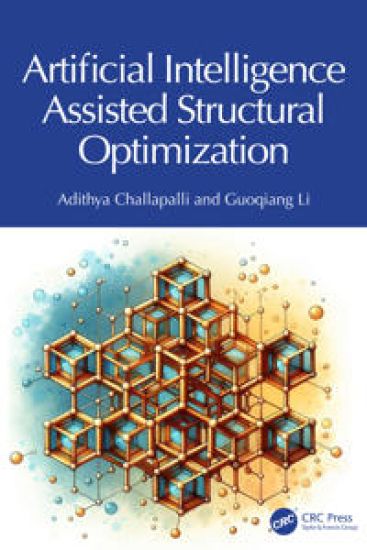
Artificial Intelligence Assisted Structural Optimization

Artificial Intelligence Assisted Structural Optimization

Adithya Challapalli; Guoqiang Li

Taylor & Francis
2026
Nidottu
Artificial Intelligence Assisted Structural Optimization explores the use of machine learning and correlation analysis within the forward design and inverse design frameworks to design and optimize lightweight load-bearing structures as well as mechanical metamaterials. Discussing both machine learning and design analysis in detail, this book enables readers to optimize their designs using a data-driven approach. This book discusses the basics of the materials utilized, for example, shape memory polymers, and the manufacturing approach employed, such as 3D or 4D printing. Additionally, the book discusses the use of forward design and inverse design frameworks to discover novel lattice unit cells and thin-walled cellular unit cells with enhanced mechanical and functional properties such as increased mechanical strength, heightened natural frequency, strengthened impact tolerance, and improved recovery stress. Inverse design methodologies using generative adversarial networks are proposed to further investigate and improve these structures. Detailed discussions on fingerprinting approaches, machine learning models, structure screening techniques, and typical Python codes are provided in the book. The book provides detailed guidance for both students and industry engineers to optimize their structural designs using machine learning.
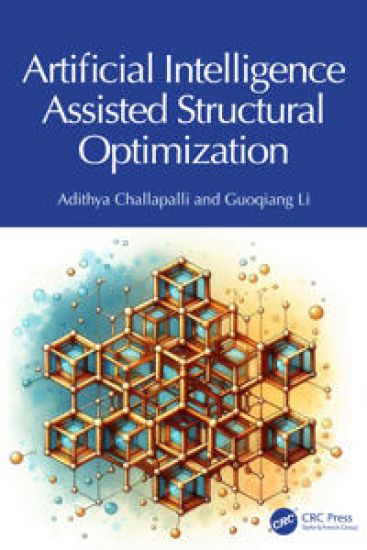
Artificial Intelligence Assisted Structural Optimization

Artificial Intelligence Assisted Structural Optimization

Adithya Challapalli; Guoqiang Li

TAYLOR FRANCIS LTD
2025
sidottu
Artificial Intelligence Assisted Structural Optimization explores the use of machine learning and correlation analysis within the forward design and inverse design frameworks to design and optimize lightweight load-bearing structures as well as mechanical metamaterials. Discussing both machine learning and design analysis in detail, this book enables readers to optimize their designs using a data-driven approach. This book discusses the basics of the materials utilized, for example, shape memory polymers, and the manufacturing approach employed, such as 3D or 4D printing. Additionally, the book discusses the use of forward design and inverse design frameworks to discover novel lattice unit cells and thin-walled cellular unit cells with enhanced mechanical and functional properties such as increased mechanical strength, heightened natural frequency, strengthened impact tolerance, and improved recovery stress. Inverse design methodologies using generative adversarial networks are proposed to further investigate and improve these structures. Detailed discussions on fingerprinting approaches, machine learning models, structure screening techniques, and typical Python codes are provided in the book. The book provides detailed guidance for both students and industry engineers to optimize their structural designs using machine learning.
Bionic Functional Structures by Femtosecond Laser Micro/nanofabrication Technologies
This thesis combines advanced femtosecond laser micro/nanofabrication technologies and frontier bionic design principles to prepare diverse biomimetic micro/nanostructures to realize their functions. By studying the formation mechanism of the micro/nanostructures, the author identifies various artificial structural colors, three-dimensional micro/nanocage arrays, and fish-scale inspired microcone arrays in different processing environments. Multiple functions such as enhanced antireflection, hydrophobicity, and underwater superoleophobicity are achieved by precisely adjusting laser-machining parameters. This novel design and method have extensive potential applications in the context of new colorizing technologies, microfluidics, microsensors, and biomedicine.
Advanced Analysis and Design for Fire Safety of Steel Structures

Advanced Analysis and Design for Fire Safety of Steel Structures

Guoqiang Li; Peijun Wang

Springer-Verlag Berlin and Heidelberg GmbH Co. K
2015
nidottu
Advanced Analysis and Design for Fire Safety of Steel Structures systematically presents the latest findings on behaviours of steel structural components in a fire, such as the catenary actions of restrained steel beams, the design methods for restrained steel columns, and the membrane actions of concrete floor slabs with steel decks. Using a systematic description of structural fire safety engineering principles, the authors illustrate the important difference between behaviours of an isolated structural element and the restrained component in a complete structure under fire conditions. The book will be an essential resource for structural engineers who wish to improve their understanding of steel buildings exposed to fires. It is also an ideal textbook for introductory courses in fire safety for master’s degree programs in structural engineering, and is excellent reading material for final-year undergraduate students in civil engineering and fire safety engineering. Furthermore, it successfully bridges the information gap between fire safety engineers, structural engineers and building inspectors, and will be of significant interest to architects, code officials, building designers and fire fighters. Dr. Guoqiang Li is a Professor at the College of Civil Engineering of Tongji University, China; Dr. Peijun Wang is an Associate Professor at the School of Civil Engineering of Shandong University, China.
Self-Healing Composites

Self-Healing Composites

Guoqiang Li

John Wiley Sons Inc
2014
sidottu
In this book, the self-healing of composite structures with shape memory polymer as either matrix or embedded suture is systematically discussed. Self-healing has been well known in biological systems for many years: a typical example is the self-healing of human skin. Whilst a minor wound can be self-closed by blood clotting, a deep and wide cut needs external help by suturing. Inspired by this observation, this book proposes a two-step close-then-heal (CTH) scheme for healing wide-opened cracks in composite structures–by constrained shape recovery first, followed by molecular healing. It is demonstrated that the CTH scheme can heal wide-opened structural cracks repeatedly, efficiently, timely, and molecularly. It is believed that self-healing represents the next-generation technology and will become an engineering reality in the near future. The book consists of both fundamental background and practical skills for implementing the CTH scheme, with additional focus on understanding strain memory versus stress memory and healing efficiency evaluation under various fracture modes. Potential applications to civil engineering structures, including sealant for bridge decks and concrete pavements, and rutting resistant asphalt pavements, are also explored. This book will help readers to understand this emerging field, and to establish a framework for new innovation in this direction. Key features: explores potential applications of shape memory polymers in civil engineering structures, which is believed to be unique within the literaturebalanced testing and mathematical modeling, useful for both academic researchers and practitionersthe self-healing scheme is based on physical change of polymers and is written in an easy to understand style for engineering professionals without a strong background in chemistry
Advanced Analysis and Design for Fire Safety of Steel Structures

Advanced Analysis and Design for Fire Safety of Steel Structures

Guoqiang Li; Peijun Wang

Springer-Verlag Berlin and Heidelberg GmbH Co. K
2013
sidottu
Advanced Analysis and Design for Fire Safety of Steel Structures systematically presents the latest findings on behaviours of steel structural components in a fire, such as the catenary actions of restrained steel beams, the design methods for restrained steel columns, and the membrane actions of concrete floor slabs with steel decks. Using a systematic description of structural fire safety engineering principles, the authors illustrate the important difference between behaviours of an isolated structural element and the restrained component in a complete structure under fire conditions. The book will be an essential resource for structural engineers who wish to improve their understanding of steel buildings exposed to fires. It is also an ideal textbook for introductory courses in fire safety for master’s degree programs in structural engineering, and is excellent reading material for final-year undergraduate students in civil engineering and fire safety engineering. Furthermore, it successfully bridges the information gap between fire safety engineers, structural engineers and building inspectors, and will be of significant interest to architects, code officials, building designers and fire fighters. Dr. Guoqiang Li is a Professor at the College of Civil Engineering of Tongji University, China; Dr. Peijun Wang is an Associate Professor at the School of Civil Engineering of Shandong University, China.