Kirjojen hintavertailu – 12 859 819 kirjaa ja 27 kauppaa
Kirjailija
Gustave Flaubert
Kirjat ja teokset yhdessä paikassa: 1 037 kirjaa, julkaisuja vuosilta 1967–2026, suosituimpiin kuuluu The Legend of St Julian the Hospitable. Vertaile teosten hintoja ja tarkista saatavuus suomalaisista kirjakaupoista.
La so adora Emma, una joven de provincias casada con Charles Bovary, quien la ama pero es incapaz de comprenderla y satisfacerla, buscar la realizaci n de sus sue os en otros amores, pasionales, plat nicos..., pero ninguno de ellos lograr calmar su desesperada ansiedad y sus rom nticas inquietudes.
Full text. An epic story of lust, cruelty, and sensuality, this historical novel is set in Carthage in the days following the First Punic War with Rome, during the 3rd century BC. Few French historical novels can stand comparison with Salammb . After the First Punic War, Carthage is unable to fulfill promises made to its army of mercenaries, and finds itself under attack. The fictional title character, a priestess and the daughter of Hamilcar Barca, the foremost Carthaginian general, is the object of the obsessive lust of Matho, a leader of the mercenaries. With the help of the scheming freed slave, Spendius, Matho steals the sacred veil of Carthage, the Za mph, prompting Salammb to enter the mercenaries' camp in an attempt to steal it back. The Za mph is an ornate jewelled veil draped about the statue of the goddess Tanit in the "sanctum sanctorum" of her temple: the veil is the city's guardian and touching it will bring death to the perpetrator. Flaubert's main source was Book I of Polybius's Histories. It was not a particularly well-studied period of history and required a great deal of work from the author, who enthusiastically left behind the realism of his masterpiece Madame Bovary for this melodramatic, blood-soaked tale. The book, which Flaubert researched painstakingly, is largely an exercise in sensuous and violent exoticism. Following the success of Madame Bovary, it was another best-seller and sealed his reputation.
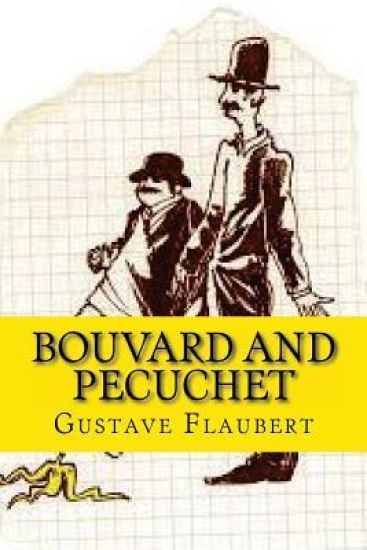
Two men made their appearance. One came from the direction of the Bastille; the other from that of the Jardin des Plantes. The taller of the pair, arrayed in linen cloth, walked with his hat back, his waistcoat unbuttoned, and his cravat in his hand. The smaller, whose form was covered with a maroon frock-coat, wore a cap with a pointed peak. As soon as they reached the middle of the boulevard, they sat down, at the same moment, on the same seat. In order to wipe their foreheads they took off their headgear, each placing his beside himself; and the little man saw "Bouvard" written in his neighbour's hat, while the latter easily traced "P cuchet" in the cap of the person who wore the frock-coat. "Look here " he said; "we have both had the same idea-to write our names in our head-coverings " "Yes, faith, for they might carry off mine from my desk." "'Tis the same way with me. I am an employ ." Then they gazed at each other. Bouvard's agreeable visage quite charmed P cuchet. His blue eyes, always half-closed, smiled in his fresh-coloured face. His trousers
"A Simple Heart", also called Un coeur simple or Le perroquet in French, is a story about a servant girl named Felicit . After her one and only love Th odore purportedly marries a well-to-do woman to avoid conscription, Felicit quits the farm she works on and heads for Pont-l' v que where she immediately picks up work in a widow's house as a servant. She is very loyal, and easily lends her affections to the two children of her mistress, Mme Aubain. She gives entirely to others, and although many take advantage of her she is unaffected. She is the epitome of a selfless character, and Flaubert shows how true altruism - the reality of being truly selfless - is the reward in itself. Whatever comes her way she is able to deal with it.
Pendant un demi-si cle, les bourgeoises de Pont l'Ev que envi rent Mme Aubain sa servante F licit . Pour cent francs par an, elle faisait la cuisine et le m nage, cousait, lavait, repassait, savait brider un cheval, engraisser les volailles, battre le beurre, et resta fid le sa ma tresse, - qui cependant n' tait pas une personne agr able. Elle avait pous un beau gar on sans fortune, mort au commencement de 1809, en lui laissant deux enfants tr s jeunes avec une quantit de dettes. Alors elle vendit ses immeubles, sauf la ferme de Toucques et la ferme de Geffosses, dont les rentes montaient 5, 000 francs tout au plus, et elle quitta sa maison de Saint-Melaine pour en habiter une autre moins dispendieuse, ayant appartenu ses anc tres et plac e derri re les halles. Cette maison, rev tue d'ardoises, se trouvait entre un passage et une ruelle aboutissant la rivi re. Elle avait int rieurement des diff rences de niveau qui faisaient tr bucher. Un vestibule troit s parait la cuisine de la salle o Mme Aubain se tenait tout le long du jour, assise pr s de la crois e dans un fauteuil de paille. Contre le lambris, peint en blanc, s'alignaient huit chaises d'acajou. Un vieux piano supportait, sous un barom tre, un tas pyramidal de bo tes et de cartons. Deux berg res de tapisserie flanquaient la chemis e en marbre jaune et de style Louis XV. La pendule, au milieu, repr sentait un temple de Vesta, - et tout l'appartement sentait un peu le moisi, car le plancher tait plus bas que le jardin.
We were in class when the head-master came in, followed by a "new fellow," not wearing the school uniform, and a school servant carrying a large desk. Those who had been asleep woke up, and every one rose as if just surprised at his work. The head-master made a sign to us to sit down. Then, turning to the class-master, he said to him in a low voice- "Monsieur Roger, here is a pupil whom I recommend to your care; he'll be in the second. If his work and conduct are satisfactory, he will go into one of the upper classes, as becomes his age." The "new fellow," standing in the corner behind the door so that he could hardly be seen, was a country lad of about fifteen, and taller than any of us. His hair was cut square on his forehead like a village chorister's; he looked reliable, but very ill at ease. Although he was not broad-shouldered, his short school jacket of green cloth with black buttons must have been tight about the arm-holes, and showed at the opening of the cuffs red wrists accustomed to being bare. His legs, in blue stockings, looked out from beneath yellow trousers, drawn tight by braces, He wore stout, ill-cleaned, hob-nailed boots. We began repeating the lesson. He listened with all his ears, as attentive as if at a sermon, not daring even to cross his legs or lean on his elbow; and when at two o'clock the bell rang, the master was obliged to tell him to fall into line with the rest of us. When we came back to work, we were in the habit of throwing our caps on the ground so as to have our hands more free; we used from the door to toss them under the form, so that they hit against the wall and made a lot of dust: it was "the thing." But, whether he had not noticed the trick, or did not dare to attempt it, the "new fellow," was still holding his cap on his knees even after prayers were over. It was one of those head-gears of composite order, in which we can find traces of the bearskin, shako, billycock hat, sealskin cap, and cotton night-cap; one of those poor things, in fine, whose dumb ugliness has depths of expression, like an imbecile's face. Oval, stiffened with whalebone, it began with three round knobs; then came in succession lozenges of velvet and rabbit-skin separated by a red band; after that a sort of bag that ended in a cardboard polygon covered with complicated braiding, from which hung, at the end of a long thin cord, small twisted gold threads in the manner of a tassel. The cap was new; its peak shone. "Rise," said the master. He stood up; his cap fell. The whole class began to laugh. He stooped to pick it up. A neighbor knocked it down again with his elbow; he picked it up once more. "Get rid of your helmet," said the master, who was a bit of a wag.
Un roman historique qui entrelace des personnages historiques et fictifs. L'action a lieu imm diatement avant et pendant la r volte mercenaire contre Carthage au troisi me si cle avant JC. Ce livre, que Flaubert a tudi minutieusement, est en grande partie un exercice d'exotisme sensuel et violent. Les costumes carthaginois qui y sont d crits ont m me laiss des traces sur les modes de l' poque. N anmoins, malgr son statut classique en France, il est pratiquement inconnu aujourd'hui chez les anglophones.
The book is widely read as a precursor to modern theories on semiotics and postmodernism. The relentless failure of Bouvard and P cuchet to learn anything from their adventures raises the question of what is knowable. Whenever they achieve some small measure of success (a rare occurrence), it is the result of unknown external forces beyond their comprehension. The worldview that emerges from the work, one of human beings proceeding relentlessly forward without comprehending the results of their actions or the processes of the world around them, does not seem an optimistic one. But given that Bouvard and P cuchet do gain some comprehension of humanity's ignorant state (as demonstrated by their composition of the Dictionary of Received Ideas), it could be argued that Flaubert allows for the possibility of relative enlightenment.