Kirjojen hintavertailu – 12 859 819 kirjaa ja 27 kauppaa
Kirjailija
Gustavo Carneiro
Kirjat ja teokset yhdessä paikassa: 2 kirjaa, julkaisuja vuosilta 2020–2024, suosituimpiin kuuluu Semantics for Robotic Mapping, Perception and Interaction. Vertaile teosten hintoja ja tarkista saatavuus suomalaisista kirjakaupoista.
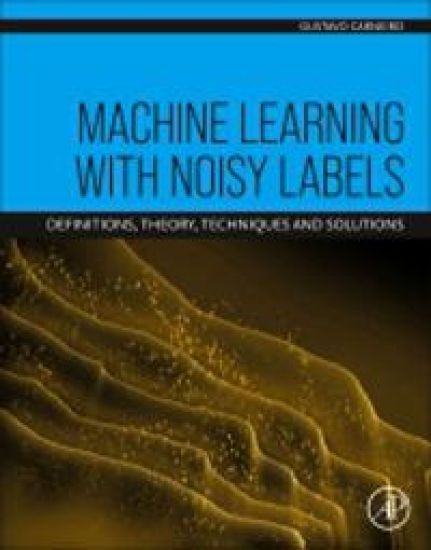
Machine Learning and Noisy Labels: Definitions, Theory, Techniques and Solutions provides an ideal introduction to machine learning with noisy labels that is suitable for senior undergraduates, post graduate students, researchers and practitioners using, and researching, machine learning methods. Most of the modern machine learning models based on deep learning techniques depend on carefully curated and cleanly labeled training sets to be reliably trained and deployed. However, the expensive labeling process involved in the acquisition of such training sets limits the number and size of datasets available to build new models, slowing down progress in the field. This book defines the different types of label noise, introduces the theory behind the problem, presents the main techniques that enable the effective use of noisy-label training sets, and explains the most accurate methods.
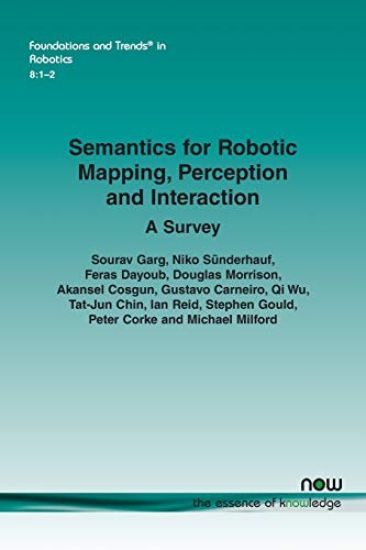
Sourav Garg; Niko Sünderhauf; Feras Dayoub; Douglas Morrison; Akansel Cosgun; Gustavo Carneiro; Qi Wu; Tat-Jun Chin; Ian Reid; Stephen Gould; Peter Corke; Michael Milford
For robots to navigate and interact more richly with the world around them, they will likely require a deeper understanding of the world in which they operate. In robotics and related research fields, the study of understanding is often referred to as semantics, which dictates what does the world ‘mean’ to a robot, and is strongly tied to the question of how to represent that meaning. With humans and robots increasingly operating in the same world, the prospects of human-robot interaction also bring semantics and ontology of natural language into the picture. Driven by need, as well as by enablers like increasing availability of training data and computational resources, semantics is a rapidly growing research area in robotics. The field has received significant attention in the research literature to date, but most reviews and surveys have focused on particular aspects of the topic: the technical research issues regarding its use in specific robotic topics like mapping or segmentation, or its relevance to one particular application domain like autonomous driving. A new treatment is therefore required, and is also timely because so much relevant research has occurred since many of the key surveys were published. This survey provides an overarching snapshot of where semantics in robotics stands today. We establish a taxonomy for semantics research in or relevant to robotics, split into four broad categories of activity in which semantics are extracted, used, or both. Within these broad categories, we survey dozens of major topics including fundamentals from the computer vision field and key robotics research areas utilizing semantics such as mapping, navigation and interaction with the world. The survey also covers key practical considerations, including enablers like increased data availability and improved computational hardware, and major application areas where semantics is or is likely to play a key role. In creating this survey, we hope to provide researchers across academia and industry with a comprehensive reference that helps facilitate future research in this exciting field.