Kirjojen hintavertailu – 12 859 828 kirjaa ja 27 kauppaa

Kirjailija

Guy Davenport

Kirjat ja teokset yhdessä paikassa: 24 kirjaa, julkaisuja vuosilta 1993–2025, suosituimpiin kuuluu Guy Davenport and James Laughlin: Selected Letters. Vertaile teosten hintoja ja tarkista saatavuus suomalaisista kirjakaupoista.

24 kirjaa

Kirjojen julkaisuvuodet: 1993–2025.

A Balance of Quinces: The Paintings and Drawings of Guy Davenport

A Balance of Quinces: The Paintings and Drawings of Guy Davenport

Erik Anderson-Reece; Guy Davenport; Eric Anderson Reece

NEW DIRECTIONS PUBLISHING CORPORATION
1996
nidottu
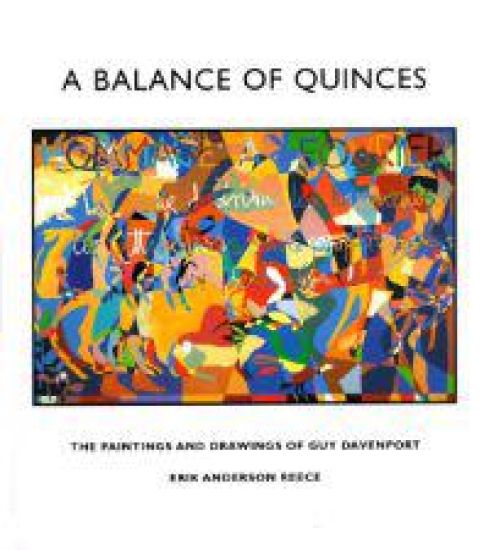
As Erik Anderson Reece says in A Balance of Quinces, "Many know Guy Davenport the creator of fiction, the critic, the illustrator, the poet, the translator.... But Guy Davenport the monastic painter is still unknown." Here gathered for the first time is a generous collection of Davenport's paintings and drawings, interwoven with commentary by poet and critic Erik Anderson Reece. The broad scope of Davenport's artistic output is included here: the pen-and-ink portraits, the abstract still lifes, and the collage compositions. Erik Anderson Reece's essay provides cultural background for the work and examines it as am extension of Davenport's writings. Besides the plentiful black-and-white reproductions throughout the text, this edition of A Balance of Quinces also includes twenty-four pages of color plates.
A Table of Green Fields

A Table of Green Fields

Guy Davenport

New Directions Publishing Corporation
1993
sidottu
A Table of Green Fields includes ten stories, variously about the painter Henry Scott Tuke, the mathematician James Joseph Sylvester, Kafka, Thoreau, along with some imaginary Frenchmen and Scandinavians, among others. Calculating the infinite in the finite, tracing geometries of desire, placing the obdurate world in an uncustomary light, each of these stories opens out its own world. Without giving up the plot or character of the traditional short story, Guy Davenport's inventions are complex events in which ideas and cultural history are a kind of music to which the characters dance. Despite the fractal, syncopated collage of his narrative style, Davenport's prose is objective, terse, and transparent. A constant theme in this book is the transmission of the past as an imaginative act; hence the title, Falstaff's dying vision of "a table of green fields," probably a mishearing of his recitation of the Twenty-third Psalm, corrected by editors to "he babbled of green fields," a symbol of all fiction, an art that must be exact about the uncertain.