Kirjojen hintavertailu – 12 903 725 kirjaa ja 27 kauppaa
Kirjailija
Guy Osborn
Kirjat ja teokset yhdessä paikassa: 8 kirjaa, julkaisuja vuosilta 1998–2025, suosituimpiin kuuluu Contract and Control in the Entertainment Industry. Vertaile teosten hintoja ja tarkista saatavuus suomalaisista kirjakaupoista.
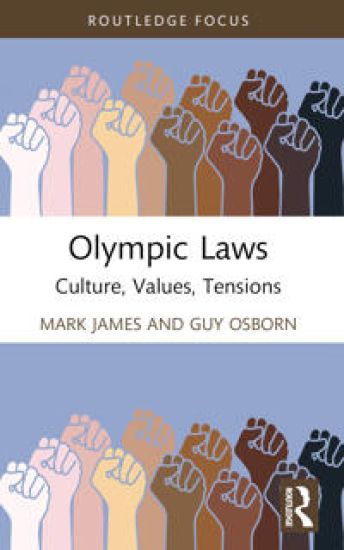
Olympic Laws: Culture, Values, Tensions is the first book to analyse fully the Olympic legal framework and its application to the IOC and the Olympic Games through a socio-legal lens. It opens up a new window into understanding the Olympic Games across recent iterations of the Games and on to future Games. The book begins by defining the parameters of the emergent legal sub-fields of Sports Law, lex Olympica and Olympic Law, through the identification of the sources of these Olympic Laws and their underpinning norms. It then uses a series of case studies to demonstrate how lex Olympica has evolved as a means of defending the Olympic Movement from unwanted legal interventions, how Olympic Law has been created to protect the commercial rights vested in the Games, and how the legacies created by this unique category of law have a lasting impact on host cities and beyond. It concludes with a call that the IOC should recalibrate its relationships with prospective hosts and the participating athletes by requiring specific adherence to the Fundamental Principles of Olympism. This is essential reading for any student or researcher with an interest in Olympic studies, sports law, or socio-legal studies or any practising lawyer or events professional looking to better understand the impact and institutions of mega-events.
Olympic Laws: Culture, Values, Tensions is the first book to analyse fully the Olympic legal framework and its application to the IOC and the Olympic Games through a socio-legal lens. It opens up a new window into understanding the Olympic Games across recent iterations of the Games and on to future Games. The book begins by defining the parameters of the emergent legal sub-fields of Sports Law, lex Olympica and Olympic Law, through the identification of the sources of these Olympic Laws and their underpinning norms. It then uses a series of case studies to demonstrate how lex Olympica has evolved as a means of defending the Olympic Movement from unwanted legal interventions, how Olympic Law has been created to protect the commercial rights vested in the Games, and how the legacies created by this unique category of law have a lasting impact on host cities and beyond. It concludes with a call that the IOC should recalibrate its relationships with prospective hosts and the participating athletes by requiring specific adherence to the Fundamental Principles of Olympism. This is essential reading for any student or researcher with an interest in Olympic studies, sports law, or socio-legal studies or any practising lawyer or events professional looking to better understand the impact and institutions of mega-events.
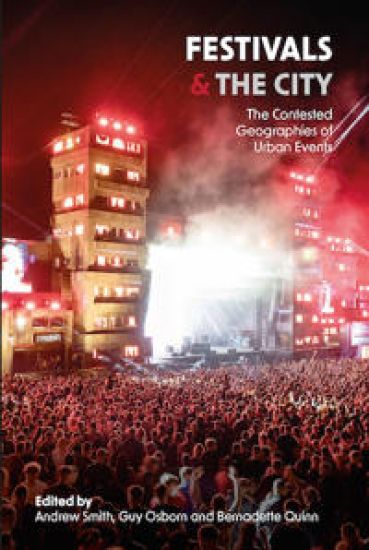
This book explores how festivals and events affect urban places and public spaces, with a particular focus on their role in fostering inclusion. The ‘festivalisation’ of culture, politics and space in cities is often regarded as problematic, but this book examines the positive and negative ways that festivals affect cities by examining festive spaces as contested spaces. The book focuses on Western European cities, a particularly interesting context given the social and cultural pressures associated with high levels of in-migration and concerns over the commercialisation and privatisation of public spaces. The key themes of this book are the quest for more inclusive urban spaces and the contested geographies of festival spaces and places. Festivals are often used by municipal authorities to break down symbolic barriers that restrict who uses public spaces and what those spaces are used for. However, the rise of commercial festivals and ticketed events means that they are also responsible for imposing physical and financial obstacles that reduce the accessibility of city parks, streets and squares. Alongside addressing the contested effects of urban festivals on the character and inclusivity of public spaces, the book addresses more general themes including the role of festivals in culture-led regeneration. Several chapters analyse festivals and events as economic development tools, and the book also covers contested representations of festival cities and the ways related images and stories are used in place marketing. A range of cases from Western Europe are used to explore these issues, including chapters on some of the world’s most significant and contested festival cities: Venice, Edinburgh, London and Barcelona. The book covers a wide range of festivals, including those dedicated to music and the arts, but also events celebrating particular histories, identities and pastimes. A series of fascinating cases are discussed - from the Venice Biennale and Dublin Festival of History, to Rotterdam’s music festivals and craft beer festivals in Manchester. The diverse and innovative qualities of the book are also evident in the range of urban spaces covered: obvious examples of public spaces – such as parks, streets, squares and piazzas – are addressed, but the book includes chapters on enclosed public spaces (e.g., libraries) and urban blue spaces (waterways) too. This reflects the interpretation of public spaces as socio-material entities: they are produced informally through their use (including for festivals and events), as well as through their formal design and management.
This book explores how festivals and events affect urban places and public spaces, with a particular focus on their role in fostering inclusion. The ‘festivalisation’ of culture, politics and space in cities is often regarded as problematic, but this book examines the positive and negative ways that festivals affect cities by examining festive spaces as contested spaces. The book focuses on Western European cities, a particularly interesting context given the social and cultural pressures associated with high levels of in-migration and concerns over the commercialisation and privatisation of public spaces. The key themes of this book are the quest for more inclusive urban spaces and the contested geographies of festival spaces and places. Festivals are often used by municipal authorities to break down symbolic barriers that restrict who uses public spaces and what those spaces are used for. However, the rise of commercial festivals and ticketed events means that they are also responsible for imposing physical and financial obstacles that reduce the accessibility of city parks, streets and squares. Alongside addressing the contested effects of urban festivals on the character and inclusivity of public spaces, the book addresses more general themes including the role of festivals in culture-led regeneration. Several chapters analyse festivals and events as economic development tools, and the book also covers contested representations of festival cities and the ways related images and stories are used in place marketing. A range of cases from Western Europe are used to explore these issues, including chapters on some of the world’s most significant and contested festival cities: Venice, Edinburgh, London and Barcelona. The book covers a wide range of festivals, including those dedicated to music and the arts, but also events celebrating particular histories, identities and pastimes. A series of fascinating cases are discussed - from the Venice Biennale and Dublin Festival of History, to Rotterdam’s music festivals and craft beer festivals in Manchester. The diverse and innovative qualities of the book are also evident in the range of urban spaces covered: obvious examples of public spaces – such as parks, streets, squares and piazzas – are addressed, but the book includes chapters on enclosed public spaces (e.g., libraries) and urban blue spaces (waterways) too. This reflects the interpretation of public spaces as socio-material entities: they are produced informally through their use (including for festivals and events), as well as through their formal design and management.
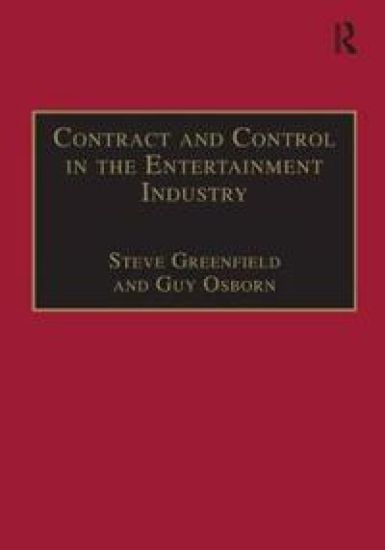
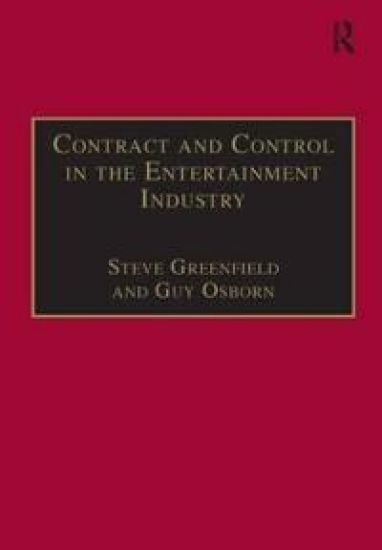
This book examines the contractual relationships of creative artists within a number of areas of the entertainment industry. Whilst it focuses specifically on football, cricket, boxing and music, developments within other parts of the entertainment business are observed. The book also charts the concessions (artistic, professional and personal) that are often made by such artists in an attempt to achieve success and the consequent legal problems that may arise from their working relationships. Embracing historical materials and current legal practices, Contract and Control in the Entertainment Industry will be of interest to academics and students in the fields of law, sociology and cultural studies. It will also appeal to anyone who is interested in seeing how many areas of the entertainment industry have placed very restrictive contractual controls on the raw materials of the industry - the creative artists.
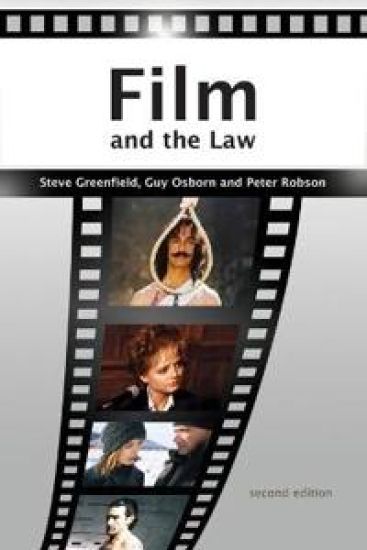
Described by Richard Sherwin of New York Law School as the law and film movement's 'founding text', this text is a second, heavily revised and improved edition of the original Film and the Law (Cavendish Publishing, 2001). The book is distinctive in a number of ways: it is unique as a sustained book-length exposition on law and film by law scholars; it is distinctive within law and film scholarship in its attempt to plot the parameters of a distinctive genre of law films; its examination of law in film as place and space offers a new way out of the law film genre problem, and also offers an examination of representations of an aspect of legal practice, and legal institutions, that have not been addressed by other scholars. It is original in its contribution to work within the wider parameters of law and popular culture and offers a sustained challenge to traditional legal scholarship, amply demonstrating the practical and the pedagogic, as well as the moral and political significance of popular cultural representations of law. The book is a valuable teaching and learning resource, and is the first in the field to serve as a basic guidebook for students of law and film.
Football in Europe has undergone massive changes over the last decade. Regulating Football gets behind the headlines to look at the impact of ever increasing commercialisation and the commodification of football. The essence of the book is football as it is played, refereed, managed, bought, sold and consumed: the authors capture the life and action of the game as seen from the perspective of the numerous participants and place these experiences within a sociological, economic and legal context which reflects the increasing commodification of the sport. Exploring the ways in which the game is regulated, the authors question whether we have reached the point where commercial issues have superseded the club – and even the game of football itself. The role of players, agents, officials, governing bodies, and the media are all explored. The authors pay attention to levels of violence and racism both on and off the field in both the professional and amateur forms of the game.
This book examines the contractual relationships of creative artists within a number of areas of the entertainment industry. Whilst it focuses specifically on football, cricket, boxing and music, developments within other parts of the entertainment business are observed. The book also charts the concessions (artistic, professional and personal) that are often made by such artists in an attempt to achieve success and the consequent legal problems that may arise from their working relationships. Embracing historical materials and current legal practices, Contract and Control in the Entertainment Industry will be of interest to academics and students in the fields of law, sociology and cultural studies. It will also appeal to anyone who is interested in seeing how many areas of the entertainment industry have placed very restrictive contractual controls on the raw materials of the industry - the creative artists.