Kirjojen hintavertailu – 12 859 819 kirjaa ja 27 kauppaa

Kirjailija

Guy Standing

Kirjat ja teokset yhdessä paikassa: 25 kirjaa, julkaisuja vuosilta 1981–2026, suosituimpiin kuuluu Migration Surveys in Low Income Countries. Vertaile teosten hintoja ja tarkista saatavuus suomalaisista kirjakaupoista.

25 kirjaa

Kirjojen julkaisuvuodet: 1981–2026.

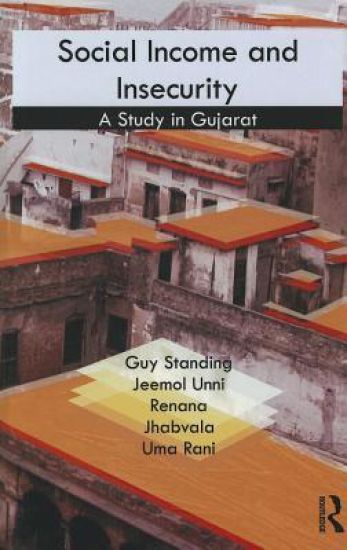
Social Income and Insecurity

Social Income and Insecurity

Guy Standing; Jeemol Unni; Renana Jhabvala; Uma Rani

Routledge India
2010
sidottu
Economic liberalisation associated with globalisation is causing a pervasive growth of economic insecurity experienced all over the world. This is placing urgent demands on policymakers to rethink old policies and institutions. This book sets out a new approach to the assessment of income dynamics, based on identifying the diverse components of people’s income and entitlements. It defines ‘social income’ as a broader concept of household income which includes state, community and private benefits. It shows how those components should be measured and provides a composite picture of the structure of incomes and support systems of different societal groups. It recognises how the structure of income, as well as its distribution, has been linked to policy and development dynamics. It starts from a premise that unless the totality of incomes and income support systems is taken into account, academics and policymakers cannot expect to develop appropriate interventions. This perspective is developed though a detailed household survey conducted in rural and urban areas of Gujarat in 2007–2008. This provides an up-to-date picture of how institutions, NGOs and the state system are operating in the context of rapid restructuring of village life in India.
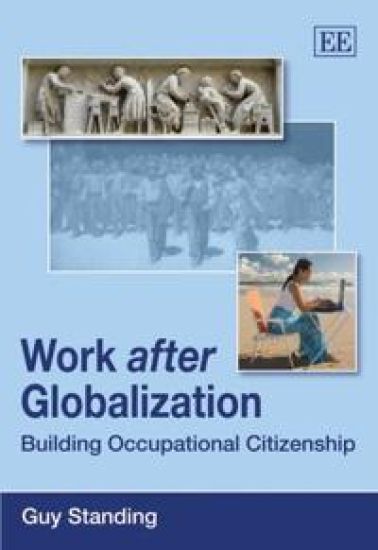
Work after Globalization

Work after Globalization

Guy Standing

Edward Elgar Publishing Ltd
2010
nidottu
In this ground-breaking book, Guy Standing offers a new perspective on work and citizenship, rejecting the labourist orientation of the 20th century. Karl Polanyi's The Great Transformation marked the rise of industrial citizenship, which hinged on fictitious labour decommodification. Since the 1970s, this has collapsed and a Global Transformation is under way, in which inequalities and insecurities are becoming unsustainable. Guy Standing explains that while a struggle against paternalism is essential, the desirable egalitarian response to the problems caused by globalization is a strategy to build occupational citizenship. This is based on a right to universal economic security and institutions to enable everybody to develop their capabilities and work whilst respecting the ecological imperatives of the 21st century. The book also explores a phasing out of labour law and a re-orientation of collective bargaining towards collaborative bargaining, highlighting the increased importance of the relationship between groups of workers and citizens as well as between workers and capital. Work after Globalization offers a new perspective on work, rejecting the labourist orientation of the 20th century. Social scientists interested in globalization and labour market issues will warmly welcome this book. It will also strongly appeal to students, researchers, policy-makers, social activists and those connected with the international regulation of occupations.
Work after Globalization

Work after Globalization

Guy Standing

Edward Elgar Publishing Ltd
2009
sidottu
In this ground-breaking book, Guy Standing offers a new perspective on work and citizenship, rejecting the labourist orientation of the 20th century. Karl Polanyi's The Great Transformation marked the rise of industrial citizenship, which hinged on fictitious labour decommodification. Since the 1970s, this has collapsed and a Global Transformation is under way, in which inequalities and insecurities are becoming unsustainable. Guy Standing explains that while a struggle against paternalism is essential, the desirable egalitarian response to the problems caused by globalization is a strategy to build occupational citizenship. This is based on a right to universal economic security and institutions to enable everybody to develop their capabilities and work whilst respecting the ecological imperatives of the 21st century. The book also explores a phasing out of labour law and a re-orientation of collective bargaining towards collaborative bargaining, highlighting the increased importance of the relationship between groups of workers and citizens as well as between workers and capital. Work after Globalization offers a new perspective on work, rejecting the labourist orientation of the 20th century. Social scientists interested in globalization and labour market issues will warmly welcome this book. It will also strongly appeal to students, researchers, policy-makers, social activists and those connected with the international regulation of occupations.
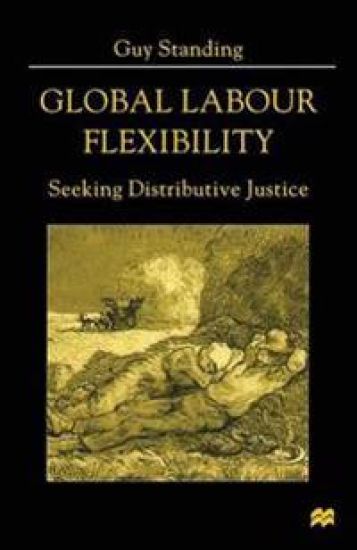
Global Labour Flexibility

Global Labour Flexibility

Guy Standing

Palgrave Macmillan
1999
nidottu
What models of distributive justice can the twenty-first century promote to challenge the spread of insecurity, inequality and social fragmentation? The twentieth century was dominated by competition between two labour models of society - state socialism and welfare state capitalism, which promoted forms of labour security. Since the 1970s globalization and flexible labour markets have increased insecurity and inequalities. After a period dominated by libertarianism, politicians and social thinkers must find ways of promoting distributive justice, based on basic security and new forms of voice representation and regulation. Dismissing the approach of the `new paternalists', this book presents a vision combining security of income and representation without moralistic state control.