Kirjojen hintavertailu – 12 859 819 kirjaa ja 27 kauppaa
Kirjailija
Gwen Burnyeat
Kirjat ja teokset yhdessä paikassa: 5 kirjaa, julkaisuja vuosilta 2018–2025, suosituimpiin kuuluu Chocolate, Politics and Peace-Building. Vertaile teosten hintoja ja tarkista saatavuus suomalaisista kirjakaupoista.
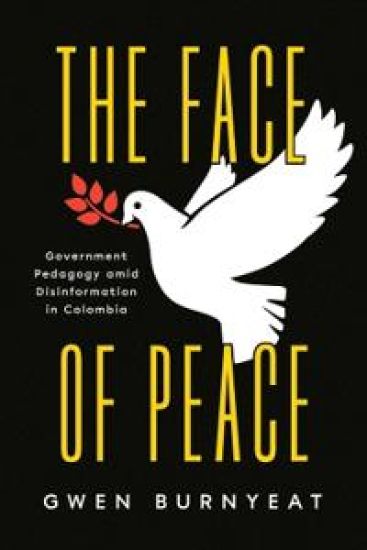
A multi-scale ethnography of government pedagogy in Colombia and its impact on peace. Colombia’s 2016 peace agreement with the FARC guerrillas sought to end fifty years of war and won President Juan Manuel Santos the Nobel Peace Prize. Yet Colombian society rejected it in a polarizing referendum, amid an emotive disinformation campaign. Gwen Burnyeat joined the Office of the High Commissioner for Peace, the government institution responsible for peace negotiations, to observe and participate in an innovative “peace pedagogy” strategy to explain the agreement to Colombian society. Burnyeat’s multi-scale ethnography reveals the challenges government officials experienced communicating with skeptical audiences and translating the peace process for public opinion. She argues that the fatal flaw in the peace process lay in government-society relations, enmeshed in culturally liberal logics and shaped by the politics of international donors. The Face of Peace offers the Colombian case as a mirror to the global crisis of liberalism, shattering the fantasy of rationality that haunts liberal responses to “post-truth” politics.
A multi-scale ethnography of government pedagogy in Colombia and its impact on peace. Colombia’s 2016 peace agreement with the FARC guerrillas sought to end fifty years of war and won President Juan Manuel Santos the Nobel Peace Prize. Yet Colombian society rejected it in a polarizing referendum, amid an emotive disinformation campaign. Gwen Burnyeat joined the Office of the High Commissioner for Peace, the government institution responsible for peace negotiations, to observe and participate in an innovative “peace pedagogy” strategy to explain the agreement to Colombian society. Burnyeat’s multi-scale ethnography reveals the challenges government officials experienced communicating with skeptical audiences and translating the peace process for public opinion. She argues that the fatal flaw in the peace process lay in government-society relations, enmeshed in culturally liberal logics and shaped by the politics of international donors. The Face of Peace offers the Colombian case as a mirror to the global crisis of liberalism, shattering the fantasy of rationality that haunts liberal responses to “post-truth” politics.
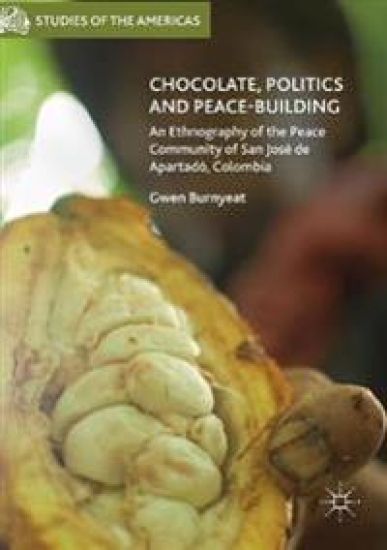
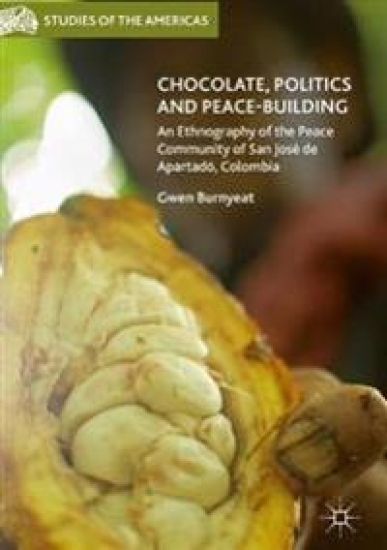
This book tells the story of the Peace Community of San José de Apartadó, an emblematic grassroots social movement of peasant farmers, who unusually declared themselves ‘neutral’ to Colombia’s internal armed conflict, in the north-west region of Urabá. It reveals two core narratives in the Community’s collective identity, which Burnyeat calls the ‘radical’ and the ‘organic’ narratives. These refer to the historically-constituted interpretative frameworks according to which they perceive respectively the Colombian state, and their relationship with their natural and social environments. Together, these two narratives form an ‘Alternative Community’ collective identity, comprising a distinctive conception of grassroots peace-building. This study, centered on the Community’s socio-economic cacao-farming project, offers an innovative way of approaching victims’ organizations and social movements through critical, post-modern politics and anthropology. It will become essential reading toLatin American ethnographers and historians, and all interested in conflict resolution and transitional justice. Read the author's blog drawing on the book here: http://blogs.lse.ac.uk/latamcaribbean/2018/06/07/colombias-unsung-heroes/
This book tells the story of the Peace Community of San José de Apartadó, an emblematic grassroots social movement of peasant farmers, who unusually declared themselves ‘neutral’ to Colombia’s internal armed conflict, in the north-west region of Urabá. It reveals two core narratives in the Community’s collective identity, which Burnyeat calls the ‘radical’ and the ‘organic’ narratives. These refer to the historically-constituted interpretative frameworks according to which they perceive respectively the Colombian state, and their relationship with their natural and social environments. Together, these two narratives form an ‘Alternative Community’ collective identity, comprising a distinctive conception of grassroots peace-building. This study, centered on the Community’s socio-economic cacao-farming project, offers an innovative way of approaching victims’ organizations and social movements through critical, post-modern politics and anthropology. It will become essential reading toLatin American ethnographers and historians, and all interested in conflict resolution and transitional justice. Read the author's blog drawing on the book here: http://blogs.lse.ac.uk/latamcaribbean/2018/06/07/colombias-unsung-heroes/