Kirjojen hintavertailu – 12 903 724 kirjaa ja 27 kauppaa

Kirjailija

Gwen Robinson

Kirjat ja teokset yhdessä paikassa: 5 kirjaa, julkaisuja vuosilta 2009–2026, suosituimpiin kuuluu Restorative Justice in Practice. Vertaile teosten hintoja ja tarkista saatavuus suomalaisista kirjakaupoista.

5 kirjaa

Kirjojen julkaisuvuodet: 2009–2026.

Devolving Probation Services

Devolving Probation Services

Matthew Millings; Lol Burke; Gwen Robinson

TAYLOR FRANCIS LTD
2026
sidottu
The role of the private sector in managing and delivering criminal justice services is not a new phenomenon and the criminal justice field is just one of a number of public and social policy fields which have increasingly been opened up to the market. Research has shown that these transitions do not follow a uniform pattern, or adhere to an accepted blueprint. Drawing on a rich original data set of observational research and interviews, this book captures a distinctive period of profound change in the devolution of the probation service in England and Wales and constructs a narrative of the transition process. It explores the impact of privatization on workers and their identities, in their move from public service to private sector employment. It explores occupational cultures and loyalties, the speed of processes of transition and leadership approaches to driving change. The books argues that the way in which workers experience and manage these transitions tell us a great deal about the prospects for retaining (formerly) public sector staff within fields that are increasingly being subject to private sector influence.
Restorative Justice in Practice

Restorative Justice in Practice

Joanna Shapland; Gwen Robinson; Angela Sorsby

Willan Publishing
2011
nidottu
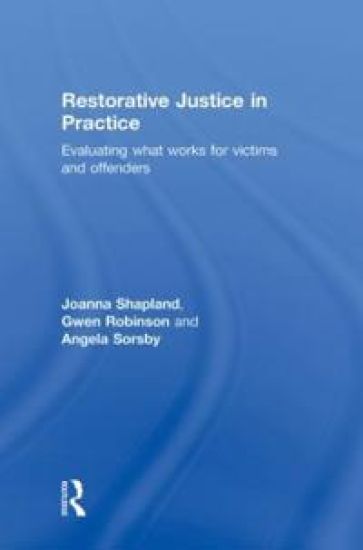
Restorative justice has made significant progress in recent years and now plays an increasingly important role in and alongside the criminal justice systems of a number of countries in different parts of the world. In many cases, however, successes and failures, strengths and weaknesses have not been evaluated sufficiently systematically and comprehensively, and it has been difficult to gain an accurate picture of its implementation and the lessons to be drawn from this. Restorative Justice in Practice addresses this need, analyzing the results of the implementation of three restorative justice schemes in England and Wales in the largest and most complete trial of restorative justice with adult offenders worldwide. It aims to bring out the practicalities of setting up and running restorative justice schemes in connection with criminal justice, the costs of doing so and the key professional and ethical issues involved. At the same time the book situates these findings within the growing international academic and policy debates about restorative justice, addressing a number of key issues for criminal justice and penology, including: how far victim expectations of justice are and can be met by restorative justice aligned with criminal justicewhether ‘community’ is involved in restorative justice for adult offenders and how this relates to social capitalhow far restorative justice events relate to processes of desistance (giving up crime), promote reductions in reoffending and link to resettlementwhat stages of criminal justice may be most suitable for restorative justice and how this relates to victim and offender needsthe usefulness of conferencing and mediation as forms of restorative justice with adults. Restorative Justice in Practice will be essential reading for both students and practitioners, and a key contribution to the restorative justice debate.
Restorative Justice in Practice

Restorative Justice in Practice

Joanna Shapland; Gwen Robinson; Angela Sorsby

Willan Publishing
2011
sidottu
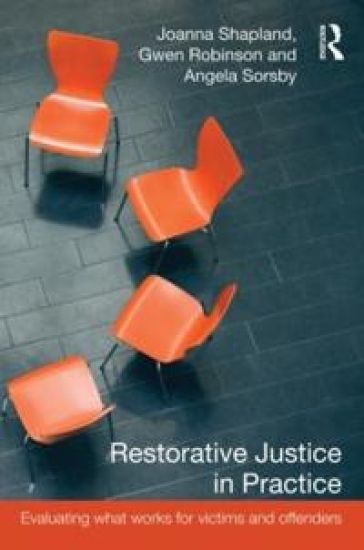
Restorative justice has made significant progress in recent years and now plays an increasingly important role in and alongside the criminal justice systems of a number of countries in different parts of the world. In many cases, however, successes and failures, strengths and weaknesses have not been evaluated sufficiently systematically and comprehensively, and it has been difficult to gain an accurate picture of its implementation and the lessons to be drawn from this. Restorative Justice in Practice addresses this need, analyzing the results of the implementation of three restorative justice schemes in England and Wales in the largest and most complete trial of restorative justice with adult offenders worldwide. It aims to bring out the practicalities of setting up and running restorative justice schemes in connection with criminal justice, the costs of doing so and the key professional and ethical issues involved. At the same time the book situates these findings within the growing international academic and policy debates about restorative justice, addressing a number of key issues for criminal justice and penology, including: how far victim expectations of justice are and can be met by restorative justice aligned with criminal justicewhether ‘community’ is involved in restorative justice for adult offenders and how this relates to social capitalhow far restorative justice events relate to processes of desistance (giving up crime), promote reductions in reoffending and link to resettlementwhat stages of criminal justice may be most suitable for restorative justice and how this relates to victim and offender needsthe usefulness of conferencing and mediation as forms of restorative justice with adults. Restorative Justice in Practice will be essential reading for both students and practitioners, and a key contribution to the restorative justice debate.
Offender Rehabilitation

Offender Rehabilitation

Gwen Robinson; Iain Crow

SAGE Publications Inc
2009
sidottu
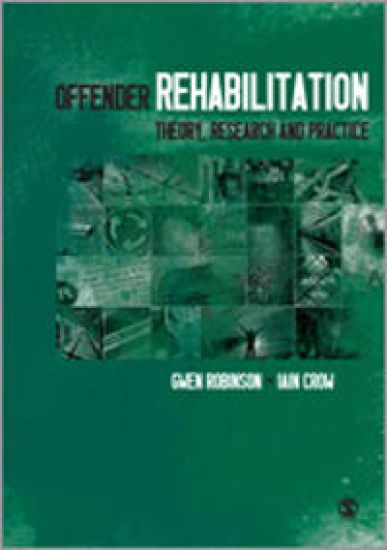
'Robinson and Crow have achieved the seemingly impossible: a book about rehabilitation that transcends the "medical model", that is original and contemporary yet grounded in a sophisticated history, and most of all that is fun to read. It will become a new classic text in a field that has been crying out for one' - Professor Shadd Maruna, Queen's University, Belfast 'In an age where there is much public and political confusion about many criminal justice matters, this book brings considerable clarity to the idea of rehabilitation, its theoretical and historical roots, and contemporary practical application. This is an accessible, lively, and critical account of a concept which is central to the shape of the criminal justice system in pursuance of something that will "work" to reduce reoffending. "Rehabilitation" seems to go in and out of fashion depending on the politics of the day, but the careful and thorough examination of the different contexts in which it operates and competing perspectives on its potential offered here highlights its enduring qualities. This is a fascinating and engaging book by two established and "real world" scholars which will serve students and policy makers alike in the fields of criminal justice and social policy' - Loraine Gelsthorpe, Reader in Criminology and Criminal Justice, Institute of Criminology, University of Cambridge This comprehensive text explains all the key themes in the development and practice of offender rehabilitation. It explores how the issue fits within its wider social and political contexts, giving an insight into its current and future relevance to criminal justice. The book covers the full range of rehabilitative approaches, exploring how criminal justice responses have been influenced by trends such as the treatment model, 'What Works?', desistance, risk and public protection, and changes in social policy. It offers the following essential features: " theoretical grounding - providing students with all the essential background they need in order to fully understand the subject " historical context - enabling the reader to see how ideas, policies and practices have developed over time " research focus - introducing the reader to questions about how rehabilitative approaches have been evaluated and debates about 'what works' for particular groups of offenders, such as sexual offenders and drug misusers " study questions and further reading - giving students the tools both to revise and to expand their knowledge Offender Rehabilitation both advances thinking about the notion of rehabilitation, and ensures that students of crime and justice can keep abreast of the most recent developments in this area.
Offender Rehabilitation

Offender Rehabilitation

Gwen Robinson; Iain Crow

SAGE Publications Inc
2009
nidottu
'Robinson and Crow have achieved the seemingly impossible: a book about rehabilitation that transcends the "medical model", that is original and contemporary yet grounded in a sophisticated history, and most of all that is fun to read. It will become a new classic text in a field that has been crying out for one' - Professor Shadd Maruna, Queen's University, Belfast 'In an age where there is much public and political confusion about many criminal justice matters, this book brings considerable clarity to the idea of rehabilitation, its theoretical and historical roots, and contemporary practical application. This is an accessible, lively, and critical account of a concept which is central to the shape of the criminal justice system in pursuance of something that will "work" to reduce reoffending. "Rehabilitation" seems to go in and out of fashion depending on the politics of the day, but the careful and thorough examination of the different contexts in which it operates and competing perspectives on its potential offered here highlights its enduring qualities. This is a fascinating and engaging book by two established and "real world" scholars which will serve students and policy makers alike in the fields of criminal justice and social policy' - Loraine Gelsthorpe, Reader in Criminology and Criminal Justice, Institute of Criminology, University of Cambridge This comprehensive text explains all the key themes in the development and practice of offender rehabilitation. It explores how the issue fits within its wider social and political contexts, giving an insight into its current and future relevance to criminal justice. The book covers the full range of rehabilitative approaches, exploring how criminal justice responses have been influenced by trends such as the treatment model, 'What Works?', desistance, risk and public protection, and changes in social policy. It offers the following essential features: " theoretical grounding - providing students with all the essential background they need in order to fully understand the subject " historical context - enabling the reader to see how ideas, policies and practices have developed over time " research focus - introducing the reader to questions about how rehabilitative approaches have been evaluated and debates about 'what works' for particular groups of offenders, such as sexual offenders and drug misusers " study questions and further reading - giving students the tools both to revise and to expand their knowledge Offender Rehabilitation both advances thinking about the notion of rehabilitation, and ensures that students of crime and justice can keep abreast of the most recent developments in this area.