Kirjojen hintavertailu – 12 903 724 kirjaa ja 27 kauppaa

Kirjailija

Gwendolyn Thompson McMillon

Kirjat ja teokset yhdessä paikassa: 4 kirjaa, julkaisuja vuosilta 2012–2022, suosituimpiin kuuluu Affirming Black Students' Lives and Literacies. Vertaile teosten hintoja ja tarkista saatavuus suomalaisista kirjakaupoista.

4 kirjaa

Kirjojen julkaisuvuodet: 2012–2022.

Affirming Black Students' Lives and Literacies

Affirming Black Students' Lives and Literacies

Arlette Ingram Willis; Gwendolyn Thompson McMillon; Patriann Smith

TEACHERS' COLLEGE PRESS
2022
sidottu
Drawing on the authors’ experiences as Black parents, researchers, teachers, and teacher educators, this timely book presents a multipronged approach to affirming Black lives and literacies. The authors believe change is needed—not within Black children—but in the way they are perceived and educated, particularly in reading, writing, and critical thinking across grade levels. To inform literacy teachers and school leaders, the authors provide a conceptual framework for reimagining literacy instruction based on Black philosophical and theoretical foundations, historical background, literacy research, and authentic experiences of Black students. This important book includes counternarratives about the lives of Black learners, research conducted by Black scholars among Black students, examples of approaches to literacy with Black children that are making a difference, conversations among literacy researchers that move beyond academia; and a model for engaging all students in literacy. Affirming Black Students’ Lives and Literacies advocates for adopting a standard of care that will improve and support literacy achievement among today’s Black students by rejecting deficit presumptions and embracing the fullness of these students’ strengths. Book Features:A counternarrative of Black literacy history, lives, and learners. Narrative examples of Black literacy scholarship, by Black scholars who embrace their faith-walk as an integral part of their holistic approach to literacy teaching and learning. Discussion questions to spur conversations among school administrators, parents/caregivers, politicians, reading researchers, teacher educators, and classroom teachers. An array of extant Black scholarship that should inform literacy praxis and research. A conceptual framework, CARE, that is applicable for all learners with a focus on Black literacy learners.

Affirming Black Students' Lives and Literacies

Affirming Black Students' Lives and Literacies

Arlette Ingram Willis; Gwendolyn Thompson McMillon; Patriann Smith

TEACHERS' COLLEGE PRESS
2022
nidottu
Drawing on the authors’ experiences as Black parents, researchers, teachers, and teacher educators, this timely book presents a multipronged approach to affirming Black lives and literacies. The authors believe change is needed—not within Black children—but in the way they are perceived and educated, particularly in reading, writing, and critical thinking across grade levels. To inform literacy teachers and school leaders, the authors provide a conceptual framework for reimagining literacy instruction based on Black philosophical and theoretical foundations, historical background, literacy research, and authentic experiences of Black students. This important book includes counternarratives about the lives of Black learners, research conducted by Black scholars among Black students, examples of approaches to literacy with Black children that are making a difference, conversations among literacy researchers that move beyond academia; and a model for engaging all students in literacy. Affirming Black Students’ Lives and Literacies advocates for adopting a standard of care that will improve and support literacy achievement among today’s Black students by rejecting deficit presumptions and embracing the fullness of these students’ strengths. Book Features:A counternarrative of Black literacy history, lives, and learners. Narrative examples of Black literacy scholarship, by Black scholars who embrace their faith-walk as an integral part of their holistic approach to literacy teaching and learning. Discussion questions to spur conversations among school administrators, parents/caregivers, politicians, reading researchers, teacher educators, and classroom teachers. An array of extant Black scholarship that should inform literacy praxis and research. A conceptual framework, CARE, that is applicable for all learners with a focus on Black literacy learners.
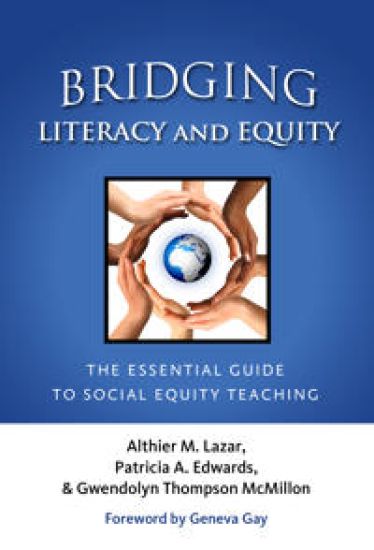
Bridging Literacy and Equity

Bridging Literacy and Equity

Althier M. Lazar; Patricia A. Edwards; Gwendolyn Thompson McMillon

Teachers' College Press
2012
sidottu
Extraordinary K-12 teachers show us what social equity literacy teaching looks like and how it advances children's achievement. Chapters identify six key dimensions of social equity teaching that can help teachers see their students' potential and create conditions that will support their literacy development. Serving students well depends on understanding relationships between race, class, culture, and literacy; the complexity and significance of culture; and the culturally situated nature of literacy. It also requires knowledge of culturally responsive practices, such as collaborating with and learning from caregivers, using cultural referents, enacting critical and transformative literacy practices, and seeing the capacities of English Language Learners and children who speak African American Language.
Bridging Literacy and Equity

Bridging Literacy and Equity

Althier M. Lazar; Patricia A. Edwards; Gwendolyn Thompson McMillon

Teachers' College Press
2012
nidottu
Extraordinary K-12 teachers show us what social equity literacy teaching looks like and how it advances children's achievement. Chapters identify six key dimensions of social equity teaching that can help teachers see their students' potential and create conditions that will support their literacy development. Serving students well depends on understanding relationships between race, class, culture, and literacy; the complexity and significance of culture; and the culturally situated nature of literacy. It also requires knowledge of culturally responsive practices, such as collaborating with and learning from caregivers, using cultural referents, enacting critical and transformative literacy practices, and seeing the capacities of English Language Learners and children who speak African American Language.