Kirjojen hintavertailu – 12 903 724 kirjaa ja 27 kauppaa

Kirjailija

Gyanendra Pandey

Kirjat ja teokset yhdessä paikassa: 16 kirjaa, julkaisuja vuosilta 2001–2025, suosituimpiin kuuluu ESTADO DE SAÚDE ORAL EM PACIENTES COM DIABETES TIPO 2. Vertaile teosten hintoja ja tarkista saatavuus suomalaisista kirjakaupoista.

16 kirjaa

Kirjojen julkaisuvuodet: 2001–2025.

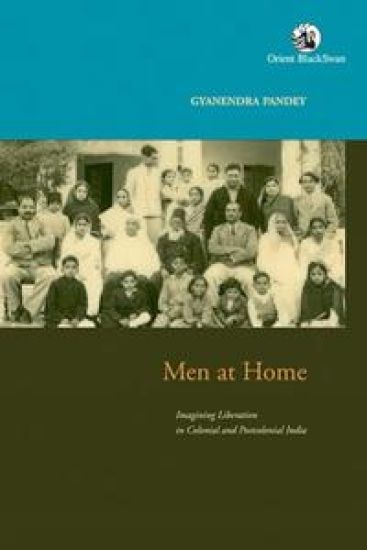
Men at Home

Men at Home

Gyanendra Pandey

DUKE UNIVERSITY PRESS
2025
pokkari
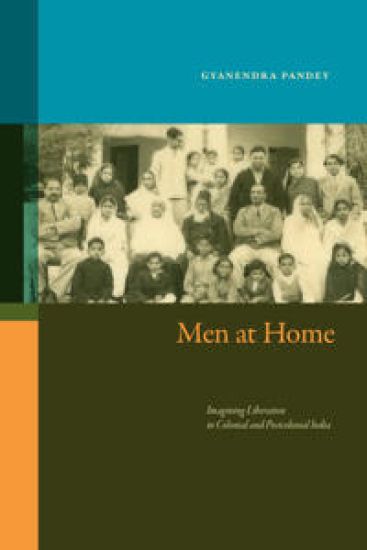
In Men at Home, Gyanendra Pandey offers a detailed exploration of men’s comportment and conduct in the home and the implications of their ambiguous commitment to this critical part of their lives. The author draws on a wealth of archival materials-autobiographies, memoirs, fiction, and ethnographies-to situate Indian men firmly in the domestic world, underlining their dependence on the family and home. He investigates how men negotiate marriage, intimacy, and conjugality and focuses the effects of the humiliating and constant assertion of gender, caste, and class power in familial interactions. To uncover the nuances of these relationships, Pandey attends to the domestic commitments of upper-, middle-, and lower-class men across religion and caste. He considers issues of honor and shame, rights and responsibilities, citizenship and belonging through this exploration of how men across the subcontinent understand themselves in and beyond their domestic relationships. As much as it is a book about masculinity and conjugality, this is a book about Indian modernity, nationalism, and society as seen from the location of men in the home.
Men at Home

Men at Home

Gyanendra Pandey

DUKE UNIVERSITY PRESS
2025
sidottu
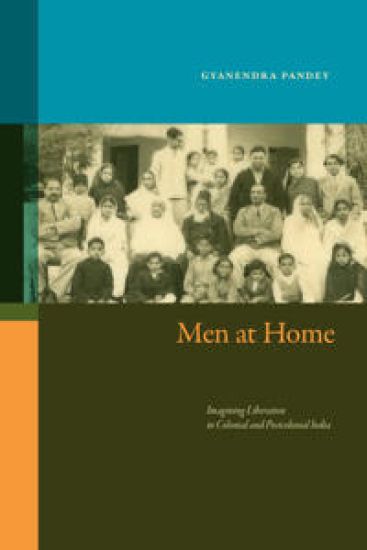
In Men at Home, Gyanendra Pandey offers a detailed exploration of men’s comportment and conduct in the home and the implications of their ambiguous commitment to this critical part of their lives. The author draws on a wealth of archival materials-autobiographies, memoirs, fiction, and ethnographies-to situate Indian men firmly in the domestic world, underlining their dependence on the family and home. He investigates how men negotiate marriage, intimacy, and conjugality and focuses the effects of the humiliating and constant assertion of gender, caste, and class power in familial interactions. To uncover the nuances of these relationships, Pandey attends to the domestic commitments of upper-, middle-, and lower-class men across religion and caste. He considers issues of honor and shame, rights and responsibilities, citizenship and belonging through this exploration of how men across the subcontinent understand themselves in and beyond their domestic relationships. As much as it is a book about masculinity and conjugality, this is a book about Indian modernity, nationalism, and society as seen from the location of men in the home.
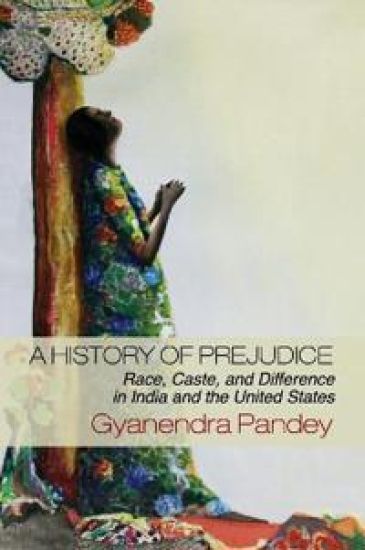
A History of Prejudice

A History of Prejudice

Gyanendra Pandey

Cambridge University Press
2013
pokkari
This is a book about prejudice and democracy, and the prejudice of democracy. In comparing the historical struggles of two geographically disparate populations - Indian Dalits (once known as Untouchables) and African Americans - Gyanendra Pandey, the leading subaltern historian, examines the multiple dimensions of prejudice in two of the world's leading democracies. The juxtaposition of two very different locations and histories, and within each of them of varying public and private narratives of struggle, allows for an uncommon analysis of the limits of citizenship in modern societies and states. Pandey, with his characteristic delicacy, probes the histories of his protagonists to uncover a shadowy world where intolerance and discrimination are part of both public and private lives. This unusual and sobering book is revelatory in its exploration of the contradictory history of promise and denial that is common to the official narratives of nations such as India and the United States and the ideologies of many opposition movements.
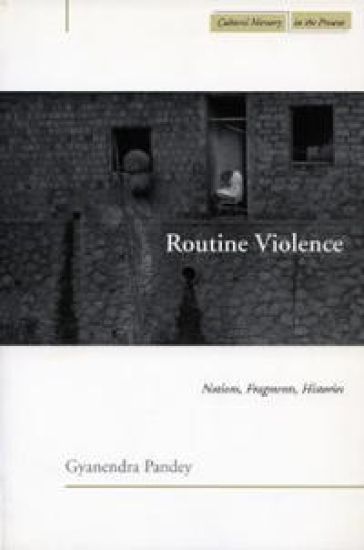
Routine Violence

Routine Violence

Gyanendra Pandey

Stanford University Press
2005
pokkari
Much has been written about the "extraordinary" violence of recent history, its brutality, and the impossibility of describing it. Routine Violence focuses on the violence of much more routine political practices—the drawing up of political categories and the writing of national histories. The book takes its material from the history of twentieth-century India: the land of Gandhi and of effective nonviolent resistance to British colonial rule. It asks questions about how particular histories are claimed as the "real" histories of a nation; how the "sacred" nation, and its ("mainstream") culture and politics, come to be constructed; and how a certain inducement to violence, and a collective amnesia regarding that violence, follow from all of this. This is the first book to engage in a sustained investigation of the routine political violence of our times. No sales in India, Bhutan, Bangladesh, Nepal, Sri Lanka, and Pakistan.
Routine Violence

Routine Violence

Gyanendra Pandey

Stanford University Press
2005
sidottu
Much has been written about the "extraordinary" violence of recent history, its brutality, and the impossibility of describing it. Routine Violence focuses on the violence of much more routine political practices—the drawing up of political categories and the writing of national histories. The book takes its material from the history of twentieth-century India: the land of Gandhi and of effective nonviolent resistance to British colonial rule. It asks questions about how particular histories are claimed as the "real" histories of a nation; how the "sacred" nation, and its ("mainstream") culture and politics, come to be constructed; and how a certain inducement to violence, and a collective amnesia regarding that violence, follow from all of this. This is the first book to engage in a sustained investigation of the routine political violence of our times. No sales in India, Bhutan, Bangladesh, Nepal, Sri Lanka, and Pakistan.
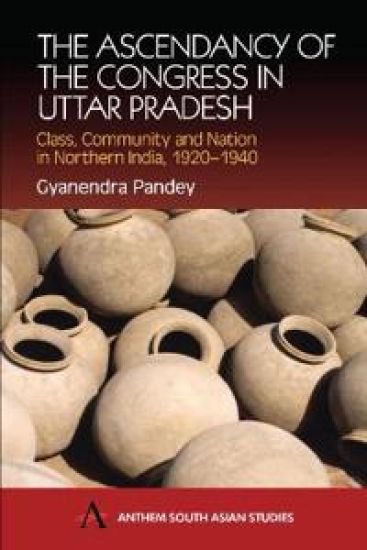
The Ascendancy of the Congress in Uttar Pradesh
A revised edition of the classic monograph, 'The Ascendancy of the Congress in Uttar Pradesh' investigates the social contradictions, class forces, and efforts at political organization and mobilization that lay behind the emergence of a powerful nationalist movement in Uttar Pradesh in the late 1920s and early 1930s. It also considers the concurrent emergence of Hindu–Muslim differences as a major factor affecting nationalist politics and the anti-colonial struggle in India.
The Ascendancy of the Congress in Uttar Pradesh
A revised edition of the classic monograph, 'The Ascendancy of the Congress in Uttar Pradesh' investigates the social contradictions, class forces, and efforts at political organization and mobilization that lay behind the emergence of a powerful nationalist movement in Uttar Pradesh in the late 1920s and early 1930s. It also considers the concurrent emergence of Hindu–Muslim differences as a major factor affecting nationalist politics and the anti-colonial struggle in India.
Remembering Partition

Remembering Partition

Gyanendra Pandey

Cambridge University Press
2001
pokkari
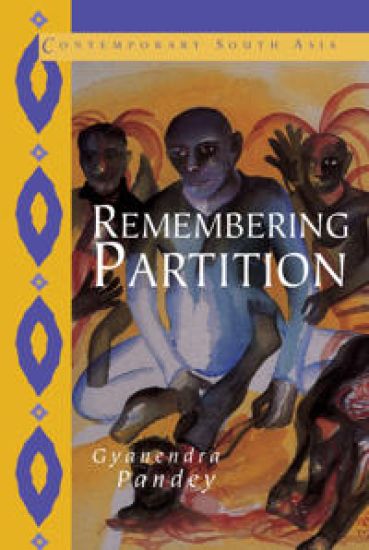
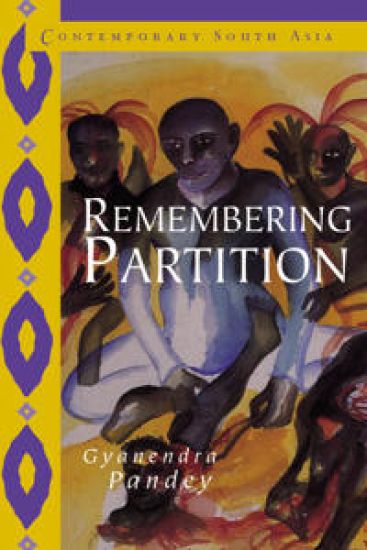
Through an investigation of the violence that marked the partition of British India in 1947, this book analyses questions of history and memory, the nationalisation of populations and their pasts, and the ways in which violent events are remembered (or forgotten) in order to ensure the unity of the collective subject - community or nation. Stressing the continuous entanglement of ‘event’ and ‘interpretation’, the author emphasises both the enormity of the violence of 1947 and its shifting meanings and contours. The book provides a sustained critique of the procedures of history-writing and nationalist myth-making on the question of violence, and examines how local forms of sociality are constituted and reconstituted, by the experience and representation of violent events. It concludes with a comment on the different kinds of political community that may still be imagined even in the wake of Partition and events like it.
Remembering Partition

Remembering Partition

Gyanendra Pandey

Cambridge University Press
2001
sidottu
Through an investigation of the violence that marked the partition of British India in 1947, this book analyses questions of history and memory, the nationalisation of populations and their pasts, and the ways in which violent events are remembered (or forgotten) in order to ensure the unity of the collective subject - community or nation. Stressing the continuous entanglement of 'event' and 'interpretation', the author emphasises both the enormity of the violence of 1947 and its shifting meanings and contours. The book provides a sustained critique of the procedures of history-writing and nationalist myth-making on the question of violence, and examines how local forms of sociality are constituted and reconstituted, by the experience and representation of violent events. It concludes with a comment on the different kinds of political community that may still be imagined even in the wake of Partition and events like it.