Kirjojen hintavertailu – 12 903 725 kirjaa ja 27 kauppaa

Kirjailija

Gyani Datt Sharma

Kirjat ja teokset yhdessä paikassa: 6 kirjaa, julkaisuja vuosilta 2018–2023, suosituimpiin kuuluu Gestión Integrada de Nutrientes en Soja bajo Vertisoles. Vertaile teosten hintoja ja tarkista saatavuus suomalaisista kirjakaupoista.

6 kirjaa

Kirjojen julkaisuvuodet: 2018–2023.

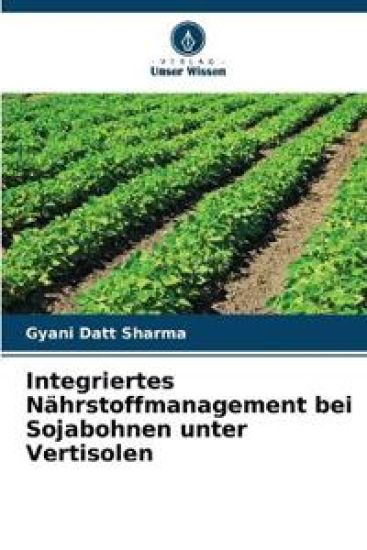
Integriertes Nährstoffmanagement bei Sojabohnen unter Vertisolen
In der heutigen Zeit ist der intensive Pflanzenbau zwar sehr produktiv, aber er h ngt weitgehend vom Einsatz anorganischer und organischer chemischer D ngemittel ab. Ihr st ndiger Einsatz f hrt zu Umweltverschmutzung. Die Gesundheit des Bodens verschlechtert sich und der Boden wird anf llig f r Erosion durch Wind und Wasser. Der Einsatz von D ngemitteln, die nur ein oder zwei wesentliche Elemente enthalten, behindert die Aufnahme anderer N hrstoffe und f hrt zu einem erheblichen Ungleichgewicht in der N hrstoffversorgungskapazit t des Bodens. Die Sojabohne (Glycine max L. Merrill) ist eine wichtige H lsenfrucht, die als effizienter Produzent der beiden knappen N hrstoffressourcen Eiwei und l anerkannt ist, die nicht nur die Hauptbestandteile der Ern hrung der Vegetationsmassen sind, sondern auch ein Segen f r die Entwicklungsl nder. Sojabohnen sind eine ausgezeichnete Protein- und lquelle mit einem sehr hohen N hrwert, da sie 40-42 Prozent Protein und 20 Prozent l enthalten (Anonymous, 1992). Da die Sojabohne au erdem in der Lage ist, den atmosph rischen Stickstoff dank der symbiotischen stickstoffbindenden Bakterien in ihren Wurzeln im Boden zu binden, tr gt sie zu einer gro en Menge an Pflanzenresten und gebundenem Stickstoff auf dem Feld bei, was letztendlich die Bodenfruchtbarkeit verbessert.

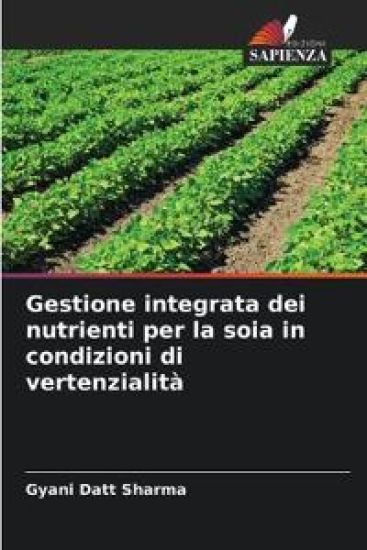
Gestione integrata dei nutrienti per la soia in condizioni di vertenzialità
Nell'era moderna il sistema di coltivazione intensiva altamente produttivo, ma dipende in larga misura dall'uso di fertilizzanti chimici inorganici e organici. Il loro uso continuo causa inquinamento ambientale. La salute del suolo si deteriora e il terreno diventa soggetto all'erosione da parte del vento e dell'acqua. L'uso di fertilizzanti contenenti uno o due elementi essenziali impedisce l'assorbimento di altri nutrienti e induce un notevole squilibrio nella capacit di approvvigionamento di nutrienti del suolo. La soia (Glycine max L. Merrill) una delle principali leguminose, riconosciuta come un'efficiente produttrice di due scarse risorse nutrizionali, ovvero le proteine e l'olio, che non sono solo i principali componenti della dieta della massa vegetale, ma anche una manna per i Paesi in via di sviluppo. La soia un'eccellente fonte di proteine e di olio con un valore nutrizionale molto elevato, poich contiene il 40-42% di proteine e il 20% di olio (Anonimo, 1992). Inoltre, grazie alla sua capacit di fissare l'azoto atmosferico nel terreno grazie ai batteri simbiotici azotofissatori presenti sulle sue radici, aggiunge un'enorme quantit di residui vegetali e azoto fissato nel campo, migliorando cos la fertilit del suolo.
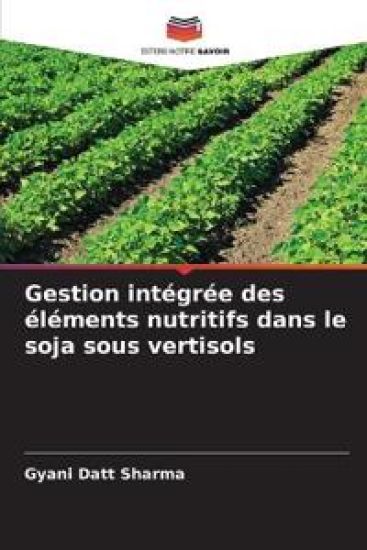
Gestion intégrée des éléments nutritifs dans le soja sous vertisols
l' re moderne, le syst me de culture intensive est tr s productif, mais il d pend largement de l'utilisation d'engrais chimiques inorganiques et organiques. Leur utilisation continue entra ne une pollution de l'environnement. La sant du sol se d t riore et le sol devient sujet l' rosion par le vent et l'eau. L'utilisation d'engrais contenant un ou deux l ments essentiels entrave l'absorption d'autres nutriments et induit un d s quilibre consid rable dans la capacit d'approvisionnement en nutriments du sol. Le soja (Glycine max L. Merrill) est une l gumineuse majeure, reconnue comme le producteur efficace de deux ressources nutritionnelles rares, savoir les prot ines et l'huile, qui sont non seulement les principaux composants du r gime alimentaire de la masse v g tale, mais aussi une aubaine pour les pays en d veloppement. Le soja est une excellente source de prot ines et d'huile avec une valeur nutritionnelle tr s lev e, puisqu'il contient 40-42% de prot ines et 20% d'huile (Anonyme, 1992). En raison de sa capacit fixer l'azote atmosph rique dans le sol gr ce aux bact ries symbiotiques fixatrices d'azote pr sentes sur ses racines, il ajoute une norme quantit de r sidus v g taux et d'azote fix dans le champ, ce qui am liore finalement la fertilit du sol.
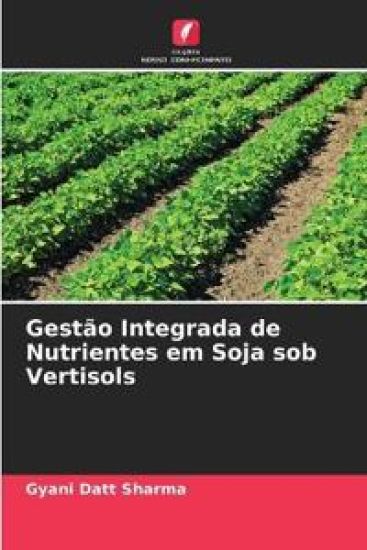
Gestão Integrada de Nutrientes em Soja sob Vertisols

Gestão Integrada de Nutrientes em Soja sob Vertisols

Gyani Datt Sharma

Edicoes Nosso Conhecimento
2023
pokkari
Na era moderna, o sistema de cultivo intensivo de culturas altamente produtivo mas depende em grande parte da utiliza o de fertilizantes qu micos inorg nicos e org nicos. A sua utiliza o cont nua causa polui o ambiental. A sa de do solo deteriora-se e o solo torna-se propenso eros o pelo vento e pela gua. A utiliza o de fertilizantes contendo um ou dois elementos essenciais impede a absor o de outros nutrientes e induz um desequil brio consider vel na capacidade de fornecimento de nutrientes do solo. A soja (Glycine max L. Merrill) uma cultura leguminosa importante, reconhecida como o produtor eficiente dos dois escassos recursos nutricionais, ou seja, as prote nas e o leo, que s o n o s os principais componentes da dieta da massa vegetal, mas tamb m uma vantagem para os pa ses em desenvolvimento. A soja uma excelente fonte de prote na e leo com um valor nutricional muito elevado, pois cont m 40-42 por cento de prote na e 20 por cento de leo (An nimo, 1992). Tamb m devido sua capacidade de fixar o azoto atmosf rico no solo em virtude das bact rias simbi ticas fixadoras de azoto nas suas ra zes, acrescenta uma enorme quantidade de res duos vegetais e azoto fixo no campo, o que acaba por melhorar a fertilidade do solo.
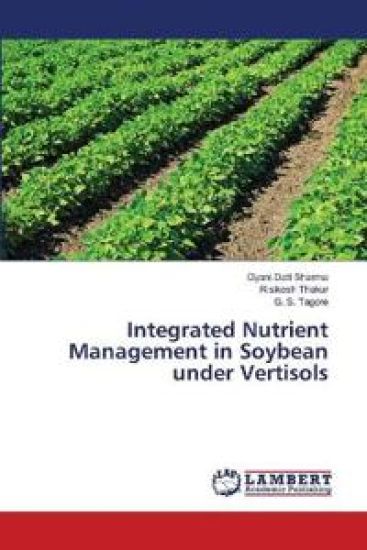
Integrated Nutrient Management in Soybean under Vertisols

Integrated Nutrient Management in Soybean under Vertisols

Gyani Datt Sharma; Risikesh Thakur; G S Tagore

LAP Lambert Academic Publishing
2018
pokkari
In the modern era intensive crop cultivation system is highly productive but it largely depends on the use of inorganic and organic chemical fertilizers. Their continuous use causes environmental pollution. Soil health gets deteriorated and the soil becomes prone to erosion by wind and water. Use of fertilizers containing one or two essential element impede the uptake of other nutrients and induce considerable imbalance in nutrient supply capacity of the soil. Soybean (Glycine max L. Merrill) is a major legume crop, recognized as the efficient producer of the two scarce nutritional resources i.e. the protein and oil which are not only the major components in the diet of vegetation mass but a boon to the developing countries as well. Soybean is an excellent source of protein and oil with a very high nutritional value as it contains 40-42 per cent protein and 20 per cent oil (Anonymous, 1992). Also due to its capacity to fix the atmospheric nitrogen in to the soil by virtue of the symbiotic nitrogen fixing bacteria on its roots, it adds a huge amount of plant residue and fixed nitrogen in the field which ultimately improves the soil fertility.