Kirjailija
György Dragomán
Kirjat ja teokset yhdessä paikassa: 9 kirjaa, julkaisuja vuosilta 2012–2023, suosituimpiin kuuluu Der Scheiterhaufen. Vertaile teosten hintoja ja tarkista saatavuus suomalaisista kirjakaupoista.
Nimi esiintyy myös muodoissa: Gyorgy Dragoman, György Dragoman
9 kirjaa
Kirjojen julkaisuvuodet: 2012–2023.
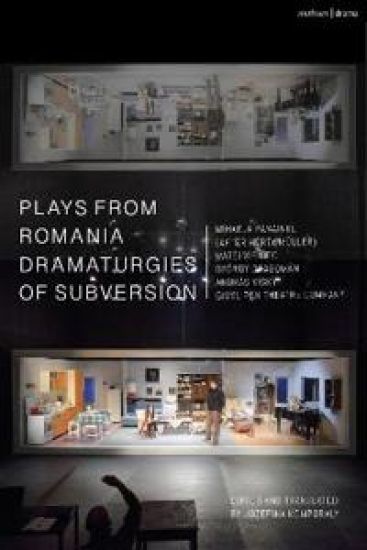
Plays from Romania: Dramaturgies of Subversion
Mihaela Panainte; Matéi Visniec; György Dragomán; András Visky
Methuen Drama
2021
sidottu
Plays from Romania: Dramaturgies of Subversion reflects the diversity of dramatic writing exploring the past and present of Romania, and takes stock thirty years after the collapse of communism. In addition to plays originally written in Romanian, the collection includes work by German, Hungarian and Roma authors born and/or working in Romania, and brings together plays written during the communist period and its aftermath. The plays included in the collection, edited and translated by Jozefina Komporaly and fully published for the first time in English, demonstrate broad variety in terms of form and content – ranging from family dramas to allegories, and absurdist experiments to modular texts rooted in open dramaturgy – and are the work of both individual playwrights and the results of collective creation. These works share a preoccupation with critically reflecting urgent concerns rooted in Romanian realities, and are notable dramaturgical experiments that push the boundaries of the genre. In addition, these plays also seek novel ways to examine universal experiences of the human condition, such as love, loss, abuse, betrayal, grief, violence, manipulation and despair. This unique anthology celebrates the renewed vitality and variety of writing for the stage after 1990, and endeavours to place Romanian theatre in a forward-looking transnational context. Lowlands ('Niederungen') by Herta Müller, adapted for the stage by Mihaela Panainte (German) This stage adaptation is based on a volume of short stories by Herta Müller written in German in 1982 and focuses on the perspective of a child narrator, by way of a series of episodes that centre on mundane aspects of daily life in a remote village against the backdrop of the oppressive atmosphere of mid-twentieth century Romania. The Spectator Sentenced to Death ('Spectatorul condamnat la moarte') by Matéi Visniec (Romanian)This play is a bitter parody of the Stalinist justice system, which totally disregards the fundamental question whether the accused is actually guilty or not. The Passport ('Kalucsni') by György Dragomán (Hungarian) This play is set pre-1989 in a typical small town in the Transylvanian province of Romania, in which the lives of the various social classes, and the fate of the persecuted and that of those who persecute are closely intertwined. The Man Who Had His Inner Evil Removed ('Omul din care a fost extras raul') by Matéi Visniec (Romanian)This topical play is a sharp reflection on the voluntary servitude in which we place ourselves, often unawares, in conditions of our contemporary consumer culture, and a fierce critique of increasingly dominant tendencies to abandon moral criteria in political life. Stories of the Body (Artemisia, Eva, Lina, Teresa) ('A test történetei') by András Visky (Hungarian) The cycle Stories of the Body comprises four plays based on real life stories as experienced by remarkable women (including Mother Teresa and Italian Renaissance painter Artemisia Gentileschi), and are connected to various cities including Budapest, Cluj/Kolozsvár, Kolkata and Rome, from the 17th to the 21st century. Sexodrom by Giuvlipen Theatre Company (Mihaela Dragan, Antonella Lerca Duda, Nicoleta Ghita, Zita Moldovan, Bety Pisica, Oana Rusu, Raj Alexandru Udrea), based on a concept by Bogdan Georgescu.(Roma) This is a work of collective creation by members of the Roma Theatre company Giuvlipen, aiming to bring to public attention taboo subjects, to enhance the visibility of Roma performers and to experiment with new forms of theatre-making in a Romanian context.
Plays from Romania: Dramaturgies of Subversion
Mihaela Panainte; Matéi Visniec; György Dragomán; András Visky
Methuen Drama
2021
nidottu
Plays from Romania: Dramaturgies of Subversion reflects the diversity of dramatic writing exploring the past and present of Romania, and takes stock thirty years after the collapse of communism. In addition to plays originally written in Romanian, the collection includes work by German, Hungarian and Roma authors born and/or working in Romania, and brings together plays written during the communist period and its aftermath. The plays included in the collection, edited and translated by Jozefina Komporaly and fully published for the first time in English, demonstrate broad variety in terms of form and content – ranging from family dramas to allegories, and absurdist experiments to modular texts rooted in open dramaturgy – and are the work of both individual playwrights and the results of collective creation. These works share a preoccupation with critically reflecting urgent concerns rooted in Romanian realities, and are notable dramaturgical experiments that push the boundaries of the genre. In addition, these plays also seek novel ways to examine universal experiences of the human condition, such as love, loss, abuse, betrayal, grief, violence, manipulation and despair. This unique anthology celebrates the renewed vitality and variety of writing for the stage after 1990, and endeavours to place Romanian theatre in a forward-looking transnational context. Lowlands ('Niederungen') by Herta Müller, adapted for the stage by Mihaela Panainte (German) This stage adaptation is based on a volume of short stories by Herta Müller written in German in 1982 and focuses on the perspective of a child narrator, by way of a series of episodes that centre on mundane aspects of daily life in a remote village against the backdrop of the oppressive atmosphere of mid-twentieth century Romania. The Spectator Sentenced to Death ('Spectatorul condamnat la moarte') by Matéi Visniec (Romanian)This play is a bitter parody of the Stalinist justice system, which totally disregards the fundamental question whether the accused is actually guilty or not. The Passport ('Kalucsni') by György Dragomán (Hungarian) This play is set pre-1989 in a typical small town in the Transylvanian province of Romania, in which the lives of the various social classes, and the fate of the persecuted and that of those who persecute are closely intertwined. The Man Who Had His Inner Evil Removed ('Omul din care a fost extras raul') by Matéi Visniec (Romanian)This topical play is a sharp reflection on the voluntary servitude in which we place ourselves, often unawares, in conditions of our contemporary consumer culture, and a fierce critique of increasingly dominant tendencies to abandon moral criteria in political life. Stories of the Body (Artemisia, Eva, Lina, Teresa) ('A test történetei') by András Visky (Hungarian) The cycle Stories of the Body comprises four plays based on real life stories as experienced by remarkable women (including Mother Teresa and Italian Renaissance painter Artemisia Gentileschi), and are connected to various cities including Budapest, Cluj/Kolozsvár, Kolkata and Rome, from the 17th to the 21st century. Sexodrom by Giuvlipen Theatre Company (Mihaela Dragan, Antonella Lerca Duda, Nicoleta Ghita, Zita Moldovan, Bety Pisica, Oana Rusu, Raj Alexandru Udrea), based on a concept by Bogdan Georgescu.(Roma) This is a work of collective creation by members of the Roma Theatre company Giuvlipen, aiming to bring to public attention taboo subjects, to enhance the visibility of Roma performers and to experiment with new forms of theatre-making in a Romanian context.
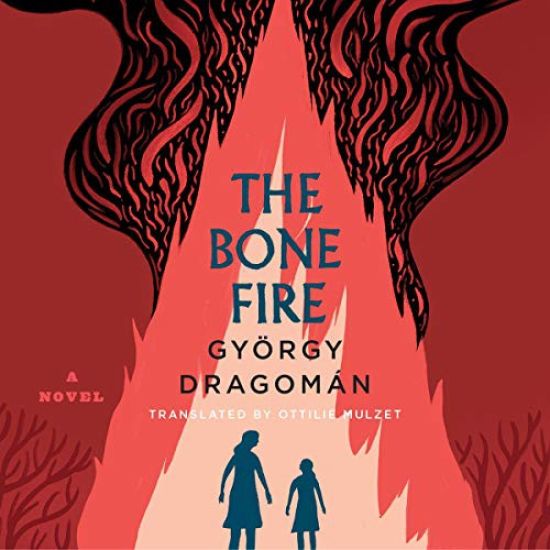
A New York Times Editors' Choice Anything can happen in The Bone Fire--and everything does. Dragom n puts us in the middle of our most wondrous and terrifying childhood fairytales, somehow unhazing their dreaminess and replicating their electrifying uncertainty all at once.--T a Obreht, bestselling author of Inland and The Tiger's Wife Dragom n's] telling is not just magic, but enchantment.--Rebecca Makkai, New York Times Book Review From an award-winning and internationally acclaimed European writer: A chilling and suspenseful novel set in the wake of a violent revolution about a young girl rescued from an orphanage by an otherworldly grandmother she's never met Thirteen-year-old Emma grows up under an Eastern European dictatorship where oppression seems eternal. When her dissident parents die in a car accident, she's taken to an orphanage, only to be adopted soon after by a grandmother she has never met. While her homeland is shattered by a violent revolution, Emma--like a witch's apprentice--comes to learn the ways of her new grandmother, who can tell fortunes from coffee dregs, cause and heal pain at will, and shares her home with the ghost of her husband. But this is not the main reason her grandmother is treated with suspicion and contempt by most people in town. They suspect her or her husband of having been involved in the disappearance of top secret government files. As Emma learns her family history, she begins to see that, for her grandparents, the alternate reality shaped by magic was their only form of freedom. The Bone Fire is a political Gothic, carried along by the menace and promise of a fairy tale.
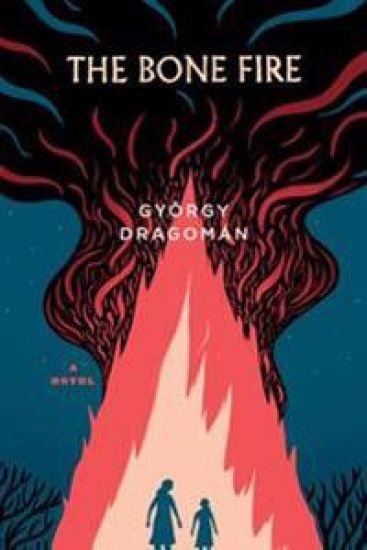
A New York Times Editors' Choice "Anything can happen in The Bone Fire--and everything does. Dragom n puts us in the middle of our most wondrous and terrifying childhood fairytales, somehow unhazing their dreaminess and replicating their electrifying uncertainty all at once."--T a Obreht, bestselling author of Inland and The Tiger's Wife " Dragom n's] telling is not just magic, but enchantment."--Rebecca Makkai, New York Times Book Review From an award-winning and internationally acclaimed European writer: A chilling and suspenseful novel set in the wake of a violent revolution about a young girl rescued from an orphanage by an otherworldly grandmother she's never met Thirteen-year-old Emma grows up under an Eastern European dictatorship where oppression seems eternal. When her dissident parents die in a car accident, she's taken to an orphanage, only to be adopted soon after by a grandmother she has never met. While her homeland is shattered by a violent revolution, Emma--like a witch's apprentice--comes to learn the ways of her new grandmother, who can tell fortunes from coffee dregs, cause and heal pain at will, and shares her home with the ghost of her husband. But this is not the main reason her grandmother is treated with suspicion and contempt by most people in town. They suspect her or her husband of having been involved in the disappearance of top secret government files. As Emma learns her family history, she begins to see that, for her grandparents, the alternate reality shaped by magic was their only form of freedom. The Bone Fire is a political Gothic, carried along by the menace and promise of a fairy tale.
MAAILMA NUKRAIM ORKESTER. VALIMIK UNGARI NOVELLE
Aune Esinurm; Margit Halasz; Adam Bodor; Kirsi Zirel; Reet Klettenberg; Monika Danel; Ervin Lazar; Eva Banki; Eva Berniczky; Laszlo Darvasi; Lauri Eesmaa; György Dragoman; Zsolt Lang; Gabor Vida; Leelo Jõulu; Siiri Kolka
UNGARI KUL
2015
nidottu
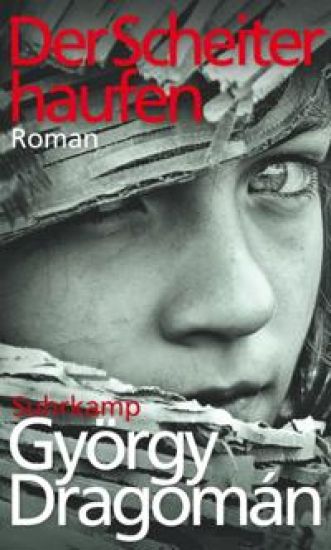
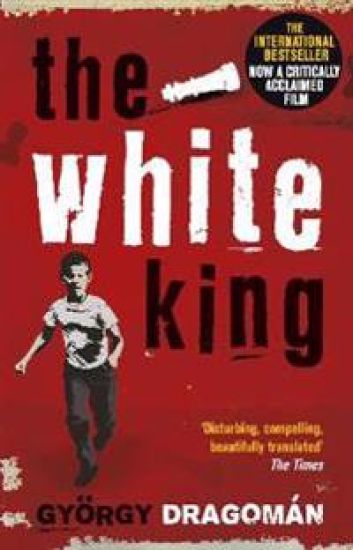
'Disturbing, compelling, beautifully translated' The Times'Electric, urgent, luminous ... It is the day the State Security came to take his father away, and he believes it will be a Sunday when his father finally comes home again. While he waits, Djata lives out a life of adventure.